
Your bag is empty.
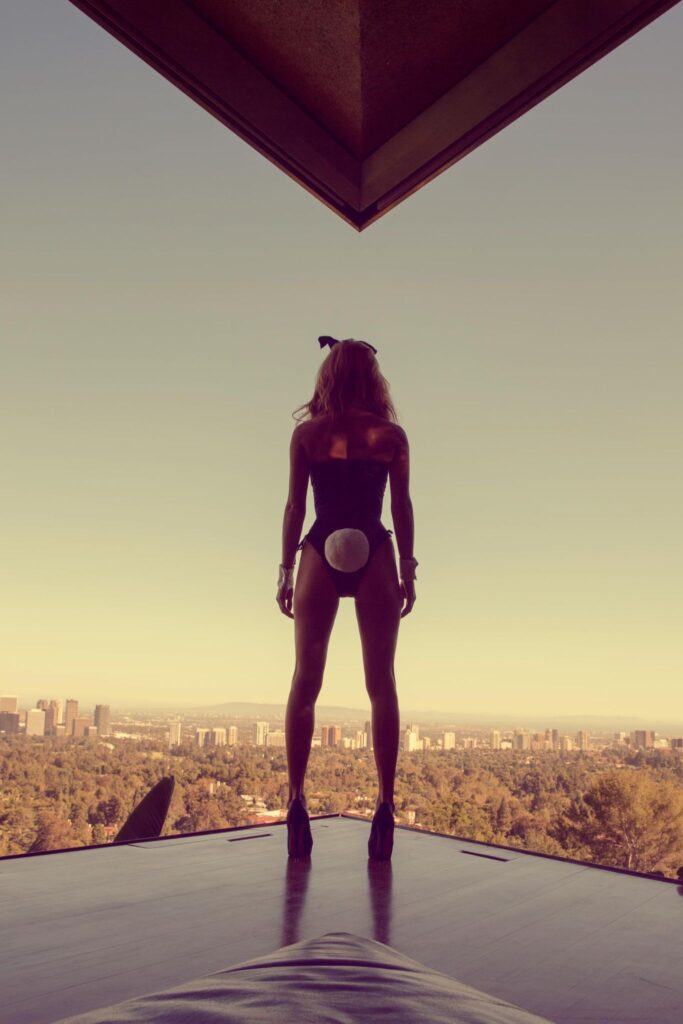
There are few garments that have carried as much cultural gravity as the Playboy Bunny suit. Worn by superstars like Kate Moss and Dolly Parton, the suit is a global symbol that blurs the line between fashion and fantasy. But before it became an iconic image of both status and sex appeal, the Bunny suit was a uniform, making its debut at the opening of the first Playboy Club in Chicago in 1960, a destination that served as a hub for music, culture, and (of course), the beautiful women that inspired Playboy.
At first glance, the Bunny suit reads as simple: ears, corset, heels, and a cottontail. In practice, it’s a deliberate and engineered garment – a second skin for the woman wearing it. Against the wood-grained walls and velvet-covered stairs of the original Playboy Club, Bunnies were, of course, the centerpiece. That meant their suits had to be designed to flatter, hold their shape, and survive long nights under watchful eyes. Even the act of serving a drink while wearing the suit came with its own special choreography, known as the “Bunny Dip.”
It’s officially been 65 years since the Bunny suit hit the scene, and it’s evolved with time. The suit has left the club, splashed across the magazine’s pages, and traveled across the world as a symbol of playfulness, pleasure, and, of course, Playboy. But even as tweaks were made and special versions emerged, the silhouette never lost its authority and allure.
In honor of the Bunny suit’s 65th anniversary, we compiled some of the details that define the revered suit, taking a look beyond the silhouette to understand its powerful history.
- The Playboy Bunny suit made its club debut on February 29, 1960 in Chicago, Illinois at the opening of the first Playboy Club.
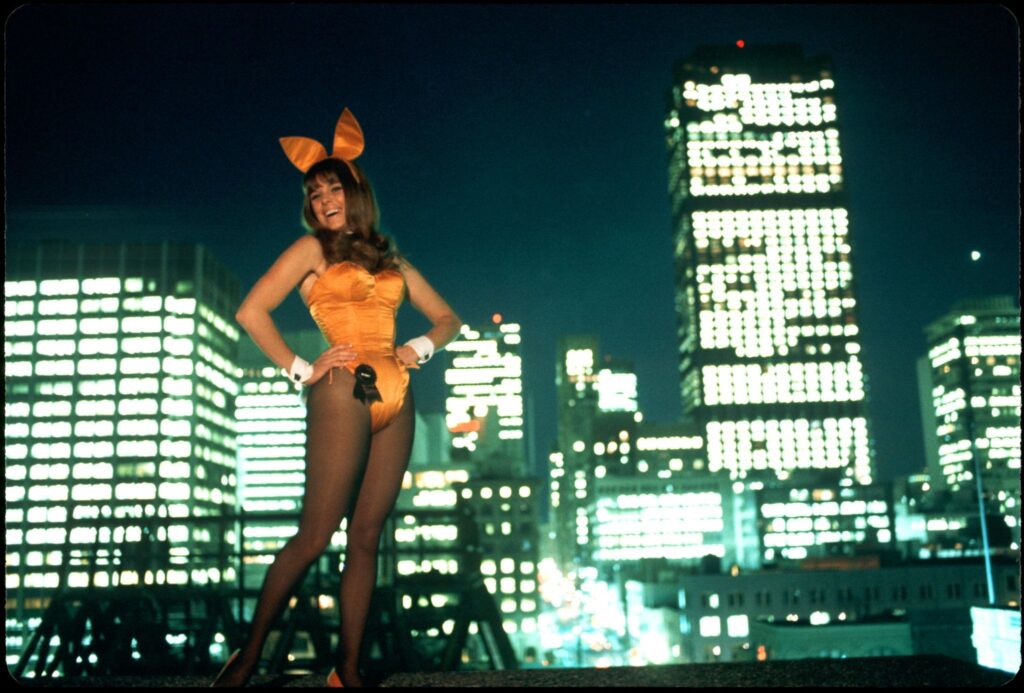
- The original costumes consisted of ears, a strapless one-piece satin and rayon garment mounted on a Merry Widow corset, dyed-to-match three-inch heel, and a fluffy yarn tail. Soon afterward, a collar, bow tie, and cuffs were added.
- In 1961, rosette name tags were added to the costume and pinned at the right hip bone.
- The Bunny suit was the first commercial uniform registered by the U.S. Patent and Trademark Office in 1964.
- The Smithsonian, the Metropolitan Museum of Art, and the Fashion Institute of Technology all have a Bunny costume in their collection.
- The entirety of the high-cut, figure-hugging outfit now includes ears, a fluffy cottontail, white cuffs, cufflinks, a collar, a bow tie, and a rosette name tag. Stockings and high-heeled shoes complete the official look. Each costume is custom-made and tailored to the woman who wears it.
- Jobs in the original clubs included Cocktail Bunny, Camera Bunny, Gift Shop Bunny, Pool Bunny, Cigarette Bunny, and VIP Bunny.
- All Bunnies working in the VIP Room of clubs wore a blue velvet suit with silver trim.
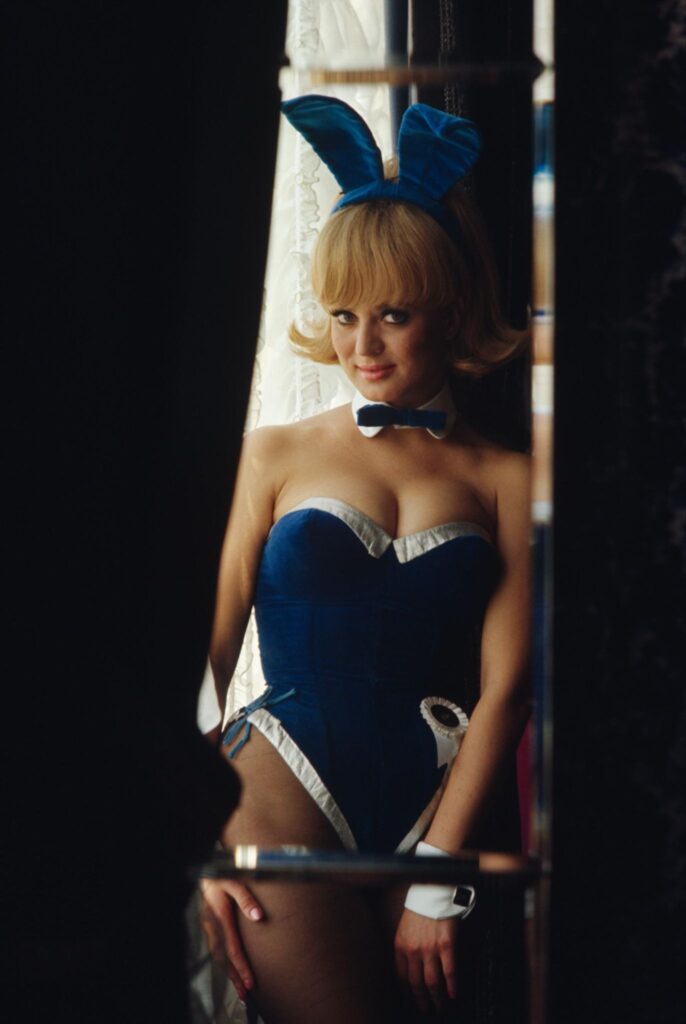
- Once selected, Bunnies completed a rigorous training process that has included memorizing the Bunny Bible and learning as many as 143 different brands of liquor.
- Bunnies share a time-honored and unmistakable move: known as the “Bunny Dip,” it was an elegant and graceful way to serve libations without ruffling or shifting the Bunny suit.
- Over the years, the costume has been worn by more than 25,000 working Playboy Bunnies.
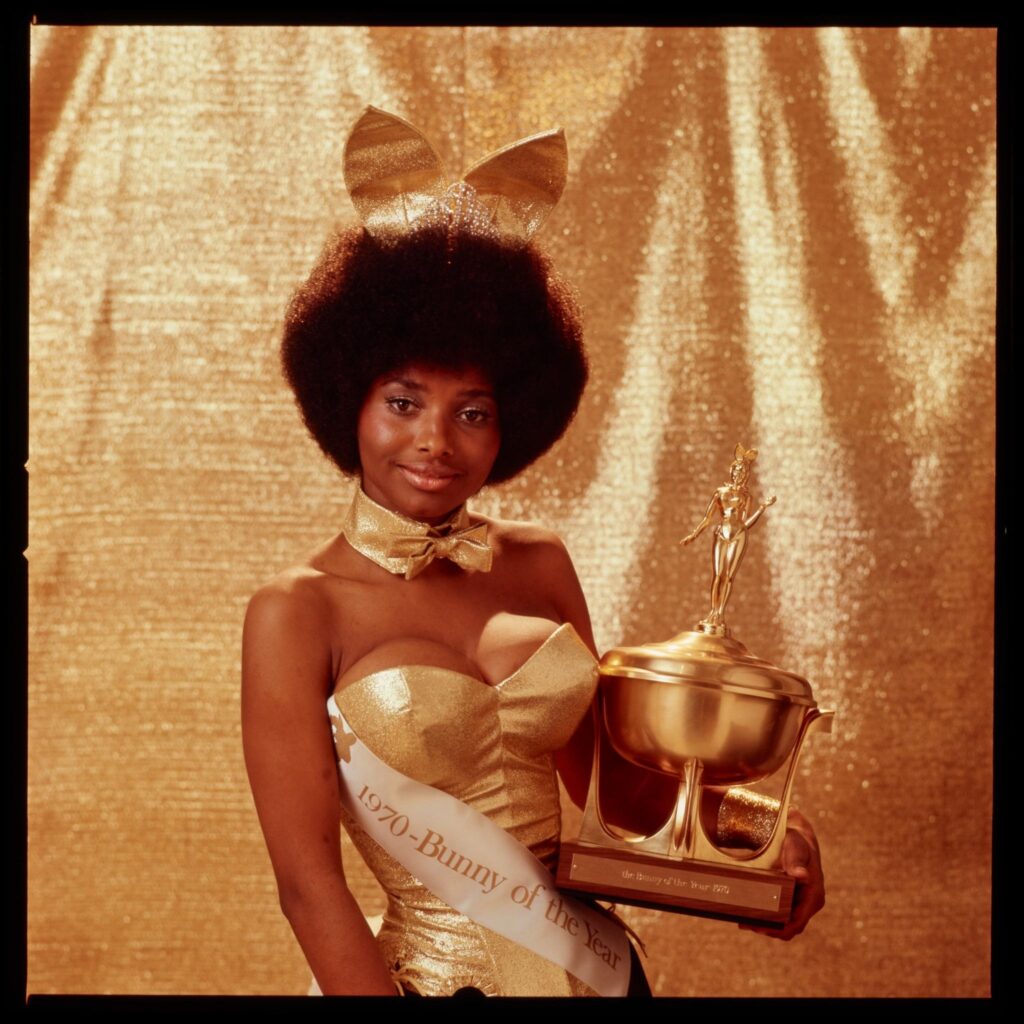
- A Bunny voted Bunny of the Year at her club would earn a silver costume. If they advanced to the International Bunny of the Year pageant, the silver was traded in for gold.
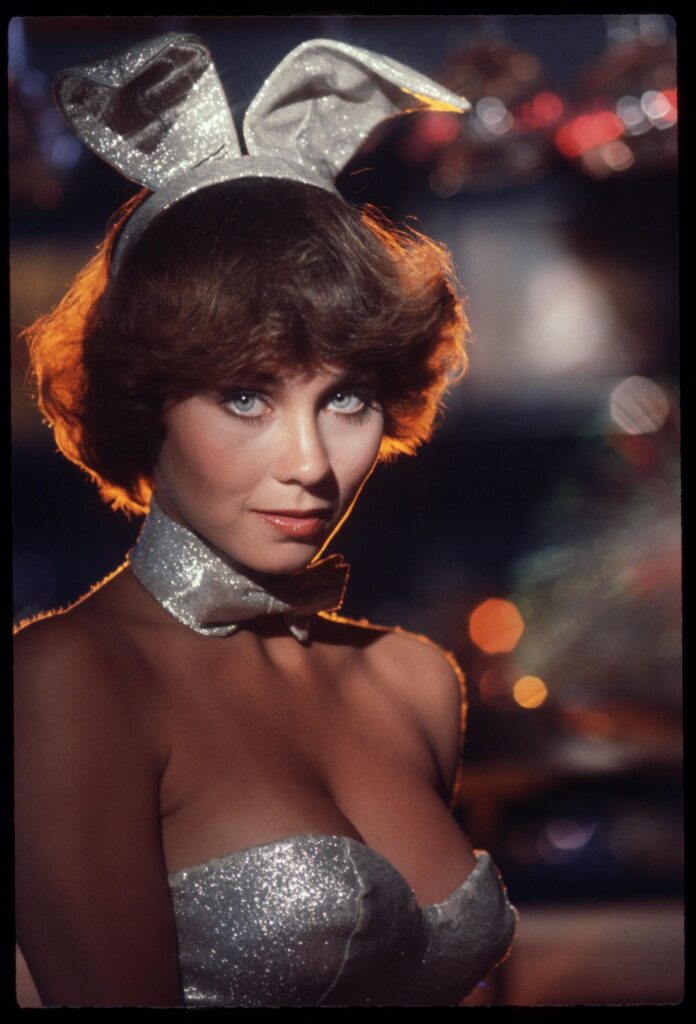
- Not all Bunnies wore the famous suit; season, location, and responsibility also dictated their attire, with non-corset-based outfits for Ski Bunnies, Croupier Bunnies, Beach Bunnies and others.
- At Christmastime, Door Bunnies wore red suits with white faux-fur trim and jingle bells.
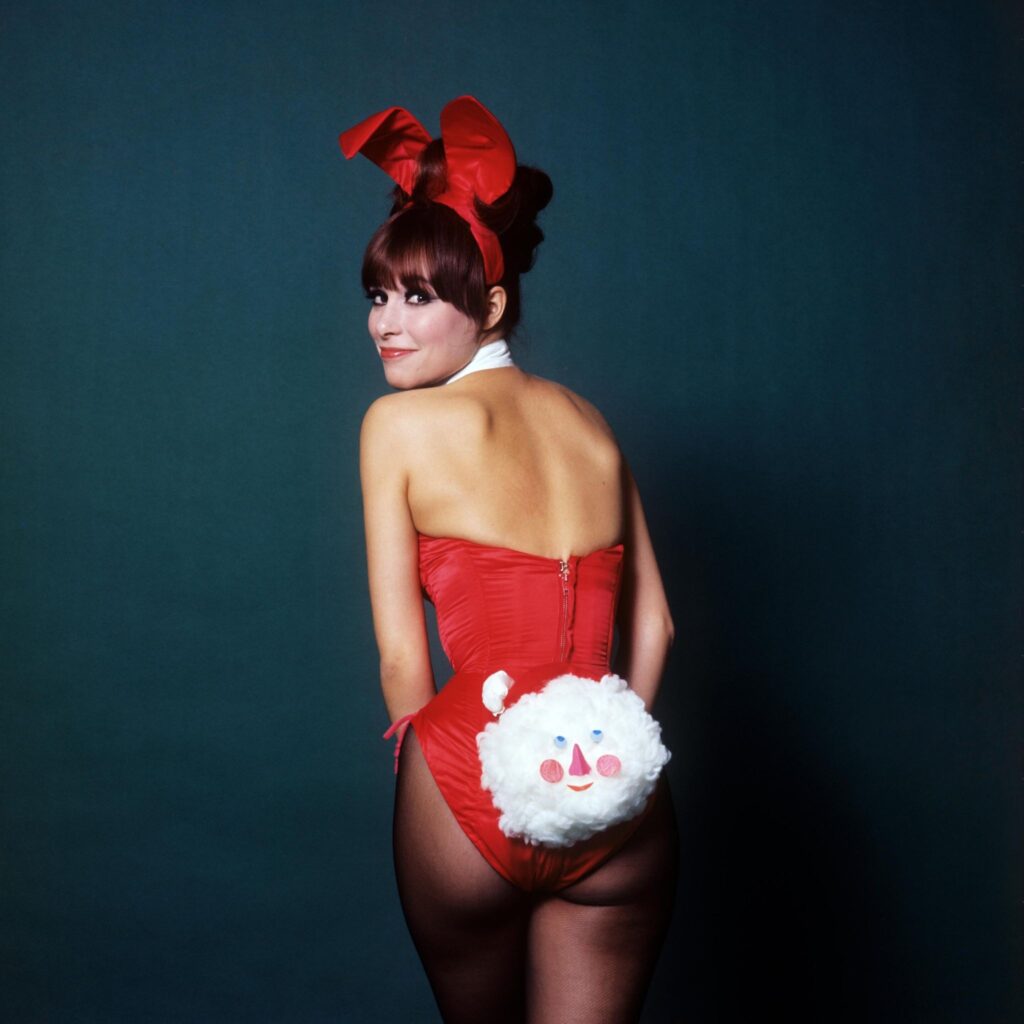
- Jan Roberts was the first Bunny to become a Playmate; her pictorial appeared in the August 1962 issue.
- In 1967, patterned costumes (termed “psychedelic”) were introduced. Some were even designed by fashion celebrities like Emilio Pucci.
- Believe it or not, there were also Jet Bunnies! Jet Bunnies worked on board the Big Bunny jet, which debuted in February 1969. The Big Bunny became one of the most recognizable planes of its time, with a solid black exterior and white Rabbit Head logo on its tail fin, and went on to welcome the likes of Elvis Presley, Sonny and Cher, and many other notable guests on board.
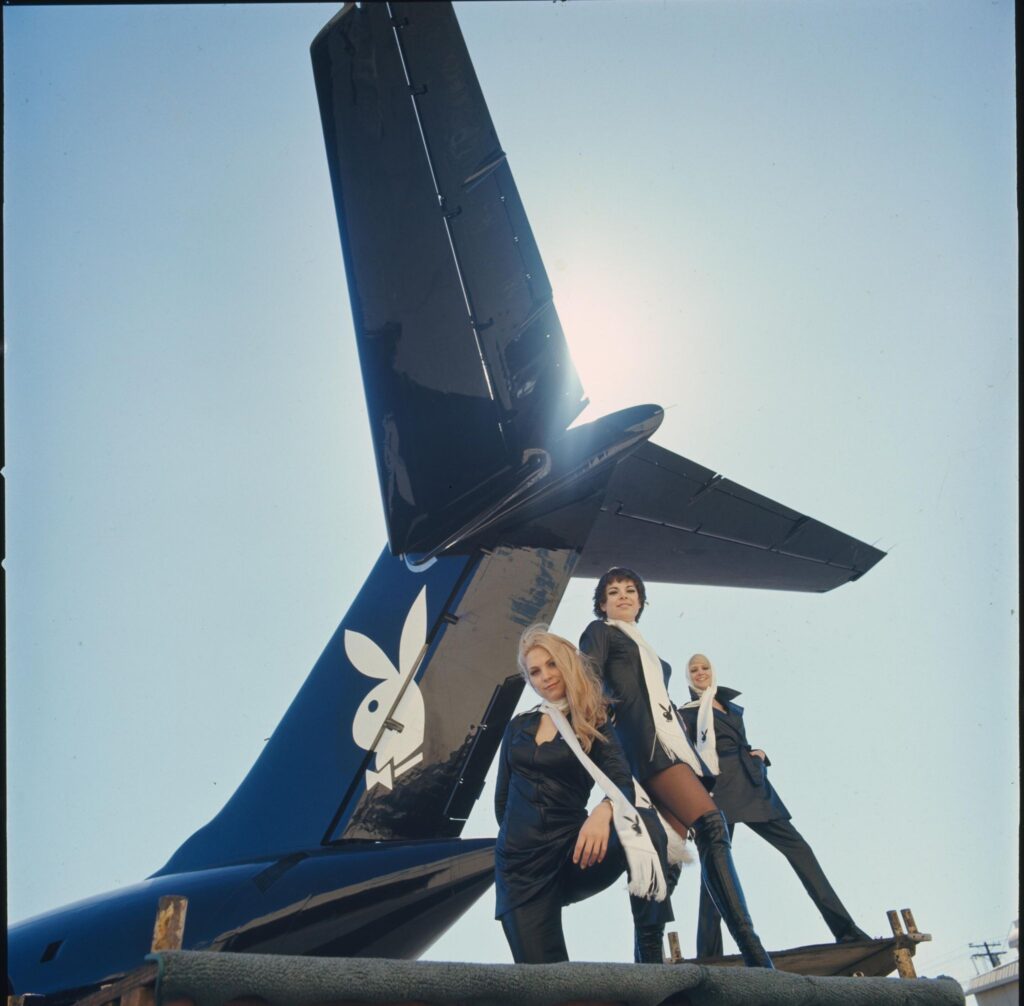
- The Jet Bunnies were chosen from the hundreds of women working as Bunnies in the Playboy Clubs. They coordinated with the pilots—hired through an airline company—to comply with FAA regulations and pass flight-attendant training.
- By 1970, the clubs employed 4,000 Bunnies who went through 14,000 Bunny suits—and 195,000 pairs of pantyhose.
- The First Bunny of the Year (crowned in 1970) was Baltimore Club Bunny, Gina Byrams.
- In 1975, 10 women from the Chicago club picketed in their Bunny suits, marching for the freedom to frequent the club as customers and date other members if they wanted. (This was later revealed to be an inside job—a playful way of publicizing the changes in club policy.)
- The Bunny cabaret costume was introduced in 1980, consisting of a frilly, lacy garment that more directly resembled lingerie, complete with stocking garters.
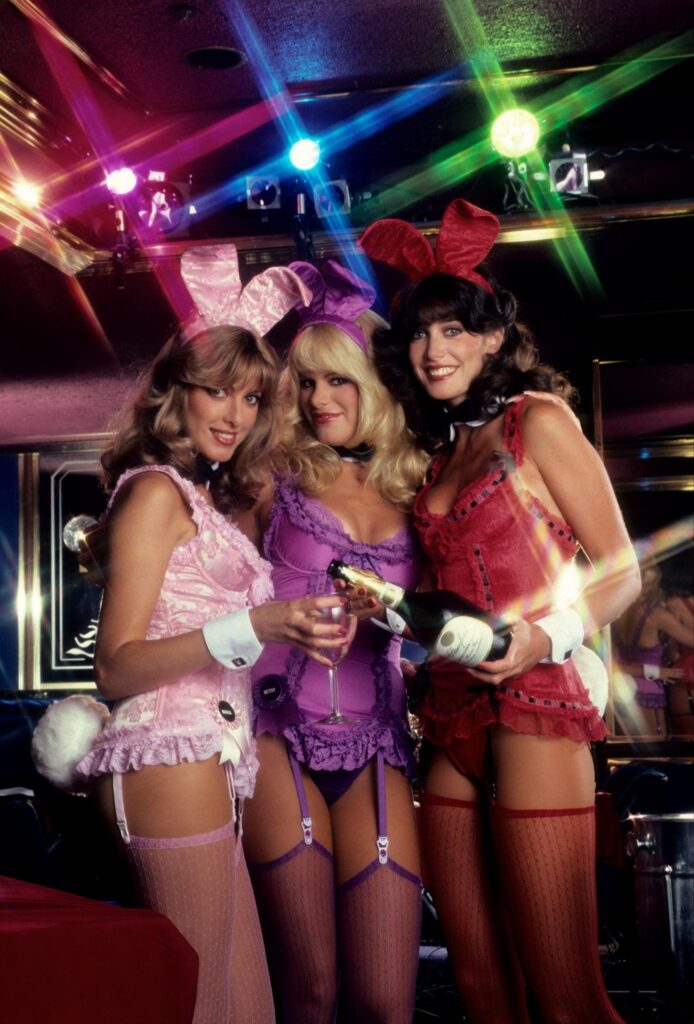
- In the early 1980s, Bunnies hired to appear at events approved by Playboy earned $17.50 an hour, which was more than five times the minimum wage of that era.
- Also in the mid 1980s, a radically redesigned line of Bunny costumes seen by Williams Clages Jr. were introduced at the Empire Club, including a “Bridal Bunny” costume, “Bunny Van Gogh” costume, and “Cupid Bunny,” among others. This era also saw costumes paying tribute to the Army, Navy, Air Force, and Marines.
- The Bunny suit has been worn by some of the greats including Pamela Anderson, Sally Field, Dolly Parton, and Kate Moss, among others.
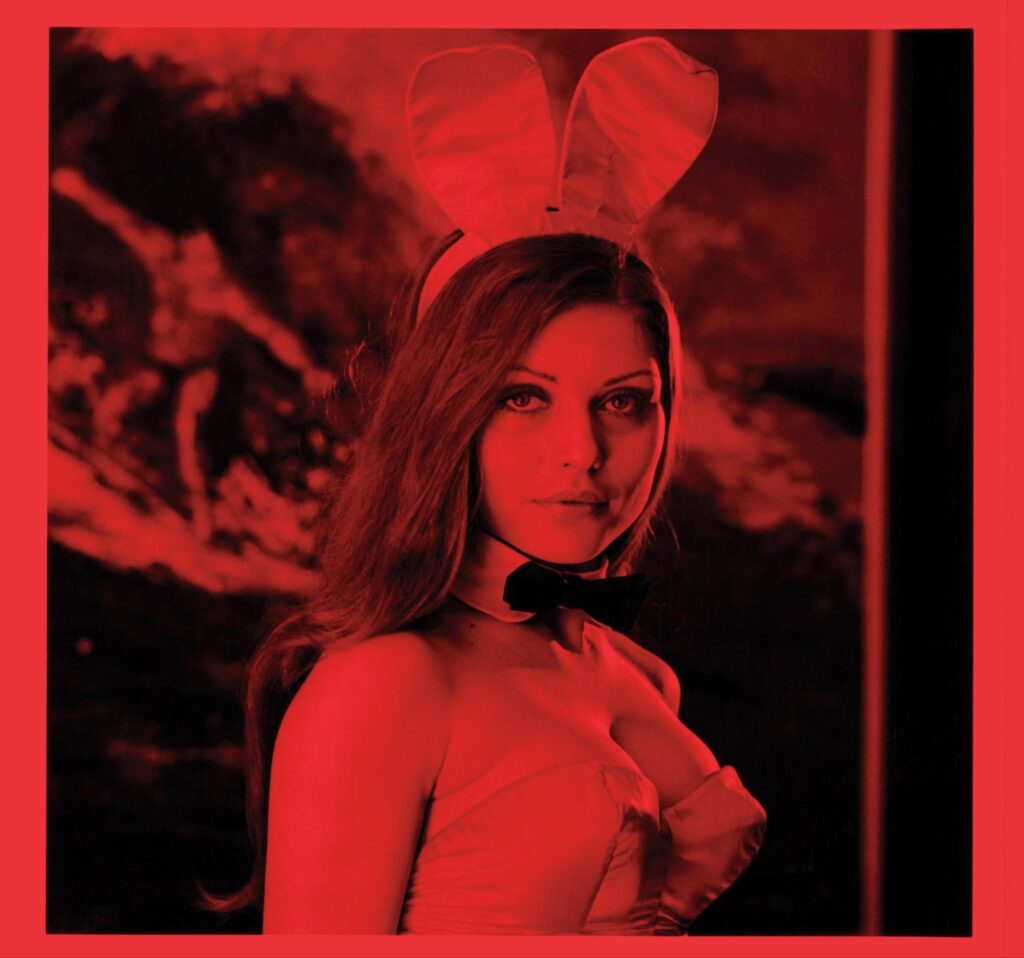
- Famous actresses Lauren Hutton, Lynne Moody, Sherilyn Fenn and rock star Blondie (Deborah Harry) all worked as Playboy Club Bunnies.
- In honor of Playboy’s 60th Anniversary, 60 Bunnies rode a double decker bus around Los Angeles in 2014.
- Club Bunnies would often have their cuffs signed by celebrity patrons.