

Your bag is empty.
At around 10 a.m. on January 7 last year, Lucas Hunter stood in the busy Colombian border town of Paraguachón when a man in military fatigues looked him dead in the eyes and said something his schoolboy Spanish made out as “Come with us.” Hunter glanced at the familiar red, yellow, and blue stripes on the man’s shoulder and assumed he was Colombian.
Hunter was no flyweight: 36 years old, six feet tall, with a frame that suggested an ability in darker arts than the kitesurfing he’d spent a week and a half doing along the Guajira Peninsula, one of the best places on earth for the sport. The soldier was short, with a belly like a cannonball. He approached Hunter and grabbed his arm. Could Hunter punch the guy? Scream for help? Hunter’s moped was parked a few yards back, and he was holding its key in his hand. Could he slip free and scamper over to it, light up its engine, and speed away?
Hunter would pore over these thoughts for weeks, replaying them like a video umpire, wondering each time whether he could’ve done something differently, as he sank deeper into the guts of one of the world’s worst gulag archipelagos. But when Hunter pulled his arm away and the soldier grabbed him again, only harder, Hunter spotted the pistol holstered on his belt. Then time seemed to accelerate, and there were suddenly more of them—military, but also immigration and plainclothes guys dressed in shirts and jeans like vaqueros, or gangsters—and they swarmed around Hunter and dragged him past a white-painted roadblock and a sign that read feliz viaje y pronto retorno. Hunter yelled, “No entra, no entra!” which was his way of pleading that he wasn’t a spy or a narco, just a gringo tourist. No one intervened. As the mob dragged him across the border and shoved him into a roadside shipping container, Hunter caught one last detail. That flag: white stars on blue. Venezuelan. The door slammed shut. It was hot inside. And he was theirs.
Most folks are as dialed in to real danger as krill in a blue whale’s mouth: Hundreds continued making merry on the Titanic even as their cabins were pointed halfway to the moon. Lucas Hunter would not have been among them. He was a man of odds and probabilities, whose London finance job hung on knowing the risks underpinning the global economy. So when one of the soldiers rifled through Hunter’s backpack and, after setting his French passport down, noticed there was another passport, an American one—which sent his eyes spinning like cherries on a slot machine as he drew an X with his hand—Hunter immediately recalled the stories he’d heard as a kid about his Jewish Hungarian great-grandparents: how some of them had survived the Nazis, and some of them hadn’t.
And he knew, right there and then.
I’m in danger.
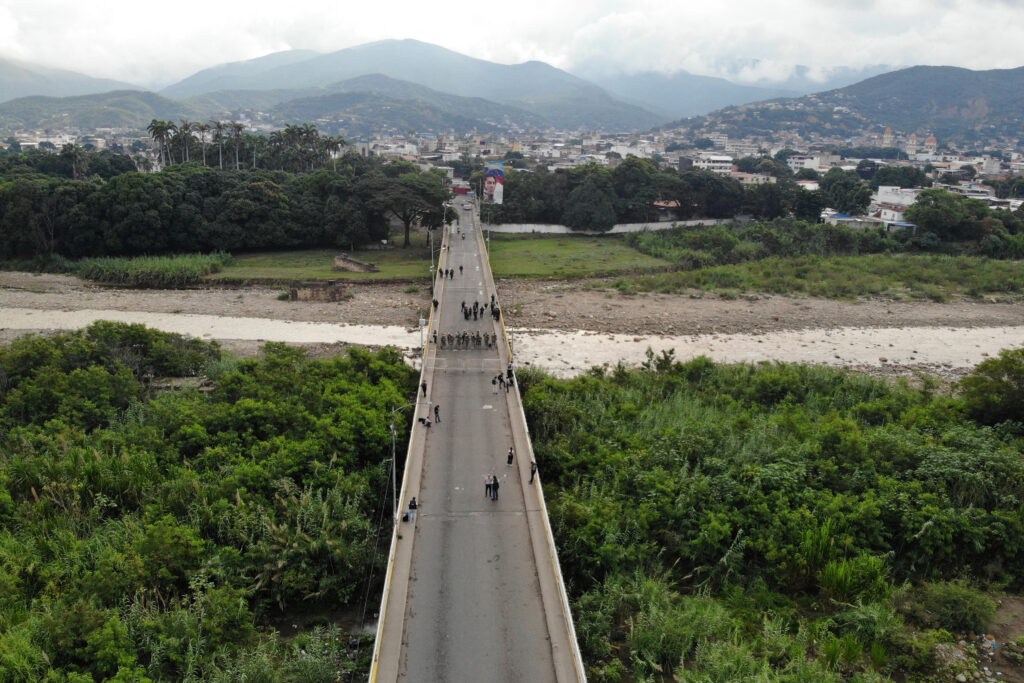
The Colombia-Venezuela border at Paraguachón, where Hunter’s ordeal began. Getty Images
Lucas Hunter hadn’t wandered into Venezuela for an adventure. He hadn’t motorcycled there by accident, or snuck in to meet a woman he’d dated online. He’d planned an itinerary through Colombia—first with his younger sister Sophie, then, when she was grounded because of illness, alone—guaranteeing the best surf, and the least potential trouble. He’d checked travel advisories and carried both his passports, just in case. In many ways, he was a model tourist.
It didn’t matter. Riding around the peninsula was like stepping through quicksand: Any moment, Hunter could be pulled into something way too powerful for him to control.
That week, Nicolás Maduro, Venezuela’s pugilistic dictator, was celebrating his third presidential inauguration by locking up thousands who protested an election almost the entire world called a fraud. U.S. president Joe Biden was among them, after spending the second half of 2024 slapping sanctions on Maduro’s regime. Biden’s successor, Donald Trump, had once said it would be “cool” to invade Venezuela, and he openly weighed Maduro’s arrest.
So the many agencies that make up Venezuela’s military-intelligence complex rounded up yanquis (Yankees) and other foreigners, some of whom they claimed were CIA stooges, but others, it seemed, simply to use as bargaining chips in a rapidly expanding policy of hostage diplomacy—one growing commonplace among autocracies keen to get a leg up over richer and more powerful enemies. (A year later, long after Hunter’s disappearance, the U.S. would engage its own version of this policy, attacking military positions across Caracas to extract Maduro himself into detention.) Rumor had it that Venezuelan authorities offered bounties of anywhere between $30,000 and $70,000 to bring U.S. citizens into custody—a huge sum for a place where cops often earn just a few thousand dollars per year—deputizing swaths of the nation as potential kidnappers.
Which might be why men from at least four agencies, including the Servicio Bolivariano de Inteligencia Nacional, or SEBIN, Venezuela’s feared secret police, interrogated Hunter in the shipping container via a phone translation app. After four hours, Hunter asked if he could tether to one of the officers’ cell networks to talk to his mom. The officer agreed. Hunter opened WhatsApp and recorded a voice note for Sophie. “Caught by the Venezuelans,” he told her in clipped, plaintive French. “I think they want to let me go, but I have the police, the military, that are asking me lots of questions, and I think I’ll get to the end of things. Lucas.”
“I could tell that he was scared,” says Sophie, a UN consultant based in Geneva. They were the tightest pair among the four Hunter siblings, and their conversations often took on a goofy tenor. This was different. She tried calling Lucas back: no response. “I didn’t know the full picture,” she adds, “but I knew it was bad.”
She wouldn’t hear from her brother again for five months.
Venezuela’s military-intelligence complex rounded up yanquis to use as bargaining chips in a rapidly expanding policy of hostage diplomacy.
The guards moved Hunter to a small barracks beside the container and sat him at a desk. Late that evening, one of them shackled his hands, threw a hood over his head, and pulled him out the barracks door and into the backseat of a 4×4, wedging him between two men. The vehicle hurtled through the night on slipshod roads until it reached a parking lot in Maracaibo, Venezuela’s second city. The guards dragged him out and down through a door into a small basement cell. They pulled off his hood and shone a lamp in his eyes. Hunter squinted in the light. To one side, he could make out the silhouette of a camera, its lens pointed directly at him.
This is how the interrogations began. Sometimes, they’d last a couple of hours; others almost a day, raking over the same, tiny details, trying to catch him in lies so small a gnat couldn’t squeeze through. Teams switched out, each wearing different insignia, seeming to compete for the best version of his story, the one that would best cast him as a mercenario, or a yanqui spy. Each session ended with a broken promise. “Just a few questions, then we’ll release you,” they told him at first. “A few more hours and you’re free. We’ll book you in here, make sure everything is fine, then you can go.” Mañana. It didn’t mean “tomorrow,” but more “whenever.” The word alone would be enough to turn Hunter’s stomach.
At around 4 a.m. on January 25, when a short, fat guard opened the cell door and motioned for Hunter to pack his things, he hoped that, finally, mañana had arrived. It hadn’t. The guard looked at Hunter and said, in English, “You are going to Caracas.”
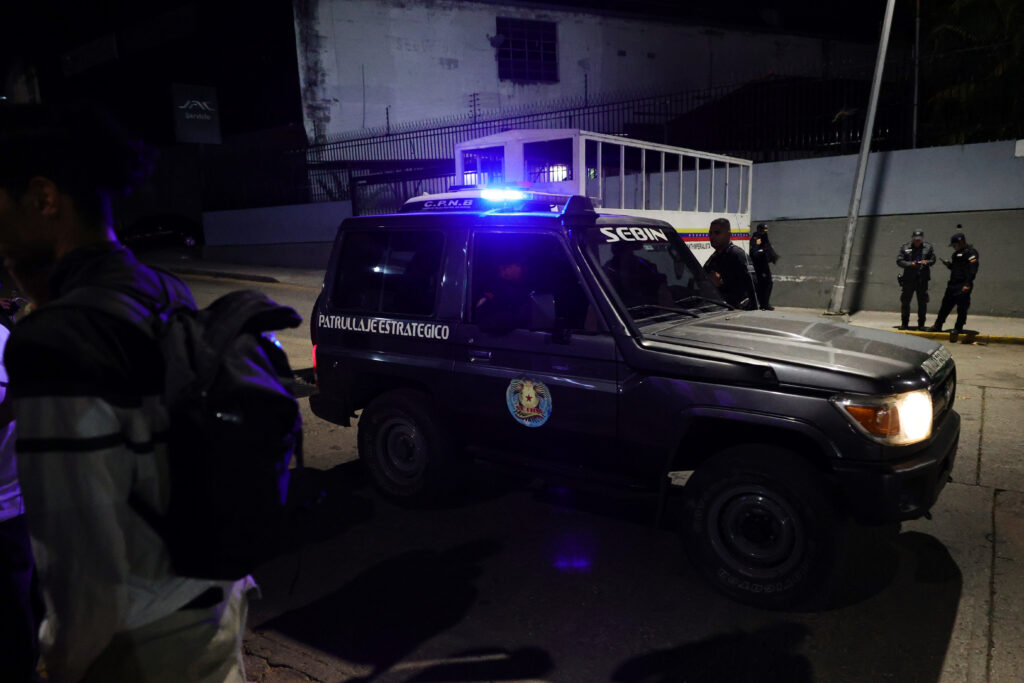
Another team was waiting for Hunter at ground level. They threw a bulletproof vest over his neck and cuffed his hands and feet. Then they frog-marched him out into the wet heat of pre-dawn Maracaibo, toward a pair of black Toyota all-roaders. It was dark, and they seemed intent on filming the moment like it was a scene in a Michael Mann movie; “really theatrical,” Hunter recalls, and “funny … I think we had to do it four times over because the angle wasn’t right.” Then they pushed him onto one of the Toyotas’ back seats, climbed in, and hurtled off, speeding along empty ocean highways, flying through red lights and two-horse towns. For 12 hours they went, through dawn and day, stopping first for fuel, then at a near-empty fried chicken store before driving past glistening coasts and palm-topped sierras. Then they drove inland, past jungle and a gigantic power station, before the palms were replaced by seas of cinder block shanties that clung to hills like discarded stacks of LEGO, and they were no longer in the gorgeous, bucolic Venezuela, the one conquistadors believed to be the home of El Dorado. They were in Caracas.
It was dusk when the convoy stopped outside an ugly, gray 16-story block in the city’s downtown, a building designed in 2005 as the home of the Caracas Metro but later sequestered as the headquarters of the SEBIN. Locals knew it as La Tumba, the Tomb. A fresh round of interrogations began, more organized, with a human translator and a polygraph. Agents shone flashlights into Hunter’s eyes and kicked the back of his chair when they didn’t like an answer. Hunter hadn’t slept for two days, nor eaten since the roadside chicken. Sweat poured from beneath the bulletproof vest, and his ankles throbbed in their shackles. “I’m done,” he snapped. “I’m not saying anything unless I see someone from the French consulate.” The agent barely looked up. “This is just procedure,” he said.
It was late evening when they’d had enough, when they pulled him back into one of the Toyotas and drove a couple of miles across Caracas, and instead of commercial buildings, all Hunter could see were waves of slums and projects that roiled up and down hills, and they arrived minutes later at the foot of a strange concrete building that rose from the barrios like a giant, space-age spinnaker, surrounded by tactical vehicles and gun-toting cops.
This was El Helicoide, the Helix. Like La Tumba, it told a story of Venezuela’s descent into turmoil. It would also be Hunter’s home for the next five months. The building looked “pretty awful,” Hunter recalls, when he became its latest foreign resident on February 21, “bustling with cops everywhere and people with guns.” Cops strip-searched him, removed the laces from his shoes, and made him wear blue pajamas. Now he looked like any other crook. It was the most hopeless he’d felt since the capture.
A guard placed Hunter in a device known as a polpo, or octopus, shackling his hands on either side of a seat belt–like band around his waist. Another round of interrogations. By 2 a.m., when they wrapped up, he could barely think.
Even Latin America’s great libertador resorted to hostage diplomacy. On August 16, 1812, while marching on the city of Puerto Cabello, Simón Bolívar took Spanish commander Antonio Zuazola captive, then offered him to colonial leader Juan Domingo de Monteverde in exchange for one of his own men. Monteverde refused, so Bolívar’s men hanged Zuazola from the decks of the city’s fortress.
Bolívar marched into Caracas a year later and, in 1819, established Gran Colombia, a nation that existed barely a decade before dissolving into Ecuador, Colombia, and Venezuela. (All three modern states kept their predecessor’s red, blue, and yellow tricolor, with subtle differences—thus Hunter’s confusion in Paraguachón.)
For the next century, Venezuela subsisted on coffee, cocoa, and leather. But in 1914 a derrick at the Zumaque I oil field, near Maracaibo, began gushing. By 1928 Venezuela was the world’s leading exporter of petroleum, with more proven reserves than Saudi Arabia. But by 1999, decades of corruption had convinced Venezuela’s people to elect Hugo Chávez, a barrel-bodied and rictus-grinned military officer who’d already tried and failed once to seize the nation in a coup d’état.
The new president promised a nation for the people. He purged corrupt officials and nationalized industry, and named Simón Bolívar Venezuela’s patron saint. Oil riches carried his ambitious welfare plans. But Chávez’s system, which the journalist William Neuman dubbed “showcialismo,” soon resembled a monarchy, with state functions dished out to inept apparatchiks who tanked the nation’s economy. Between 2013—when Chávez died of cancer and was followed by Nicolás Maduro, a loyal Chavista—and 2019, almost two-thirds of Venezuela’s economy vanished. Inflation topped out at 130,000 percent in 2018, compounded by sanctions imposed by the first Trump administration.
Gangs proliferated, and millions of Venezuelans fled abroad in what has become Latin America’s largest-ever exodus. Those criticizing La Revolución Bolivariana often wound up at El Helicoide, a 786,000-square-foot pyramidal stack of floors, topped with a geodesic dome, which was first conceived in 1955 as a futuristic shopping center and a symbol of Venezuela’s petrostate sophistication. But the project was never completed, and from the 1980s it became a home for domestic intelligence agencies whose message to the people was clear: Try us and this could be your grave.
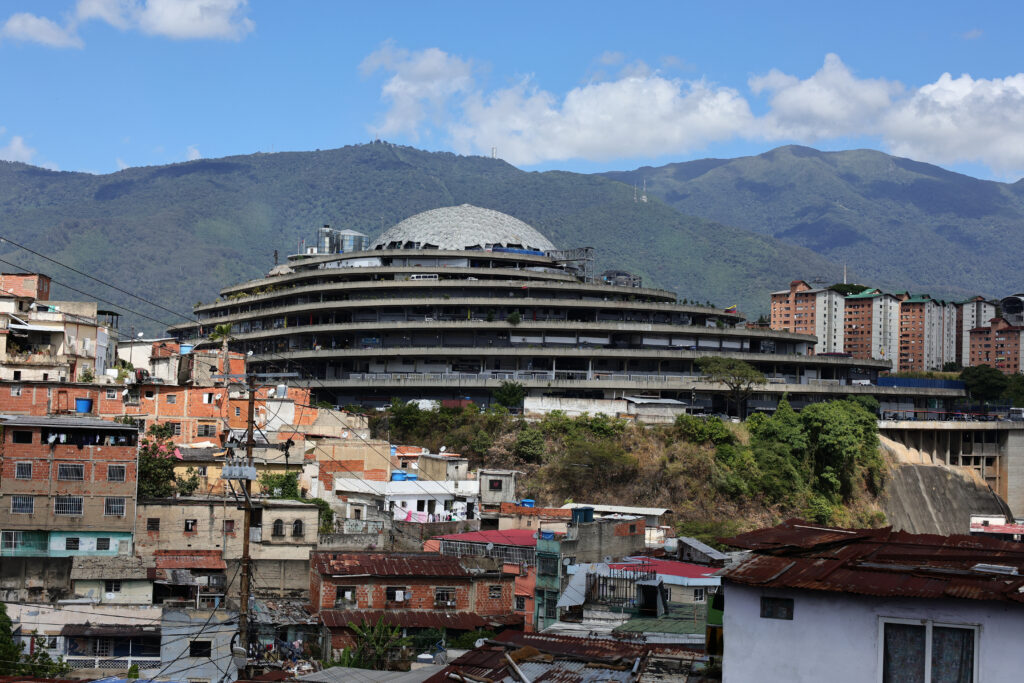
El Helicoide, a shopping mall turned political prison. Getty Images
Maduro didn’t have Chávez’s charisma, and he responded to Venezuela’s economic crisis, in part, by extending Simón Bolívar’s program of hostage diplomacy, kidnapping fleets of foreign nationals to bring their governments to heel—or at least to the negotiating table.
Hostage diplomacy “has somehow become a central tool of modern statecraft, a mechanism for nuclear powers to inflict pain on one another without tipping into war,” write Drew Hinshaw and Joe Parkinson in their book Swap: A Secret History of the New Cold War, which focuses on U.S. citizens detained in Russia. But nations all over the world, from Iran to North Korea, Afghanistan, China, and Turkey, have increased their use of the tactic.
“It works,” says Phil Gunson, a Caracas-based analyst for the International Crisis Group, a Brussels-based NGO. “Because it’s a way of applying the pressure via public opinion on … rival governments to do your bidding.”
The U.S. State Department knew that nine Americans were held at Rodeo One, a site outside Caracas known to hold political captives. But nobody knew where Hunter was.
In 2020 a botched U.S. mercenary operation to topple Maduro and install his rival Juan Guaidó prompted Maduro to swell the populations of El Helicoide and other facilities with foreigners as well as Venezuelans: The NGO Foro Penal reported that Venezuela held 421 “political detainees” that year. In 2023 Biden appeared to play ball with Caracas by agreeing to release Maduro ally and convicted money launderer Alex Saab for dozens of foreign prisoners. Hostage diplomacy “works even better,” says Gunson, “if the U.S. openly engages in trading hostages.”
At first, it seemed as if Trump would continue playing ball in his second term. On January 31, 2025, Trump’s special envoy Richard Grenell met Maduro at Caracas’s Miraflores Palace and returned with two things: a promise from Maduro to accept Venezuelan migrants from the U.S. and the release of six American detainees. “Just been informed that we are bringing six hostages home from Venezuela,” Trump posted to Truth Social. “Thank you to Ric Grenell and my entire staff. Great job!”
One of those who came home was David Estrella, a 62-year-old New Yorker whose family had employed the services of Global Reach, a D.C.-based nonprofit lobbying for American citizens held overseas. The day before, a U.S. government official had told Sophie Hunter to contact Eric Lebson, chief strategy officer at Global Reach. Sophie, a multi lateral climate and trade expert, was a natural choice to lead the family’s fight to bring her brother home. But with relatives in France and the U.S., she struggled to get everybody pulling in the same direction. When she engaged Global Reach, she says, “all the chaos that was happening prior got funneled into a process and a strategy. … We knew we were with people who understood what was going on and who were committed to bringing Lucas home.”
Lebson, a former Pentagon official, was close with staff at SPEHA, the Office of the Special Presidential Envoy for Hostage Affairs. The U.S. State Department knew that nine Americans were held at Rodeo One, a site outside Caracas known to hold political captives. But nobody knew where Hunter was. “Not knowing was the real terror,” says Sophie. She read articles about people who had suffered terribly at the hands of the SEBIN, the agency that Lebson’s contacts inside Venezuela told him were most likely holding her brother. And she fretted that he could suffer a flare-up of the asthma he’d suffered since childhood.
But finding Hunter wasn’t Global Reach’s biggest challenge. “There’s so much anguish and conflict in the world,” says Lebson. “Why should I stop and take a second out of my day to care about this guy?” If the public, and the government, believed Hunter had ventured into Venezuela on a kitesurfing jolly, Lebson adds, they might think: “I don’t care. He got what he deserved.”
That April, Global Reach helped secure the release of Ksenia Karelina, a Russian American detained in Moscow during a family visit. Global Reach decided to foreground a detail about Karelina that it believed would best capture Americans’ sympathies: She was a keen amateur ballerina. It worked. The team followed a similar blueprint with Hunter. “In reality,” says Lebson, Hunter was “a serious finance guy who works in London and international markets. But we needed to find a way to get people to care.”
Global Reach decided that to best grab the attention of the American public—and the Trump administration—Hunter would be the Kitesurfer. Furthermore, Lebson says, “our narrative had to explain: This is a smart guy. He never went to Venezuela. He did his research. He steered clear. He was in Colombia. … And that’s where we brought up the K word: kidnapped.”
The first time Hunter suspected somebody was looking for him wasn’t until the end of February, several weeks into the ordeal, when guards hooked his cellphone up to a Wi-Fi network and he found a WhatsApp message in French from somebody he guessed was at the French embassy in Caracas. (The U.S. had not had a diplomatic presence in Venezuela since 2010; its closest embassy is in Bogotá, Colombia.) But over days of brutal interrogations at El Helicoide, the only screen he could see clearly was one in the corner of his interrogation room that beamed CCTV footage of a filthy prison cell occupied by an emaciated man with a Robinson Crusoe beard. It looked like hell. On day six, the guards marched Hunter around the building to a separate entrance, booked him in, and showed him his new home. It was the cell from the CCTV. The wild-haired man was an Argentine named Gustavo. There was mold on the wall and a bucket for a toilet. Hunter’s bed was a rotten mattress with springs poking through the fabric. Sometimes there was drinking water; sometimes there wasn’t. Blackouts threw the building into frequent darkness, broken only by the lights of the shanties outside, which shimmered like dull votive candles. The heat outside boiled the building like a pot, luring mosquitoes to feast on its inhabitants. Hunter’s hands stayed bound, and they were in near-constant pain.
Hunter called it “the Cage.” To survive, he had to retrain his mind. “I’ve seen different reactions,” he says. “One is total numbness—like mentally, clinically depressed. And then you don’t do anything. Another one is to be super angry, and that obviously tends to lead to adverse outcomes.”
“Hostage diplomacy works even better if the U.S. openly engages in trading hostages.”
But there was a third way. Hunter’s father was Protestant and his mother Catholic, and he’d attended an all-boys Catholic school in Paris. He hadn’t thought much about religion since. At first, when other inmates recited the rosary in Spanish, he’d try to say it with them. Initially, he says, “it was just a way to connect with other people.” But through religion, Hunter discovered a form of acceptance. It slowed him down, calmed him. He ate slowly and slept half the day. “God has a plan,” he would repeat, however drunk that plan might seem. “There must be a purpose to this.” When a guard asked if he wanted to watch something on a device, Hunter asked for French prayers on YouTube. He would sing hymns with the inmates and break what little bread they had together. “I don’t think I could find any other way to just go through that without going crazy,” he says. “That was the only way.”
Three weeks passed; he visited the yard only twice. By that time, he was cut from the mattress springs, and his hands bled from the cuffs. The food had turned his stomach. He had coughing fits and diarrhea. When a guard took him to see a doctor, he broke down in front of the man and pleaded for him to remove the handcuffs, just for a moment.
“You made an oath,” Hunter cried. “You’re a doctor.”
The doctor refused. Later that day Hunter was transferred to El Helicoide’s maximum security wing. It was clean, but it didn’t have windows or bars on the door. It was just a box. Hunter shared the cell with a Venezuelan man who flew into bouts of wild paranoia, spending entire nights talking to himself, and Hunter had no way to block out the sound but to dissociate entirely. What if, by doing so, Hunter would lose his mind completely by the time he got out? The thought terrified him.
Hunter took some solace from conversations with his fellow detainees, many of whom were members of Venezuela’s political opposition. One of them was a lawmaker named Alfredo Díaz, a state governor that the SEBIN had disappeared the previous November. Díaz had “good energy,” Hunter recalls. “He’d be the one saying, ‘You’ll be out soon. Don’t worry. The Trump guys are working on your case.’”
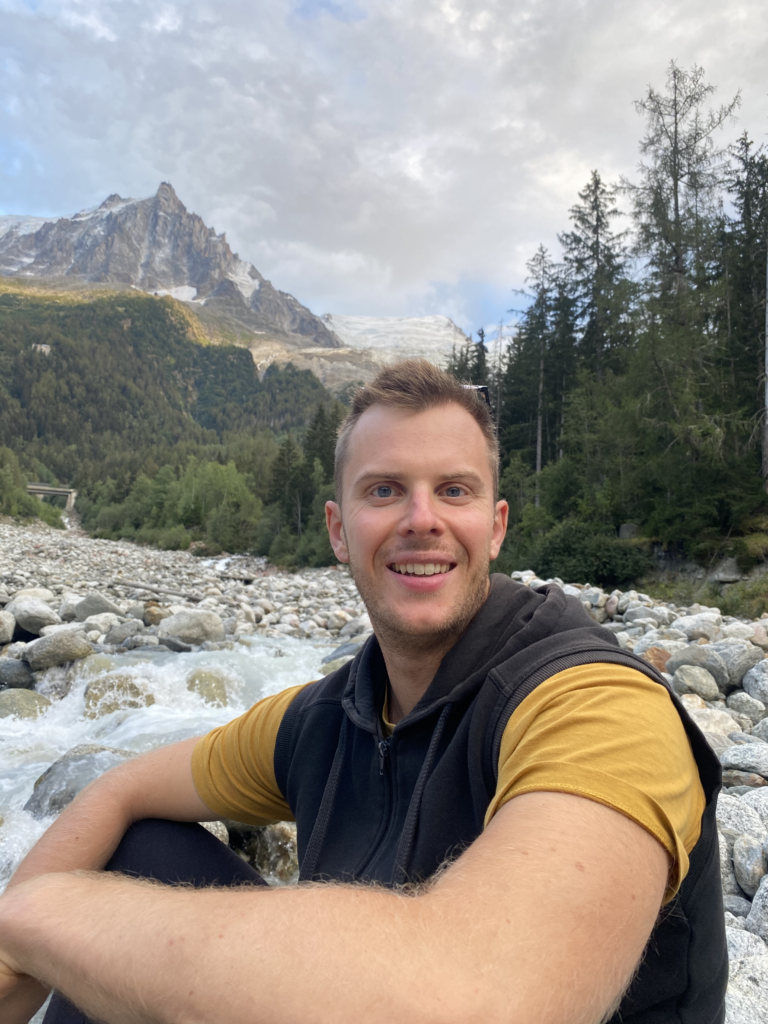
Díaz was right. On May 20, Ric Grenell secured the release of another American prisoner in Venezuela, an Air Force veteran named Joseph St. Clair. Sophie launched a website and social media pages for her brother and called Global Reach more than daily. Occasionally they would prepare for media interviews or government meetings. “Sometimes I would just call them because I was scared for Lucas and wanted to talk,” she says. “They never said no.” Sophie visited Washington on several occasions, meeting with congresspeople and penning op-eds. Around the same time, Lebson and his team, using a web of informants inside Venezuela, finally discovered that Lucas was at El Helicoide. But the relief of knowing where he was quickly turned to fear. “We didn’t know if the U.S. government knew that he was not at Rodeo One, and we feared they might get those guys released and leave Lucas behind,” says Sophie. She hit the phone, desperate to reach Grenell. In June, Tim Hunter, Lucas and Sophie’s brother, who was based in the U.S., produced a 15-second television commercial featuring their great aunt Susie to air in the D.C. area. Holding a portrait of Lucas, Susie addressed President Trump: “Thank you for already bringing seven Americans home from Venezuela,” she said. “Please bring Lucas home safe. I know you’re the only one who can.”Susie Hunter isn’t sure why she was chosen to front the ad. “Maybe because I’m old,” she jokes. Whatever the reason, Susie’s Southern charm appeared to work.
On the second day the ad ran, a senior U.S. official called Tim Hunter. “President Trump saw the ad,” he told Tim. “I want you to know we have Lucas on our radar.”
The week before Hunter’s release was among the worst of his 192 days of captivity. A credible tip that he’d be released came and went, and workers began painting the walls in abrasive gray paint that ripped off any skin that rubbed against it. The paint fumes made the prisoners sick, and yard time vanished. The guards grew more aggressive and cruel: They would barge into cells for spot checks precisely when the prisoners were going to sleep. Amid the construction, even more cameras were installed—in cells and even in toilets.
On July 18, when guards burst into his cell, Hunter assumed it was for another round of harassment. But this time, they were flanked by the prison warden. He turned on the light and kicked Hunter’s mattress. What he said was in Spanish, but Hunter could make out two words: médico (doctor) and cosas (things).
“I figured, OK, I have to take my things and go see the médico for some reason.”
But his cellmate woke up. “Dude,” the cellmate said in Spanish. “That’s it. You’re free.”
The guards walked Hunter outside, cuffed his hands behind his back, threw a hood over his head, and put him in a car. Then they drove away. And for the first time in five months, Lucas Hunter wasn’t in El Helicoide anymore.
Fifteen minutes later, the agents ushered him into a room with a camera and handed him a statement. It was a confession, of sorts, declaring that Hunter acknowledged he’d broken the laws of the Bolivarian Republic of Venezuela, that he was treated fairly, and that he promised not to sue. Then they sat him outside, and after a while he felt it before he saw it: movement, people lining up beside him, all of them in blue pajamas, like him. He wondered if they were also gringos, but he’d long since trained his mind not to react to slivers of hope.
There again, Hunter was sure he heard somebody say “aeropuerto.” Then everybody got into cars and drove across the city, and soon they were on the tarmac, facing a small jet. There were officials shaking their hands, and everybody was smiling. Some of them wore cowboy hats, and Hunter finally figured that he was in the company of Americans, that he was going home. They headed into a room where somebody gave them a change of clothes and little plastic U.S. flags, and they waved them, and people took pictures, and everybody smiled. The chargé d’affaires from the embassy in Bogotá explained what would happen next, that they’d fly to San Salvador, the capital of El Salvador, to meet President Nayib Bukele, whose colossal prison, the Centro de Confinamiento del Terrorismo, or CECOT, would release 252 Venezuelans as part of the deal. There’d be a brief media appearance. Then they’d head to a U.S. Air Force base in San Antonio for debriefing and medical evaluations. And then, when they felt ready, they would be free.
The group touched down in San Salvador, met Bukele, then left. While they were in the air, a State Department official handed Hunter his phone. Sophie was on the line. “I’m in the air,” he told her. “We’re going to Texas.”
“You’re safe,” she replied. “Trust the people around you. Susie is on her way to Texas already, and I’m coming tomorrow.”
By the time Lucas Hunter was released, U.S. officials were deep into a plot to overthrow Nicolás Maduro. At 10:46 p.m. on January 2 this year, President Trump told his forces to launch Operation Absolute Resolve, which, having dispatched 150 jets from 20 air bases to bomb positions across northern Venezuela, breached Maduro’s compound at 2 a.m. the next day and captured the Venezuelan leader and his wife, Cecilia, as they attempted to hide in a safe room. Maduro is now in detention in Brooklyn, awaiting trial for a host of drugs and weapons charges, maintaining that he is not a defendant but a prisoner of war. Trump has promised to “run” Venezuela via Maduro’s successor, Delcy Rodríguez. The CIA now has operatives all over the country, and Trump has threatened more violence if Rodríguez does not comply with his pledge to extract Venezuelan oil.
Venezuela has since released a number of U.S. citizens from detention. But White House officials will not confirm their identities, or whether more remain in Venezuelan custody. And according to Foro Penal, Caracas still holds about 750 political prisoners. The release of Hunter and his cohort may have closed one chapter on hostage diplomacy. But the persistence of Chavista rule despite Maduro’s absence suggests that the policy will continue to flourish—even if it doesn’t target Americans.
Few of the stories involving those released since January 31 are as straightforward as Lucas Hunter’s. A surprising number of the detainees were former or current members of the U.S. Armed Forces. One of the 10 Americans released alongside Hunter was Dahud Hanid Ortiz, a 19-year U.S. Army veteran and convicted murderer who in 2016 stabbed three people to death in a Madrid law office. Ortiz had gone there intending to kill a lawyer, Víctor Joel Salas, who was not present; he killed two employees and a client instead. Some accounts suggest Maduro’s government added Ortiz to the exchange at the last minute; others say U.S. negotiators prioritized the optics of releasing a larger number of Americans. Either way, having already served part of his sentence in Venezuela’s Rodeo One prison, Ortiz is now a free man, and officials acknowledge that the triple murderer is somewhere in the United States. “Ortiz was never a political prisoner; he was a murderer who was convicted and sentenced by the Venezuelan authorities,” Salas says. “The case record makes it quite clear that he’s a criminal.”
Well, at least I’m getting food and drinkable water. Isn’t that awesome?
Sophie arrived the evening after Hunter’s return and met him the next morning. They hugged.
“Thank you for coming to rescue me,” he said.
“I’m here for you,” she told him. “And we’ll stay for as long as you need.”
It was tough to adapt to life outside El Helicoide. Authorities gave him $1,000 to spend on clothes, but Hunter could pick out only items in the same blue as his prison pajamas. And his feet blistered after attempting a jog. He struggled to snap out of the apathy that had helped him survive his captivity. People expected him to suddenly live in the moment, to live like there was no tomorrow. He couldn’t relate. “I don’t feel that I enjoy life more than before,” he says. It’s “very disappointing.”
The longest conversation Hunter had in San Antonio was with the base’s chaplain. “I’ve been in touch with God for all those months,” he began. “But somehow, since my release, He’s nowhere to be found. The connection is cut.” Even praying felt strange. They spoke for hours. The chaplain handed Hunter a copy of Man’s Search for Meaning by Viktor Frankl. It helped. Now he has a French Bible on his bedside table. Slowly, he’s getting back into it.
Sometimes Hunter dreams he’s in prison. It’s not a terrible dream; it’s just strange. He doesn’t feel any animosity toward his captors. “They had orders, and they wanted to get more bargaining chips,” he says. “And for them, one of the strategies was hostage diplomacy. And I was a good candidate. So nothing personal here. It’s just the way geopolitics goes.” He started back at work in October, and he feels like he’s ready for a relationship, ready for a family, for professional success, “to build something meaningful.” Travel for travel’s sake doesn’t sound like fun anymore. In December, Alfredo Díaz, the opposition figure Hunter had befriended at El Helicoide, died in custody, at age 56. The news upset Hunter. But it also helped put his ordeal in context.
“There are some terrible days. Sometimes, especially after a terrible day, I realize, Well, at least I’m getting food and drinkable water. Isn’t that awesome?”