

Your bag is empty.
“You’re not fooling anybody when you say that what happened was a natural disaster. You’re lying!” shouts a very intense and fuming Bryan Cranston as he dials the level of his dramatic-acting chops up to 11. “It was not an earthquake. It wasn’t a typhoon. Because what’s really happening is that you’re hiding something out there! And it’s gonna send us back to the Stone Age!” Cue multiple shots of panic, planes plummeting from the skies and various natural disasters, followed by a glimpse of a very familiar reptilian behemoth and his distinctive, signature roar. That was the trailer for 2014’s Godzilla, the “Big G’s” long-awaited, American-made return to cinemas.
The buzz was positive, and the casting was promising. Walter White from Breaking Bad was seemingly the lead in a Godzilla movie. In it, Cranston played Joe Brody, a nuclear plant engineer who—spoiler alert—shockingly bit the dust at the movie’s 41-minute mark. To many, it instantly neutered the movie and plucked the most interesting character out of what was already a flimsy plot. But Cranston wasn’t the only one short-changed. Godzilla himself was criminally underused in his very own self-titled movie with roughly 10 minutes of screen time, and a bulk of that screen time was during the movie’s monster-smackdown climax. The flick scored a worthy 75% “fresh” rating on Rotten Tomatoes, and while the movie itself was overall satisfactory for a popcorn summer flick, it was by no means spectacular and left the diehard fans a little underwhelmed and salivating for more kaiju action.
Now enter Godzilla: King of the Monsters, the juiced-up sequel that aims to turn the tide and deliver what fans wanted in the first place—more monster mayhem. At the helm this time is Michael Dougherty, the writer-director of the devilishly delightful Halloween-themed anthology flick Trick ‘R Treat, and 2015’s yuletide creature-feature Krampus. He also co-wrote the screenplay for 2003’s X2: X-Men United, arguably one of the best X-Men films ever. Dougherty is no stranger to directing hordes of monsters either, only this time, he’s moving on up from the eight-foot tall Krampus and his mini-minions to 390-foot-plus Titans.
These include not only Godzilla, but other fan-fave juggernauts from Toho’s roster of iconic cinematic giants, such as Mothra, Rodan and King Ghidorah. Those worried about another 10 minutes of screen time from the movie’s real star, Godzilla—fret not. While I didn’t have a timer on hand during my viewing, it’s safe to say that it’s more than double this time, perhaps triple, and that’s not counting the screen time from the other monsters, who also definitely get their fair share of love. These aren’t muddy, rapid-fire glimpses, either. Loaded with breathtaking, long-lingering shots, the camera even occasionally pulls back to showcase these titans in all of their majestic glory.
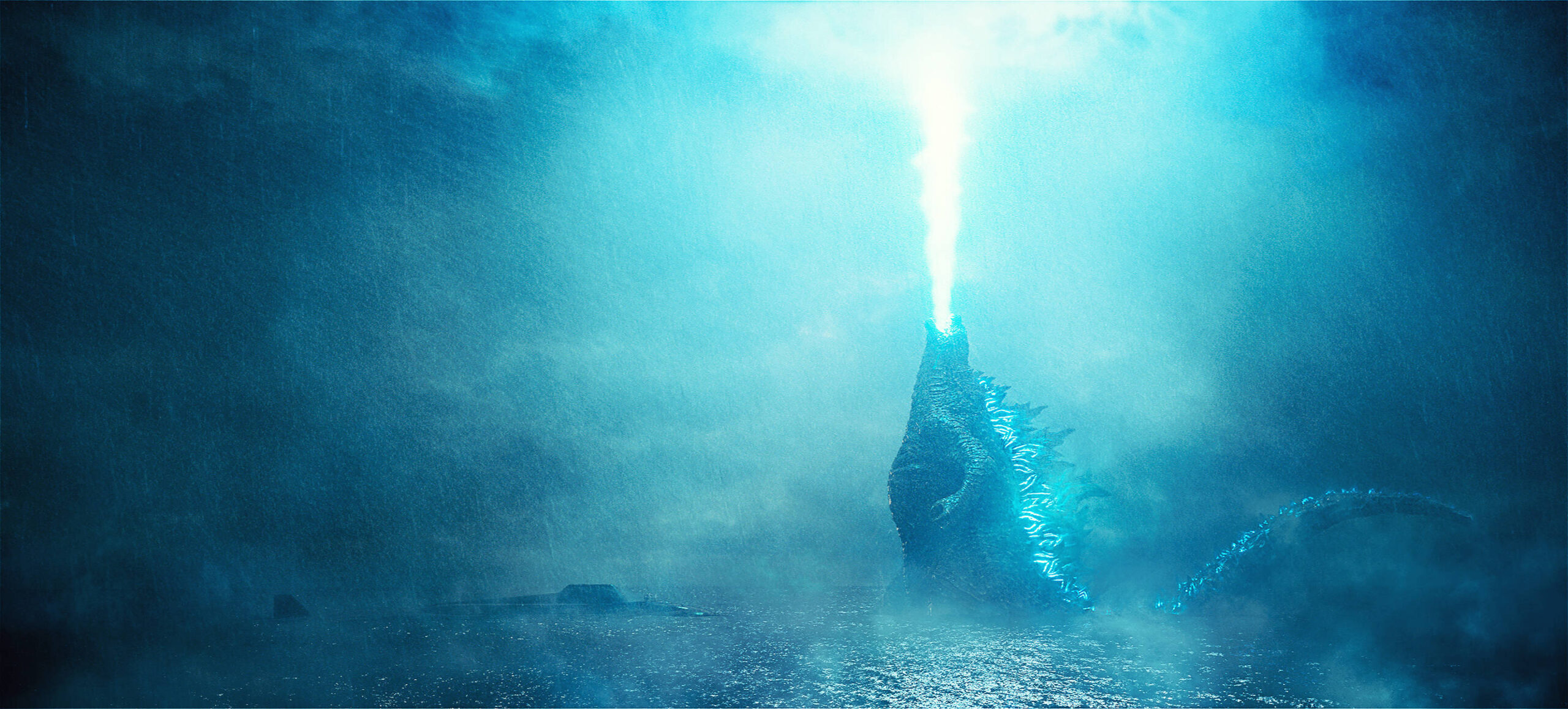
While 2014’s Godzilla mainly follows a bomb-squad specialist who wanders around aimlessly as an errand boy for the military, King of the Monsters beefs up the human plot. This outing features two factions of humans who have very different views and plans for Godzilla and the Titans—some with ulterior motives. The ensemble cast includes Vera Farmiga (The Conjuring), Kyle Chandler (First Man), Millie Bobby Brown (Stranger Things), Charles Dance (Game of Thrones) and Ken Watanabe, who reprises his role as Dr. Ishiro Serizawa. Also keep your eyes peeled for appearances by characters from other movies—this is a shared universe after all, and Dougherty expertly sprinkles them throughout. If you haven’t seen Kong: Skull Island, it’s highly recommended you do so, and keep mental notes of names.
It’s also very obvious that Dougherty is fond of the past Toho Godzilla movies and has a strong passion and respect for the source material—not just with their stories, but also with design. There are no experimental misfires here, such as the roided-out, iguana abomination seen in Roland Emmerich’s much-maligned Godzilla-by-name-only from 1998. While all of the Titans are given a modern makeover, they clearly resemble their past counterparts. Winks, nods, references and Easter eggs abound. I almost missed a major one myself upon first viewing, but I will say this: Fans of Mothra will scream with glee if they’re familiar with her original backstory. Loaded with atmosphere, dazzling monster-versus-monster action and a meatier story line than 2014*’s Godzilla*, Dougherty did his due diligence and listened to the fans. Even composer Bear McCreary delivers us the triumphant return of the classic Toho Godzilla theme, which is neatly infused into his score, providing a very welcome and much-needed dose of euphoric nostalgia.
While out promoting his new movie, Dougherty found time for a chat with Playboy about all things Godzilla. I talk to him about his fondness for the past Toho monster movies, how he picked Godzilla’s adversaries—as well as why some didn’t make the cut—and his thoughts on cinematic universes.
First of all, I want to thank you for not pulling a Bryan Cranston on us and killing off the best character within the first 40 minutes of the movie.
[Laughs] I guess that depends on who you consider the best character.
They’re all great. The cast is very colorful and diverse. I think this one has a nice balance between the human plot and monster action because with the last one, people complained that there wasn’t enough Godzilla and that the human plot line bogged things down.
It’s tricky. It’s always a tricky balance with the Godzilla movies. Some people want more monsters, but you have to have humans in there at some point for the audience to have a personal connection to. As much as I would love to make a Godzilla movie that’s pure monsters, we’re not there yet.
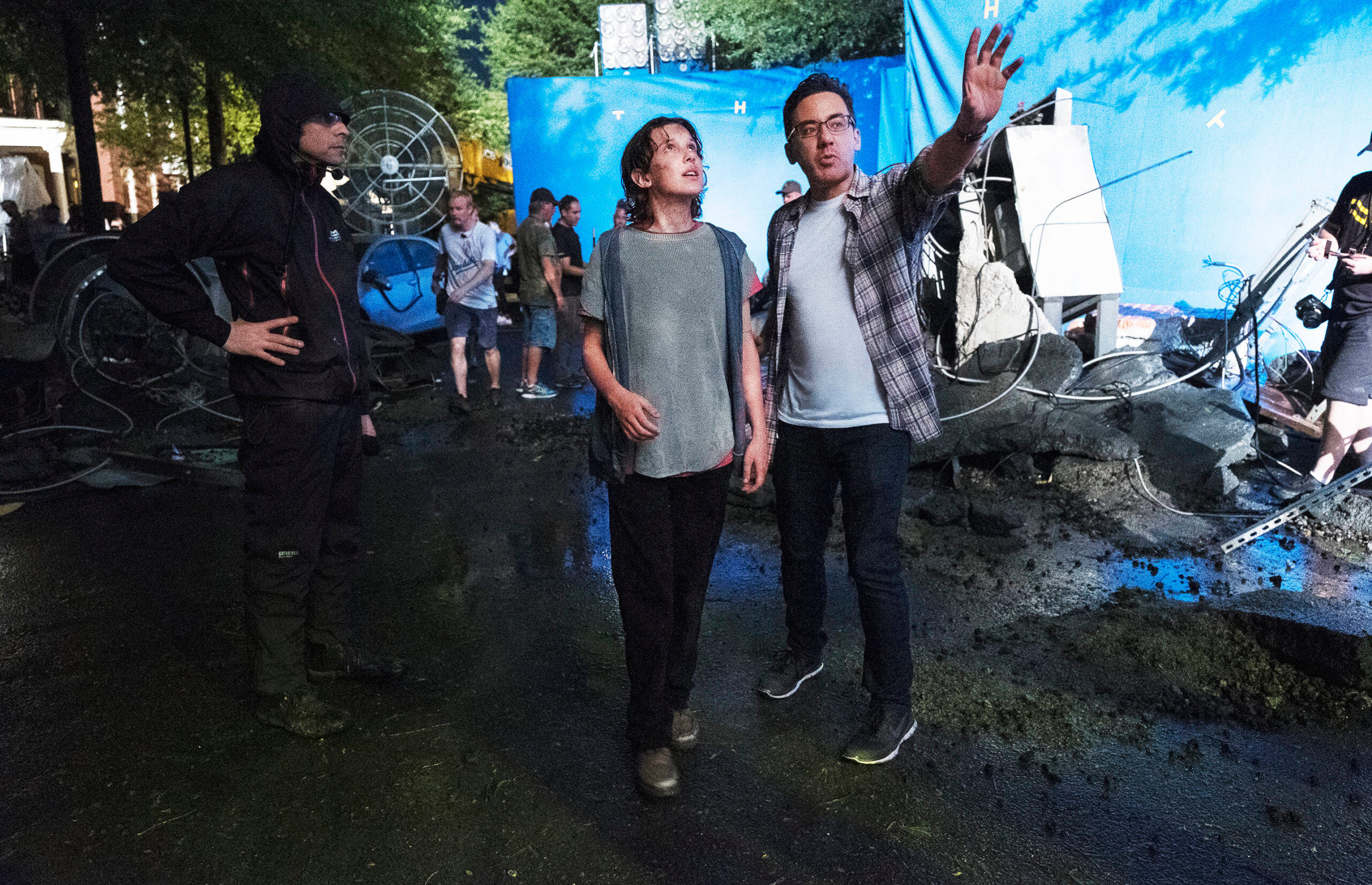
This is your third movie as a director, and this one in particular is your biggest spectacle yet. You’re also working with a beloved movie monster who has a 65-year movie history. Are you already bracing yourself for the onslaught of fanboy opinions? What’s your pre-release ritual for a movie like this?
I don’t actually have a pre-release ritual. Maybe it’s time to come up with one involving blood sacrifices or something similar. No, I just sort of buckle up and hold on tight. With every movie, I go on the same emotional roller coaster, whether it’s a big movie or a little movie. I pour as much of myself into them as I can. I’m always at the same level of nervousness and anxiety. At the same time, there is an excitement. I’m looking forward to unleashing this character into the world. As a fan, and I know I am biased, I think we did the character justice. Myself and my entire crew did everything we could to make sure we live up to his legacy.
In Trick ‘R Treat, your lead monster was the pint-sized Sam. In Krampus, your titular monster was about eight feet tall, and now you’re working with these 390-foot-plus Titans. It’s also your biggest, most effects-heavy movie that looks like it required way more attention to detail. Did this pose any new challenges for you as a director?
I feel like I am working on this monster growth chart of sorts—they just keep getting bigger. Again, it doesn’t matter if the movie is big or small, or if the monster is big or small—in the weirdest way, it is the same level of focus and intensity. I pour just as much love and care into my small monsters as I do my big ones. I care so much about every scale and every wrinkle, and I try to give them as much life and personality as possible. This one was definitely more of a marathon. It was over a three-and-a-half-year process. It’s always a long, crazy roller-coaster ride, no matter what the budget size is.
Godzilla seems to have gotten a lot bigger since his last appearance in 2014’s Godzilla. Was there a particular reason why you wanted to go even bigger?
[Laughs] Well, all organisms grow over time. There’s a tradition that Godzilla changes and tends to grow bigger each film. I think the record holder is still the anime Godzilla movie, where he’s like the size of a mountain, but that movie takes place in the far-off future. Godzilla is evolution in the flesh. He changes appearance and size in every film, so I just feel like we’re continuing that tradition.
Godzilla also had some wacky abilities in some of the older movies. Like in 1971’s Godzilla vs. Hedorah, he uses his atomic breath to hover and fly. You reinvent some of his old abilities in this film, which I won’t spoil, but were there any other crazy abilities you toyed with bringing back, or maybe inventing new ones?
Nothing beyond what appears in the film. We never considered making him fly, or hover, or use his breath in any inappropriate way, but I did want to make sure that I portrayed as many of Godzilla’s newish or unseen powers as possible.
It’s exciting that Mothra, Rodan and Ghidorah are back. There are a lot of other classic monsters that don’t seem to appear among all of these other new Titans. Some fans would like to see Anguirus back. Are there any other monsters you tried to bring into this movie, but maybe you just couldn’t nab the rights?
Yes and no. I mean, there are 17 creatures in this movie, and counting. I definitely toyed with the idea of having cameos with a few more. The issue is, every single one of the Toho creatures comes with a price tag. They all have their fees. So it’s a choice between, do you pay that fee? Or do you allocate that money for other priority issues? Ultimately, we decided that the crown jewels of the Toho universe—Godzilla, Mothra, Rodan and King Ghidorah—are enough for now, and then, who knows? Down the road, maybe we’ll tap into the larger pantheon. Also, adding new, original creatures was just as appealing as cameos from the classic ones.
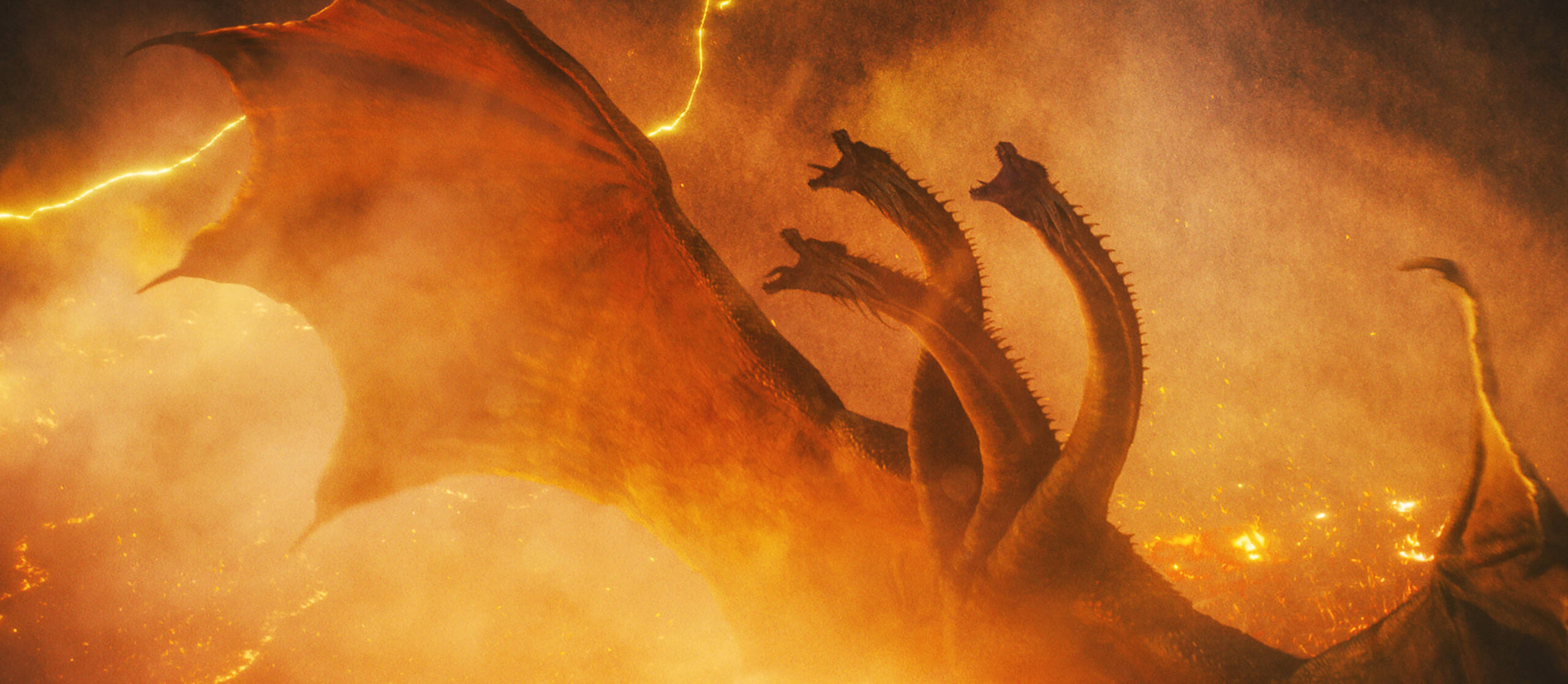
You definitely picked the cream of the crop. They fit in with what you guys are doing with this new universe, where a character like Jet Jaguar might be a bit tougher to pull off.
[Laughs] Well, actually, I don’t know. Theoretically, you could come up with a version of Jet Jaguar that works in this more grounded universe.
You brought on composer Bear McCreary, and it was a wise choice that he revived that classic, Toho Godzilla theme. It was the cherry on top that was sorely missing from the last film, and it makes it feel more like a Godzilla movie. Did you two know right away that you wanted to incorporate that theme?
It was a mandate from the very beginning to bring back the theme. That was a top priority. I feel like there are certain legacy titles like Godzilla, James Bond or Star Wars where the theme is inseparable from the success of the film itself. By not embracing or using the theme, it feels like a particular strain of the DNA is missing. I worked very close with McCreary to make sure that not only we got the rights, but also reintroduced it in a way that honored the original music.
Whose decision was it to do a new cover of Blue Oyster Cult’s “Godzilla” song? It was a nice touch, and I was not expecting to hear that during the end credits.
By the way, neither was I. That was a surprise gift from McCreary. The idea was always kind of floating around. During one of our review sessions, he didn’t even tell me he was going to do it. He snuck off and did that as a complete surprise, and I couldn’t have been happier the first time I heard it. Much like Godzilla himself, it’s the perfect mix of Eastern and Western cultures coming together because he wove in this Japanese chanting with the track. I think it’s a perfect synergy.
There’s a Godzilla vs. Kong film in the works. Can you tell us how involved you are with that?
My writing partner is back, and I did a rewrite on it. Nothing too intense, but we’ve definitely had some creative involvement. But that’s mostly been in director Adam Wingard’s very capable hands.
So there’s a lot of shared cinematic universes going on in Hollywood right now. Aside from superhero movies, we have this new Godzilla “monsterverse” in the works. What are your thoughts on people claiming there’s superhero fatigue or that everyone is cashing in and doing their own shared universes right now?
If there was superhero fatigue, we sure as hell are not seeing signs of it. [Laughs] I mean, they’re all doing pretty well for themselves, and I couldn’t be happier. My local theater looks more like my childhood bedroom, in terms of entertainment selection. So, I’m all for it. As far as cinematic universes are concerned, I love it. What people seem to forget is that Toho and the Godzilla films were the pioneers of the concept. Obviously, the black-and-white Universal monster movies dipped their toes in the water first, but Toho really grabbed the concept and ran with it. Mothra, Rodan, Godzilla and King Ghidorah were some of the very first, giant crossover films. Toho was really a pioneer as far as cinematic universes are concerned. Marvel came along and did it brilliantly for the modern age, but I feel like we’ve come full circle with the monsterverse.
Whether it’s writing, producing, or directing, do you see yourself involved with Godzilla movies beyond this next Godzilla vs. Kong movie?
I need a vacation first. [Laughs] I need some time off from Monster Island before I can really say, but it’s definitely appealing. I love these monsters. They’re true characters to me. Who knows? Maybe I’ll throw another monster party down the road.