

Your bag is empty.

The godfather of erotic film talks to Playboy about the poetry involved in desire.
If you asked an Italian who the director of erotic cinema is, the answer would be only one name: Tinto Brass. A free and provocative auteur, he turned the body and desire into a language through which to expose social hypocrisy. Born in Milan and deeply connected to Venice, after his experience at the Cinémathèque française in Paris he made his directorial debut with Chi lavora è perduto and went on to make works such as The Key, Miranda and Paprika. To those who, in his films, “see nothing but asses,” he replies with attacks on bourgeois respectability and the taboos of a conformist, moralistic society, defending his idea of cinema to the very end.
Today, his eyes still have the brightness and curiosity of another time. He is waiting for me at his home in the countryside near Rome, in Isola Farnese, among soft hills that seem to calm the soul. He is seated in an armchair, with a blanket over his legs and his usual cigar between his fingers. Behind him is a bookcase filled with posters, awards and still photographs. On the coffee table is a photograph of Caterina Varzi, his wife and muse, who welcomes me warmly. Outside are the garden and the patio where, two months ago, he celebrated his 93rd birthday with his closest friends.
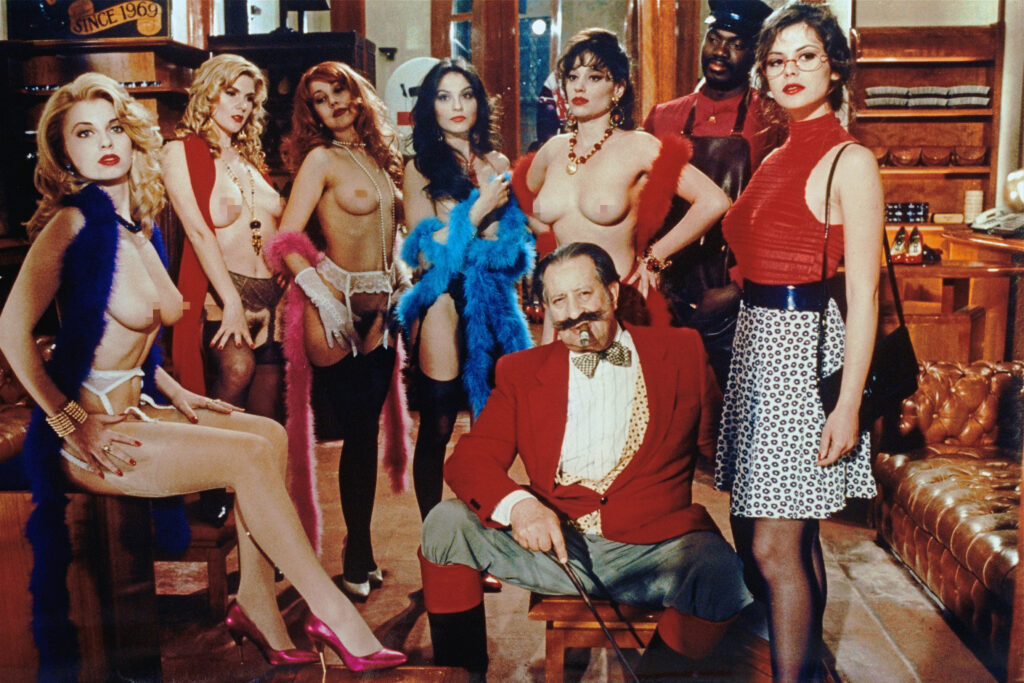
I have always been an optimist. I have tried to see the good side of things, making mistakes often, but always with passion. I disown nothing and I have no regrets. Caterina helped me recover parts of my memory that I had lost and, in rereading the past, I rediscovered the intensity of many moments. With her, my present continues to come alive.
I returned to Rome without remembering my life, my films, or the actresses, and without being able to read, write, or speak normally. Caterina rebuilt the past with me through photographs, screenplays, articles, music, and a patient process of repetition. At first, I did not even recognize the actresses who had been among my most beloved: Stefania Sandrelli, Serena Grandi and Anna Ammirati. But a phone call from Paris revealed that I could still speak French fluently: foreign languages became a bridge for communication. Memory returned as a web of images and associations, without following chronological order, and the book was born as a free montage of imperfect frames.
Enormously. I grew up among Tintoretto, Titian, [Giovanni Battista] Tiepolo, Canaletto, [Francesco] Guardi, [Pietro] Longhi, [Alessandro] Magnasco, and my grandfather’s paintings. In the abbey, restored by my grandfather Italico and transformed into the space for his collection, I breathed art every day; it was there that Tintoretto had worked on Paradise, and my father organized concerts there. Italico was also a traveler, a painter of the Great War and a set designer of the Grand Canal. He passed on to me a figurative sensibility and the idea of the artist as a worker. That world is where my cinema comes from: more visual than narrative, with its search for bodies full of flesh, warmth and humanity.
With very distant images and sensations: my mother glimpsed half-naked, the maids I would spy on, the sound of pee, and my curiosity about the female body. They were not ideas yet, but original experiences of the gaze that would return in the films, feeding voyeurism and my way of portraying desire.
Today I see many products and few films, a product comes from industry, a film from an author.
My father was authoritarian and fascist; his rules represented a domestic form of power for me. My mother was beautiful, but submissive to her husband and lacking confidence in me. We sat together at the table without speaking, and I do not remember hugs or caresses. When I was thrown out, my father had the lock changed. That rupture was painful, but it marked the beginning of my independence: I finished my studies with my mother’s help, wrote to [filmmaker Luis] Buñuel, went to live on Giudecca with [late wife] Carla Cipriani, and then left for Paris.
The prohibition awakened my curiosity. I found erotic books there, including Lady Chatterley’s Lover, which made me understand how desire, imagination, and freedom could be instruments of knowledge. “Coito ergo sum” means that existence should not only be thought, but lived through the body and experience.
I left with a trunk, my clothes and my self-portrait, without money or certainties. I found freedom. I spent time with Godard, Truffaut, Rivette and the other authors of the Nouvelle Vague, often at night in brasseries. Henri Langlois and Mary Meerson taught me that preserving and showing films means creating the future. There, I understood that cinema did not have to obey morality, the market, or respectability.
From Ivens I learned to see documentary and editing as forms of thought. With him, I shot a work in Lucania about poverty that [Radiotelevisione italiana] did not broadcast in full; as I remember it, the copies were destroyed, except for the one I took from the editing room. I edited Rossellini’s documentary on India at night: he was, like Ivens, a great master. Antonioni was also a friend with whom I played ping-pong, letting him win because he could not stand losing.
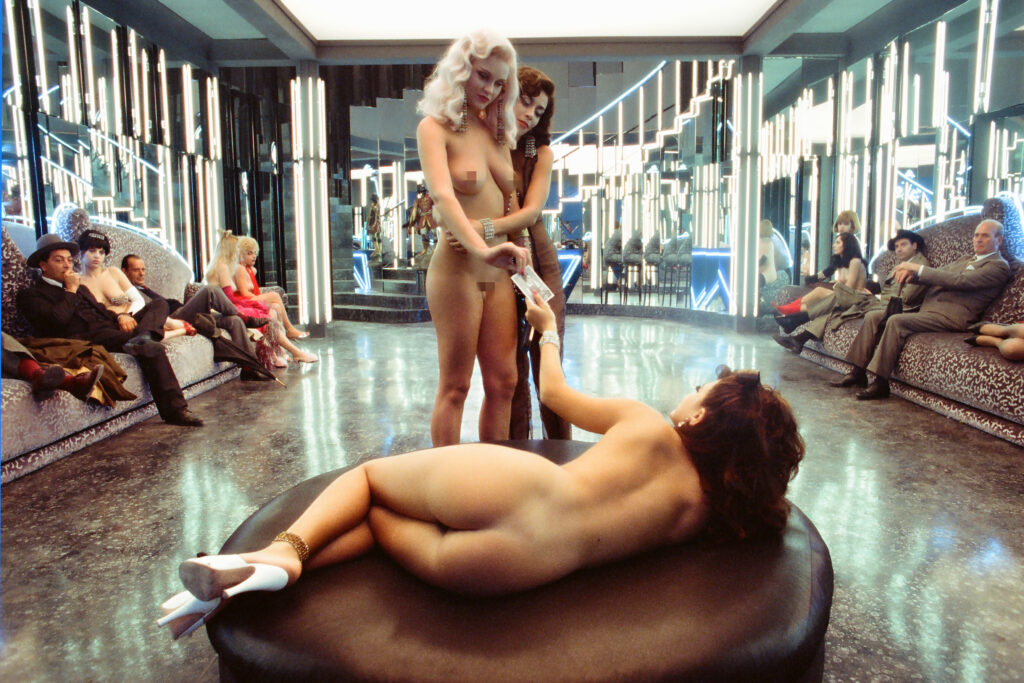
There is no fracture in my films. I have always been interested in language. The early films expressed my intolerance of power directly; the erotic ones transfer that same rebellion onto the body and desire. For me, what matters is the how, meaning is born from form, editing, color, rhythm, and sound. Today I see many products and few films, a product comes from industry, a film from an author.
Yes, it remains my cry against hypocrisy. I wanted to give body to the revolutionary moods of the time, to portray my eroticism and to experiment with language. To make it, according to my memory, I gave up the possibility of working on A Clockwork Orange, which was later entrusted to [Stanley] Kubrick. I have no regrets, that creative anger was authentic.
It was my best enemy. Every time it tried to gag me, I found a subtler, more ironic and more subversive way to say the same things. Prohibition stimulates the imagination, which is the essence of eroticism. With In capo al mondo, the conflict even reached Parliament, where Communist and Socialist deputies challenged censorship criteria still linked to fascist legislation.
We live in permanent pornography, where the body is consumed. What eroticism lacks today is poetry.
With performers such as Alberto Sordi, Monica Vitti, Vanessa Redgrave and Franco Nero, I tried to build an autonomous visual device, rather than simply serving the acting. After Chi lavora è perduto, I accepted Il disco volante mainly because of Silvana Mangano, with whom I was in love. With producers, the conflict instead concerned control: they saw the film as an investment, I saw it as the work of an author.
It is undisciplined and cannot be confined within boundaries. Orgasm is loss of control and naked truth; a free individual is dangerous to any system. Today the real transgression is slowness, intimacy, and not showing everything. We live in permanent pornography, where the body is consumed. What eroticism lacks today is poetry: it is mystery, anticipation, play and the narration of desire. Dear bigots, you have missed out on so much life!
Eroticism is joy of life, pleasure, play. I have never understood why it should be serious, guilty or painful. Irony is the orgasm of intelligence. I wanted to laugh with the audience and make pleasure something to be shared.
Sex was meant to express that political madness and the ability of power to destroy both those who exercise it and those who suffer it. Penthouse offered means and apparent freedom. Malcolm McDowell had the energy needed for the character; with Gore Vidal, what divided us was method, because he defended the text while I defended the direction. Bob Guccione excluded me from the editing and added pornographic scenes that I had not directed. I recognize the material I shot and the original idea, not the final result.
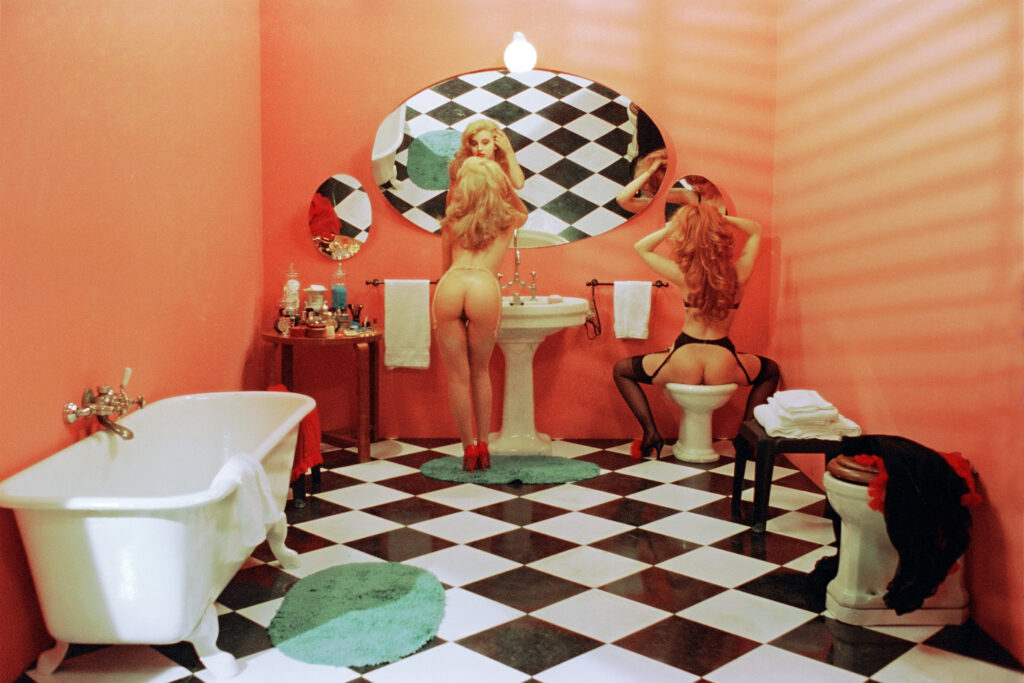
In language, not in the amount of nudity. Eroticism leaves room for imagination, anticipation, ambiguity, and form; industrial pornography reduces the body to performance and consumption. After that experience, I returned with Action to a poor, improvised and experimental cinema, pouring into it the anger of having lost control over the work.
It is an act of love: attention, desire, and wonder. I film as I caress, and the camera is my eye in love. Through diaries, jealousy, photography, and betrayal, I portrayed desire as a force against old age, death, and fascist morality. Venice was the ideal place, with its masks, water ,and reflections; Stefania Sandrelli had a concrete, intelligent, and mysterious femininity.
I was looking for vitality and the ability to inhabit the body without shame, not conventional perfection. They often know their own desire and direct the game. Snack Bar Budapest shows that I never abandoned experimentation; L’uomo che guarda explores voyeurism; Così fan tutte turns betrayal into fantasy and freedom; Senso ’45 links eros with the collapse of fascism.
The public has always been my accomplice, even when critics confused play with superficiality. Caterina rebuilt my personal memory and today takes care of my cinematic one: she knows every film and every note, but above all the deeper meaning of my work. She does not preserve in order to close, but in order to keep alive. The label of erotic filmmaker weighs on me when it erases everything else: politics, editing, and experimentation.
The body reveals what the face can hide. I have lost memories and abilities, but not irony or the desire to keep imagining projects. Television and social media have expanded some personal freedoms, but reduced the spaces of personality. That is why I continue to imagine non-conformist forms, even remote directing and a film based on Una passione libera: an author only stops when he gives up his gaze.