Your bag is empty.
The pioneer of pop surrealism takes his "Cosmic Caverns" Beyond the Streets
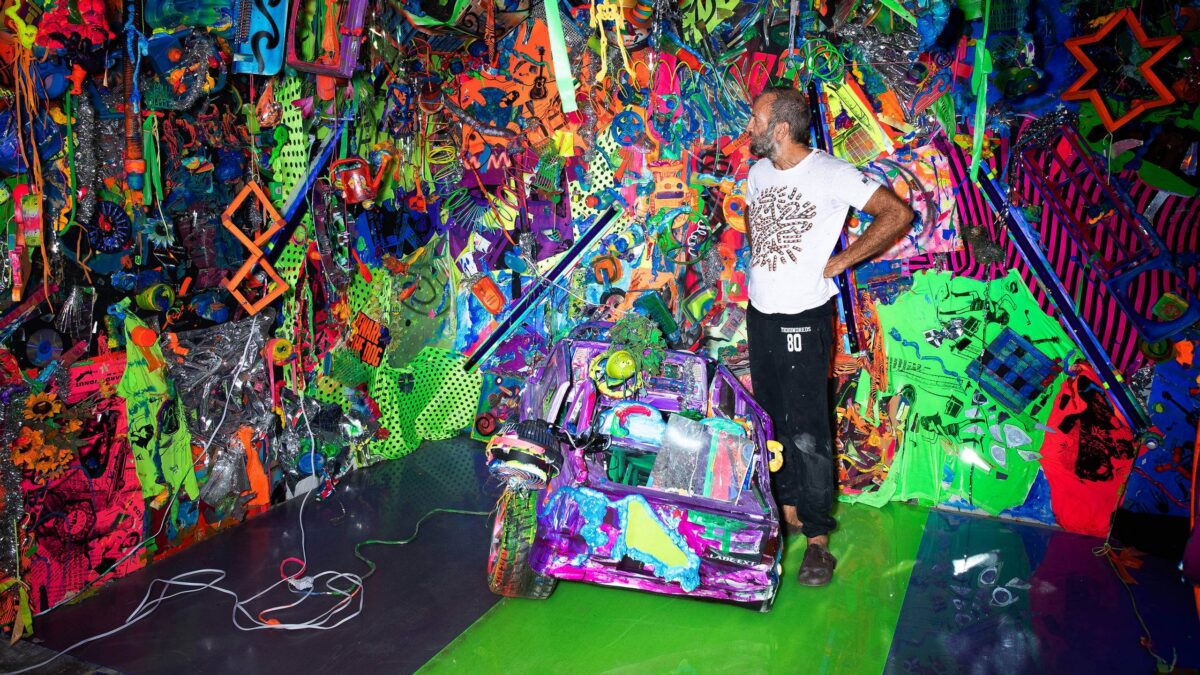
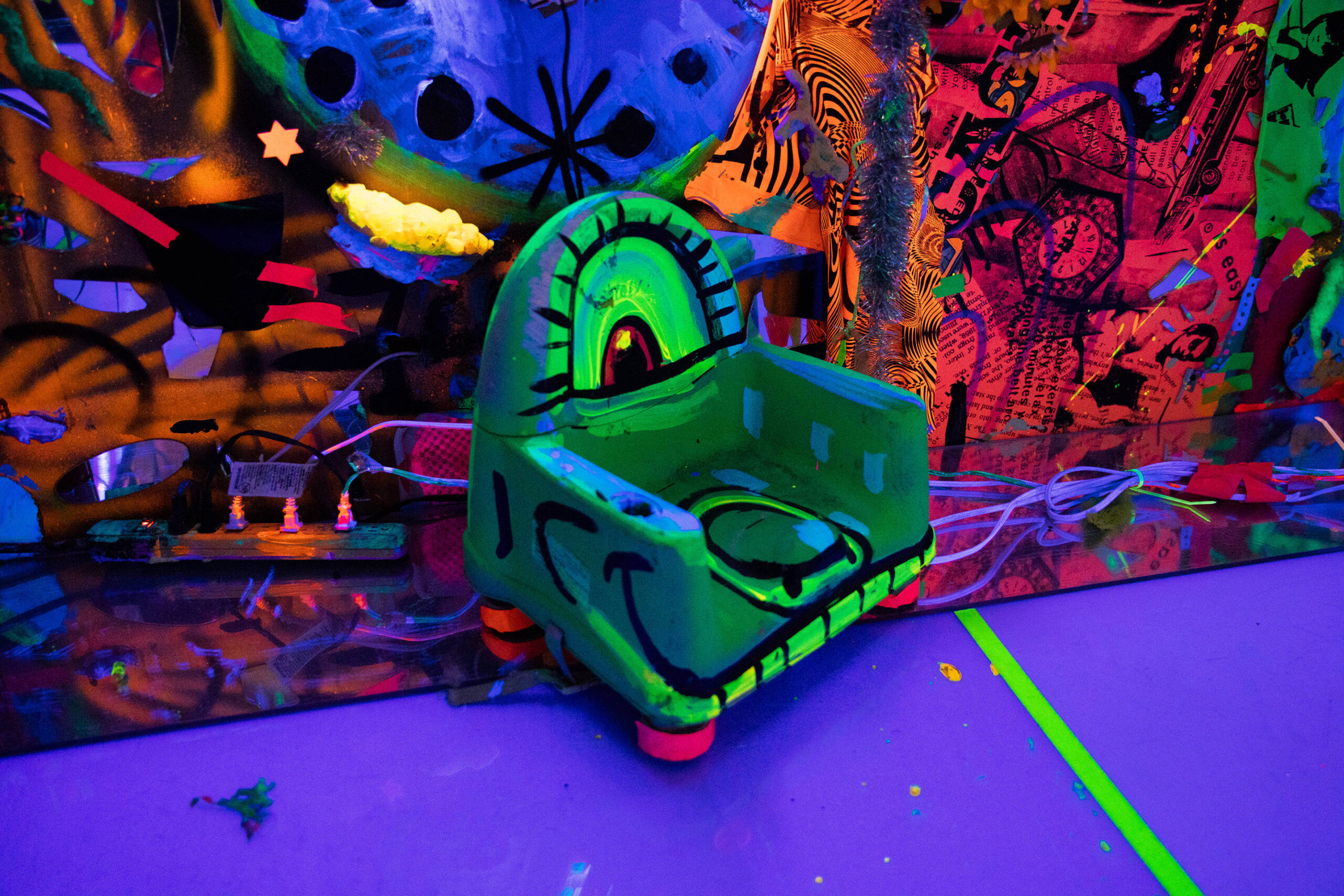
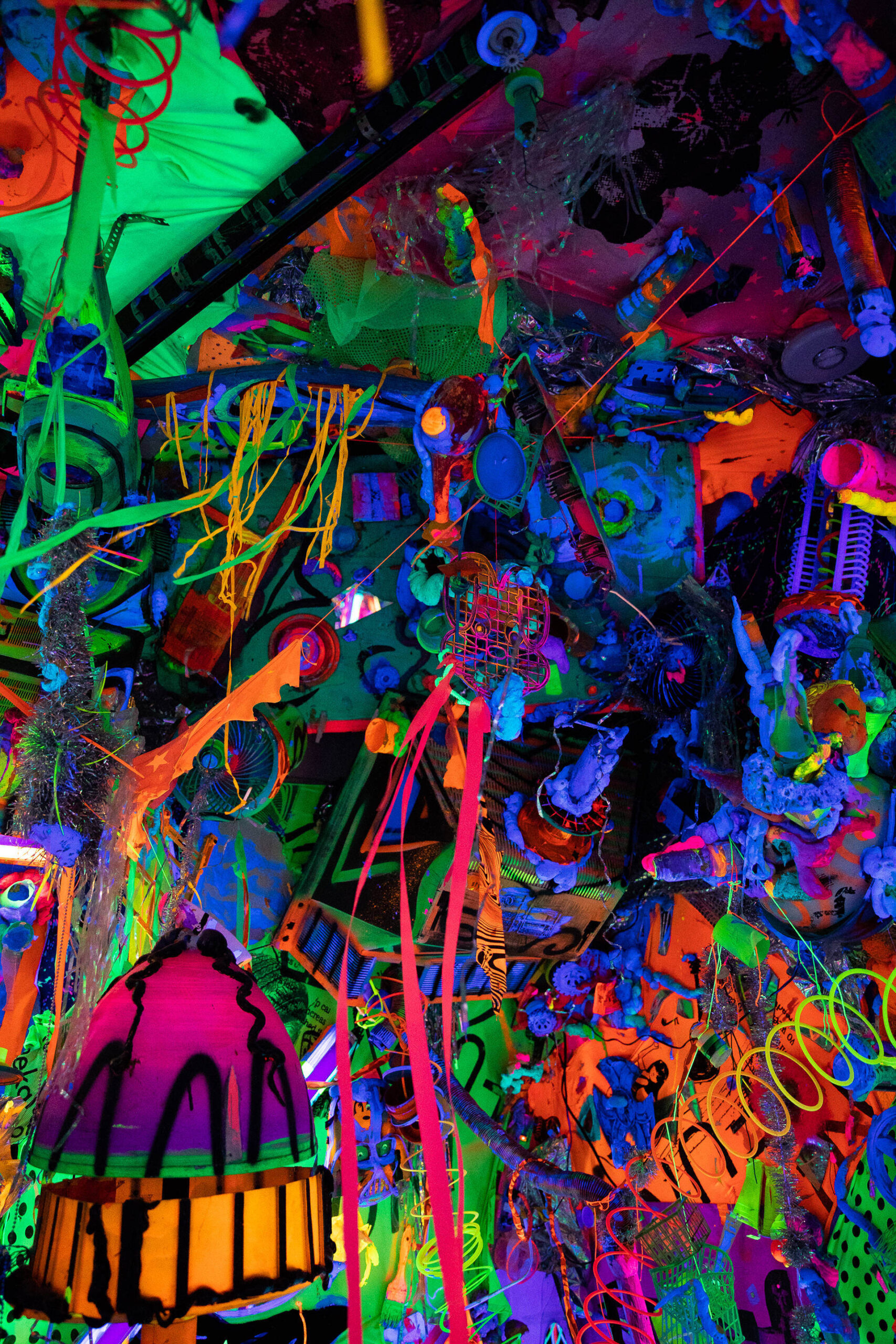
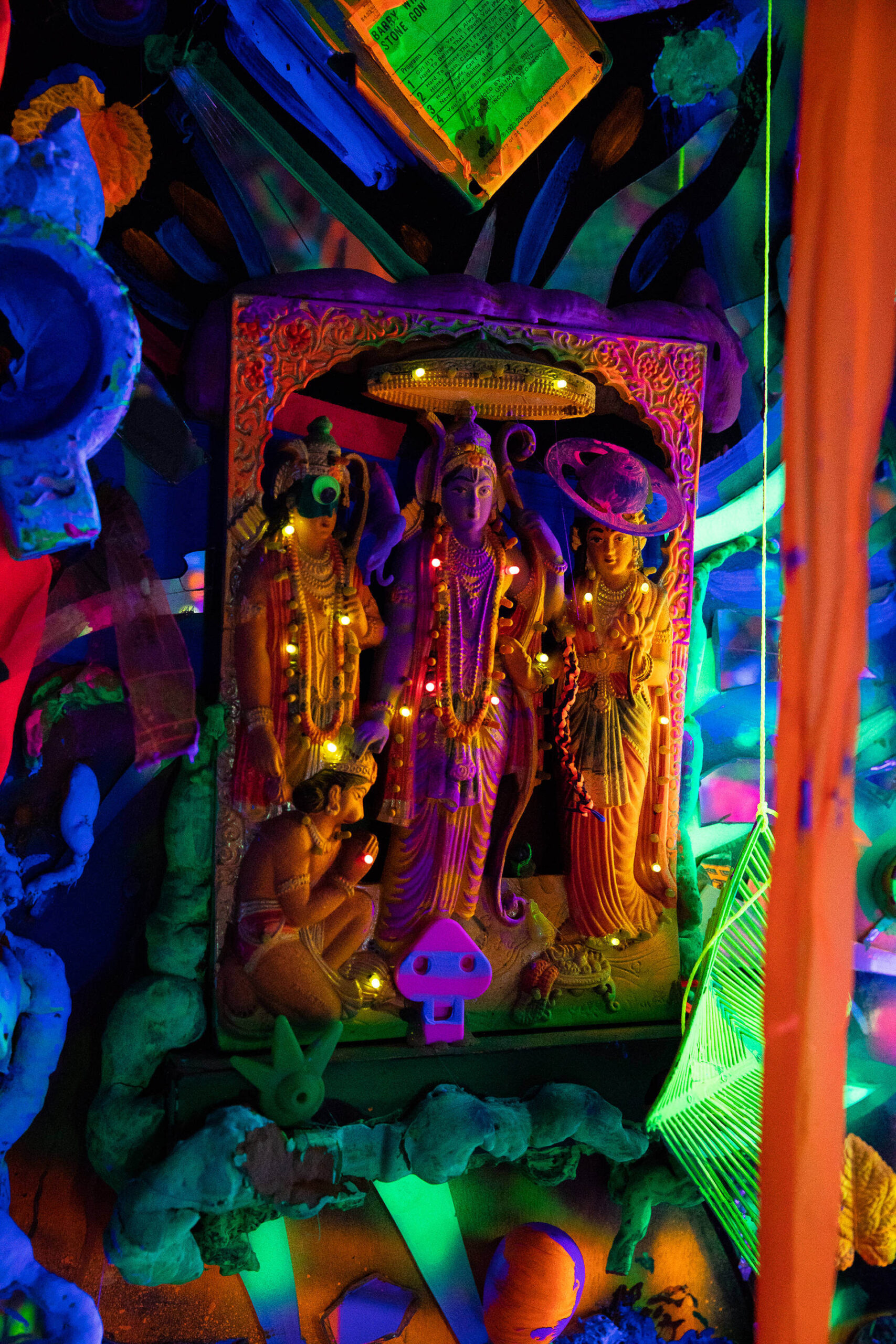
After crossing a vestibule vibrating with a cheerful soundtrack of saws and hammers, I reach the entrance to a glowing womb in the heart of downtown Los Angeles. Inside, the 1979 disco hit “We Got the Funk” reverberates from walls that have been constructed from trash and plastic, soaked in neon Day-Glo, and bathed in black light. A fluorescent rainbow-striped pool chaise lounges in the center of the small cave; a purple pint-sized convertible jeep is parked in one corner; a chandelier fashioned from tennis ball-colored keg cups perches above a matching armchair in another. A disco ball holds court over it all.
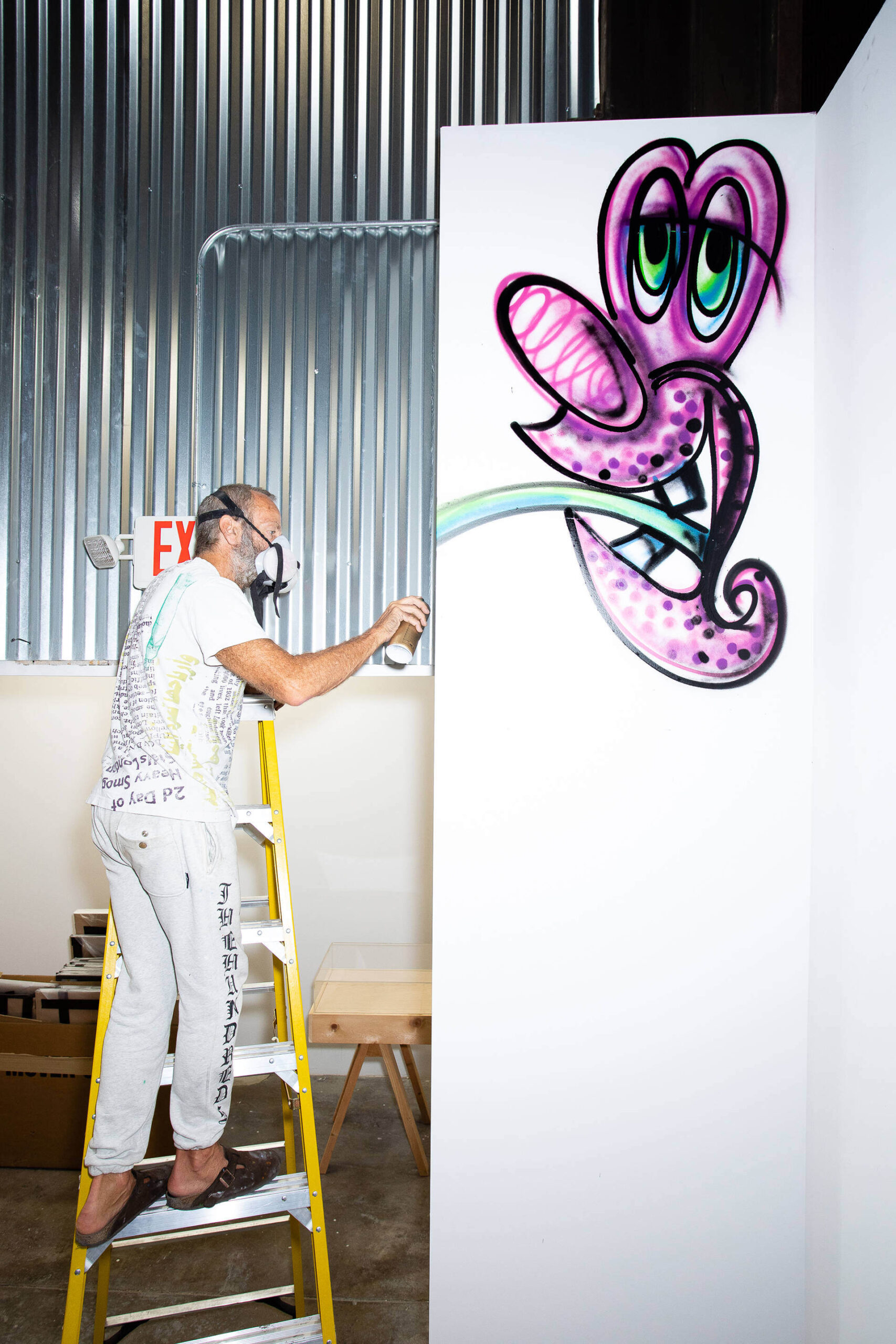
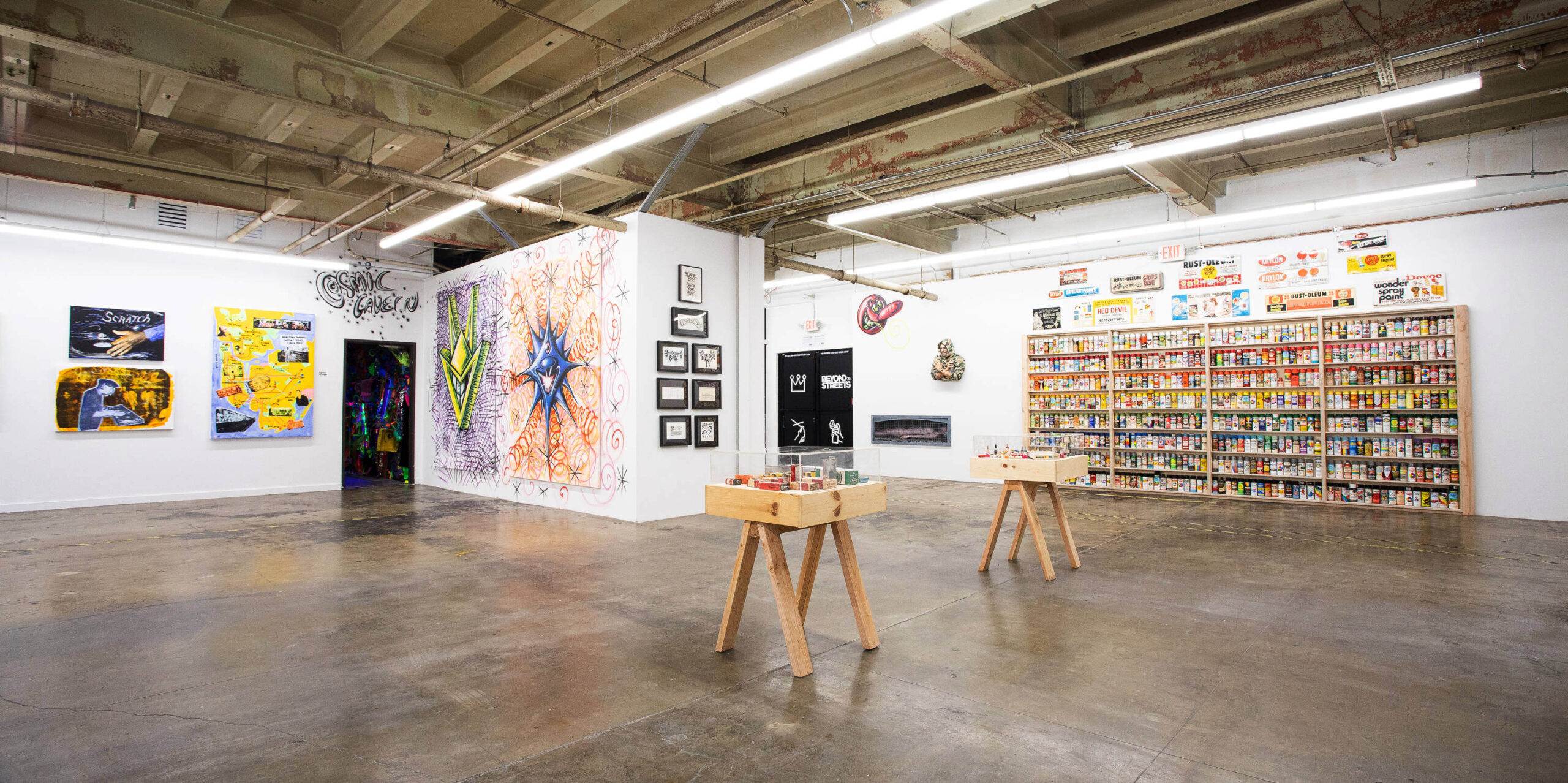
The psychedelic universe is Kenny Scharf’s “Cosmic Cavern”, and this isn’t Kenny’s first disco. In spite of an intrinsic Instagram value rivaled only by Yayoi Kusama’s “Infinity Mirrors”, Scharf’s creation actually predates the internet. I’m meeting Scharf here to give me a behind-the-scenes look at what he’s created as part of the mega-exhibit, Beyond the Streets. The sprawling contemporary art exhibit, curated by Roger Gastman, is housed in a 40,000-square-foot, ecru-colored warehouse marked with a blue sign reading “Fu Yuan International Inc: Oriental Arts & Crafts Importer Wholesaler”. The exterior of the venue, which is actually named Werkhartz, is the outer skin of an onion that Gastman, a respected graffiti historian, has carefully layered with miniature worlds spawned from the imaginations of Scharf, as well as 99 other artists, in his street art tour de force set to live on in Los Angeles through August before moving on to other cities throughout the country.
Hatched as an inspired plan to make rent, Scharf’s “Cavern” is the aesthetic offspring of the trippy club culture that permeated New York City nightlife in the 1980s at the same time that Scharf— alongside Jean-Michel Basquiat, Jenny Holzer and Keith Haring—was shaping the East Village art scene with his color wheels of melting Gumbys and other fantastical visions inspired by outer space, nature, Googie architecture and The Jetsons.
Though Scharf would eventually be invited to exhibit his work everywhere from the Whitney Museum of Art to the Hole to the pages of Playboy, galleries back then weren’t ready for his pop surrealist fantasies. So, he took his work to the streets. “I never professed to be a graffiti artist, nor a street artist,” Scharf told Gastman in a recent interview for a Beyond the Streets companion book. “Art people weren’t interested in looking at my work…I wanted them to have no choice but to see me.”
And they would see him. When Scharf debuted his first rendition of the dance-ready “Cavern” in 1981, he charged $5 to enter the closet of the Times Square apartment he shared with Haring—and it was a smash hit. The “Cavern” has spent the four decades since graduating to progressively larger closets, holding pop-up-residencies everywhere from the Whitney Biennial to Scharf’s former Bushwick basement. It has even been adapted for other mediums, including a Rizzoli monograph and a VR experience.
It is the career-defining work of an artist who has mastered transforming the old into the new. But aside from its Instagram currency, how exactly has the “Cavern”, or Scharf’s career for that matter, remained relevant for 40-plus years? One reason is because the neon forest is, like the exterior of the Werhartz venue, an unassuming shell for something more profound. “My art has a veneer of fun and color, but if you want to look a little deeper under the surface, there’s a lot of content.”
“Art people weren’t interested in looking at my work…I wanted them to have no choice but to see me.”
Scharf and I have just wrapped up a private tour of Beyond the Streets with Gastman. Now the artist and I face each other cross-legged on the carpeted floor of a small house, below a painting of Homer Simpson, cast as a futuristic penis, going head to head with one of his donuts. It is by Los Angeles-based artist Kristofferson San Pablo, who counts Scharf as a fan. “My subject matter since I was a little kid hasn’t really changed,” says Scharf, who is wearing a new anorak peppered with red mushrooms that look like they could belong in one of his paintings. “I’m into the idea of the future. I’m into cartoons. I’m into nature—flowers, insects, bees.”
Another thing Scharf has always been into is the serious side of beautiful worlds, especially the health of the planet, a byproduct of coming of age in southern California during the ecology movement in the 1960s and ’70s. “I grew up in the valley. When I was a kid, the air pollution would be so bad that you could barely keep your eyes open,” he remembers. “My lungs would ache and you could see this brown layer [in the sky]. That made a really big impact on me.”
The artist’s concern for the environment plays a central role in his work. “I’ve been making sculpture out of beach garbage for 30 years now,” he says. “As I get older, I feel even more urgency about these obsessions,” he continues, citing global warming, the recent rollback of restrictions on tail pipe emissions, the petroleum industry and “the sea of plastic in our oceans” among them. His “obsessions” continue to be a relevant subtext for his fantastical worlds. “I’ve been putting these warning signs into my paintings” he says. This is why “99 percent” of every “Cosmic Cavern” is constructed from salvaged garbage, the majority of which is plastic, with an emphasis on non-biodegradable petroleum products.
Scharf’s piece fits well within the “cluster of stories,” as Gastman calls it, told by the international, multigenerational, multi-disciplinary roster in Beyond the Streets. The lineup features a mix of established and emerging artists who do or document graffiti. Highlights include a 40-foot-tall mural by Takashi Murakami; a full-scale church by FAILE (which was shipped from Lisbon in pieces); the pixelated hyper-color fantasies of Paper Rad’s Ben Jones; a floor-to-ceiling Dabs Myla triptych adorned with 3,000 flowers; a puppet installation by Paul Insect; and recreations of iconic institutions including Trash Records, Lee Quiñones’s handball court and the Venice skate park, original graffiti and all (Yes, its skate-able).
In spite of these nods to graffiti’s past, “This is not a historical show,” emphasizes Gastman. “It’s important artists that did true illegal work on the streets to be respected by their peers, not the new buzz street art world people that spent four months on the street and now they’re ‘artists.’” It is people who “love the culture and continue to push it and/or document it.”
“Kenny’s still doing it because he loves it, and he’s continued to inspire those artists. He’s running circles around people 20, 25 years old. And doing it well.”