Your bag is empty.
Legendary artist Spencer Tunick discusses #ReturnoftheNude ahead of its Melbourne debut
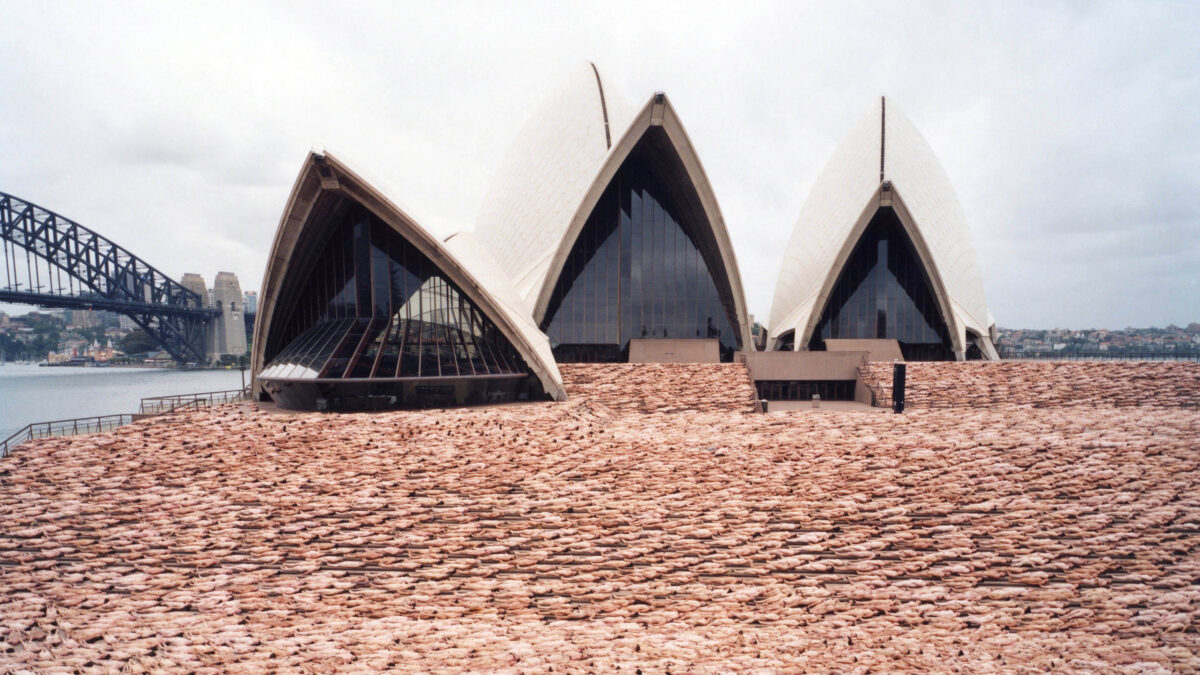
When artist-photographer Spencer Tunick was at SITE Santa Fe in 2001, he noticed an older woman, small in stature, telling the people gathered around his work all about it. “How does this woman know so much about my work? Who is she? Is it my mom?!” Tunick exclaims of his thinking at the time during our breakfast interview at Melbourne’s Como Hotel ahead of his next installation at the PROVOCARÉ Festival this week. “It turned out to be Justice [Ruth Bader] Ginsburg!”
Tunick’s work spans more than two decades, making international headlines in 2000 when New York City officials took umbrage with his public nude artworks, and, to court. All the way to the Supreme Court, where Justice Ginsburg was one of the judges who dismissed his case and sent it back to federal court, where Tunick eventually won on appeal. “The entire court was looking at nude photos,” he chuckles.
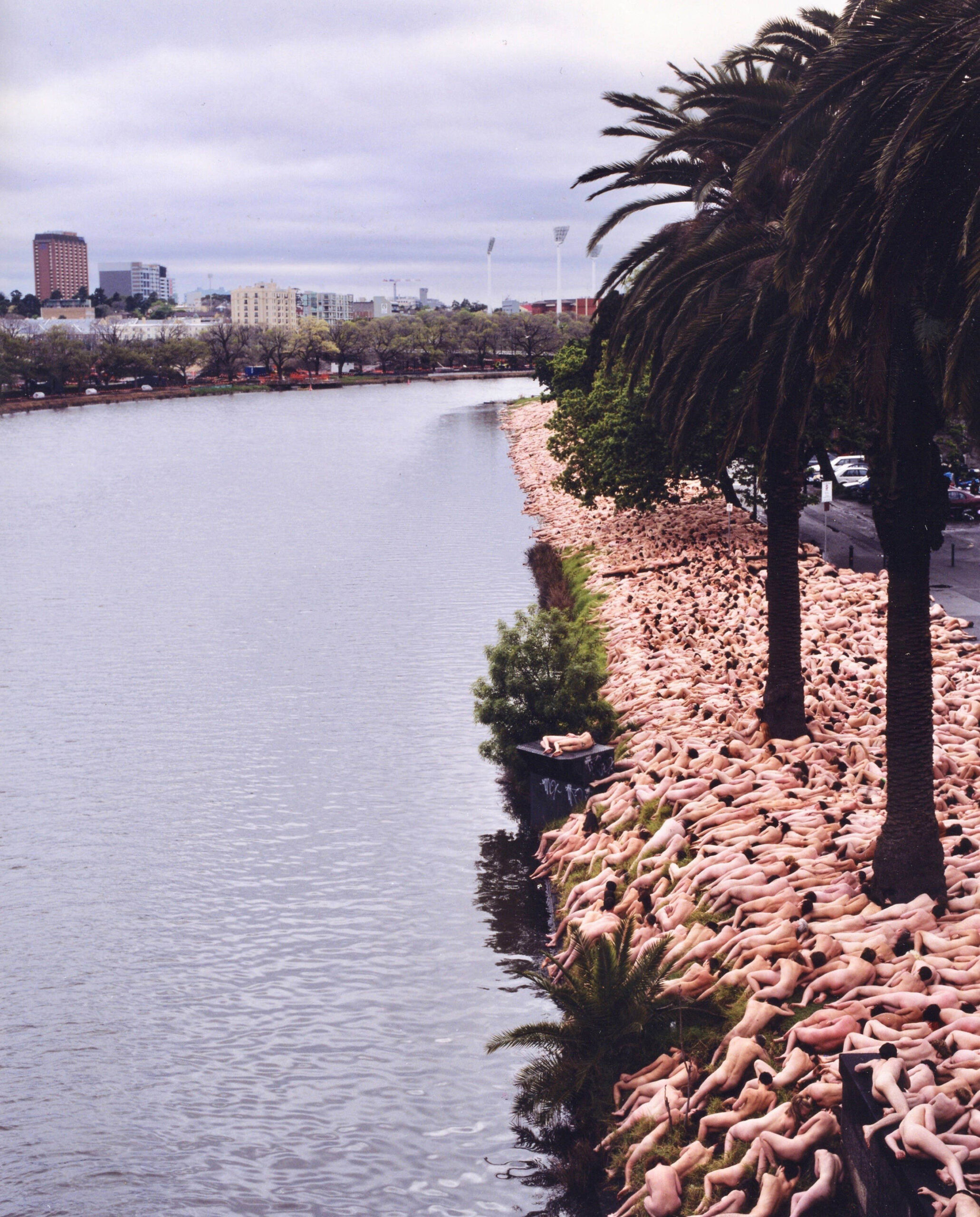
ReturnoftheNude is the name of the headlining artist’s presentation for the aforementioned Melboune festival in the Chapel Street precinct. The series includes two installations culminating in a mass display of hundreds of nude bodies at the pinnacle of an above ground parking garage. In the age of #FreeTheNipple and gratuitous nudity in real life and online, it would seem that this vision of a #ReturntotheNude is unnecessary—nudity evidently hasn’t gone anywhere. But Tunick explains that not only is the title of the work a reference to the “positive response I get” whenever he returns to Australia but “for me, [it] means a return to the body as an art object, as an honorable dignified entity. We live right now in a world where nudity is associated with money, crime or violence, not art.”
Still, even at the top of a festival’s billing, Tunick faces obstacles thanks to his controversial subject matter. Given the high traffic along Chapel Street and the presence of trolley wires which “would block my lift from going up and from getting a vantage point,” Tunick says, he “had to come up with ideas that fit a smaller area.” He picked a nearby garage owned by a supermarket. “No one thought it would be a problem because there were only four cars up there during the time that I was going to work,” he says. But it was. He and festival organizers had to get creative. “When somebody turns you down for something like that it’s very hard to get permission [again],” Tunick says, “so I thought that [PROVOCARÉ] should reach out to the press to see if public opinion could change the supermarket’s mind and they did… [It’s] very rare that a corporate entity says yes to the body nude in art. It would not happen in the U.S. because corporations are scared of sponsoring art installations with the naked body.”
The debut of #ReturnoftheNude, in the early days of a brisk Australian July, proves that the less-than-smooth road to the performance art was well worth it. As I shadowed Tunick from the penthouse of a nearby hotel, participants file into the much-protested structure draped in gauzy red veils evoking an apocalyptic look akin toHandmaid’s Tale’s heroines. But even after witnessing the haunting beauty that Tunick had produced, even asI passed the exhilarated participants descending from the parking garage on my way home, only time will tell whether Tunick’s vision—via his lens—would be fully realized.
Regardless, #ReturnoftheNude is a success in that it furthers the artist’s mission to combat societal stigma associated with a lack of clothing. “More people are creating celebrity identities with the use of nudity on Instagram, Facebook and Twitter and that’s all great,” he says. “I think the more nudity there is the more it pushes back against conservatism.” He wanted to make this series a multi-dimensional event, where not only the participants experience the art, but also the international social platform explorers, and future festival attendees. He encouraged around 1,000 #ReturnOfTheNude participants (from 12,000 responses) to post selfies and hashtag the event name. Later, visitors can experience the first installation, which took place in one of Melbourne’s famed laneways on Sunday, in virtual reality via an app.
“I think the more nudity there is the more it pushes back against conservatism.”
He pauses before going on: “At the same time I don’t want my kids seeing violent nudity on [social media]. So I disagree with censorship of the body but I also think it’s important to protect children against certain imagery.” Perhaps for this reason Tunick had some trepidation about being profiled by Playboy. “I think Playboy has been a very important part due to the cache and the money that backs their stance against conservatism and attacks against the body,” he is sure to say. “I think as far as free expression I think they’ve been very important it’s just that my work is about the everyday male and the everyday woman and all different body types. Sometimes it’s hard for me to see my work in magazines like Playboy so I’ve avoided being interviewed by them. But recently my friend Natalie White—who is working to ratify the ERA—was in Playboy, so I think they’re covering more progressive, women’s stances now. She was in the magazine and she’s a wonderful artist and activist for the equal rights amendment. That’s why I said yes [to this profile].”
And it has all seemingly come full circle. “My father was a Playboy [club] keyholder and collector,” Tunick exclaims. “He had a key to one of the Playboy clubs in Manhattan. As a kid he took me to the Great Gorge Playboy Club Hotel. It’s sort of a blur to me, I just remember big jacuzzis. I was 8.”
“It was a very simple and innocent approach, at that time, to the naked body…Like your parents walking around naked.” Conceivably a formative experience that shaped his attraction to the nude in his work, I wonder, though Tunick doesn’t believe so. “I just think there was a dialogue out there about the body that always wasn’t secretive and criminalized,” citing Yayoi Kusama and Carolee Schneemann as early influences.Following the recent publication of his books, Participant and Reaction Zone, and next month’s Bodø Biennale in Norway’s Arctic Circle, what’s next for Tunick? “I’d like to do an installation in D.C… I’ve been scouting D.C. for 20 years.”
His work has arguably always been political, and that is evident even more so in some of his recent works. “I’m out there to make work that expresses my inner feelings, but at the same time, if people who are participating can get something out of it, I’m happy to loan my work to other people’s freedom rights,” Tunick says.
He staged a protest of the Republican National Convention in 2016 in collaboration with his wife, Kristin Bowler, called “Everything She Says Means Everything“. Maybe his most diverse work up until #ReturnOfTheNude, which Tunick said he wanted to look like “a mosaic” of different ethnicities and genders, the installation featured the types of women who are most likely to be affected by the current administration, while he has photographed a nude Obama election celebration for his Party series. “If I could do a work of, let’s say, all Native American people forming a human pipeline that was a nude… I would love to be asked by some young artist to come and make a work that empowered their position,” he says.
“I’d like to do an installation in front of the Supreme Court, some works on the mall with the Capitol Building in the distance.” He’s basically been given the blessing by Ginsburg. Tunick says he “gave her a book of my work that I happened to have on me and she said to me, just don’t do it in front of the Supreme Court. And that was my message that she wants me to do it in front of the Supreme Court!”There’s no time like the present.