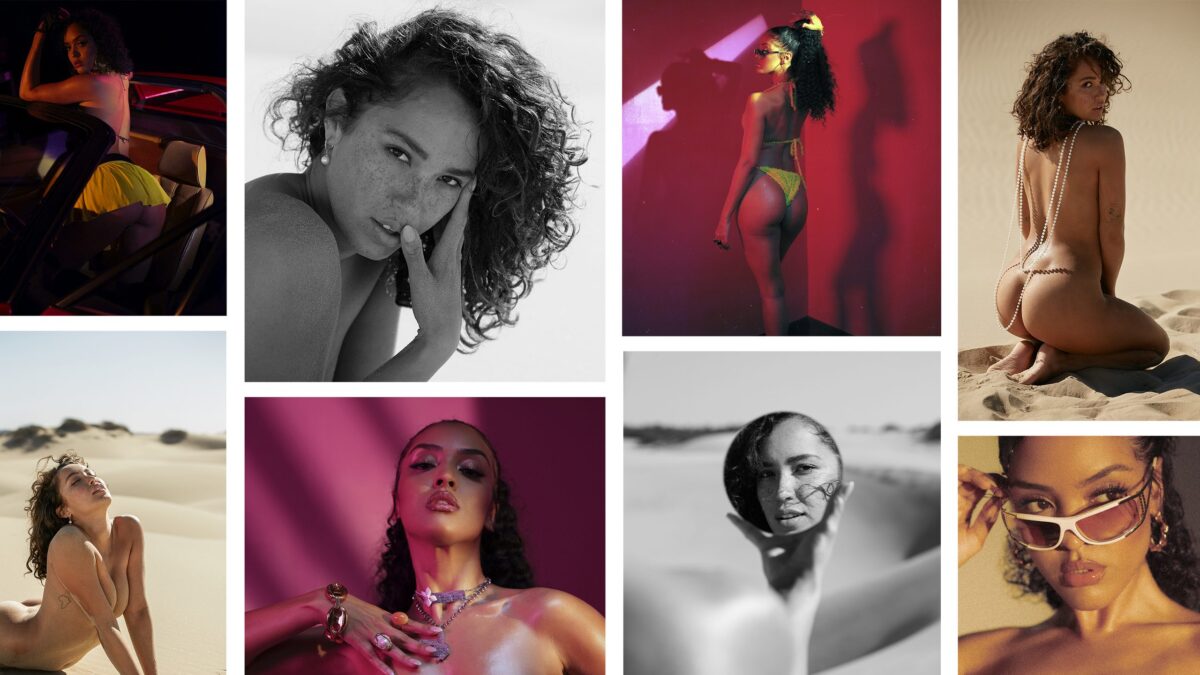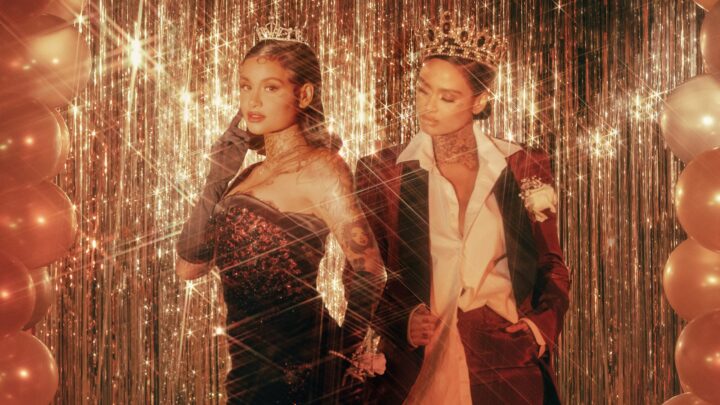
At Playboy we celebrate the beauty and talent of our diverse Playmates all year long. But for this February, we decided to shine a spotlight on two women who, despite coming from very different backgrounds, show the vibrancy of the Afro-Latina experience in the United States. With their culturally mixed heritage, April 2019 Playmate Fo Porter and Winter 2021 Playmate Izabela Guedes straddle the intersection of Latinidad and Blackness. Porter has a Mexican background while Guedes hails from Brazil. Through their very existence they push against the standards of who can be Latin and strike against the anti-Blackness that can run rampant in the culture.
For Black History Month, we brought these two powerful women together to talk about the freedom of being a sex symbol and the special meaning of being an Afro-Latina in a society that’s often been slow to recognize and uplift all forms of beauty.
For years, I was always getting outcast by the white girl with blonde hair.
PLAYBOY: How did you feel when you were announced as a Playmate? What did it mean to you?
GUEDES: My agent told me [Playboy] was watching me for a year. It’s crazy, because you think nobody’s seeing you, but everyone is watching. At the end of the day, you’re inspiring somebody. When the casting manager at Playboy called me to give me the news, I was so happy. I couldn’t believe it. It’s such an important magazine. It’s iconic.
PORTER: When I was chosen, I was hit up on Instagram. One of my really good friends is 2017 Playmate of the Year Brook Power. I was telling my husband, “That’s boss. I want to be in Playboy.” Two weeks later, that little blue emblem showed up in my DMs with “Playboy” next to it. They were asking, “Do you want to be part of the crew?” When I got the announcement I was crying the whole day. I was on cloud nine.
PLAYBOY: What does Black History Month mean to you? Is there a special way you observe it?
GUEDES: I just got [to the United States] four years ago, and that’s when I found out about Black History Month. We don’t celebrate it in Brazil, which is just crazy because more than half the population is Black. But I think it’s cool; it’s important. I make sure to post stuff since I have a big following. I’m always using my platform to educate people and show them what’s going on.

PORTER: I didn’t know I was Black until I was seven years old. I always thought I was Mexicana. My mom is from Mexico and my dad wasn’t in the picture in the beginning, so I just didn’t know. Finding out I was Black was this whole mind explosion. When it comes to Black History Month, I remember being a kid and being like, “Oh, my god, I’m Black. I get to celebrate this.” I love being able to identify with people and being relatable to people who were underrepresented for so long. Just to be Afro-Latina is a beautiful, beautiful thing.
PLAYBOY: Both of you live at a very special intersection of Blackness and Latinness. What challenges have you faced because of that identity?
GUEDES: It’s kind of complicated. In Brazil, we’re all so mixed. My mom is mixed, my dad is mixed, everyone is mixed. I have to do a DNA test because I don’t even know what’s up. But because of colorism, people with lighter skin get more opportunities and get treated better. I remember when I had dreads, I went to this restaurant in Brazil and they didn’t let me in. But if I have my hair straight, people look at me differently. It’s always been complicated.
PORTER: Growing up, being both was such a beautiful experience—but I also experienced the negativity. Was I treated negatively because of my skin? Yeah. Did I let it affect me? No. I have freckles. I look way different than most people. It was a challenge, but I would never change it for the world. My ancestry is Indigenous America, Mexico, Portugal, Cameroon, Nigeria, Spain, Mali, Scotland, Colombia and Venezuela. I even have the Carolinas. It’s all so beautiful and mixed. I just started realizing the term “Afro-Latina” last year, and I feel it fullheartedly. I have a tattoo of a senorita on my arm, and I’m going to put an Afro goddess next to her.
Your body is a temple and sometimes your temple wants dick, sometimes your temple wants pussy.
PLAYBOY: Do you feel that Afro-Latino representation is improving in the entertainment industry, or is it still a huge blind spot for Hollywood?
GUEDES: It could be better at this point; it could be way better. But I had to move here from Brazil to work, because in Brazil all they want is really skinny girls or blonde chicks. I couldn’t find work. But when I moved to America it got way easier.
PORTER: I agree 100 percent. Here in Los Angeles, for years, I was always getting outcast by the white girl with blonde hair. But now it’s changed so drastically. Once everybody is on track with you, I think everything works so well together.
PLAYBOY: Let’s talk about sex a little bit. As Playmates, you become sex symbols for so many people. What tips would you give to women who want to sexually empower themselves and own their bodies?
PORTER: It’s important from a young age to be comfortable with your body and know there’s nothing to be ashamed of with it. Being able to embrace your sexual side—or even just walk around your house naked—is important. Don’t be ashamed of your sexuality and don’t be ashamed of what you like. Your body is a temple. Sometimes your temple wants dick, sometimes your temple wants pussy.

GUEDES: I agree. I always want to inspire people, and I try to tell my followers and the people around me that your body is your temple. With social media, we’re absorbing all the time. The moment we wake up, we’re scrolling, scrolling, scrolling and comparing ourselves to other people. You’re only going to have this body one time. You got to enjoy it; you got to love it. Don’t be afraid of it or what other people think of it. It’s the greatest instrument you’ll ever own.
PORTER: Right. This is mine. It took me a long time to love this entity, but once I did, I was like, “Ain’t no one stopping this.”
PLAYBOY: Everyone has a different introduction to Playboy. What did Playboy mean to you growing up, and what does it mean to you now?
GUEDES: Playboy in Brazil is so big. It was such a flex to be in Playboy. I’ve always liked to do nude photography and art. I think nudity bothers so many people, but I’ve always been comfortable. Being in Playboy means you’re beautiful, you’re a badass and you’re free. You don’t care about what people think about you.
PORTER: I’m the only girl, with four brothers. So I grew up with Playboy; I knew Playboy from the time I was six years old. I would be finding the magazines and collecting them. I still collect them. I’m just so proud that they thought I was worthy for this title.
You’re only going to have this body one time. You got to enjoy it. It’s the greatest instrument you’ll ever own.
PLAYBOY: We’re coming off of a really difficult year—not that 2021 has been much easier for most people. How did 2020 change you, and what lessons are you bringing into 2021?
GUEDES: I’m more present. We are obligated to be more present. We don’t have the past; we don’t have the future—we just have the now. I’m a Sagittarius, so I love to travel. But I couldn’t travel last year because coronavirus in Brazil was so bad. Sitting my little ass home and staying there with my demons for a really long time was scary. Overall, we need to be empathetic and think about others now.
PORTER: Last year was the hardest year I ever endured. I lost five people last year—not specifically to Covid, but it was one after the other. So at the end of the year I bought a house. I’ve been waiting to buy a house; we’ve been looking in L.A. for a couple years. Finally, I was like, “Fuck this. Our life is too damn short. We’re losing too many people.” It just makes me appreciate life even more and makes me want to live for myself and for my husband. That’s what I’m bringing into 2021. I’m not worrying about what’s going to happen next. Are we going to be able to make money? Are we going to be able to work? I’m saying fuck it, and I’m doing it. So that’s where I’m at.