Your bag is empty.

Leah Thomas, sustainability and climate justice activist and the founder of Intersectional Environmentalist, believes there’s much mainstream environmentalism can learn from the Black Lives Matter movement
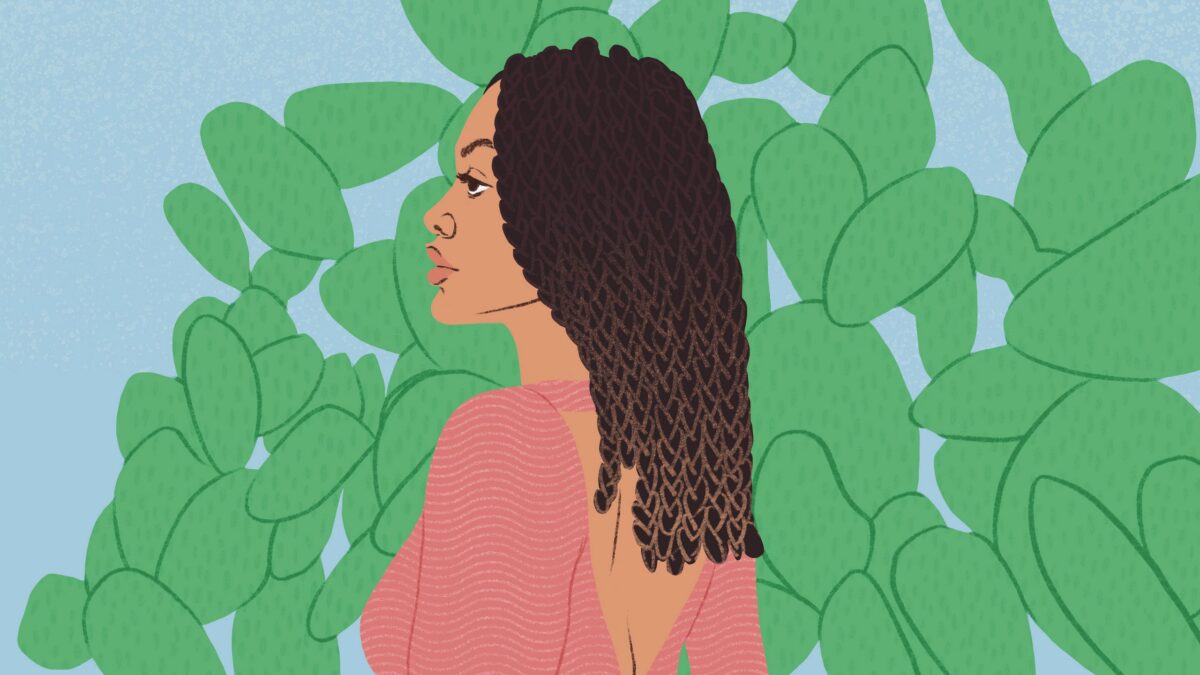
Take a deep breath. Pay attention to the feeling of sucking air into your lungs and then slowly expelling it. For many, this act requires no reflection; one simply does it. For others who exist in a world that attempts to steal their breath, this act is a small rebellion.
I grew up in Florissant, Missouri, a small St. Louis suburb about 10 minutes from Ferguson. My neighborhood was the result of white flight; it was roughly half white when I was young and predominately Black by the time I was an adult.
A nerd who cares deeply about science and animals, I eventually left for California, where I studied environmental science and policy at Chapman University. In August 2014, having finished my freshman year, I was back in Missouri for the summer. One day my phone started blowing up with texts and calls. There had been a shooting. Michael Brown, an unarmed Black teenager, had been killed—gunned down by a police officer. People were asking if I knew Brown. I didn’t, but I’m sure he was only a few friends circles away.
When Black and brown communities are disproportionately impacted by poor air quality and suffer higher instances of respiratory illnesses as a result, you have to ask: Who are these environmental protections and regulations for?
Ferguson soon erupted with unrest; everything was chaos. I couldn’t stick around; I had to return to college. Yet I couldn’t stop thinking of what had happened—was still happening—in Missouri. As I sat in a classroom in bright, sunny California, learning about the Clean Air Act, my sister was getting tear-gassed back home at a Black Lives Matter protest. I couldn’t focus and became cynical, but then an “aha” moment dawned. I recognized the intersection between environment and race. It was impossible, now, not to view what I was learning on campus through the lens of Ferguson. When Black and brown communities are disproportionately impacted by poor air quality and suffer higher instances of respiratory illnesses as a result, you have to ask: Who are these environmental protections and regulations for?
I went down a rabbit hole, my mind spinning, wondering if there was some way Brown could have lived. Maybe if everyone had access to just environments, tragedies like Ferguson wouldn’t happen. If Black people can’t even breathe because the air quality is so bad—or because they’re being gassed—how are they going to be able to experience joy? That moment woke me up, and that’s when I began to focus on environmental justice.
To understand intersectional environmentalism, you first must understand intersectional theory. Developed by scholar Kimberlé Crenshaw, intersectionality maps out how overlapping identities can create different experiences of oppression or privilege. Intersectional environmentalism, a natural outgrowth of this thinking, advocates for the protection of both people and the planet. It acknowledges the connection between the degradation of the earth and the mistreatment of our most vulnerable populations.
Social justice should not be an add-on to environmentalism. It should be foundational. Environmental activists talk often about a hypothetical climate crisis that will come years and years from now. But they ignore that the climate crisis is already here for poor people and people of color across the globe. The pollution, waste and excess that poison the planet do not impact everyone equally. White Americans’ actions cause the majority of pollutants in the United States, and yet they experience better air quality than Black and brown communities. Black people are three times as likely as white people to die from air pollution, and race is the number one indicator of the placement of toxic waste facilities. Clearly, justice cannot be divorced from the environment. White supremacy is literally in the air we breathe and the water we drink. Everyone has heard of Flint, Michigan—where lead-contaminated water caused a years-long crisis for the (majority Black) population—but there are so many other Flints that don’t make headlines.
We like to think of environmentalists as progressive, but so-called progressive environmentalism has led to laws that negatively impact people of color time and time again. Just one example: The conservationist movement that created so many of our beloved national parks caused the displacement or disenfranchisement of countless Indigenous people, yet it’s remembered by history as a good thing because it protected animals and plants. What kind of environmental movement do you have if you care about the smallest of endangered species at the expense of Black, brown or Indigenous lives? Mainstream environmentalists want to save the planet, but for whom?
There needs to be a complete rethinking of environmental education. The first step is realizing that many Americans have been left out of the equation. At the Intersectional Environmentalist (a sustainability-meets-social-justice group I co-founded last year), we have created an awareness-raising resource for those who want to learn and take action, featuring hundreds of people and organizations to follow and support. There’s activist Mustafa Santiago Ali, who worked at the Environmental Protection Agency for decades; Evelynn Escobar-Thomas, founder of Hike Clerb; José González, who started Latino Outdoors; and Teresa Baker, founder of In Solidarity, which works to diversify the outdoors industry.
Last summer the protests over the police killings of George Floyd and Breonna Taylor helped bring the concepts of social justice and intersectional environmentalism to a wider audience. But so many people in this space have been doing the work long before white people began to take notice. And unfortunately that attention is already waning. People are going back to their regularly scheduled programming, it seems, and engaging less with racial-justice content. Black Lives Matter had a moment, but moments are not sustainable. Movements are.
It’s the role of those who profess to be our allies to make sure this isn’t just some fad that everyone was super hyped about for one summer. What can people do to help build a movement? Keep amplifying the voices of those less privileged, keep unlearning, keep calling out racism and keep taking it to the streets. Then maybe everyone can have access to a future where we all breathe free.