Your bag is empty.
The model turned musician bares all in a conversation with Ottessa Moshfegh.

Looking for Cara Delevingne’s full cover story? It’s available to subscribers only—become a member to read the full, extended version (and see her full pictorial) here.
After a life in the public eye, Cara Delevingne is finally taking control. She’s been a model, an actor, and an advocate, but now, Delevingne is stepping into a new era, making music, starring in movies, and calling her own shots. As Playboy‘s Summer 2026 cover star, Delevingne is a “star reborn,” opening up about sobriety, sexuality, and her new relationship.
Speaking to New York Times bestselling author Ottessa Moshfegh, Delevingne opens up about publicly embracing her identity after she announced she’s a lesbian onstage with Rosalía, receiving affirmation from Stevie Nicks for her upcoming debut album, and entering what she describes as the most authentic chapter of her life.
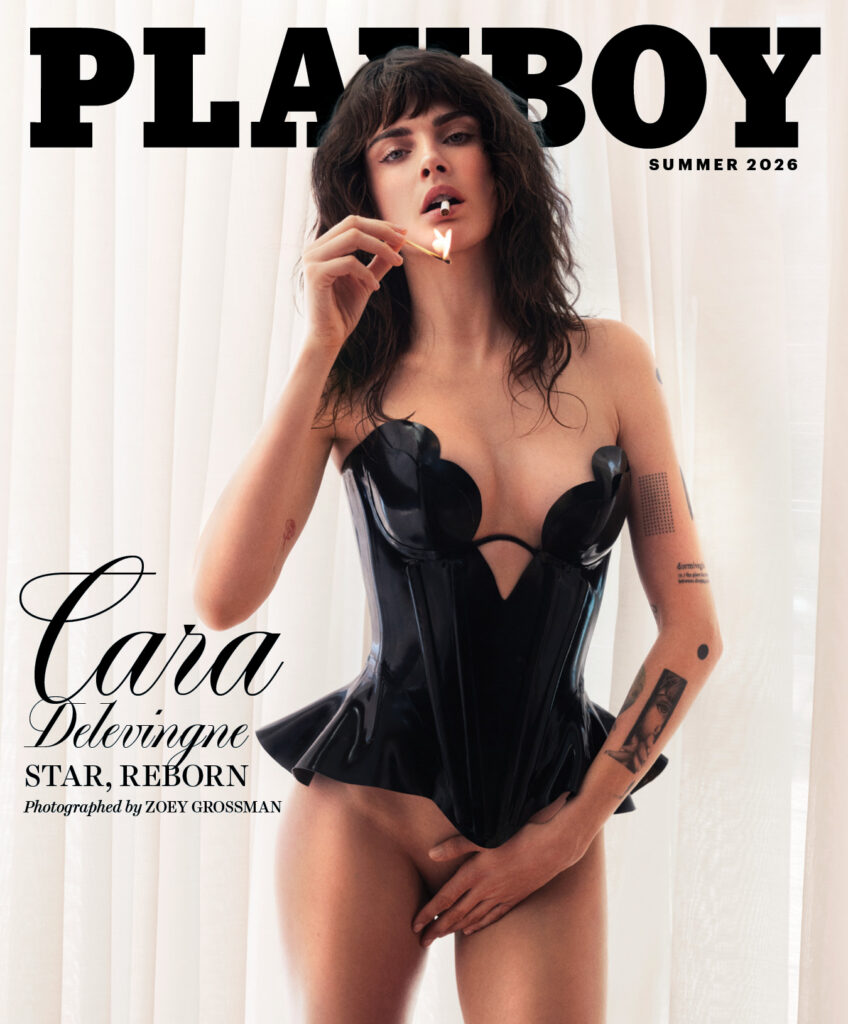
Part of embracing her new era meant posing for—and reclaiming—our iconic cover. Photographed by Zoey Grossman and styled by Lana Jay Lackey, Delevingne says she worked with the predominantly female team to feel agency over her body, appearing nude, and embracing her image.
“I’ve been naked before in shoots, in movies. But it always made me feel a bit gross when it was for someone else—of course, it was my choice and I agreed to it, but it never felt empowering,” she says. “I didn’t feel great after it. But today I had so much fun. I’ve never felt more comfortable in my body and in my sexuality. I feel like I’m in more of my prime as a woman and as a sexual being.”
In her prime, Delevingne is also making history. She’s the first out lesbian woman to appear on the print cover of Playboy. To mark the occasion, she also dons the iconic Bunny Suit, becoming the first supermodel to do so for the magazine since Kate Moss in 2014.
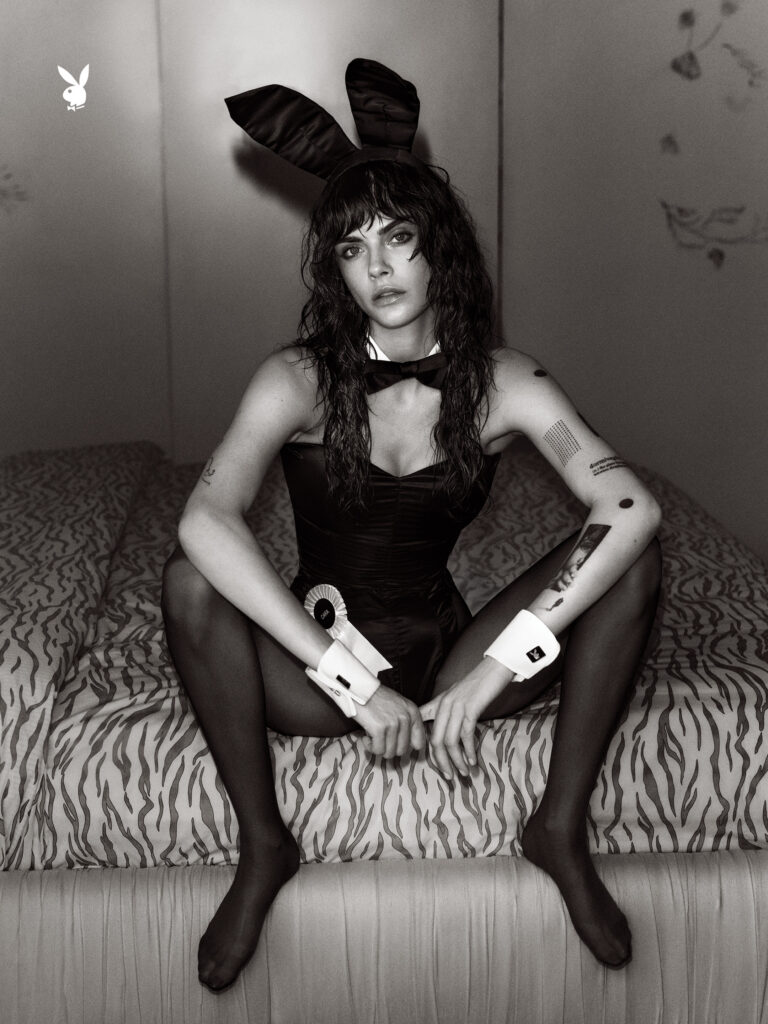
On why saying yes to Playboy was an act of rebellion: “Of course, Playboy is very much a heterosexual institution. That’s why it felt like a bit of a “fuck you” and a rebellious thing to do, and to have an incredible female-led creative team—a lot of them being queer—felt really fun and different.”
On almost releasing her debut album anonymously: “Originally, I wanted to release the music under a different name so no one would know it was me, because I just wanted it to go out there. But I didn’t want the preconceived ideas—how many people are going to say it’s bad without even listening to it? Of course, I accept that—people might think it’s bad whether they know or care if it’s me or not. But that’s not why I’ve done it.”
On redefining intimacy after sobriety: “Sex sober after all of that is definitely difficult. It changes, but it’s so much deeper and so much more emotional. I used to put a higher value on sex and validation from people. I used to think, “Oh, I’m a pervert. I’m a really horny person.” But I think [I was] seeking love and validation through sex.”
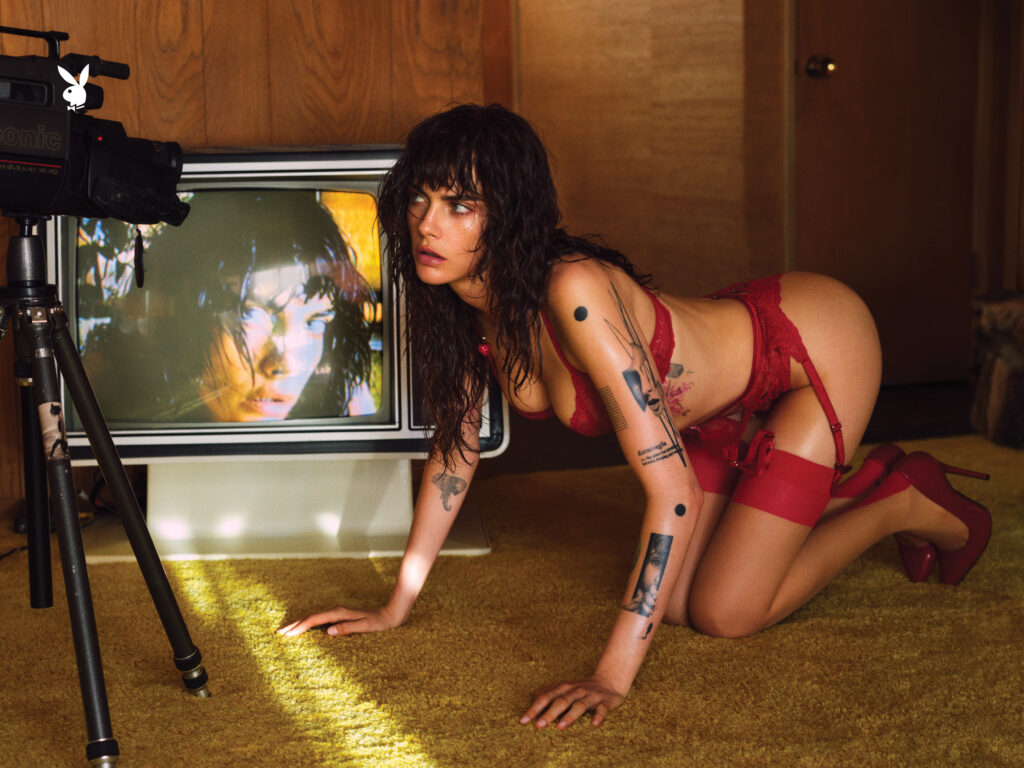
On creativity and sexuality: “Sex is a language, too, and your own sexuality, what turns you on, is like a beautiful dance you play with yourself. So many people spend so much more time on how they want to be perceived by others, and not their own sexual relationship with themselves—loving yourself and turning yourself on. It’s fun when you can discover that.”
On finally feeling seen in her relationship with Minke: “She’s a normie. I mean, she’s not sober, but she has a drink. We’re very different. I can’t date someone like myself, ever—I come with a lot of stuff. She’s the most incredible person I know. We’re best friends, obviously, lovers, and everything else, but I’ve never had a relationship like it and felt so close to someone and felt so seen.”