Your bag is empty.
To land his iconic Playboy Interview with John Lennon and Yoko Ono, Playboy's David Sheff had to help the rockstar evade legal trouble.
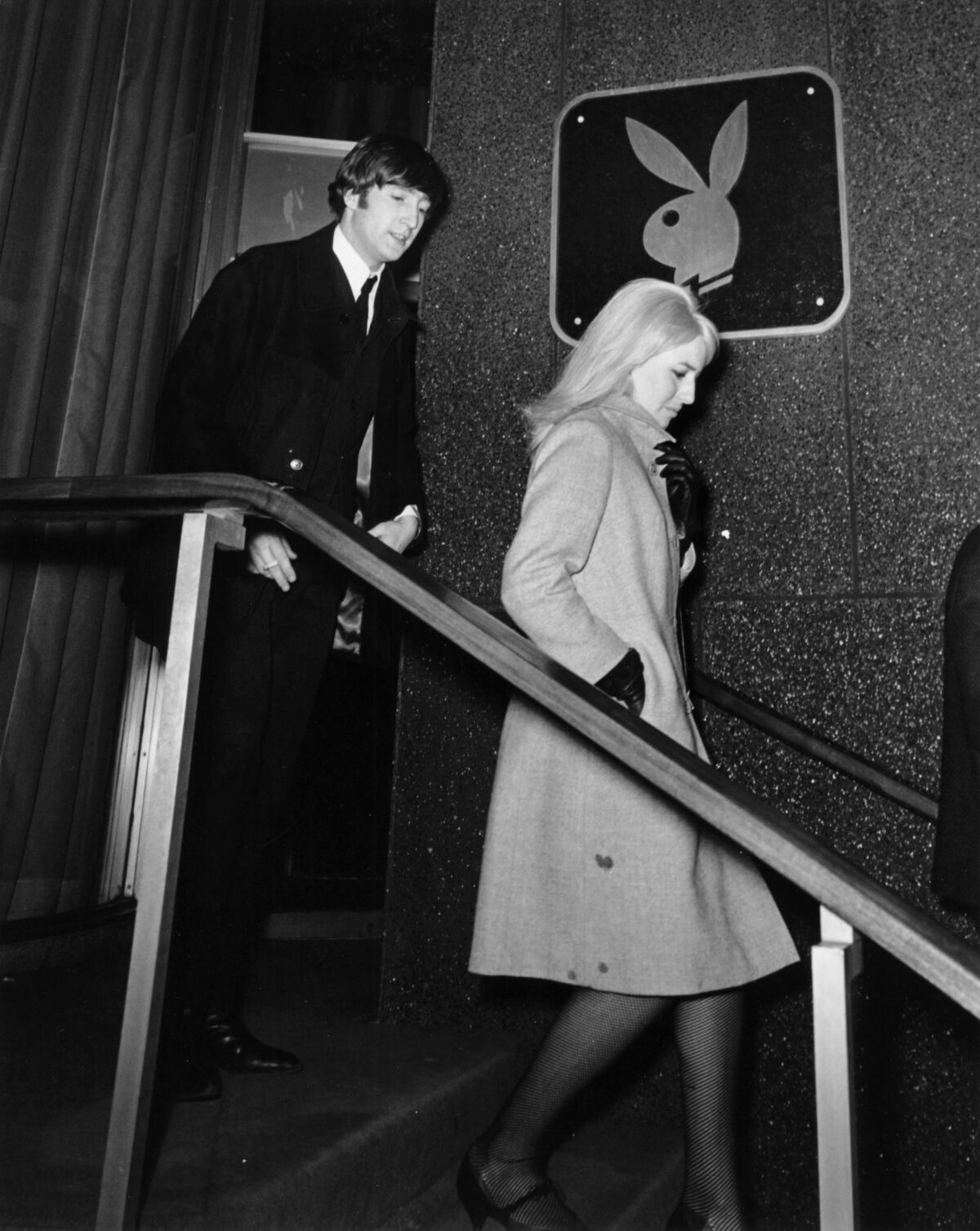
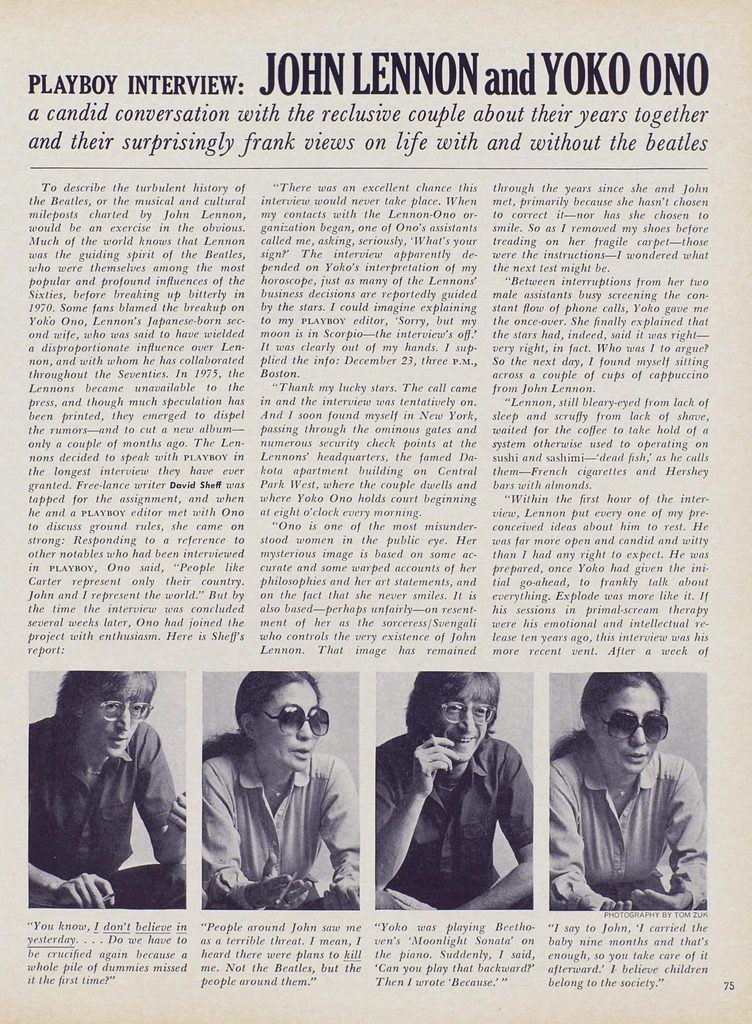
Playboy writer David Sheff’s interview with John Lennon and Yoko Ono was never a sure thing. After disappearing from the press in 1975, the mysterious pair re-emerged in 1980 as they cut a new album, granting select interviews. Playboy‘s request was the longest interview they’d ever accepted—our first challenge. The second challenge was left to the stars: Ono’s assistant called Sheff to ask for his astrological sign, the answer to which would determine whether Ono allowed the interview to move forward.
“I could imagine explaining to my Playboy editor, ‘Sorry, but my moon is in Scorpio—the interview’s off,'” Sheff wrote of the experience. “It was clearly out of my hands. I supplied the info: December 23, three p.m., Boston. Thank my lucky stars. The call came in and the interview was tentatively on.”
Two hurdles cleared and interviews commenced. But Playboy Interviews are not a one-shot deal. They require multiple days and hours of access. So, the third challenge, ahead of a subsequent interview: a pesky process server, waiting to slap Lennon with a subpoena. Here’s what happened, in Sheff’s words:
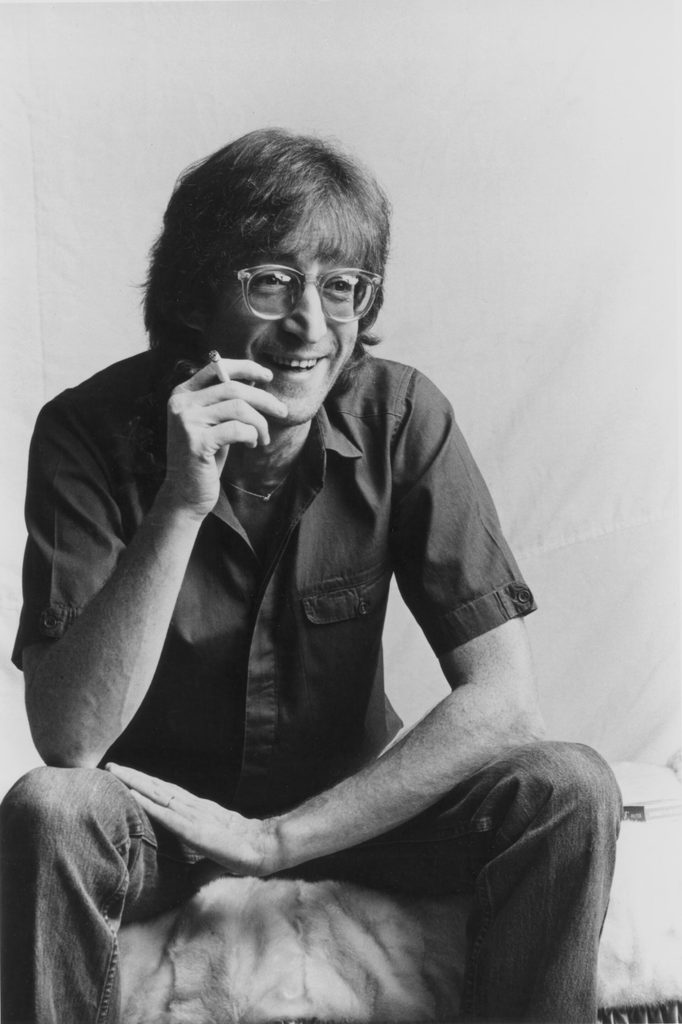
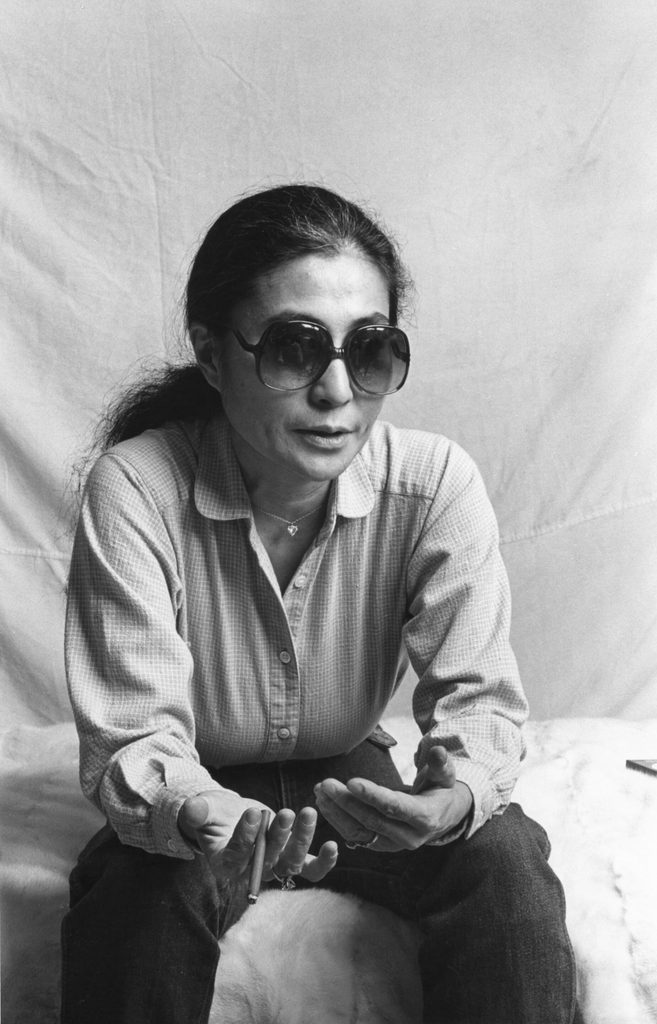
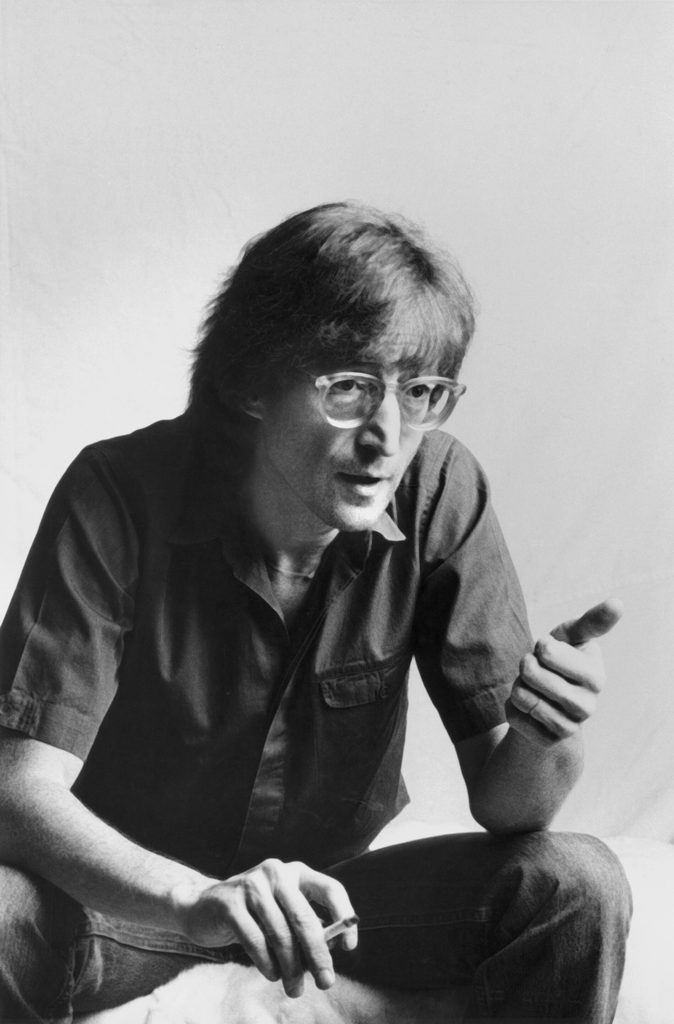
After a week of conversations with Lennon and Ono separately as well as together, we had apparently established some sort of rapport, which was confirmed early one morning.
‘John wants to know how fast you can meet him at the apartment,’ announced the by-then-familiar voice of a Lennon-Ono assistant. It was a short cab ride away and he briefed me quickly: ‘A guy’s trying to serve me a subpoena and I just don’t want to deal with it today. Will you help me out?’ We sneaked into his limousine and streaked toward the recording studio three hours before Lennon was due to arrive. Lennon told his driver to slow to a crawl as we approached the studio and instructed me to lead the way inside, after making sure the path was safe. If anybody comes up with papers, knock them down,’ he said. ‘As long as they don’t touch me, it’s OK.’ Before I left the car, Lennon pointed to a sleeping wino leaning against the studio wall. That could be him,’ Lennon warned. ‘They’re masters of disguise.’ Lennon high-tailed it into the elevator, dragging me along with him. When the elevator doors finally closed, he let out a nervous sigh and somehow the ludicrousness of the morning dawned on him. He broke out laughing. ‘I feel like I’m back in “Hard Day’s Night” or “Help!”‘ he said.
Thanks in part to Sheff, whatever Lennon’s legal trouble was would have to wait for another day. What resulted was a dynamic, intimate interview with Lennon and Ono that would hit newsstands in December 1980, just two days before Lennon was fatally shot.
The interview dives deep into Lennon’s relationship with his former bandmates, calling them neither best friends nor ferocious enemies. He did, however, carry resentment. On George Harrison largely omitting Lennon as a musical influence in his book, I, Me, Mine: “I was hurt by George’s book. He put a book out privately on his life that, by glaring omission, says that my influence on his life is absolutely zilch and nil.” And on his song, “How Do You Sleep?” which takes direct aim at Paul McCartney: I was using my resentment toward Paul to create a song, let’s put it that way. He saw that it pointedly refers to him, and people kept hounding him about it. But, you know, there were a few digs on his album before mine. He’s so obscure other people didn’t notice them, but I heard them. I thought, ‘Well, I’m not obscure,’ I just get right down to the nitty-gritty.”
And while the Beatles are, of course, a driving force in the interview, Lennon wasn’t thrilled about it. Take, for example, this exchange:
PLAYBOY: How does it feel to have influenced so many people?
LENNON: It wasn’t really me or us. It was the times. It happened to me when I heard rock ‘n’ roll in the Fifties. I had no idea about doing music as a way of life until rock ‘n’ roll hit me.
PLAYBOY: Do you recall what specifically hit you?
LENNON: It was “Rock Around the Clock,” I think. I enjoyed Bill Haley, but I wasn’t overwhelmed by him. It wasn’t until “Heartbreak Hotel” that I really got into it.
ONO: I am sure there are people whose lives were affected because they heard Indian music or Mozart or Bach. More than anything, it was the time and the place when the Beatles came up. Something did happen there. It was a kind of chemical. It was as if several people gathered around a table and a ghost appeared. It was that kind of communication. So they were like mediums, in a way. It’s not something you can force. It was the people, the time, their youth and enthusiasm.
PLAYBOY: For the sake of argument, we’ll maintain that no other contemporary artist or group of artists moved as many people in such a profound way as the Beatles.
LENNON: But what moved the Beatles?
PLAYBOY: You tell us.
LENNON: All right. Whatever wind was blowing at the time moved the Beatles, too. I’m not saying we weren’t flags on the top of a ship; but the whole boat was moving. Maybe the Beatles were in the crow’s-nest, shouting, “Land ho,” or something like that, but we were all in the same damn boat.
ONO: The Beatles themselves were a social phenomenon not that aware of what they were doing. In a way-
LENNON: [Under his breath] This Beatles talk bores me to death. Turn to page 196.