Your bag is empty.

From criminal justice to corporate fairness, these pro-cannabis groups are working toward a better future
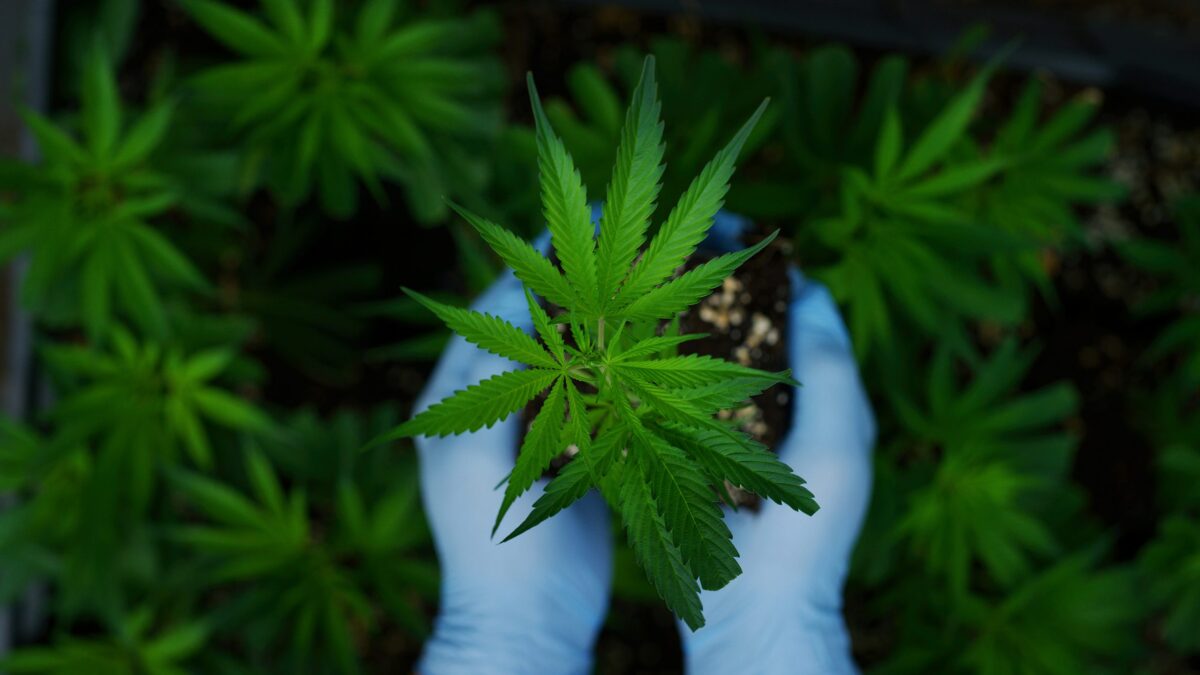
Getting high on cannabis can relieve stress, pain and anxiety. It can abolish thoughts that keep you up at night and intensify feelings of pleasure—though the industry itself is far from euphoric. In fact, as legalization spreads from state to state, inequities and inequalities are growing more difficult to ignore. But myriad organizations are committed to fight for fairness when it comes to growing, selling and consuming the plant. Here are five standout groups Playboy is excited to promote.
Cannabis isn’t legal at the federal level (yet), which means it isn’t regulated by the Food and Drug Administration, despite its approval of a few cannabis-related products. The Cannabis Certification Council is ready to fill the void. Ben Gelt, co-founder and board chair of the Denver-based nonprofit, has been working in the industry since 2011. “I learned firsthand that Colorado and virtually every other state really had no quality control, no quality assurance baked into the regulation,” Gelt says.
For the past few years, the CCC has organized cannabis sustainability conferences where industry experts can share environmentally conscious tools and techniques. Later this year, the council plans to launch an “Organically Grown” certification with specific labeling for indoor, greenhouse and outdoor hemp, as well as for cannabis production and cannabis-derived byproducts. To help maintain transparency and guard against conflict of interest, the process will rely on accredited third-party auditors and inspectors to evaluate businesses against the new standard.
Although several certifications already exist in the industry, Gelt tells us that “a lot of them have fundamental flaws in their structure, and more critically, none of them are immediately clear to the average consumer or industry person.”
People go to the dispensary and are like, ‘What’s the strongest thing you’ve got?’
The overall goal of the CCC is to give consumers an opportunity to think about cannabis the way they think about organic berries, grass-fed beef or cage-free eggs.
“People go to the dispensary and are like, ‘What’s the strongest thing you’ve got?’” Gelt says. “That’s what all the data says about how consumers behave in cannabis stores. They’re buying the cheapest, strongest product they can. It’s like going to the liquor store and getting the cheapest Everclear. Nobody does that, but that’s what consumers are doing in cannabis today.”
Next time you visit a dispensary, ask yourself: What’s in my weed? And be on the lookout for that CCC certification.
In states where cannabis use was—or still is—criminalized, enforcement hits marginalized communities the hardest. Even when legalization arrives and the government attempts to correct its past wrongs (such as the war on drugs) with social equity programs written into legalization, a lack of guidance and compliance can make executing these difficult. That’s where Equity First comes in.
For example, the Los Angeles Department of Cannabis Regulation requires every license holder in the city to complete a Corporate Social Responsibility report outlining how they’ll integrate social and environmental concerns into their business plans. According to co-founder Felicia Carbajal, it’s up to Equity First to keep the city accountable.
In 2019 the organization of community leaders and activists, including members from Cage-Free Cannabis, the Smart Pharm Research Group and the Social Impact Center, collaborated with the United Food and Commercial Workers Local 770 on a report calling on Los Angeles to enforce existing cannabis policies and emphasize community reinvestment.“One of the things we need to see across the nation is that they create cannabis health and social equity working groups,” Carbajal says of the grassroots effort, which also reaches out directly to license holders. In addition, they’re “calling for progressive and comprehensive enforcement that doesn’t put people back in jail.”
Businesses that aren’t accessible to their communities probably aren’t doing much to benefit them; a consistent demand for change from inside and outside Equity First is key: “The biggest thing most people can do is just get active and start asking questions,” Carbajal says. She suggests signing this petition, which calls for the immediate expungement of eligible criminal records.
And then there’s the ballot box: “I think people need to go and vote now more than ever. When we put legalization on the table, we have to make sure there is some repair being brought into the conversation. We cannot count on industry—any industry—to be held accountable unless we push them to be.”
As of spring 2020, this organization was dissolved.
In addition to getting people out of prison and helping them clear their records, the Last Prisoner Project helps them access the resources they need to rebuild their lives. “Something unique that LPP works on is creating opportunities within the cannabis industry for justice-involved individuals and those who have suffered the harshest consequences of the prohibition and criminalization of cannabis,” says Sarah Gersten, the organization’s executive director and general counsel.
The year-old social-justice network believes that anyone who enjoys the benefits of legal weed has a “moral imperative” to help those who have suffered under its criminalization. According to Gersten, that work has become especially important now that the United States is in the midst of a pandemic.
“Anyone in any kind of detention right now is in the most vulnerable position,” she says. “You are literally unable to practice social distancing. You have no access to hygiene products, to cleaning supplies, hand sanitizers, toilet paper. You can’t control the air you breathe, the space you’re in.” Under these circumstances, releasing cannabis offenders and asking officials to stop arresting people on cannabis offenses isn’t just the right thing to do, Gersten says; “It is the only thing to do if we want to protect our communities.”
“Call your lawmakers, send letters. Let them know you don’t believe a cannabis offense should equate to a death sentence.
Gersten and her peers are urging those under self-quarantine orders to visit the Last Prisoner Project’s website for information on calling their governors and department of corrections heads. And they’re asking anyone involved in cannabis manufacturing or cultivation who has access to masks and personal protective equipment to donate them to detention facilities, “both for inmates as well as for officers—just really basic measures to try to mitigate an outbreak.”
You can also take action on the federal level via petitions demanding that officials take steps to mitigate the effects of coronavirus on incarcerated people—including the release of low-level offenders who present no public-safety risk and people over the age of 65 if they’re within six months of their release date. “It is really important in this context to sign on to petitions like this,” Gersten says. “Call your lawmakers, send letters. Let them know that you want to decarcerate, that you want to protect our incarcerated communities and that you don’t believe that a cannabis offense—a low-level drug offense—should equate to a death sentence.”
Jason Ortiz, board president of the Minority Cannabis Business Association, has been interested in cannabis legislation since he was a teen. “I got arrested in high school for simple possession and got to learn all about the criminal justice system, the war on drugs and all that good stuff,” he says. In college, Ortiz joined a group called Students for Sensible Drug Policy. It trained him as an activist, and he’s been one ever since.
The MCBA is a trade association that serves minority cannabis entrepreneurs, workers and consumers, viewing the cannabis industry as an opportunity to level the playing field for business-minded people of color. “If we don’t have the communities most impacted, generally poor communities of color, as part of that legal industry, the black market will continue forever,” Ortiz says.
The organization’s status as a nonprofit business league means they can lobby, but Ortiz says they don’t just argue for or against other people’s bills; they create their own bills and then push to have them implemented. “I think the most important work we do is bringing the cannabis community of color together to find consensus on what it is we want, what programs are actually working, what we can learn from places that are doing it right,” Ortiz says. “Then we can take that information and share it with everybody across the country.”
The organization also acts as a networking platform for entrepreneurs of color in need of venture capital. In 2019, for example, it partnered with Merida to launch the Inclusive Industry (“i2”) Accelerator to fast-track the development of minority-owned businesses. “We got about half a million dollars spread out between five companies for some seed capital to help them get moving,” Ortiz says.
As head of a business association, he’s focused on the future and the industry’s potential for growth: “The momentum is on our side, and no matter how difficult it gets, it’s still on the upswing.”
If you’re into the history of Playboy, you may be familiar with NORML, or the National Organization for Reform of Marijuana Laws, and its militant fight for legalization across the country. But the organization, funded early by Hugh Hefner and currently running more than 150 chapters around the world, is about so much more than the lawful right to toke up.
“Despite the fact that there are 11 states with legalization, in 2018 600,000-plus Americans were still arrested for marijuana possession,” executive director Erik Altieri says. “So while we’ve made great strides in changing laws at the state level in certain places, there are still hundreds of thousands of Americans every year who are put in handcuffs, get a criminal record, are saddled with the collateral consequences of that record and have to live under prohibition.”
We’re still seeing individuals get fired from their job for testing positive for marijuana.
Once a state moves toward legalization, NORML works to set up an automatic expungement program for anyone with a criminal record for marijuana possession. It also makes sure consumers are getting quality products that are tested and affordable, and it fights workplace discrimination associated with drug-testing policies. “We’re still seeing individuals get fired from their job for testing positive for marijuana, even though it’s now a state legal activity,” Altieri says.
While NORML works on everything from protecting civil liberties to advancing social justice, its main focus, according to the executive director, is to “empower everyday citizens to engage in the political process and change the laws in their own community. We provide a lot of tools—not just to educate yourself, but tools so you can easily contact your state and local officials through e-mail and through phone to advocate for these policy changes and specific legislation.”