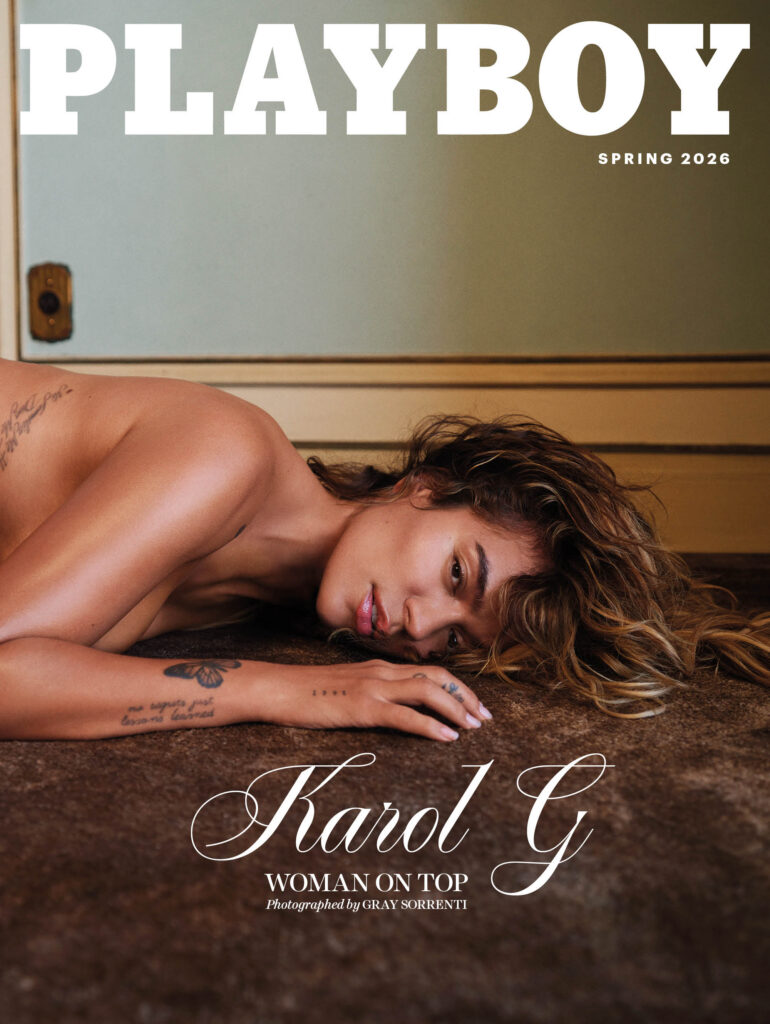
This cover story appears in our Spring 2026 issue, on newsstands April 14th. Want us to come to your place? Order the issue here to get it delivered to your door, or become a member to get digital access to the issue and early access to paywalled content.
Karol G is in her “fuck it” era. The 35-year-old record-breaking Colombian pop superstar is on the verge of reaching another milestone. No, it’s not the fact that she’s about to make history as the first Latina to headline Coachella—it’s that she’s stepping into the most authentic, unfiltered version of herself.
Early in her career, Karol G—who was born Carolina Giraldo Navarro in Medellín—declined to pose for SoHo, a Colombian men’s magazine. She worried people would judge her. Now she’s on the cover of Playboy. Carolina always imagined she would have a family by the time she reached her 30s. Now she’s newly (and proudly) single. She typically shies away from politics. Now she’s weighing whether to publicly call out ICE when she takes the stage. But the sentiment signals so much more than an unguarded Karol G. That’s her, shedding layers of pressure, expectations, fears, and pain, slowly making room for a new voice that even she seems surprised to discover.
The world has come to know Karol G’s voice through her reggaeton music—a hypermasculine genre she reclaimed and expanded, fusing pop, trap, ballads, and Caribbean symphonies that can take you from feeling like you’re at a Colombian street party to reflecting about your latest breakup. Through the years, she’s racked up major awards, including one Grammy and several Latin Grammys and Billboard Music Awards, which is why most people would have never detected the shakiness behind her voice last year. Coming off the high of her 62-show Mañana Será Bonito tour in 2024—the first global stadium tour ever headlined by a Latina artist, selling more than 2 million tickets—she embarked on a downward spiral. Her album Tropicoqueta was received with mixed reactions. Her relationship with Colombian singer Feid ended. She no longer knew who she was. “When I woke up on January 1, 2026,” she says, “I told myself, ‘No more crying.'”
In many ways, her upcoming performance at the world’s most influential music festival will be Karol G’s rebirth.
You’re days away from making history at Coachella.
I’m counting them down. I actually have a mini board on my nightstand. I started when there were 10 weeks left, and now it’s almost here. When I received the call, I felt like a huge weight fell on me. They called me and told me—in Spanish—that I was going to be the first Latina to close the festival. I feel very blessed to be part of a generation that is trying to change the narrative and raise our voice for the community. And so, at that moment I asked myself, If we are going to do this, what is going to be our purpose with this show? I feel like it’s a show for my community, for the world, but it’s a show that’s very much for me.
Through this rehearsal process, have you discovered a new version of yourself?
Completely. I thought that this was going to be like my consecration, but I actually feel like it’s the beginning. This is the first time in my life that I feel I’m going to see myself as the artist in the same caliber as the stage that I’m stepping on. I’m working with [choreographer] Parris Goebel on the show. She’s iconic. She’s the GOAT. She did the J.Lo Super Bowl. She did Rihanna’s. I told Parris, “Don’t think of what I’m capable of; I want us to build the show that you dream of for me. Let’s unite our universes—you from dance, me from my Latina community. And I’ll figure out how to keep up.”
I thought that this was going to be like my consecration, but I actually feel like it’s the beginning.
What does it feel like to be on that stage with thousands of people waiting for you?
The adrenaline is so high it’s like when you’ve had too many drinks and you erase the tapes—you come offstage and cry about what just happened, feeling like it never happened to you at all. In my daily life I don’t see a difference between Carolina and Karol G. But when I’m about to walk onstage, my body feels different, my mind feels different. I stop thinking from humility and start thinking: I earned this, this is mine. Everything becomes a superpower. And then I get offstage and I’m Carolina again—and Carolina feels like she missed it. That happened to me at Coachella in 2022. The show ended and it felt like five minutes. This time I want both of them there at once. I think they can coexist.
The country is very different from the last time you performed at Coachella in 2022. What is it like for you to step onto that stage as a Latina right now?
I think the word Latina carries a lot of weight right now. Over the past year, everything I’ve done has come with that sense of responsibility, to show up for my community and express what I feel. There’s definitely a frustration at times because you feel like you can’t do everything, but you try to do what you can from your position. And if we can at least shift people’s perspective, even just a little, that matters. Through music and art, I’ve seen that non-Latinos in the U.S. are beginning to understand the depth of what’s happening and the real pain behind it.
Latina, immigrant, and Colombiana are polarizing, divisive words lately. Do you feel pressure to defend the community in a more aggressive way than you have in the past?
More than pressure, I feel a responsibility to make sure that what I do actually has an impact. I don’t want to just say “ICE Out” and have nothing come from it.
I’m not saying I wouldn’t speak out—I would, and I would do it with my whole soul. But I also want to take a step back and understand what that truly means and what it creates, and what more we can do beyond that.
Through my foundation, we’ve been doing very personal work with immigrant mothers here in the U.S., helping some return to their home countries with dignity when that’s what they want. It’s meaningful but also limited to the people we can directly reach.
That’s why, through my music and this show, I want to continue building love and understanding for our community—a resilient, hardworking community that has contributed so much. I understand that countries have laws, but when things cross the line of basic human dignity, that’s when it becomes difficult to process.
Will you say “ICE out?”
I’m probably going to go a little harder than that. I just want to represent my community. But what I’m telling you is that, as a human being, I want that to mean more. I’m not saying that I’m not going to do it; what I’m saying is that I would do it and will do it with my soul. But I want to sit down and understand, in my head: Here’s what that meant.
You understand the power of your words. So are you willing to say it?
I know my team would kill me but I am willing to say it. If I’m being honest with you, there are real boundaries and responsibilities I have to be mindful of. At the end of the day, I ask myself—”what is my role in this position and how can I use it in the most meaningful way?”
I feel a responsibility to make sure that what I do actually has an impact. I don’t want to just say “ICE Out” and have nothing come from it.
Are we asking too much from Latino artists right now? Because we are asking you to be global artists but also activists, to have a universal message but also a political one. Is it fair to ask you to be all these things?
I don’t know if ‘fair’ is the right word, because maybe it isn’t. But like I was saying before, I always want to speak honestly. Sometimes when you do that, you’re not saying what people expect—or what a certain space wants to hear—and that can be complicated.
At the Grammys in 2025, presenting the only Latin award of the night, I manifested that I wanted to talk. I told myself 70 times, “I want to say something, I want to say something, I want to say something,” and then, “But you can’t say it, you can’t say it, you can’t say it.”
Who says you can’t say things?
A lot of people. People will say, “It’s better that you don’t.” Because if you say the thing, maybe you become bait. Some people want to show their power.
You hear a lot of different opinions—maybe it’s better not to, maybe this isn’t the right moment. There’s always a level of pressure around what you say and how it can be received.
So for me, it becomes a personal decision—whether to say something, and when. I have a very big platform, and I’d rather use it in a moment where I can fully stand in it for my community.
That’s why I try to be thoughtful and sometimes wait for the right opportunity—so that when I do speak, it truly represents something meaningful and creates real impact.
What do you want people to feel when you’re singing on that stage?
When people see anything related to Karol G, I want them to think to themselves, I can do that. Social media sells you perfection, but the process itself—of how you get there—never exists there. It’s as if everyone just becomes a millionaire, or everyone just has a great life.
I want people to see reality in me. In fact, last year was one where life threw me to the floor, kicked me, pushed me, stood on me, spun me around. You know, a couple of months ago, as I was designing the show—the narrative, everything I want to do or say on stage—I realized that I was drawing inspiration from the book Women Who Run with the Wolves, which I read about six years ago. The essence of the book is that it helps you find your inner wild woman. It talks about how, in the past, women were the ones who led the tribe. Women were seen as great because of their intuition, their spirituality, their sensuality. All those things were positive attributes that exalted and magnified women, but society slowly took them away over time.
Do you feel like a wild woman?
Yes, I do. I feel like a wild woman. You know, after all of last year’s hardships, I needed to cancel everything and walk away. I told my team I needed to stop. I needed to understand why everything that was happening to me was happening. So I went to Hawaii for a month.
I’ve always thought that my most evolutionary moments come when I’m alone.
You chopped off your hair then, right?
That’s what happened. When you chop off your hair, the first thing people say is “She lost it!” But maybe I was letting my wild Carolina do what she wanted to do. Maybe it meant regaining a little bit of control over myself, over my decisions, over the way I think without having an answer. It was my decision, and no one was giving me their opinion. I feel like the reason we are here is to evolve the soul, and to have had that opportunity to analyze myself—to judge myself and critique myself, to understand why things were happening to me—has allowed me to move forward. I think people will start to notice that in everything I’m doing. Because I’m happy doing music, I’m super inspired in the studio. I’m letting go of everything. I’m single and, to be honest, I’ve always thought that my most evolutionary moments come when I’m alone. As a good Latina from a traditional family, they teach you to give yourself fully to relationships, to a point where you can even lose yourself.
Now that you’re single, have you learned something about love that you didn’t know before?
Yes. I think you have to work a lot on yourself so the relationship can work. You also have to do the work so that you can walk away when you recognize it’s not going to work. When I finished my last relationship, I initially felt like, Wow, I’m here again. But then I saw it as, Wow, how beautiful that I had the courage to say that I no longer wanted to be there. I also think a new question surfaced within me: “Does eternal love exist?” I don’t have an answer to that question. I don’t know anymore. Because when you really give it your all, when you decide to change, to put yourself to the side, to live the other’s life, to do everything you can, and it doesn’t work? Then you tell yourself: “Maybe it’s not forever.” Maybe you should just enjoy the time when it’s beautiful, and let it go when it’s not, and allow life to surprise you with new loves.
Have you felt that pressure to have that traditional Latina life?
Of course. In my case, people think I’m already behind. According to my culture, I should have kids by now. But you know what? This year has literally been like, ‘Fuck it.’ I don’t feel like I’m behind. I actually feel that it’s beautiful that I’m living my process, that I’m evolving, that I’m learning, that I’m not tired of experimenting, that I’m curious.
You always seem so sure of yourself, on stage and in photos. When was the last time you felt truly insecure?
All of last year. From before my album even came out. A lot of things were happening in my life, in my mind. And I think something broke in me when the tour ended. When you have that applause every single day and then it stops, you start to miss it—and missing it makes you feel like you’re losing it. Like the love is slipping away. It becomes chaos in your head: I’m losing it, I’m losing it. So I made a lot of decisions last year that came from fear, and I realized they were very bad decisions. And those bad decisions compounded—like a game of dominos, like a snowball. On top of that, things in my personal life and my relationship were also falling apart. I didn’t like what I was seeing of myself. We pulled back from public appearances because I felt that way. I’d finish an interview and call my team and say, “No—I don’t know why I said that. I don’t even think that.”
You’ve talked about declining to pose for SoHo, the Colombian men’s magazine, early in your career. What were you thinking then?
I remember it very well. They asked me and I said no—I wouldn’t do it, because I didn’t want people to know me through that narrative. I wanted to come in through a different door. But when this opportunity came, I thought: why did I say no back then? How beautiful that I had the chance to go out into the world, to experiment, to let my mind open up. I can understand now that at some point I also said “I’ll never do a song about marijuana”—and now I’ve said that and much more. At the end of the day, people are going to talk regardless. I’m clear that people speak from their own capacity, their own limitations. I sold 2.3 million tickets. But there are also people who don’t like what I do. Which side am I going to pay attention to?
I love powerful women who show their power through their bodies.
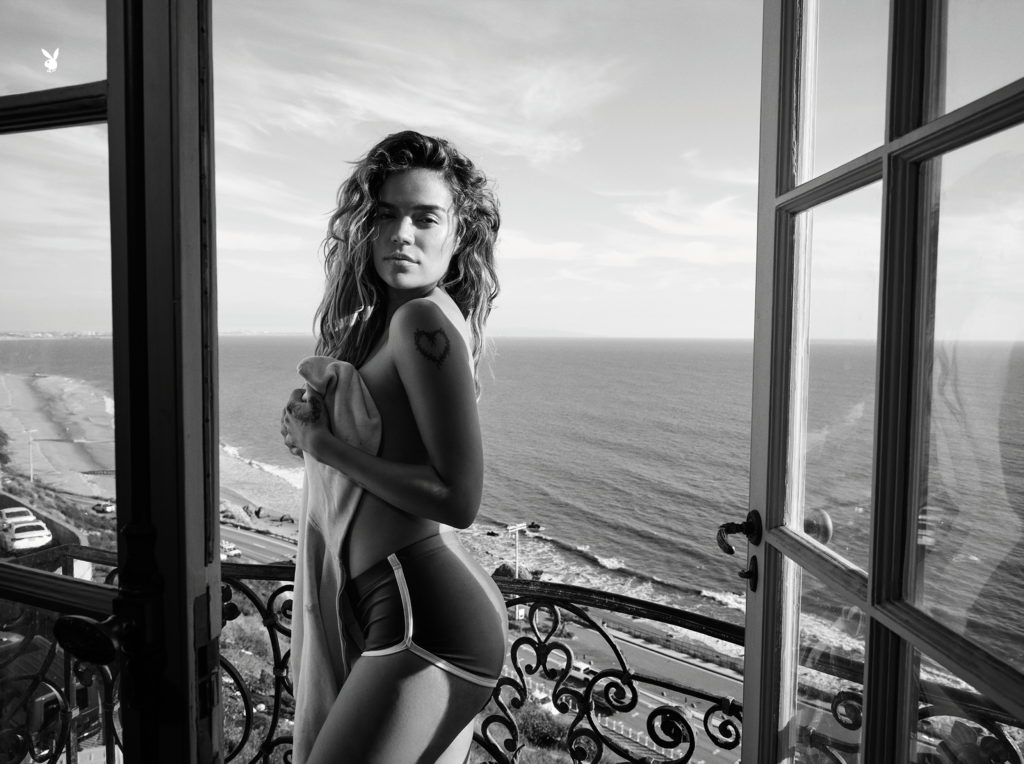
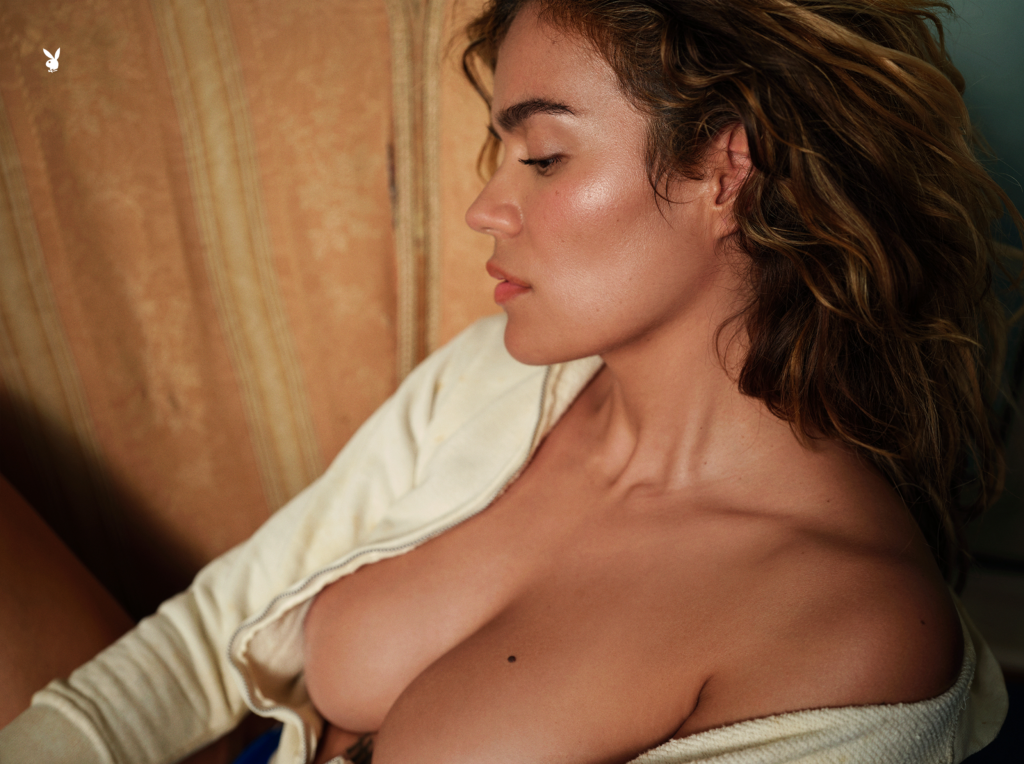
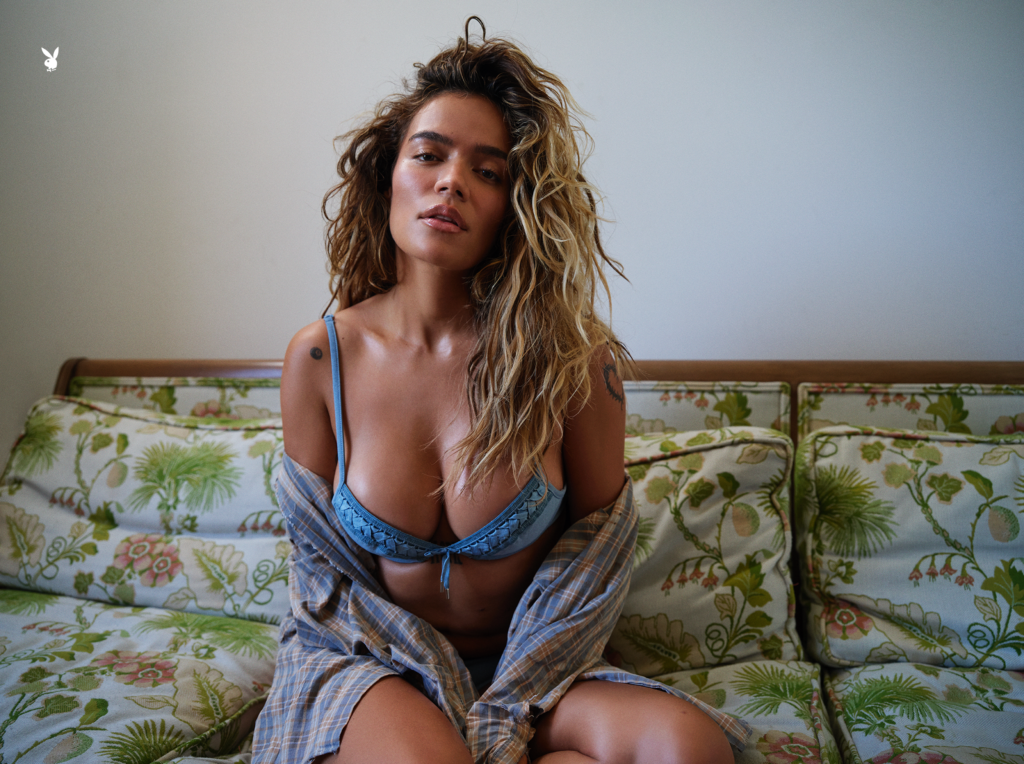
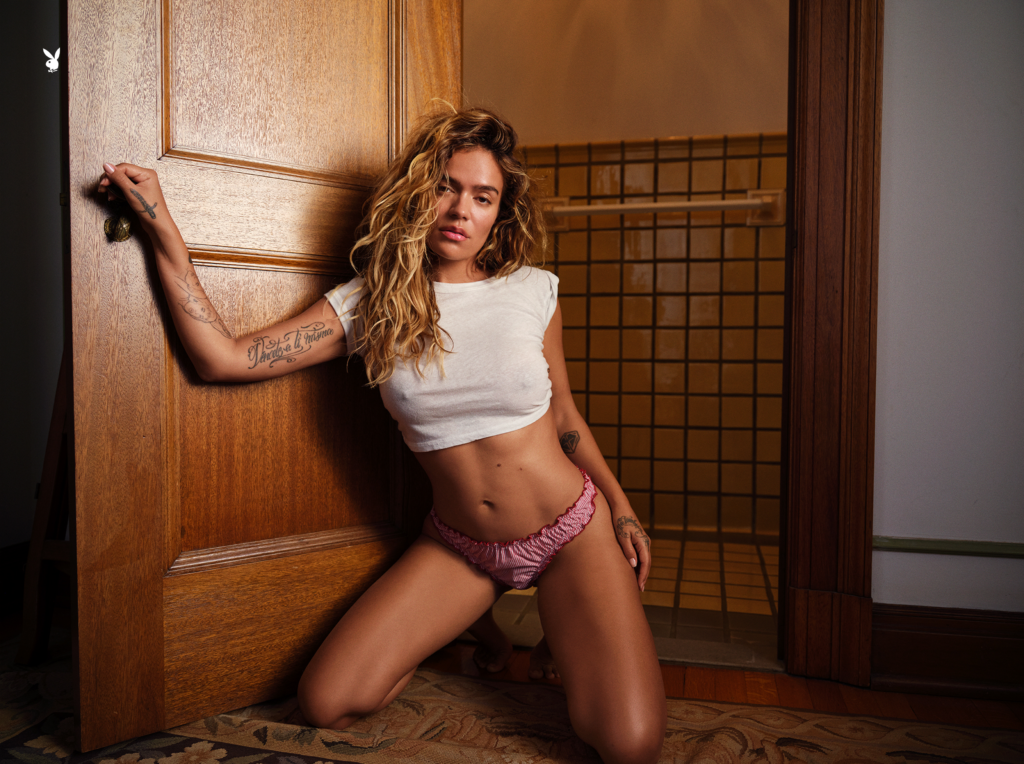
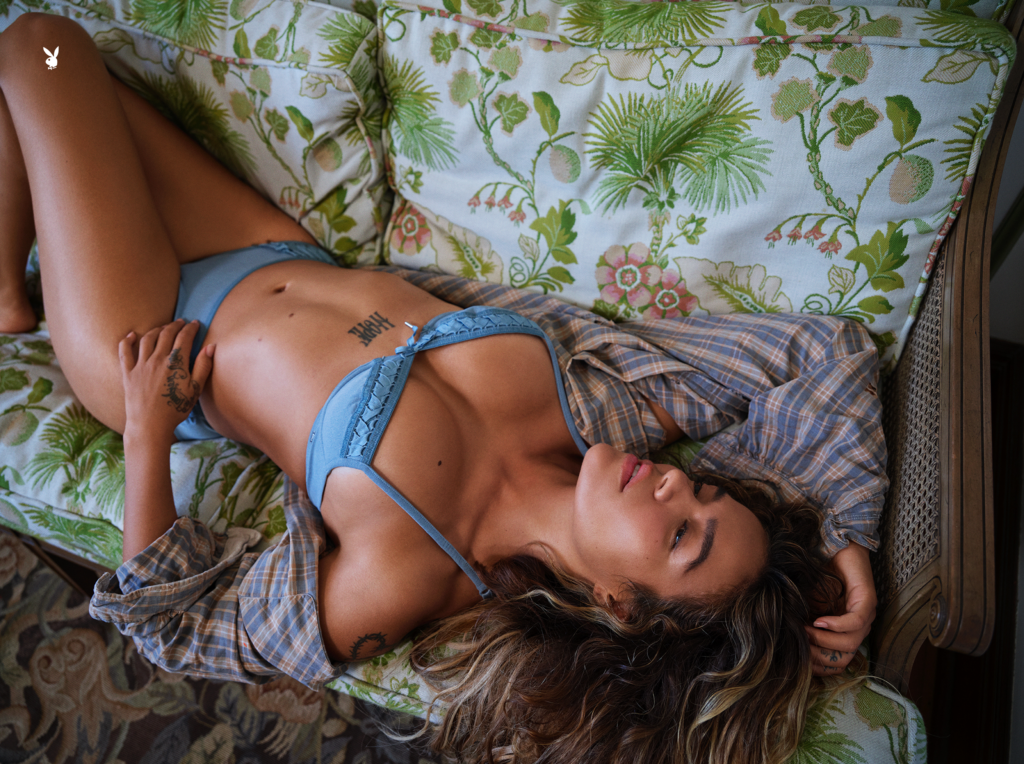
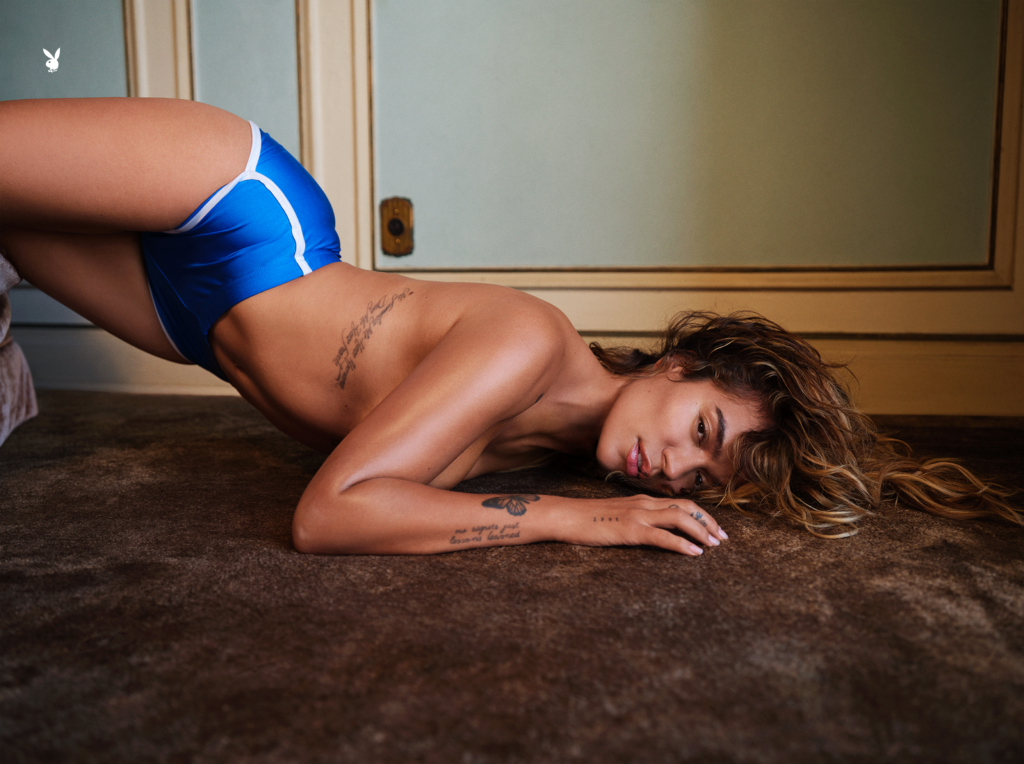
I want to talk about your Playboy cover. Your critics say you’re too sexual. Others will see a bichota [a play on a Puerto Rican slang term she repurposed to mean “boss lady”]. Why did you decide to appear on the cover of Playboy?
I had the two Carolinas telling me what to do: “You should do it.” “You shouldn’t do it.”
I questioned if it was the “convenient” thing to do. That’s how I arrived to the question I needed in order to say “fuck it.” It’s not about what is convenient; it’s about what I would do. I love powerful women who show their power through their bodies. That’s one of the reasons why I did the Tropicoqueta visuals, because of the vedettes [cabaret dancers.] In past times, people saw the sexiness of vedettes as stupid. They saw them just as entertainment, but for the vedettes—during an era where they didn’t even have a voice—to be able to go on a stage and express their pain, their anger, their passion, their love through their bodies… that became their art. So I see how people see it one way, but I see it differently.
The only person I asked if I should do it or not was Sofía Vergara. I called her and told her, “If you tell me not to do it, I won’t.”
What did she tell you?
“Mijita, with that body? When you get to this age, you tell yourself, ‘Fuck, why didn’t I pose that one time? I should have posed more with a thong!’ Just one thing: Don’t show your pussy!” She also said, “This moment will have a reason. What is going to be your reason?” The truth is, my reason is a little bit about doing what I want to do; at the same time it’s a little bit about being rebellious, but not unjustified rebellion. I feel like you become what others say about you. There’s always a different rumor about me: Someone got me pregnant, someone killed me, they’ve split me between political parties.… In the end, you can’t waste your time denying everything.
So I kind of want people to push me out of that “perfect woman/good girl” box, because I’m not perfect, and it’s not that I’m either good or bad. I am…human.
And humans are imperfect. Beyond that, we are different. And so why do I want to do this? Because I want to. Because I grew up inspired by how beautiful the women in the magazine looked, and now I have the opportunity to be that beautiful, sexy mamasota in the magazine. Why not?
Have you ever just told people who ask you these types of questions: “I do it because I want to”?
No.… I think maybe yesterday was the first time. I think we were talking about something, and I said, “Fuck it.”
What makes you feel the sexiest?
That it’s my decision to be there. That’s what I was thinking the entire time I was doing the photo shoot.
The more successful I become, the more misunderstood I am.
Does it bother you if men sexualize you?
No. It’s going to happen either way. I swear, people will try and destroy everything you do. I was singing at the Vatican, and the next day people were destroying me. If I dress up as a nun, people will see it as sexual.
But part of your magic is that you have empowered that sexuality and femininity.
This may sound super cliché, but it’s my reality because I live it and feel it constantly: Women have a superpower that men don’t have. The same way that we give birth and have children, spiritually we have something that men don’t have. And the system isn’t ready for that. So when it sees a powerful woman, it completely flips its own narratives. I feel like that’s what’s happened to me. The more successful I become, the more misunderstood I am. The only thing I’ve tried to do is inspire my followers and celebrate my successes, because I’m the only one who knows how much it has cost me.
This interview was conducted in Spanish and translated and edited for clarity. Translated by Ezra E. Fitz.