Your bag is empty.
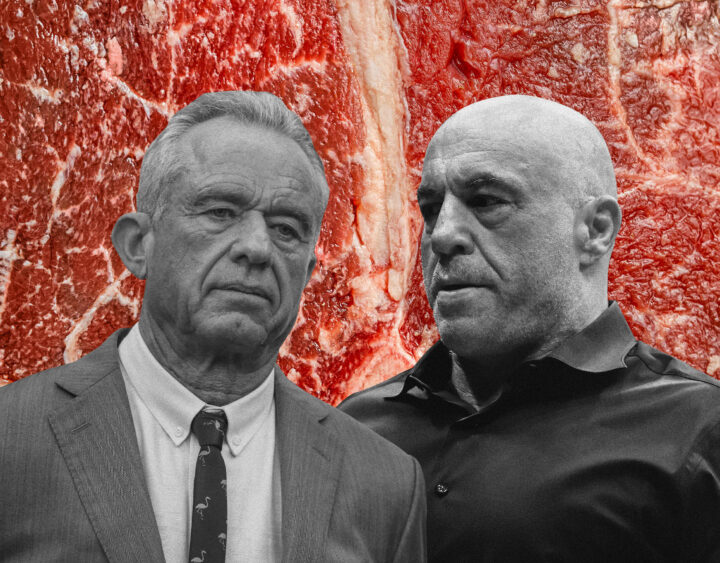
RFK Jr.'s agenda has started to reshape America. But are we getting healthier?

Last February, Robert F. Kennedy Jr. was sworn in as Health and Human Services Secretary, catapulting the Make America Healthy Again agenda from its niche wellness influencer interest to national policy. Kennedy’s confirmation to the role was not without controversy. His nomination was narrowly approved by the Senate (though votes largely followed party lines), following contentious hearings about his anti-vaccine viewpoints, thoughts on COVID-19, and his past support of conspiracy theories.
As he took office, RFK Jr. promised to take “bold, decisive action to reform America’s food, health, and scientific systems to identify the root causes of the chronic disease epidemic and Make America Healthy Again.” On its face, RFK Jr.’s agenda could have had widespread appeal—to root out chronic disease at the source isn’t a controversial stance, one that medical professionals say has long been a goal in the field. His nomination came after the COVID-19 pandemic left many Americans with deep skepticism of our government and health officials, looking for the kind of no-nonsense answers RFK Jr. seemed to promise. And, RFK Jr.’s plan seems to target growing concerns for many Americans, like research that points to the negative impact of ultra-processed foods and the rising rates of colon cancer among young people.
But the Health Secretary also came into his role at a time of increasing conspiracy. As Americans turned away from the medical establishment, RFK Jr.’s anti-vaccine history and peddling of conspiracy theories was alluring for some, as others expressed outrage at his nomination. In pursuit of his agenda, RFK Jr. has made sweeping changes to the childhood vaccine schedule, targeted synthetic dyes in our food, rearranged the previously defunct food pyramid, promised to find the “cause” of autism, and more.
So, are we healthier as a result? No one has a better answer than that question than America’s doctors, the people who see and talk to patients every day. To get a read on RFK Jr.’s first year in his role, Playboy talked to three doctors about our year in Make America Healthy Again. The doctors we spoke to agreed that reducing chronic disease and contributing to positive lifestyle shifts among Americans is a worthy goal, but one they don’t think RFK Jr. is meeting the mark on—particularly as they say he’s eroded the little medical and vaccine trust we had left after COVID.
We also asked each expert to throw it back to med school and grade RFK Jr. on his performance so far, creating a MAHA report card. Spoiler alert: RFK Jr. is nowhere near a straight-A student.
Board certified obesity and lipid specialist, founder of Vineyard, a comprehensive weight management program.
What changes have you noticed in your field as a result of RFK Jr.’s policies?
More of a reluctance for vaccination in the public, more distrust in physicians in general. That’s been going on since COVID, but it’s gotten worse. Confusion in nutrition, science, focusing on what I would call small, insignificant contributors to disease like food dyes. Even incorrect information, like glorifying saturated fat as healthy. We’re seeing a lot of pseudoscience being pushed to the forefront.
You mentioned saturated fats. RFK Jr. is heavily focused on our food and nutrition—he recently debuted new dietary guidelines. How do you feel about his policies around food and its impact on health?
A lot of it is theatrics. There are contradictions within the [new dietary guidelines] guidelines. Some of it is benign—more focus on protein is fine, but it’s not going to change much. The contradictions are [related to] saturated fat, like focusing on whole dairy while it mentions keeping saturated fat low. That’s hard to do if you’re including higher fat foods [like whole milk].
The biggest thing to me is that it’s performative. They make it seem like it’s revolutionary, but the prior guidelines never endorsed eating highly processed foods. People just didn’t follow the guidelines. The food pyramid hasn’t been around since 2011, so they’re making it seem like, ‘we’re finally pushing back and giving you good information.’ But the information before wasn’t bad. It was trying to get people to eat whole, unprocessed foods. Performative is the right word.
Has RFK made any policy changes that you like? Have you seen any positive changes as a result?
I think focusing on direct to consumer marketing of big pharma commercials and removing those is a positive. I think trying to push the narrative of eating more whole, unprocessed foods is good—but we’ve done that in the past. It’s hard to really put into action. I think he’s by far mostly a negative given his anti-vaccine rhetoric. That’s the biggest issue. A lot of the nutrition stuff he does, it won’t do anything, it won’t have much of an impact. Creating more vaccine hesitancy or even anti-vaccine rhetoric is really dangerous.
I think there’s going to be a lot of changes when [this administration] gets out of office to revert back to previous vaccine policies. There’s going to have to be a lot of public health effort to regain trust. But a lot of this is cyclical—when you start seeing anti-vaccine rhetoric, you start seeing outbreaks, then people remember why we have vaccines in the first place. Vaccines fail because of how successful they are.
RFK Jr.’s stated goal is to “reform America’s food, health, and scientific systems to identify the root causes of the chronic disease epidemic and Make America Healthy Again.” What do you think of this goal, and do you think he’s made progress toward accomplishing it?
We already know how much of an impact lifestyle and social determinants of health have on quality of life and longevity. To me, it’s a Trojan horse for bringing in his anti-vaccine ideology. Nobody will argue that lifestyle has a large impact on chronic diseases and prevention. There are a lot of proponents pushing him because it seems like he’s the only one who has this idea, but this idea has been around forever. With him empowered, he’s able to bring in his pseudoscientific ideas, which will damage our long-term health.
Pretend you’re a teacher and RFK Jr. is your student. If you’re grading him on his MAHA agenda, what’s his score?
He hasn’t fully stripped all the vaccines, it could be worse. I would give him a D.
Double board-certified pediatrician specializing in allergy treatment and immunology.
What changes have you noticed in your field as a result of RFK Jr.’s policies?
In my field, the most noticeable change has been an increase in confusion and mistrust among patients and families, particularly around vaccines. While no single policy has fundamentally altered day-to-day clinical care yet, the tone from HHS matters. When leadership publicly questions long-standing scientific consensus, it inevitably affects how patients interpret risk, evidence, and medical advice. Overall, I view this impact as negative.
Has RFK Jr. made any policy changes that you like? Have you seen any positive changes as a result?
I support efforts to take chronic disease seriously, invest in prevention, and examine how environmental, nutritional, and social factors affect long-term health. In theory, those goals are reasonable and broadly shared across medicine. However, I have not yet seen concrete, evidence-based policy changes from this administration that clearly advance those aims in a meaningful or measurable way.
What about policy changes you dislike, or any negative changes?
I’m concerned by actions and rhetoric that undermine trust in vaccines, public-health institutions, and scientific advisory processes. Casting doubt on well-studied interventions without compelling new evidence risks downstream harm, particularly for children and other vulnerable populations who depend on high vaccination rates and clear guidance.
I strongly disagree with efforts to restructure vaccine policy or advisory bodies in ways that appear politically motivated rather than evidence-driven. The childhood vaccine schedule exists because it is the safest and most effective way to protect children from serious disease. Undermining expert panels or implying that the schedule is unsafe without credible data threatens public trust and population health.
Dietary guidelines, beef tallow, and food dyes have also taken center stage in the MAHA agenda. Do you have any thoughts around RFK Jr.’s recommendations on these topics?
Nutrition science is complex, and reasonable people can debate specifics. I’m open to evidence-based discussions about ultra-processed foods, marketing to children, and overall diet quality. Where I part ways is when single ingredients or additives are framed as primary drivers of chronic disease without strong data, or when rhetoric oversimplifies nuanced science. That approach can distract from more impactful, proven interventions.
What do you think of MAHA’s stated goal, and do you think RFK Jr. has made progress toward accomplishing it?
The stated goal of addressing root causes of chronic disease is not controversial. Most clinicians would agree with it. The problem is execution. So far, I’ve seen more focus on contrarian talking points than on scalable, evidence-based reforms that would genuinely improve health outcomes. Progress toward the stated goal has been limited.
Pretend you’re a teacher and RFK Jr. is your student. If you’re grading him on his MAHA agenda, what’s his score?
If I were grading him as a teacher grading a student, I’d say the intent earns partial credit, but the methods and use of evidence fall short. I’d give the MAHA agenda a D; not because prevention and reform don’t matter, but because undermining scientific consensus and public trust is not how you achieve lasting health improvements.
Board-certified OBGYN and author of The Birth Book: An OB-GYN’s Guide to Demystifying Labor and Delivery.
What changes have you noticed in your field as a result of RFK Jr.’s policies?
The most alarming changes under his leadership have been the spread of medical misinformation that directly harms women. His administration promoted claims that Tylenol causes autism in pregnancy despite lack of causal evidence, creating dangerous confusion about the safest pain reliever available to pregnant women. He’s also undermined vaccine confidence—particularly concerning for women’s health given the HPV vaccine’s proven protection against cervical cancer, yet he refused to renounce past statements questioning its safety and has financial ties to litigation against it.
Perhaps most egregious: his administration is treating the Ethics and Public Policy Center’s deeply flawed “study” on mifepristone as legitimate science. That report wasn’t peer-reviewed research—it was an anti-abortion advocacy piece with severe methodological problems, cherry-picked data, and conflicts of interest. Elevating junk science to justify restricting medication abortion access is a profound betrayal of evidence-based medicine. Trump has directed Kennedy to “study the safety of mifepristone,” which signals potential moves to restrict access to this safe, effective medication that’s been used by millions of women.
These aren’t evidence-based policy changes. They’re ideologically driven attacks on reproductive healthcare disguised as science, and they’re creating real harm by confusing patients and providers about safe, effective treatments.
Have there been particular impacts to pregnant women and their health as a result of RFK Jr.’s policies? Do you have specific thoughts on his recommendations around pregnant women taking Tylenol or getting vaccines?
Yes, there have been significant and dangerous impacts to pregnant people since RFK has taken office, and I can tell you it’s not making them healthier. In May 2025, Kennedy removed COVID-19 vaccines from the CDC’s recommended schedule for pregnant people, bypassing the normal scientific advisory process entirely. This is particularly harmful because pregnancy is a well-established risk factor for severe COVID complications, and maternal vaccination protects newborns who can’t yet be vaccinated themselves.
His Tylenol-autism claims are medically irresponsible. He’s told pregnant women acetaminophen causes autism without causal evidence, while ignoring that untreated fever and pain carry real pregnancy risks. Discouraging its use could lead women to either suffer untreated symptoms or use riskier alternatives.
On vaccines more broadly, Kennedy fired all 17 members of the CDC’s Advisory Committee on Immunization Practices (the independent expert panel that reviews vaccine science) and replaced them with individuals including vocal opponents of vaccination during pregnancy. He’s also changed childhood vaccine schedules, including removing the newborn hepatitis B vaccine recommendation—a shot that prevents a serious liver infection and if contracted in infancy can lead to liver cancer.
These aren’t evidence-based decisions. Kennedy, a lawyer with no medical training, is dismantling decades of vaccine science and replacing expert consensus with ideology.
Has RFK Jr. made any policy changes that you like? Have you seen any positive changes as a result?
His stance on reducing ultra-processed foods and addressing chronic disease resonates across the political spectrum and addresses a real need, so I can align with that. But with a big “however,” which is that he’s not pursuing solutions that actually work.
If he were serious about nutrition and chronic disease, he’d advocate for expanded SNAP benefits, better Medicaid coverage, and universal school lunch programs. Instead, he’s part of an administration cutting SNAP and gutting Medicaid. You can’t credibly claim to care about making America healthy while taking away resources that help people access food and healthcare. His “solutions” are fear mongering about vaccines and medications while ignoring the policies that would actually address social determinants of health.
What do you think of MAHA’s stated goal, and do you think RFK Jr. has made progress toward accomplishing it?
Addressing chronic disease is important and is something we doctors do everyday, so this is not a new idea made up by RFK. And guess what? It requires rigorous science, not ideology or conspiracy theories or letting people with no actual medical training make policy or funding decisions. His approach has prioritized dismantling public health infrastructure over evidence-based solutions.
The contradictions are absurd: he invokes “health freedom” while making it harder for patients to access vaccines by removing them from the schedule that could impact if they are covered by insurance, replacing independent scientific experts with anti-vaccine conspiracy theorists, and using his government platform to spread fear about safe medications. Real health freedom means patients having accurate information and affordable access to care, not a government official using misinformation to steer their choices.
Pretend you’re a teacher and RFK Jr. is your student. If you’re grading him on his MAHA agenda, what’s his score?
F. He’s undermined evidence-based medicine, bypassed scientific review processes, spread medical misinformation, is working to restrict access to reproductive healthcare, and gutted research funding–all while invoking “gold-standard science” so often you’d think he actually knew what it meant.