Your bag is empty.

An up-close look at the complicated supply chain that leads to your daily flat white
Matt Swenson, man bob tucked neatly behind his ears, has the mien of a patient teacher who wants you to succeed, peppering his speech with “that’s a great question” even when my questions are, objectively, not.
I am here with Swenson, chief product officer for Chameleon Cold-Brew, in northern Cajamarca Province, Peru, 100 miles from the Ecuadorian border. We’ve assembled with some 20 other people in a fluorescent-lit cinder block conference room at the headquarters of Cenfrocafe, one of the largest coffee cooperatives in the country. Contained in this room is an entire coffee supply chain, from the cafetaleros who grow the beans to the cooperative that represents their interests to the trader that brokers the deals to the roaster that delivers the final product to consumers in the United States. The roaster in this case, Chameleon, is the “number one organic cold brew brand in the US” according to Nestlé, which acquired the company in 2017. Swenson and his team are meeting many of the people in this room for the first time, and all of them are here to discuss a question that the future of their industry hinges upon: Can coffee be sustainable?
When people talk of “sustainability” within the coffee industry, they are talking less about environmental responsibility—although that certainly is part of it—and more about whether coffee farming is a viable way to make a living. Increasingly, it is not. Coffee farming, especially organic coffee farming, is a laborious, uncertain business, and that uncertainty is only getting worse as climate change brings blights and pests to higher elevations. Many young people are opting to leave their family farms in search of better opportunities in cities. If Chameleon and other specialty roasters can’t figure out a way to make coffee farming attractive to the next generation, they’re going to have a problem—a problem that should be of grave concern to anyone dependent on her daily cortado.
Chameleon cofounder Chris Campbell has given Swenson broad leeway to invest in the economic and social well-being of global coffee producers who sell to the company. The plan is simple: Better coffee commands a better price, so if Chameleon can help farmers increase the quality of their beans, they can create a pathway to financial stability. Coffee is graded on a 100-point scale, and the higher the score of a coffee, the higher the price it can potentially command. Anything above an 80 is considered a “specialty coffee,” and a rough estimate is that no more than 15 percent of the beans grown in the world fall into this category. It is this 15 percent that is bought by specialty roasters, from the big players like Starbucks to the small, local outfit in Tulsa. A Cenfrocafe cafetalero will produce a mix of specialty coffee beans, which can be sold at a premium, and lower quality beans, which are destined to sell at a lower price point and end up at gas stations and delis across the United States. As with any crop, not all beans will be winners, but Chameleon aims to increase the percentage that are.
Helping farmers prosper is partly a matter of conscience, but shareholders can’t eat altruism. The business rationale for investing in farmers is compelling: As consumers opt for flat whites over Folgers, the global appetite for specialty coffee continues to grow. Should China’s tastes even marginally migrate from tea to coffee—and given the vogue for Western foods among the country’s burgeoning upper-middle class, they should—demand would skyrocket. Says CEO Campbell, “In three to five years, Chameleon is going to need 10 million pounds of coffee—organic, high-quality coffee with a very specific flavor profile.” Chameleon’s investments today ensure the supply chain of tomorrow—or so they hope.
“Top-down sustainability is not effective,” Swenson tells me. “We want to involve the community at a grassroots level and give them the tools to create a path towards increased prosperity.” And so Swenson, after a listening tour where he polled coffee farming communities about their needs, has developed five sustainability initiatives spanning four countries. In Myanmar, Chameleon is helping farmers who already use organic practices to secure their certification, which will allow them to command an extra 20 cents per pound. In Colombia, they are funding a technical assistance program where agronomists will visit communities and teach best practices for increasing quality and yields. And in Peru, they are building a new Q Grading lab at Cenfrocafe’s San Ignacio offices. We are here for the lab’s inauguration.
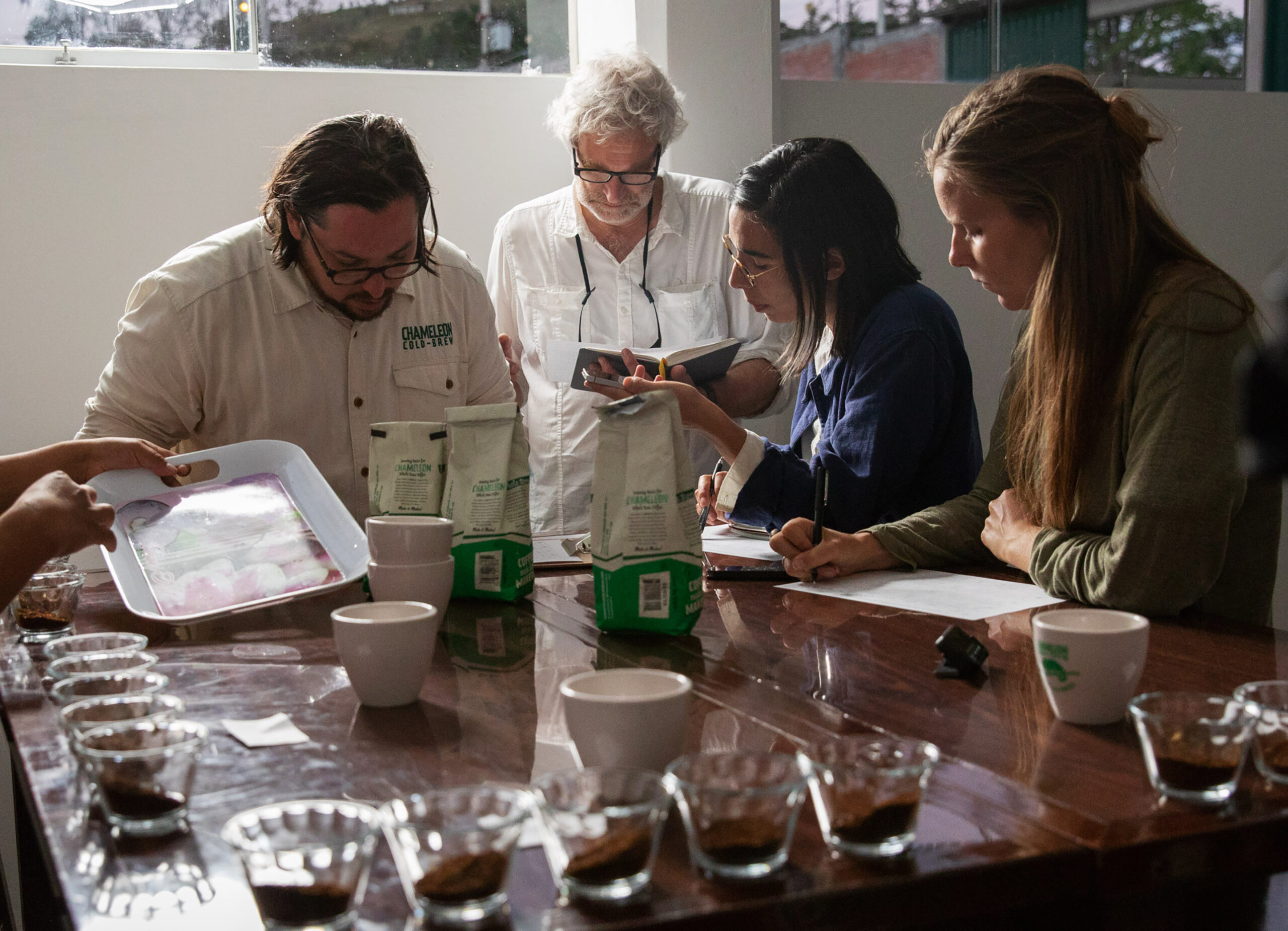
The lab is housed in a corner of a capacious warehouse that, at peak harvest, will hold 20,000 sacks of green coffee, and it is so new that the smell of fresh paint mingles with that of the beans being roasted in preparation for Q Grading. Q Grading is the process by which the quality of a coffee is evaluated on that 100-point scale, and at the heart of that process is cupping. Like eating ribs or Olympic speed walking, it is impossible to look elegant while cupping coffee. I watch as five Cenfrocafe cuppers—all in their late teens and early twenties, all from local coffee-growing families—aggressively sniff, stir, waft, slurp, and spit their way through three batches of coffee in order to extract detailed tasting notes.
Q Graders undergo a rigorous certification process overseen by the Coffee Quality Institute, and as a result there is a surprising consistency to the flavors identified and marks given by Q Graders around the world. Swenson explains how he and Juan Pablo Niera Chininin, the son of a San Ignacio coffee farmer who now runs the Q Grading lab, are able to minimize subjectivity when scoring a cup of coffee. “It doesn’t matter if my flavor experiences throughout my life have been different than Juan Pablo’s. We share a sensory lexicon, so we know that what I say tastes like honey he also thinks is honey. Or milk chocolate. Or raspberry.”
When people talk of sustainability, they are talking less about environmental responsibility… and more about whether coffee farming is a viable way to make a living.
It may seem odd that a cafetalero would need a specially trained third party to tell him whether or not his coffee is of good quality. Certainly it goes against the trope of the wise farmer, face weathered by the sun, who fondles his citrus and knows exactly how many days until his crop is ready for harvest. But in many ways, cafetaleros have more in common with gold miners than they do with orange farmers. While coffee is an agricultural crop, it is also a commodity traded on the open market, and most smallholder farmers cannot afford to drink what they grow.
Kevin Sullivan manages the North American office of Falcon Coffees, a sustainably-minded trader that acts as the middleman between Cenfrocafe and Chameleon. “I used to think that when you come to coffee origins, you’re going to drink the best coffee,” he says. “No, the best stuff—of any commodity—gets exported. A lot of farmers don’t ever see their coffee in a liquid format. Prior to having this lab put in, there was no cupping, no quality testing in the area of San Ignacio.”
That meant that all of the Cenfrocafe farmers in San Ignacio bulked their beans together and sent them to Jaén, roughly 70 miles to the south, for evaluation. Individual farmers were not being recognized for their work, for better or for worse. The new San Ignacio cupping lab allows individual farmers to submit bean samples for grading early in the harvest, enabling them to correct for post-harvest imperfections and potentially raise the quality of their beans. A Q grader may detect phenolic compounds, which suggest the beans were dried incorrectly, leading to an unpleasant undertone of Band Aids. Or an overly astringent coffee may point to too many unripe cherries in the batch.
Even if smallholder farmers—the term used to describe family farmers, who produce 80 percent of the world’s coffee—do drink their own beans, they are potentially unfamiliar with what happens to their crop once it leaves their hands. Back in the conference room, Matt Swenson from Chameleon loads up a presentation explaining their products, the backbone of which is a cold brew concentrate. He explains that not only is the coffee meant to be consumed cold, it is also brewed without heat. The farmers furrow their brows. Matt projects their range of 10 oz ready-to-drink bottles on the wall, each with a different jewel-toned label. One of Cenfrocafe’s officers asks if the colors denote different qualities of coffee:
“Is the blue label, say, an 84 scoring coffee?”
“Um, no,” Matt replies. “The blue is vanilla flavored.”
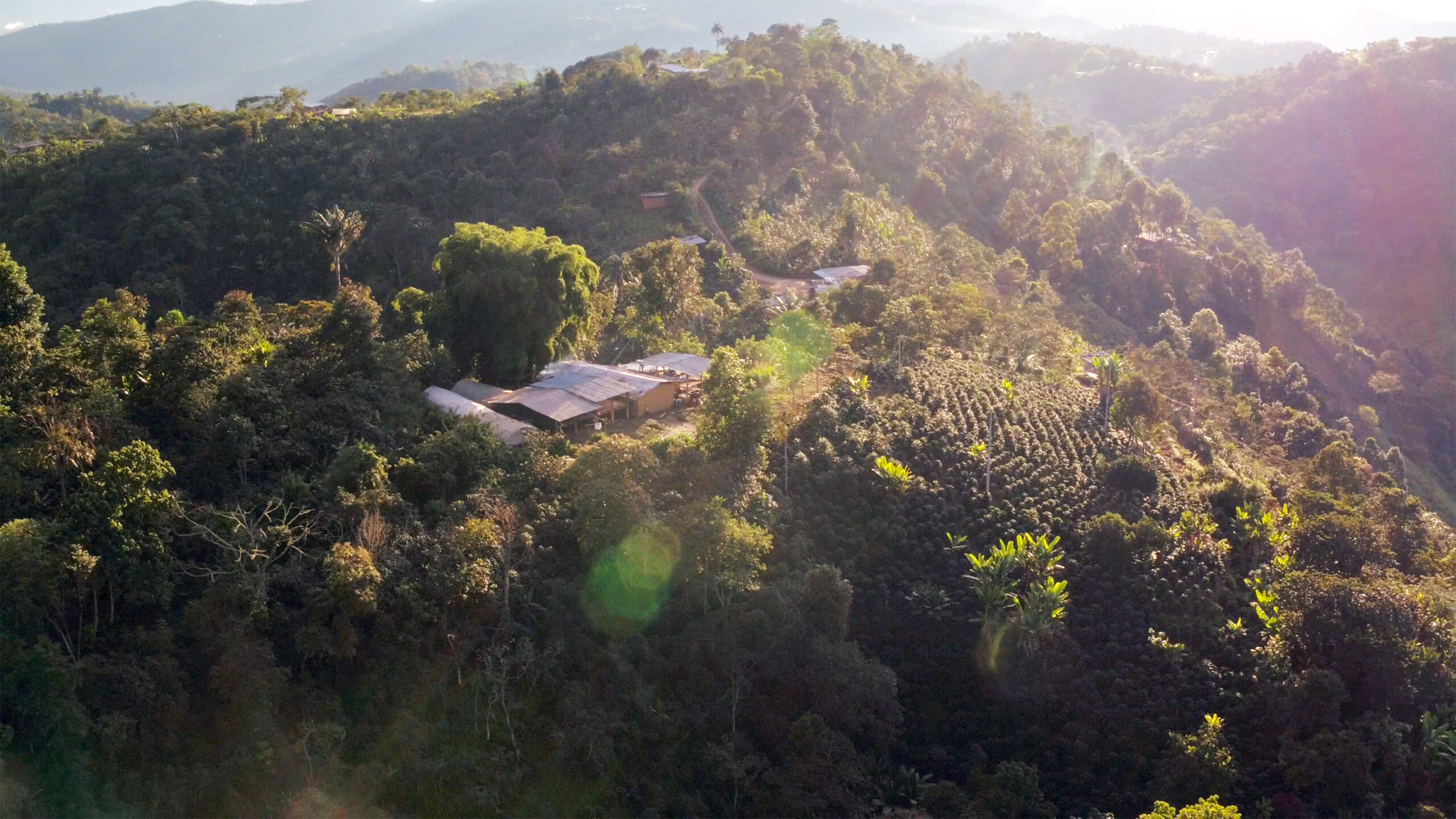
A gentle-faced man in a red polo raises his hand. Teodomiro Melendez is one of the co-founders of Cenfrocafe. From a coffee-producing family in San Ignacio, he excelled in school and studied agronomy in order to return home and help his community. Melendez begins with pleasantries—thanking Chameleon for investing in farmers, for being here at all—before launching into his question, politely but unflinchingly. “Globally, farmers only get 10 percent of what is paid. As producers, we don’t have the luxury of covering costs, let alone making a margin. What are we supposed to do? And what are you going to do to keep people on farms?”
This is the heart of the issue. For all the commitments made by Chameleon and other ethical coffee roasters to improving farmer livelihoods, the lot of a cafetalero is one of economic instability at best and poverty at worst. Chris Campbell jumps in to respond to Melendez’s question, explaining that there’s simply a limit to how much American consumers will pay for a cup of coffee. His business too must cover its costs. All of this is true—and if Chameleon were to fail as a business, the farmers of Cenfrocafe would lose a committed buyer—but it is hard to find the equivalency between the cold-brew brand whose parent company is Nestlé and the farmer we just visited whose floor is made of dirt.
“Building the capacity of cooperatives to do their own quality testing is valuable,” says Stephanie Daniels, a Senior Program Director at the Sustainable Food Lab, an NGO that works with corporations and farmers alike to find market-driven solutions to sustainable food production. “That said, it’s only one piece of the puzzle.” Coffee farmers are plagued by lack of access to credit, volatile pricing that fluctuates from season to season and a rapidly changing climate. Buyers like Chameleon aim to mitigate those burdens by providing fixed-price, multi-year contracts so that farmers are not entirely at the mercy of the environment and the commodities market, but Daniels says that consumers have an important role to play too. “Coffee is not highly processed the way cocoa is, so you can understand the supply chain more easily. Those beans in your bag were grown by a person.” A consumer who cares about that person might seek out roasters that are meaningfully investing in grower communities or that disclose how much they pay their farmers (like the participants in the Transparent Trade Coffee program) or that boast certifications like Fair Trade or Rainforest Alliance.
There is a term used in the development world that comes up often in discussions about coffee farming communities: “food insecurity.” It is a euphemism for when people do not have enough to eat. For many smallholder coffee farmers, “the lean months” refer to the period of time between when the money from the last crop runs out and the next harvest begins. This is the specter that looms, invisible and yet weighty, over all the discussions about how to increase yields and raise quality. What is at stake for Chameleon is the integrity and continuity of a supply chain that will determine the success of the company, which, as of summer 2018, employed 41 people full-time and is responsible to its shareholders. What is at stake for the farmers of Cenfrocafe is their ability to send their kids to school, pay their medical bills and put food on the table.
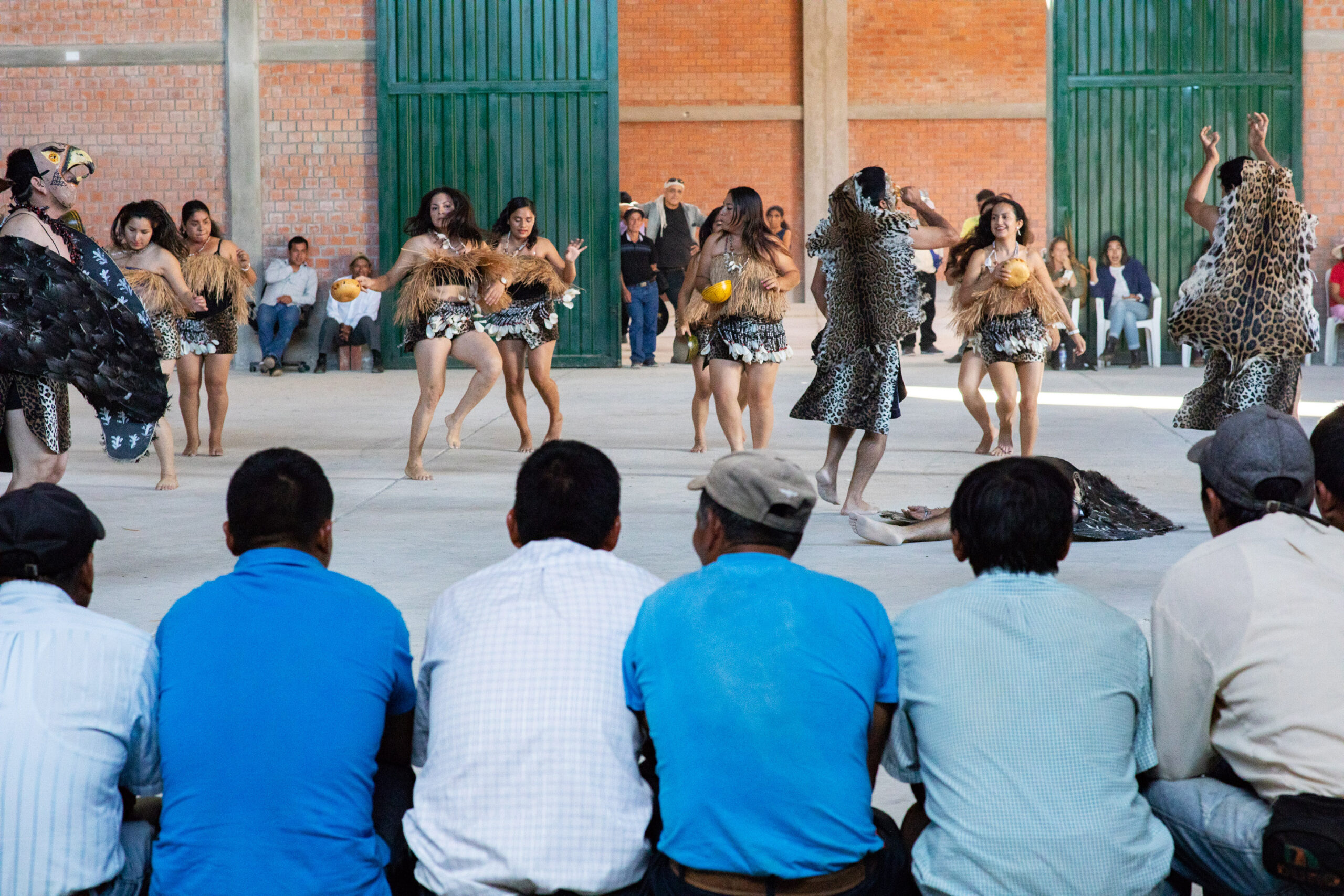
The next day, we all reassemble in San Ignacio for the official opening of the Q Grading lab. Hundreds of farmers line the perimeter of the Cenfrocafe warehouse together with their families. There are speeches, a talent show and a community barbecue featuring the local specialty, guinea pig—which, yes, tastes like chicken but looks unmistakably like a guinea pig, buck teeth and all. Swenson and Campbell are called outside to smash a bottle of champagne with a hammer. Over the Peruvian cumbia blasting from a tower of speakers set to 11, I tell Teodomiro Melendez that I was impressed yesterday by his willingness to ask the hard questions of the Chameleon team. He explains that coffee farmers traditionally don’t have a voice, and so it is incumbent on him to speak when the opportunity is presented.
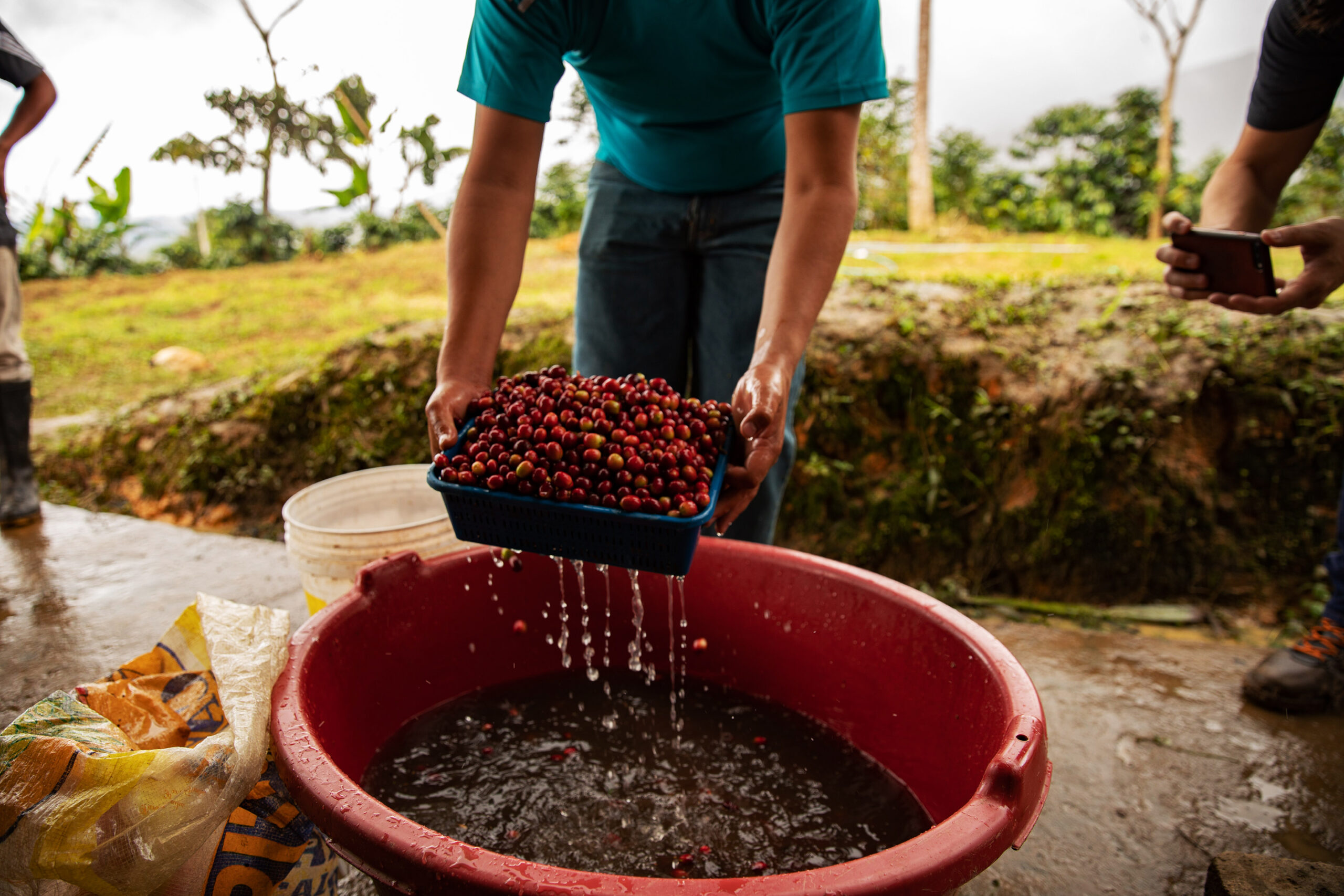
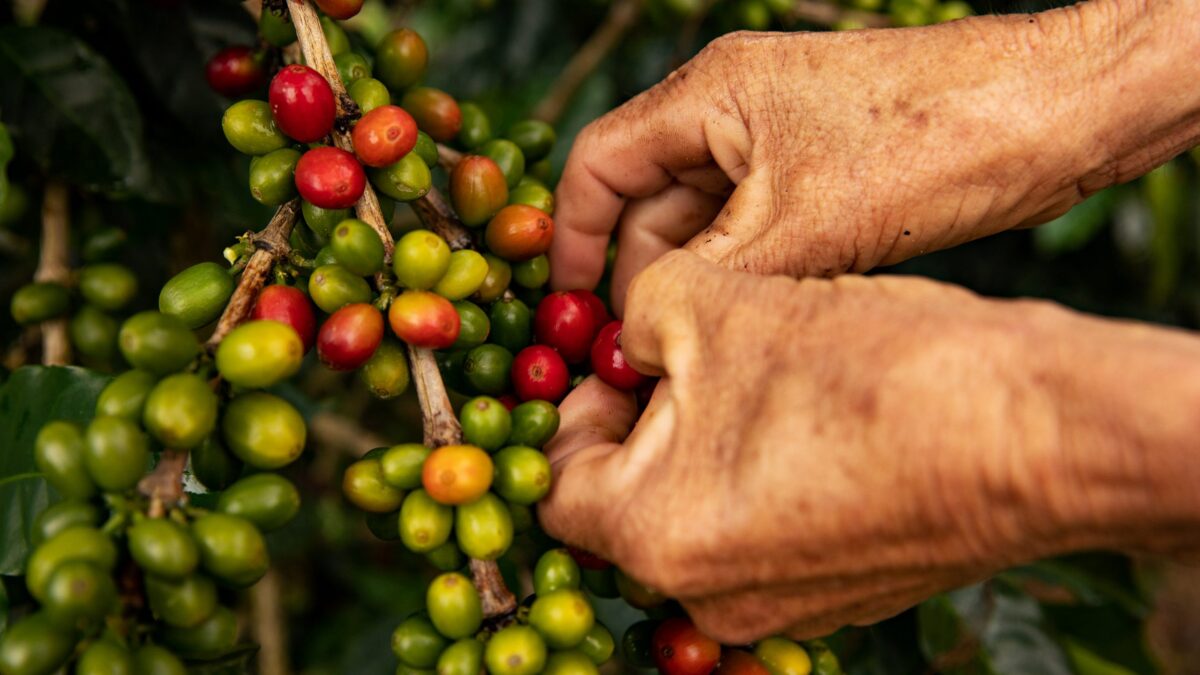
I think back to a few hours earlier, when we had visited a few of the smallholder farms with Melendez. I had been amazed to see the amount of painstaking labor that went into the harvest—the picking, the washing, the sorting, the pulping, the fermenting, and the drying, all done by hand. Chris Campbell had seemed just as surprised as I was. He may be the CEO of a coffee company, but ultimately he’s a business guy, with an MBA and a background in consulting. He doesn’t spend much time at origin. As we had walked the fields, watching the cafeteleros’ fingers ferret out only the ripest cherries, Campbell had said to no one in particular, “How is it possible you can buy a cup of coffee for a dollar?” Maybe, I thought, it shouldn’t be.