Your bag is empty.
The 2018 shuttering of Mon-Li brought lessons that range far beyond its exquisite sipping menu
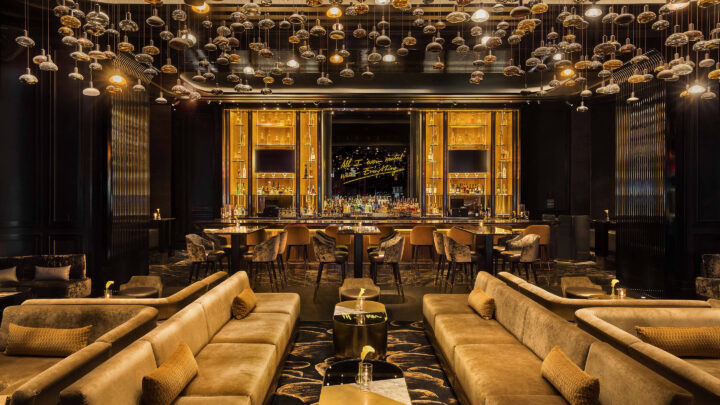
A 12-seat bar nestled between the Pacific Ocean and the Malibu Hills in Southern California, Mon-Li should be racking up Michelin stars, James Beard Awards and national press attention.
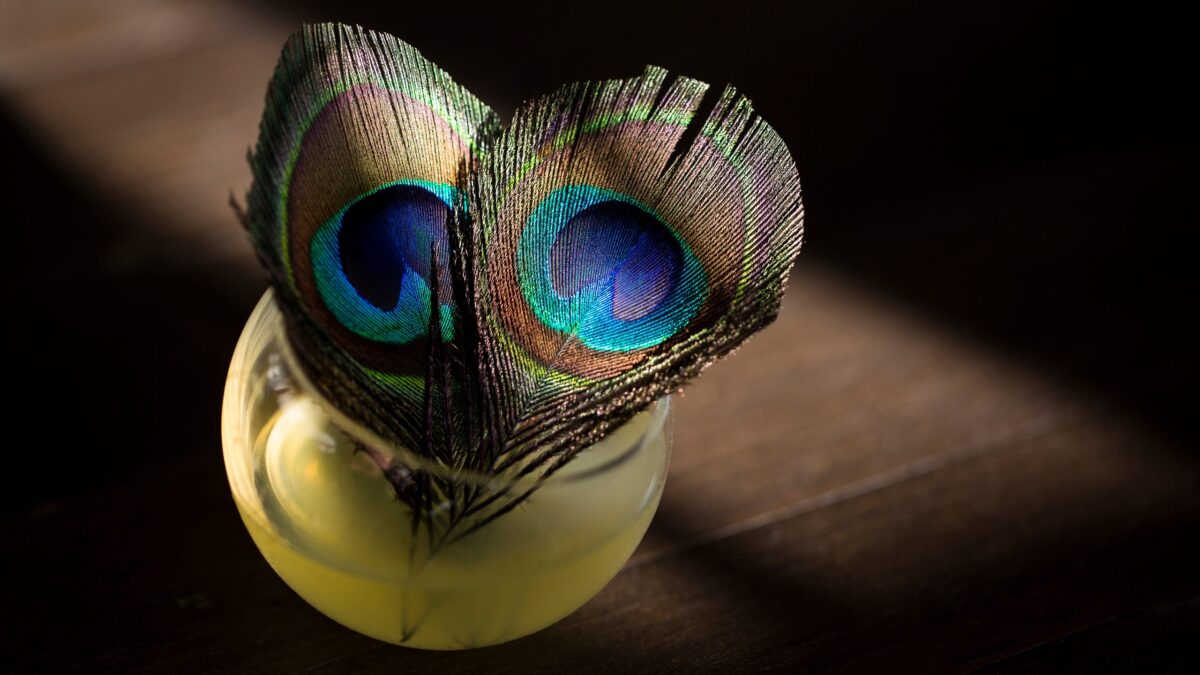
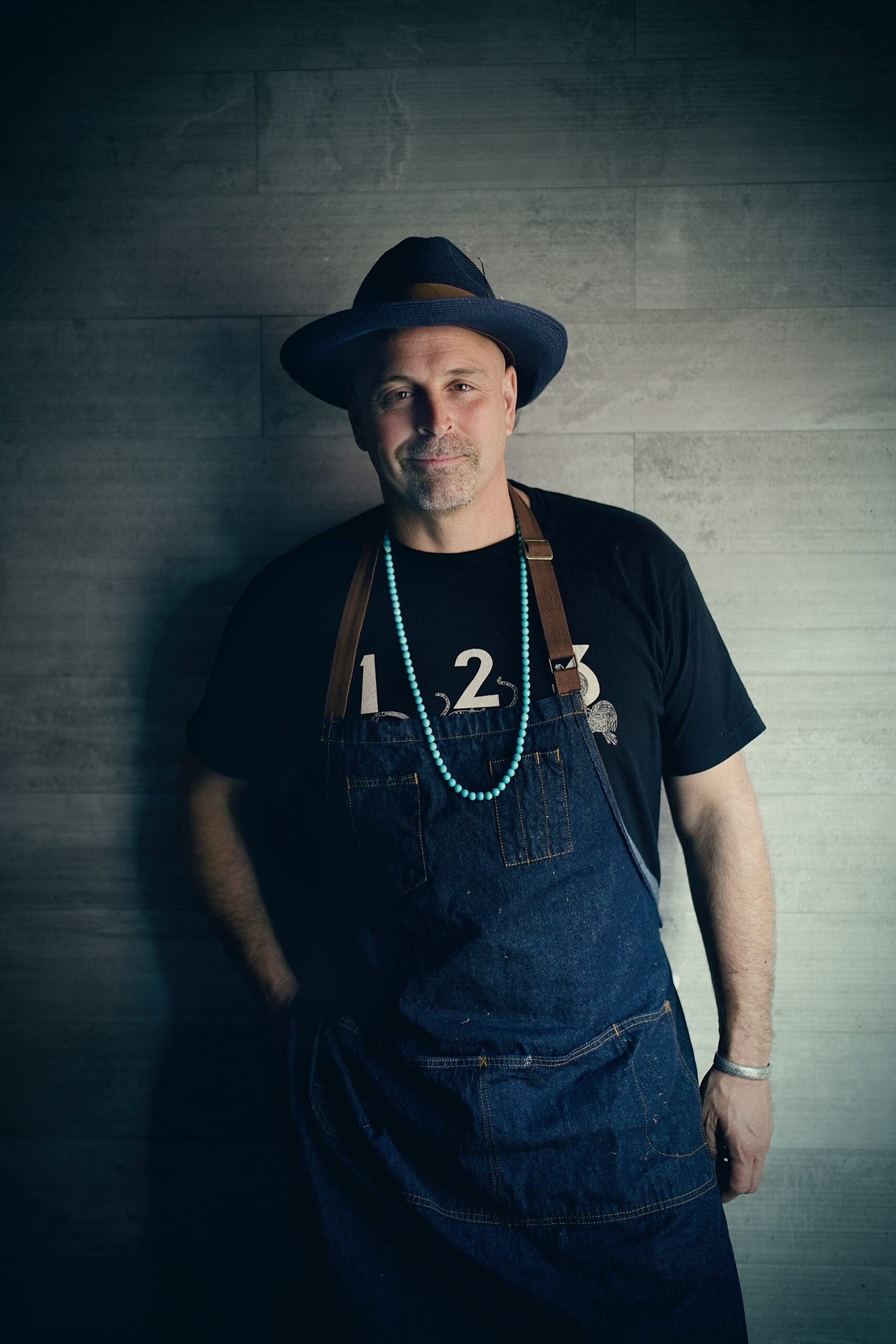
Bartender-chef Matthew Biancaniello is well known locally for his complex, culinary-style cocktails (many of which are collected in his 2016 book, Eat Your Drink), and the place, whose 18-course tasting menu featured ingredients grown in an on-site garden, was to be his magnum opus. The opening menu included a cocktail consisting of sea moss-infused mezcal, white balsamic vinegar, a wild herb called huacatay and sparkling sauvignon blanc, garnished with iridescent peacock feathers.
But it was only Mon-Li’s fifth Thursday night in business when the Woolsey Fire ignited in those hills, on November 8, 2018. “The night the fires came, I was saying this is the best we’ve ever been,” Biancaniello says. “We had divers pulling lobsters out of the water right in front of the bar that day that we served!”
A filmmaker who’d been an underwater cameraman for Jacques Cousteau’s production company, an on-set animal handler and a yoga teacher, Biancaniello doesn’t have the background of your typical craft-cocktail mixologist. He started tending bar around age 40, and when he began replacing the low-quality produce in his cocktails with fresh fruits and vegetables from the Santa Monica Farmers Market, he started getting lots of attention.
The fire caught Biancaniello off guard. “I knew there was a fire and wind, but I didn’t think there was any danger,” he says. The smoke and firefighting efforts forced the bar to close for the weekend, and on Saturday morning he got a text from a friend who’d seen on TV that Mon-Li was on fire. “I couldn’t get in touch with my partners; I found out later that all five of their homes burned,” Biancaniello says.
It was 12 days before he was even able to return to the property.
The fire spared most of Mon-Li itself, but the one wall that was damaged contained all of the building’s utility connections. And with the widespread damage in the city of Malibu, inspections to get the electricity, water and gas turned back on would take a while. “In my naive way, I thought we’re gonna clean this up and get it open again,” Biancaniello says. But when Mon-Li still didn’t have electricity nearly six months later, he finally had to declare the project dead.
Whipped up by high winds and fueled by drought conditions, the Woolsey Fire burned nearly a million acres of Southern California, damaged or destroyed about 2,000 structures and killed three people. It was one of dozens of California wildfires last year: The Camp Fire, which ignited in Northern California on the very same day, became the most destructive in state history, killing 86 and destroying 14,000 homes.
As climate change continues to make the state hotter and drier, fires like these are becoming more and more common. An L.A. County report on the Woolsey Fire says that five of California’s deadliest wildfires have happened in the last two years, six of the most destructive in the last 10 years and 15 of the largest in the last 19 years. I write this just over a year after Woolsey, in the wake of wildfires that raged once again up and down the state.
But around the world, in ways as dramatic as wildfires and as mundane as slight swings in yearly rainfall, climate change is starting to have a serious effect on how we eat and drink.
We had divers pulling lobsters out of the water right in front of the bar that day that we served!
In Italy, the 2018-2019 olive harvest yielded 175,000 tons of oil, the lowest since 1990. Extreme weather and rising temperatures—especially in the south of the country—have forced production steadily downward for the last 15 years. Many Italian producers are turning to more heat-tolerant Spanish olive varieties, which also offer the advantage of being machine-harvestable, but this takes time. Salvatore Bono, co-owner of Bono Olive Oil, is one of few producers preparing for further changes to the weather by buying up hundreds of acres of land in Sicily to plant Spanish trees—but those won’t yield fruit for a few years. “From what I’ve heard, [most producers] are scrambling,” he says.
Much like olives, grapes come in many different varieties, each adapted to specific weather and soil conditions, and the wine world too is being shaken up by climate change. Temperatures in top wine regions like Bordeaux and the Napa Valley are rising steadily, effectively forcing winemakers to move their vines further from the equator to find the right growing conditions. Champagne producer Taittinger planted experimental vines in England in 2017 and expects to release its first British sparkling wine by 2023.
In the last decade or so, wine production has spiked in the UK, along with such other unexpected areas as Denmark and Poland. “There are ‘new’ wine-growing regions that have shown enormous growth in both quantity and quality,” says Karl Storchmann, clinical professor of economics at New York University and editor of The Journal of Wine Economics. “In the US, expect East Coast winemakers (e.g. in New Jersey, Virginia and New York) to make further progress and improve their already great products.”
In actuality, climate change will (at least temporarily) create some food and drink “winners.” Much as rising temperatures in Europe are pushing vineyards northward, rising ocean temperatures in the Atlantic are pushing lobsters in the same direction. Since 1990, the annual lobster catch in the state of Maine has roughly sextupled, for example, while landings in southern New England have dropped. And a paper from Columbia University’s Columbia Center on Sustainable Investment estimating global warming’s impact on coffee found that although the total amount of beans produced worldwide should stay roughly the same through 2050, Ethiopia and Vietnam will be growing a much larger share, while Colombia and Honduras’ coffee industries will be largely destroyed.
Climate change is happening, has been happening and will continue happening. But food and drink, for the most part, isn’t ready, which means more big, sudden and drastic changes are on the way.
“When the fires happened, I was just in shock,” Biancaniello says. “I’d lived in L.A. for 19 years and knew there were fires, but until that actually happens to you, you’re removed from it.”
Since last November, Biancaniello’s been working on a new book of recipes called Omakocktail, and he just started a “residency” behind the bar at chichi restaurant N10. “All of my experiences—my work and my travels—have fed into what I do,” he says. He’s working on perfecting a California kelp forest–themed menu: “In my underwater filming career, I got to go places recreational divers don’t, and document sea life that would be lost if there was another major oil spill.”
Apparently Biancaniello is the only one who feels removed. “We haven’t heard many solid plans in addition to ours to navigate these tougher times,” says Sicilian olive oil maker Bono (and even his plan is still in its early stages).
Biancaniello is also seeing climate change affect his profession in ways more subtle than fires and crop migration. “Even before the fires, it was so damn dry up there,” he says. “This farm that used to supply currants doesn’t grow currants anymore. The drought affected the mushroom hunters. All of these great mushrooms—like chanterelles especially—had shorter seasons and fewer mushrooms because of the lack of rain.”
He goes on: “But the biggest thing was the bees. Because it was so dry and there weren’t any plants or trees, I had to feed them with sugar water every day. You can’t eat that honey.”
Biancaniello has definitely not gotten over the death of Mon-Li. “The place was genetically made for me,” he says. “I had three huge gardens, I had all this cactus fruit and nasturtiums on the property. There were wild walnuts—I made 12 jars of nocino. It all burned in the fire, and I won’t even be able to replicate that for years.”
All of which makes you wonder how a fancy night out will look in 2050: Imagine enjoying a nice Welsh sparkling chardonnay with Nova Scotia lobster and a very expensive cup of Ethiopian coffee—but definitely not any Gulf oysters—in an underwater restaurant where New Orleans used to be.