Your bag is empty.
Playboy columnist James Barkman documents his solo adventures to the world's most isolated corners
The coordinates 70.2556° N, 148.3384° W are home to Deadhorse, Alaska, the end of the road in North America that looks as stark as the name sounds. It is a place positioned 300 miles above the Arctic Circle and is the northernmost road-accessible town in the Western Hemisphere.
Sunlight is 24/7 during the summer, when it is rumored that thick clouds of mosquitoes tend to block out the sun. (Seriously.) The winter months are equally contrasted with an eternal darkness, save for the frequent light shows of aurora borealis, the Northern Lights. The arctic is not for the faint of heart. There’s no doubt about that.
My two friends and I made one last stop for gas, water and pipe tobacco before hitting the Dalton Highway. The guy on the other side of the pump hollered, “Oh, you’re going to Prudhoe? Lotta grizzes up there you know. Good thing you’re takin’ a gun with ya’ll.” The old timer’s leather boots were weathered and his beard was almost as thick as his accent. Tobacco in his cheek and a sun faded baseball cap, he wasn’t the first local to warn us about grizzly bears. I couldn’t help but feel the familiar rush of adrenaline at the thought of getting back into truly wild country. I wasn’t convinced my 30-30 lever action would do much to a grizzly, but it was better than nothing.
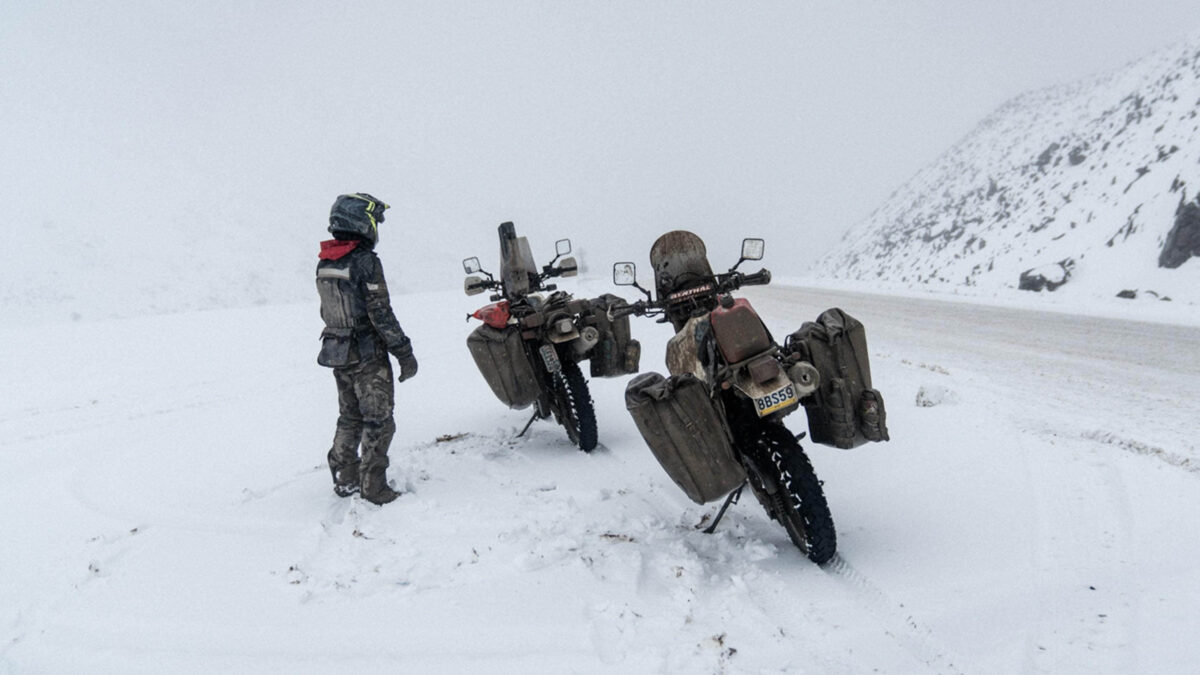
While some people’s idea of an adventure might be one that caters to tropical beaches with palm trees and coconuts, there’s always been a bone in my body that shies away from the traditional expression of entertainment. I hate being miserable as much as anybody else, but I believe the subtle dangers of comfort and passivity pose an even greater threat.
No matter who you are or where you’re from, you could probably agree that we live in a culture of instant gratification. I grew up surrounded by creeks and cornfields, in the countryside of rural Pennsylvania, before the days of even Sony Walkmans and DVDs. My upbringing instilled in me an appreciation for simplicity and balance that has laid a valuable foundation for my life. My parents ensured that my childhood was spent reading books instead of watching TV, and romping through creeks instead of playing video games. Every kid longs for real, genuine adventure, but not all seem to be able to keep their dreams protected from the clutches of adulthood.
I see life as a holistic pursuit in the sense that it can’t be compartmentalized. The way you approach one area is going to bleed into others, for better or for worse. Riding a motorcycle (mine is a Suzuki DR650) won’t change your life but at the same time, riding a motorcycle can completely change your life. The presence of discomfort and hardship in the pursuit of something meaningful is a powerful thing. Okay, I may have plagiarized that principle from Zen and the Art of Motorcycle Maintenance, but it’s a good one. I’ve learned that what I structure into my life will affect it on a philosophical and psychological level.
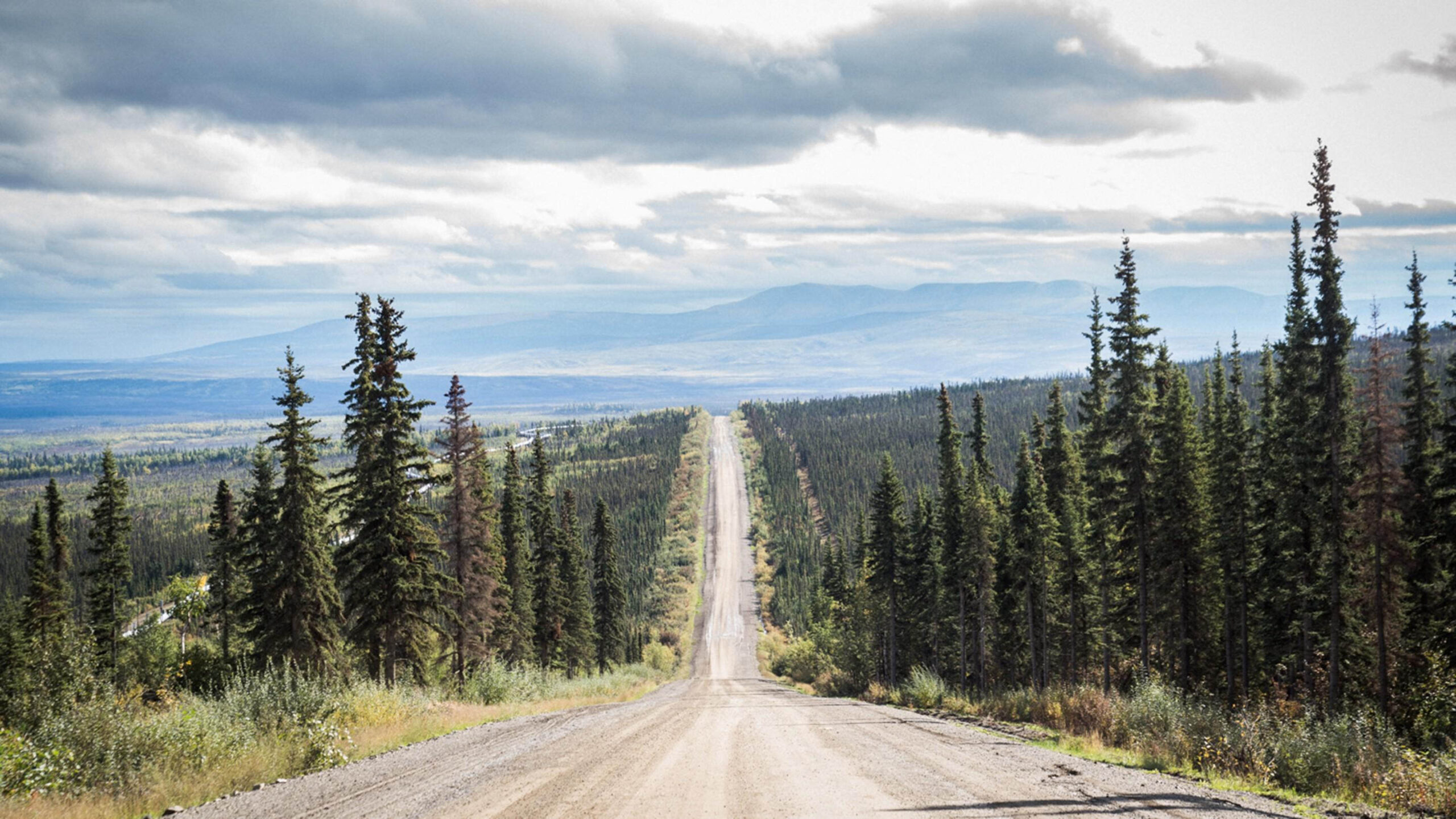
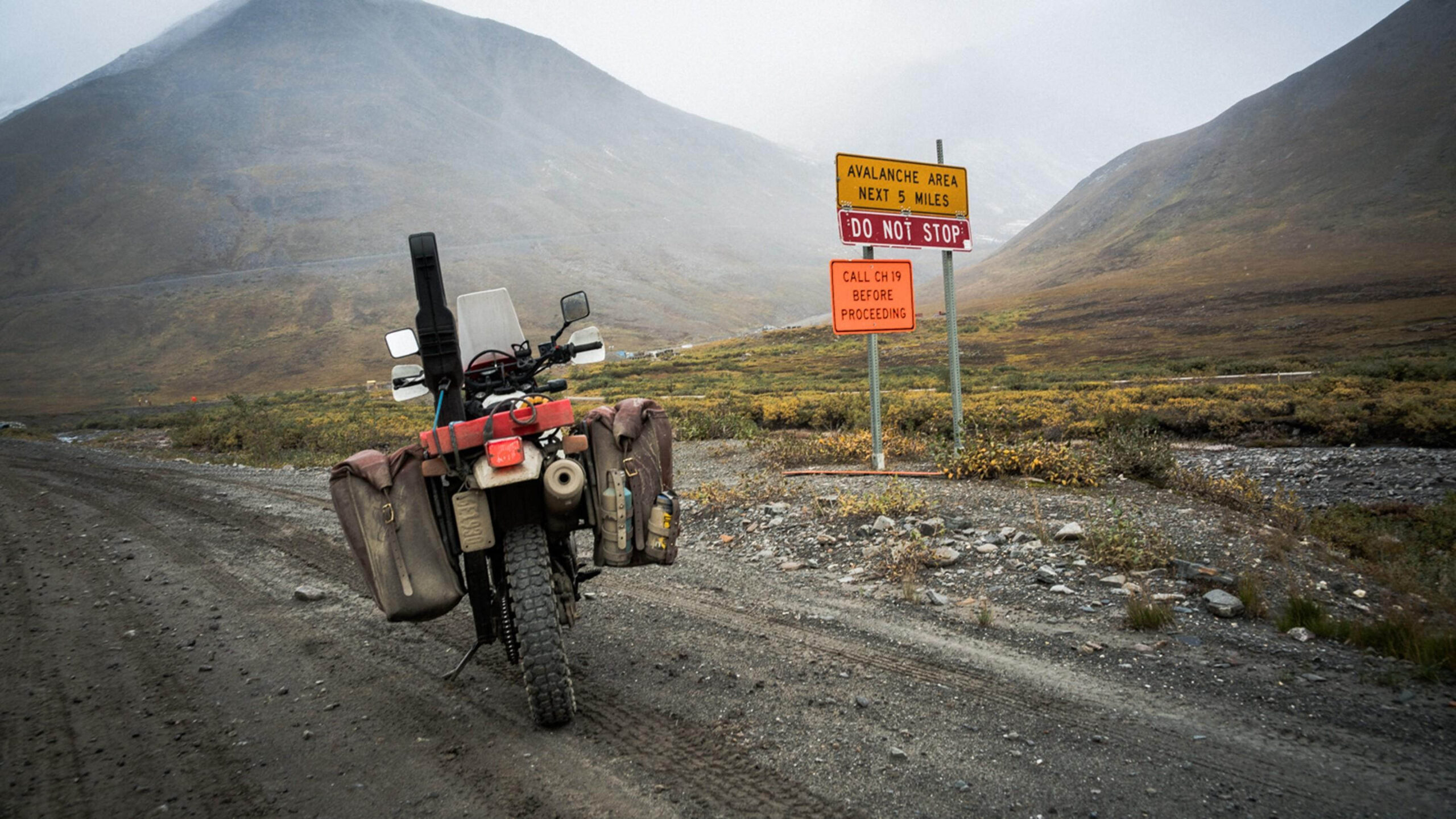
The Dalton Highway runs from just outside Fairbanks to the tiny industrial town that was our destination, right on the edge of the Arctic Ocean. Built and used by greasy, road hardened Alaskan truckers for the purpose of transporting oil and supplies, it stretches more than 414 miles before ending at the oil fields of Prudhoe Bay. With the exception of two “towns” along the highway, neither of which boast a population of more than 22, it’s nothing but mostly unpaved road that cuts straight through unadulterated arctic tundra, mountains and forests. Teeming with muskox, caribou, moose, wolves and grizzlies, the highway is a dust bowl in the summer and a mud pit come the autumn rains. The winter packs on more than a few feet of ice and snow, not to mention frequent avalanches and temps of minus 60 degrees Fahrenheit.
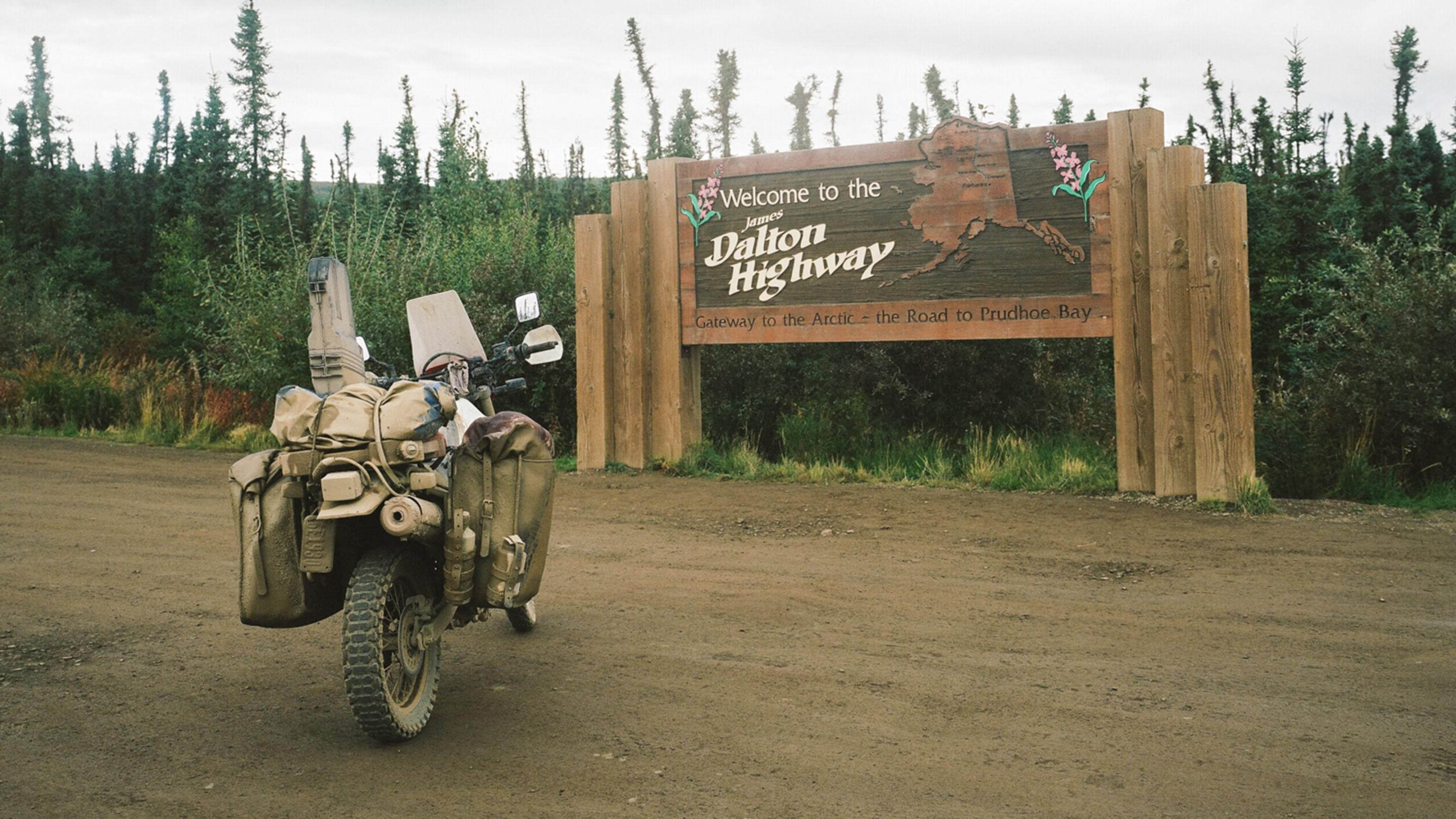
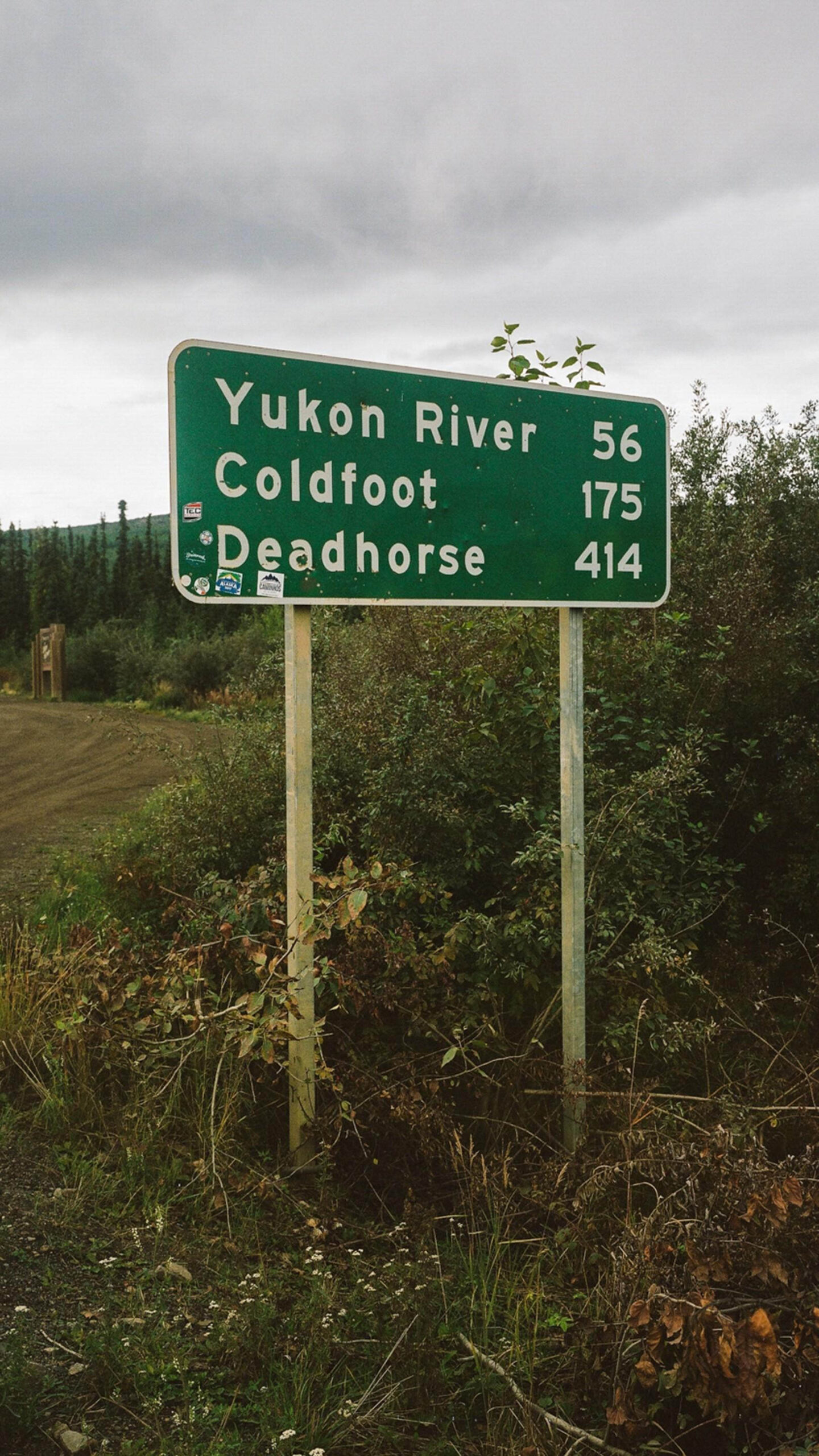
“Deadhorse 414 miles” the sign read. Staring down the muddy, cold road ahead of us, we had just arrived at the official start of the Dalton Highway, the “Gateway to the Arctic”.
“Hope we don’t break down,” Jeremy said.
“Or get eaten,” I joked.
We shared a laugh as the skies turned grey. For the next 828 miles, we were on our own. No service, no backup plan—just raw, arctic wilderness. My apprehension gave way to excitement for the adventure ahead.
Beer, check. Gas, check. Rifle, check. The arctic wasn’t a place that we wanted to get caught with our pants down, and weather was in the forecast—even though, up here, that didn’t really mean much considering weather patterns changed without warning. Ask an Alaskan what the forecast is, and he’ll just tell you to step outside.
“Looks like rain, better get a move on,” Allen surmised.
We cracked into our ration of lukewarm Pabst Blue Ribbon, raised a toast for good luck and crossed our fingers in hopes that we didn’t run into an early snow storm. I tightened my goggles, gave the boys a thumbs up and kicked my bike into gear.
Winter comes early in the north country. By the time summer is hitting the lower part of Alaska and Canada, it’s nearly on its way out in the Arctic. The cold welcomed fall/winter in full swing, turning the leaves brilliant colors of orange and yellow. We rode by hundreds of miles of truly breathtaking landscapes that stretched as far as the eye could see.
The painted forests turned to mountains, and the mountains to tundra. Even though I couldn’t feel my fingers, the rush of icy wind in my face and the steady hum of 650 cc’s under the seat gave me a sense of connection to the landscape. The fact that I wasn’t sitting in a warm, dry, vehicle, comfortably watching it all pass by through a pane of glass was strangely invigorating.
A large bull moose bolted as I passed within a few yards of it, startling me out of my daydreams. Good thing he bolted left, I thought to myself.
I woke up to the sound of the tent walls flapping in the wind. We had arrived at camp the night before, completely exhausted from the last two days of hard riding through an intense combination of wind, rain and sleet.
We had entered the Arctic Circle over a hundred miles back, and the weather was sure holding to its reputation. The temperature dropped well below freezing, and I had slept in every layer of clothing I had. Jeremy was up already and Allen was lying with his arms behind his head, looking at the ceiling. I didn’t say anything and neither did they—we didn’t have to, having long ago graduated from the pressure for small talk.
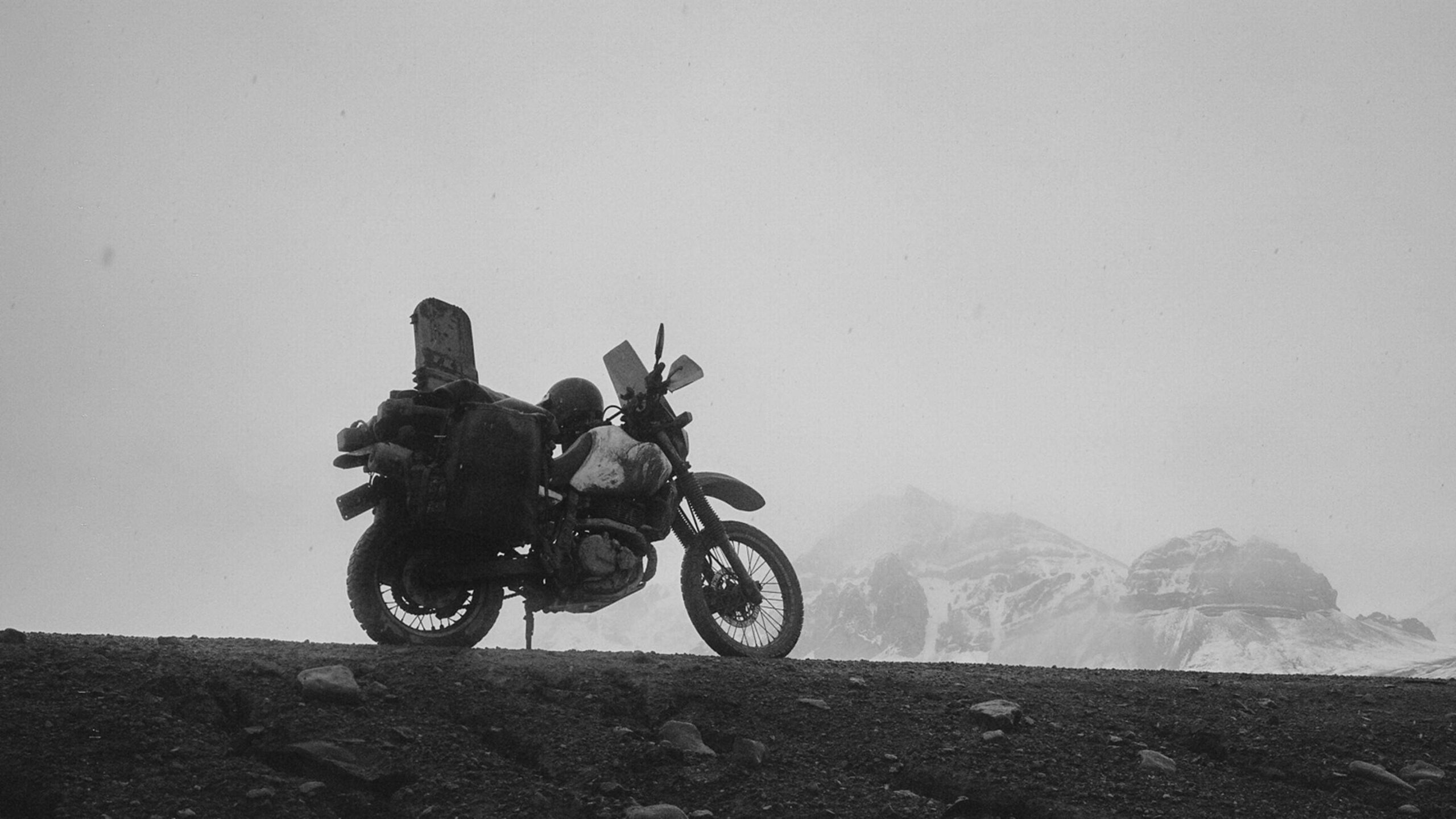
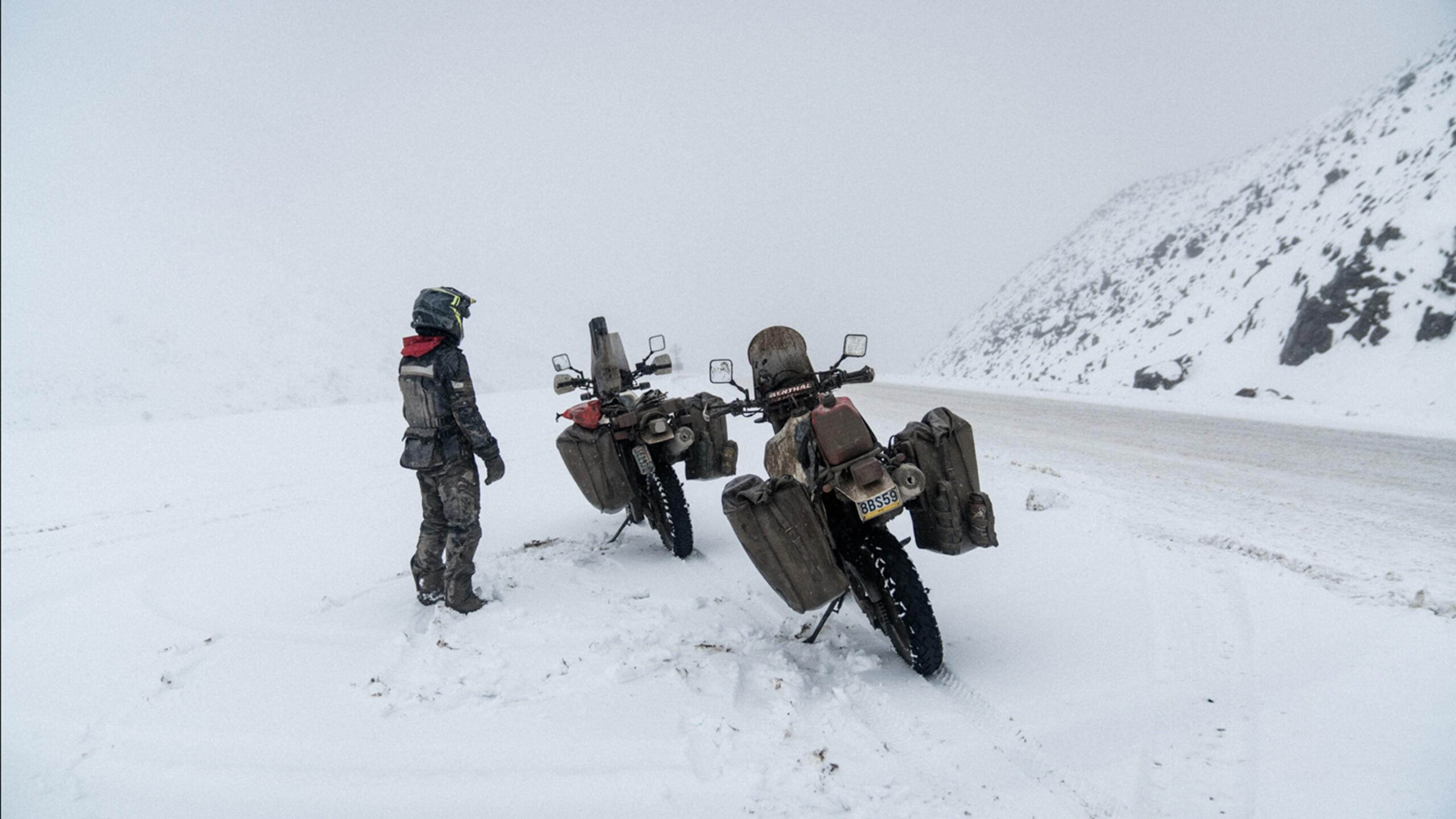
A fresh layer of snow blanketed our bikes, and the peaks of the Allagash Mountains were just so visible in the distance. The Arctic Tundra was vast, rugged, and beautiful. We were alone in an ocean of earth and sky. If nature doesn’t make you feel small, you’re doing it wrong.
Allen broke the silence. “That was a close call you had yesterday.”
We laughed, immediately remembering one of the many moments that are only found amusing in hindsight. Out here, a wreck was nothing to laugh about, and fishtailing at 65 mph is mildly terrifying.
“No kidding, that mud was so deep,” I replied.
The wind swept across the open tundra and somehow found its way through our tent walls. I unzipped the door, peeked my head out to assess the day’s weather, and squinted at the sky.
“Cloudy with a chance of snowflakes,” I reported as the snow piled higher on our motorcycles.
Covering long distances in a short amount of time results in driving through different weather systems. One minute we’d be riding through pouring rain, and the next under sunny skies with vibrant rainbows. The roads had been a mixture of gravel, dust, and mud, and temps were consistently hovering just above freezing.
I then went on, “I’m cold. How much whiskey do we have left?”
“Enough,” Allen replied.
I finished my mug of cowboy coffee (a hard to swallow, but necessary camping staple), spit out the grains and chased it with a couple swigs from our unidentified bottle of booze we had picked up at a liquor store in Fairbanks. I had been miserable for the last 48 hours and every small convenience did wonders for morale.
In a place like this, it’s interesting how values change. Not a thought was given to the piles of unread emails sitting in my inbox, what my friends thought of politics, or what was (or wasn’t) new on social media. My attention was given to the task at hand and the road ahead.
As we packed up camp and headed north once again, the weather turned to a steady rain and sleet, ensuring a true arctic welcome and turning the road into 100 percent mud. We struggled to keep our bikes on two wheels while simultaneously dodging the territorial semi trucks that liked to take the middle ground.
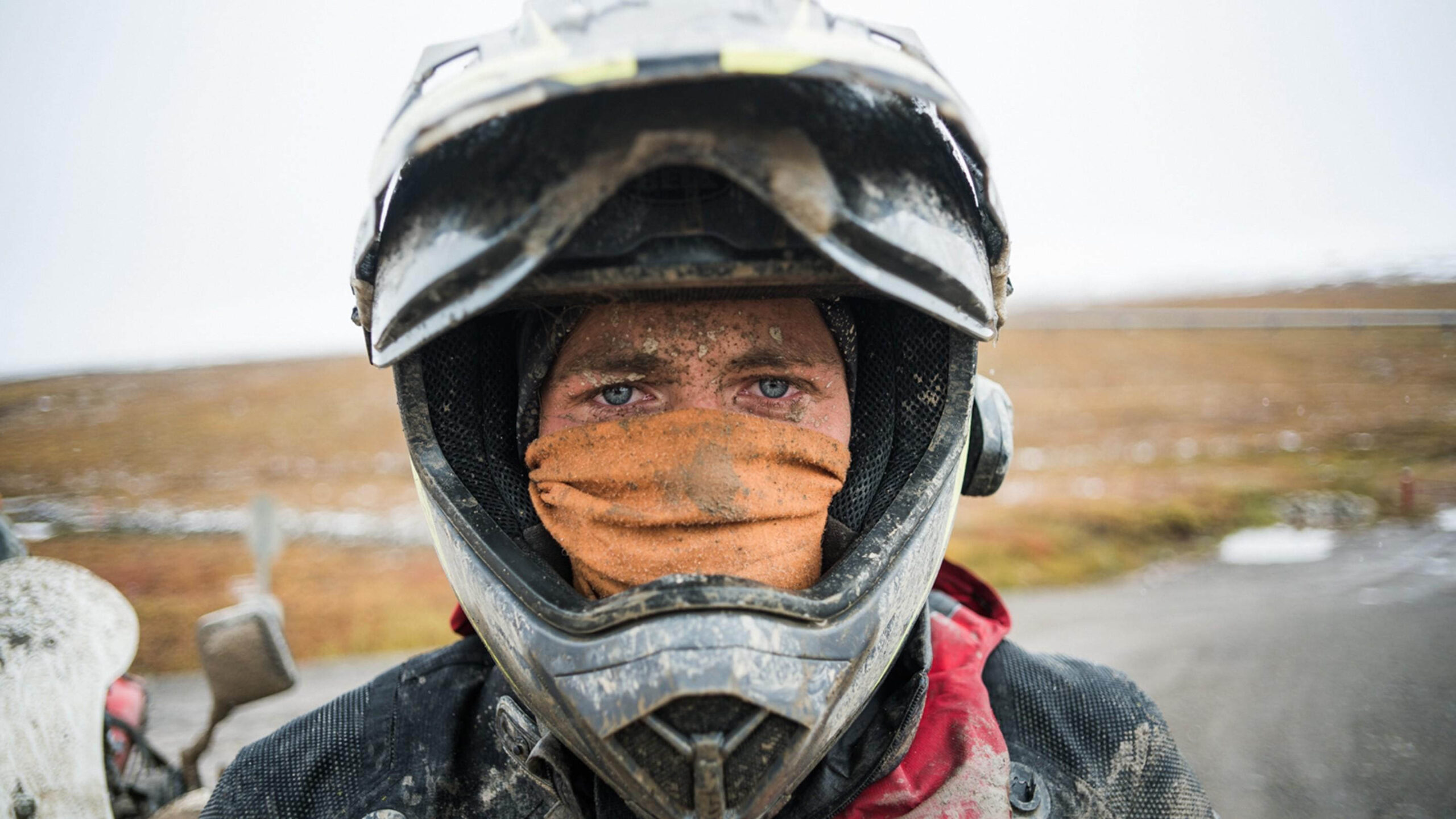
After 414 long, freezing miles, we finally arrived in the god-forsaken town of Deadhorse. Chilled to the bone, covered in mud from head-to-foot, hating it but loving every second of it—a strange phenomenon known as “type 2” fun.
A bulletin board warned locals of an aggressive sow and her cub known to chase people. We were in Alaska alright. It took 30 minutes for my fingers to thaw out and twice as long for my toes. After the most miserable riding conditions of our lives, we were about to turn around and ride straight back through it. I quickly snapped a couple photos of our triumphant success, and we left almost as soon as we arrived.
Our adventure was far from over, and the 414-mile journey back to civilization threw us a couple curve balls and left hooks in the form of disastrous breakdowns and a snowstorm. The arctic is certainly the most beautiful, awful place I have ever seen. Our journey wasn’t exactly a vacation, but it was an adventure, and it left me with stories for the future grandkids. After all, at the end of the day collecting memories, not things, is what will matter most.