Your bag is empty.

It was the law that led to the arrest of our founder. Now, it's targeting abortion pills by mail.

This story appears in our Spring 2026 issue, on newsstands April 14th. Want us to come to your place? Order the issue here to get it delivered to your door, or become a member to get digital access to the issue and early access to paywalled content.
A strange thing happened after the Supreme Court struck down Roe v. Wade in 2022: Abortions increased. Though 41 states have some sort of ban in place, many women are able to receive a prescription for abortion medication via a telehealth visit. Now one in four abortions nationwide occurs with pills received in the mail.
But if Republican politicians have their way, those statistics won’t hold for long. In 2023, the men who designed the Texas abortion ban, pastor and activist Mark Lee Dickson and former Texas solicitor general Jonathan F. Mitchell, tried to impose their morals on New Mexico by invoking 1873’s Comstock Act, a Victorian-era “zombie law” banning obscenity—including anything “designed, adapted, or intended for producing abortion”—from transport by the U.S. Postal Service.
The New Mexico Supreme Court struck down their attempt, but the duo didn’t see it as a failure. In fact, Mitchell said he was “thrilled” by the outcome. The case alerted conservatives across the country to Comstock’s potential: a way to create a back-door national abortion ban by restricting the mail.
Enforcing Comstock “is a very easy route to try to shut down abortion nationwide,” says Joanne Rosen, a professor at Johns Hopkins Bloomberg School of Public Health and co-director of the Center for Law and the Public’s Health in Baltimore. “The legislation is already there.… You have to enforce a law that already exists.”
Long before that New Mexico standoff, the Comstock Act nearly took down the magazine you’re reading.
Playboy’s very first issue hit newsstands in December 1953, featuring an investigation into “gold diggers,” Marilyn Monroe’s bare breasts, and a letter from founder Hugh Hefner positioning the magazine as a “pleasure-primer styled to the masculine taste.” Splashing into an intensely conservative post-war era, Playboy made waves when it hit newsstands, attracting the attention of the anti-obscenity crowd.
“We’re talking about the height of Cold War domestic politics, where sexuality is seen through that lens in this intensely politicized moment,” explains Whitney Strub, an associate professor of history at Rutgers University–Newark and author of Obscenity Rules: Roth v. United States and the Long Struggle over Sexual Expression. “The nuclear family is seen not just as a matter of sexual and social mores, but as a bedrock for the national project of Americanism.”
In both 1955 and 1958, the U.S. Post Office leveraged the Comstock Act—which prohibited mailing “every obscene, lewd, lascivious, indecent, filthy or vile article, matter, thing, device, or substance”—to try to stop Playboy from being sent to homes across America. And it failed both times.
By the time this happened, the man for whom the Comstock Act is named was long dead, but his prudish postal rules had staying power. Anthony Comstock was an anti-vice crusader who, after the Civil War, teamed up with the YMCA.
“Anthony Comstock was a mono-maniac,” says Amy Sohn, a journalist and author of The Man Who Hated Women: Sex, Censorship, and Civil Liberties in the Gilded Age, a book about Comstock. “He was obsessed with purity and chastity.”
Comstock used that singular focus, exploiting the rapid expansion of the federal government after the Civil War to infuse his strict religion into law—using the newly emerging federal power to bind sexuality to marital procreation.
Comstock claimed to have seized 150 tons of books and made 4,000 arrests between the time he was made a special agent of the U.S. Postal Service and his death in 1915. Over the course of the next decades, his anti-obscenity laws were eroded thanks to progressive attitudes and to a handful of court cases, including 1965’s Griswold v. Connecticut, which eliminated Comstock’s ban on mail-order birth control.
Still, the Comstock Act remained on the books.
While the explicit mission against obscenity eventually faded into the background, the Christian nationalism that drives these efforts never went away. The country endured an anti-porn crackdown that lasted from the 1955 hearings that blamed increasing “juvenile delinquency” on smut to the Meese Commission in the 1980s, a Reagan-era effort to prove that pornography caused violence and antisocial behavior. At the time, Hefner called this “sexual McCarthyism.”
Comstock seemed forgotten until the Supreme Court overturned Roe and the legality of the abortion pill came into question. “The federal government isn’t using Comstock to go after people with a painting of a sexy nude,” says Amy Werbel, an art history professor at the Fashion Institute of Technology in New York City and author of Lust on Trial: Censorship and the Rise of American Obscenity in the Age of Anthony Comstock. “The act is being selectively revived.”
In an apparent attempt to squash the conversation, the Biden administration’s Department of Justice issued a memo in 2022 declaring the Comstock Act essentially unenforceable. That hasn’t stopped efforts like the one in New Mexico, though, nor has it fully eliminated the possibility that the Trump administration will use Comstock to get closer to a nationwide abortion ban. Trump has hired at least one Comstock-loving lawyer, Josh Craddock, to his administration, and Rosen says there are some justices on the court who are, at a minimum, “Comstock curious.”
The same religious forces that drove Anthony Comstock’s lifelong anti-vice crusade are again in fashion, according to Werbel. “That basic drive for Christian nationalism, and very specifically, a white Protestant Christian nationalism, that’s what has never gone away,” she says, noting that it was Comstock’s fervent religion that led him to lump erotic materials and abortifacients together as obscenity.
We see this, Werbel says, in executive orders that seek to define gender, in the purging of women and trans people from powerful positions, and in efforts to control women’s bodies like an 1870s anti-vice crusader.
“It isn’t just women whose ability to control their fertility would be affected,” says Rosen. “Male partners would also have real limits to their ability to control their desire to become or not to become parents.”
The courts struck down those New Mexico laws, but a far bigger fight is coming. This past July, a Texas man filed a federal lawsuit against a California doctor, alleging he provided abortion pills to a former partner and violated the Comstock Act. His lawyer? Jonathan F. Mitchell. Experts expect the case to reach the Supreme Court—opening the door for Comstock to rise from the dead.
The short history of a bad idea.
1844 Anthony Comstock is born in Connecticut to deeply religious parents. He grows up to believe moral decay is as dangerous as treason.
1863 While serving in the Civil War, Comstock rails against fellow soldiers’ use of alcohol, cigarettes, gambling, and profanity, habits he sees as corrupting both men and the nation.
1865 Congress passes the first federal ban on mailing “obscene” materials, laying the groundwork for Comstock’s future campaign.
1873 Comstock launches the New York Society for the Suppression of Vice to limit the distribution of “obscene literature,” which is ultimately codified in what we now know as the Comstock Act. The law bans all obscenity—including magazines with nude pictures, birth control, items that induce abortion, and more—from being sent via mail.
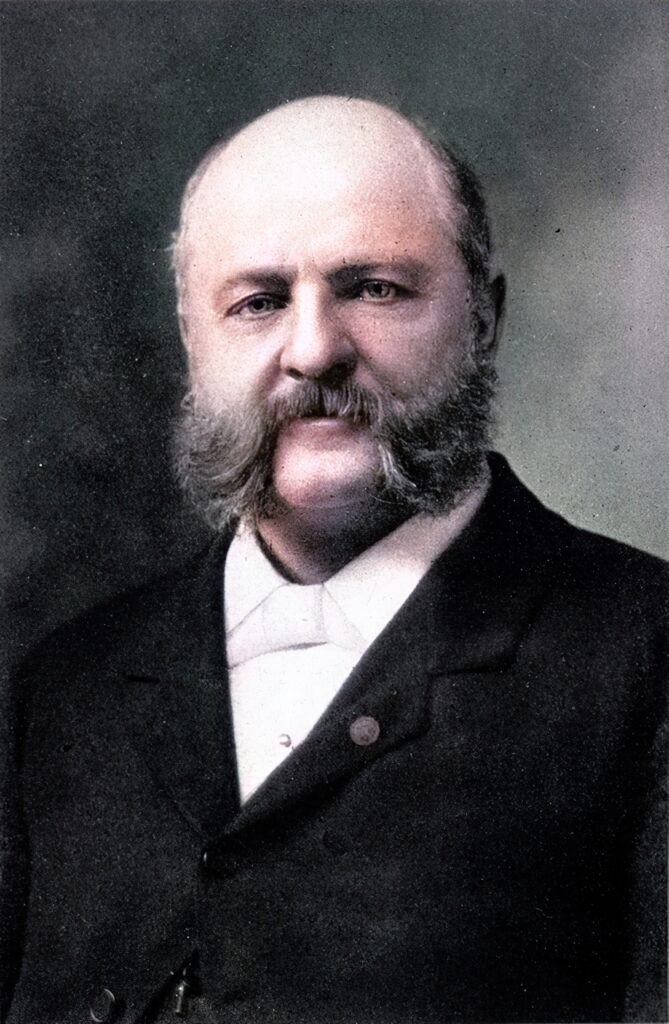
1915 Comstock dies. His law survives him, though it wanes in power.

1953 Hugh Hefner launches Playboy.
1955 Senator Estes Kefauver, a Democrat from Tennessee, holds a three-day hearing that blames increasing “juvenile delinquency” on porn, largely attacking Jewish publishers. That same year, Playboy wins its first obscenity case in court.
1957 The Supreme Court rules that obscenity is not protected under the First Amendment in Roth v. United States, a case brought by Samuel Roth, a mail-order book seller who proliferated in what some later called “high-brow smut.”
1958 Playboy prevails against obscenity charges again in 1958 after the Postmaster General tries to prevent the mailing of the November issue, which contains seminude photos of pinup icon Brigitte Bardot.
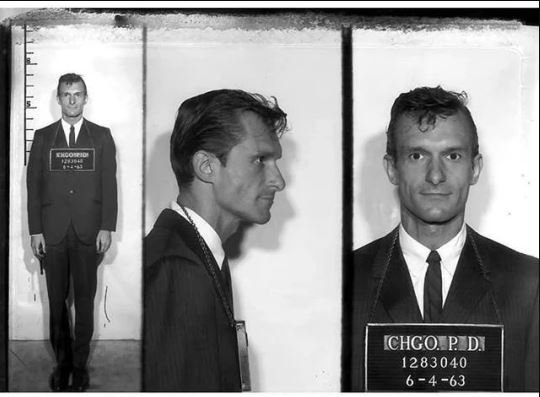
1963 In June, Hefner is arrested on charges of publishing and circulating obscene literature—specifically, half-naked pictures of Jayne Mansfield. In December, he’s acquitted.
1973 One hundred years after the Comstock Act was created, the Supreme Court redefines obscenity in Miller v. California, making it much harder to outright ban or restrict porn. That same year, another landmark Supreme Court case legalizes the right to abortion: Roe v. Wade.
2022–present After Roe is overturned, abortion pills prescribed via telehealth become the new front in abortion politics. Conservative lawmakers and litigators revive the Comstock Act in an effort to block abortion medication sent through the mail.