Your bag is empty.
Tonight is his last on air. There's a lot at stake.
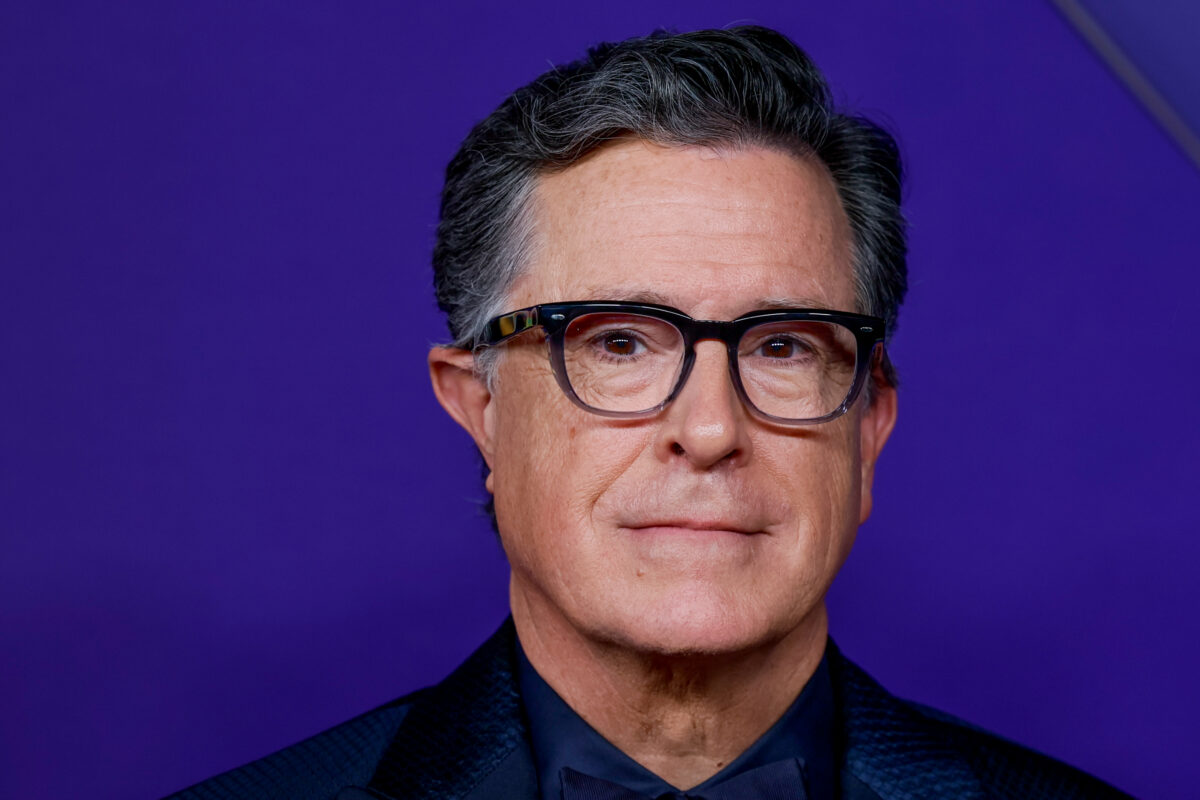
Stephen Colbert understands the power of fear. As a character, he used it — built an entire television empire on it, rallied thousands to the National Mall under the banner “Keep Fear Alive,” even ran a satirical presidential campaign powered by it.
He spent a decade playing a man who trafficked fear nightly to expose it, to mock it, to make the people wielding it look ridiculous.
In the fall of 2012, he sat down with Playboy — one of the rare times he agreed to be interviewed as himself rather than as his character — and explained why fear is such an effective weapon. He quoted Thomas Jefferson: “I have sworn upon the altar of God eternal hostility against every form of tyranny over the mind of man.” Injecting fear into people, Colbert said, is an attempt to kill their thinking. It’s an act of oppression.
Thirteen years later, his reflection turned out to be a premonition. He couldn’t have known he was foreshadowing his own ending.
On May 21, The Late Show with Stephen Colbert will air its final episode, canceled three days after he called a legal settlement between his network, CBS, and the President of the United States a “big fat bribe.” The man who explained fear as tyranny found out what happens when you’re on the losing side.
For a decade on Comedy Central’s The Colbert Report, the real Stephen Colbert was nearly impossible to find. He played a character — in his words, a “well-intentioned, poorly informed, high-status idiot,” — widely seen as a parody of the Bill O’Reilly school of conservative cable news punditry. In the very first episode, in 2005, he coined the word “truthiness” — a truth someone knows from the gut rather than from evidence or facts. It was the thesis statement of the entire run of the show. The character believed his own nonsense.
When Colbert moved to CBS in 2015 to take over The Late Show from David Letterman, he left the character behind. CBS initially discouraged him from being too political, and at first he obliged. Gradually, he waded back to the deep end.
“Authoritarians don’t like anybody who doesn’t give them undue dignity,” he told Rolling Stone in 2018. “Comedians are anti-authoritarian by nature.”
On Thursday night, Colbert will walk off the stage at the Ed Sullivan Theater for the last time. The Late Show franchise — 33 years old, two hosts, an institution — ends with him. CBS executives say it’s a financial decision, but almost no one believes them.
The math doesn’t quite hold up. The Late Show was the most-watched late-night program in the country, averaging more than 2.7 million viewers this season. It won its first Emmy last fall, after nine consecutive years at the top of its time slot. It was, by any traditional measure in the television business, a success.
It was also losing roughly $40 million a year, according to reporting by Puck News, but that accounting is contested. Fellow late-show host Jimmy Kimmel has called it “beyond nonsensical,” arguing it accounts only for advertising revenue and ignores affiliate fees.
What isn’t contested is the timeline. On July 14, 2025, Colbert went on air and called out the $16 million settlement his parent company, Paramount (which owns CBS), had reached with President Donald Trump, after he sued the network over what he called “deceitful” editing of a 60 Minutes interview with Vice President Kamala Harris, claiming it put him at a disadvantage in the 2024 election. The lawsuit was widely viewed as a threat to free speech and freedom of the press, and Paramount was much-derided for settling. On his show, Colbert noted that the settlement came as Paramount was trying to get the Trump administration to approve the company’s merger with another media company, Skydance. Hence, “a big fat bribe.” Three days after Colbert made the statement, his manager received a call. The show was being canceled.
“I’m not being replaced,” he told the studio audience, above their boos. “This is all just going away.”
Trump posted on Truth Social that he “absolutely loved” the news. He said Kimmel was next.
It was another premonition — although that time, it might have been more of a warning.
Two months later, Kimmel used his late-night platform on ABC to criticize Trump supporters and accuse them of trying to score political points off the assassination of conservative activist Charlie Kirk. Within 48 hours, FCC Chairman Brendan Carr — a Trump appointee — went on a conservative podcast and issued a direct threat to ABC’s parent company, Disney. Local station groups Nexstar and Sinclair, which together carry ABC to nearly a quarter of American households, announced they were pulling the show from their affiliates. ABC suspended Jimmy Kimmel Live that same night.
(Kimmel eventually came back, although his contract expires next month with no renewal announced.)
“Pre-complicance.” That’s what Jon Stewart named it on The Daily Show shortly after Colbert’s cancellation was announced. It was, in Stewart’s estimation, an effort from major networks to avoid Trump’s crosshairs, which were increasingly aimed at media entities and other sectors. “I don’t think the answer can be found in some smoking gun email or phone call from Trump to CBS executives,” he said. “I think the answer is in the fear and pre-compliance that is gripping all of America’s institutions at this very moment.”
It’s the idea that corporations don’t need to be told what to do. The fear controls their thinking. Just like Colbert said it would.
Paramount successfully completed its multibillion-dollar merger with Skydance, obtaining FCC sign-off. House Democrats have opened an investigation, but nobody expects it to change anything.
David Letterman, who held this franchise for 22 years before Colbert, said recently he’d be surprised if late-night television survived another year. He’ll be a guest Thursday on the program he handed off a decade ago. Kimmel, Jimmy Fallon, John Oliver, and Seth Meyers were there last week. Kimmel and Fallon will air reruns that night, going dark in solidarity.
Late-night television has always had a complicated relationship with fear and consequence. For 30 years, comedians who pushed too hard got canceled. It happened to Bill Maher in 2001 (he defended the 9/11 hijackers from being called cowards), to Sinéad O’Connor in 1992 (she ripped up a photograph of the Pope on SNL.)
Canceled — by networks, by advertisers, by viewers. Never by the government.
Never anything that looked so much like pre-compliance. What’s worth sitting with, on the occasion of this ending, is what Colbert told Playboy long before he knew how much it would affect him personally: Fear is a political weapon. Satire is an antidote. Thursday indicates that the prescription is running out.