Your bag is empty.
Playboy’s sex editor drops some wisdom on how to live, love and lust again as we inch toward the end of a global crisis

Q: My partner and I have been working from home since last April. We have a solid long-term relationship, and our chemistry has always been off the charts. At the beginning of quarantine our libidos jumped significantly, and we took advantage of the extra time together to explore more about ourselves sexually. However, as the pandemic and its stressors dragged on, this excitement tapered off. We are now having less sex than we did before Covid-19 was a thing. It’s reached the point where we go up to two weeks without either of us feeling motivated to be intimate. Is this bad, and how do I fix it? —J.S., Orange, California
A: The initial mistake here is assuming something is broken and needs fixing. Our sex lives are not linear. It’s natural for sexual interest and activity to ebb and flow; a lull doesn’t necessarily mean your relationship is on its deathbed.
We are collectively living through a major trauma, regardless of whether you are on the front lines as an essential worker, working from your couch or not working at all. If your situation is otherwise comfortable—still employed, quarantined with a loving partner and (hopefully) healthy—it may be tough to recognize this trauma and how it manifests. Just like we put our phones on low-power mode to save battery until we can recharge, it’s likely that our libido goes on lockdown to save our energy for a crisis. Simply put, it can be hard to feel present and receptive to pleasure during difficult times.
Pleasure is not a monolith; it looks different for every couple.
To assess the health of your sex life, ask yourself: Are you and your partner supportive of each other? Do you communicate well? Do you prioritize each other’s needs in and out of the bedroom? If the answer to all these questions is yes, then you’re in good shape. Don’t worry about a dry spell. Sex is just one part of a successful relationship, and an overemphasis on it can cause you to lose sight of the bigger picture. A healthy sex life doesn’t necessarily mean frequent sex—that’s a lesson that will serve you well both during and after the pandemic.
Q: In early 2020, I came out as queer at the “ripe” age of 46. As a late bloomer fresh to the scene, going to gay bars and clubs quickly became my main outlet to engage with LGBT culture, make new friends and find dates. Right as I began to feel as though I belonged somewhere, my city went on lockdown. Since then, all my party spots have basically been shut down. The isolation has been killing me, and I feel like the pandemic has robbed me of the first year of my life where I was able to be my authentic self. How can I work through this? —L.L., Evanston, Illinois
First off, congrats on coming out! That’s a huge achievement and takes so much courage. As someone who came out later in life, you may feel you need to make up for lost time and experience everything all at once. Gay bars and clubs are a key part of the LGBT community, beloved sanctuaries filled with go-go dancers, thumping pop music and $17 vodka sodas. When you’re navigating a world that’s hostile to your truth, the gay bar is a refuge, a church. Having grown up in churches of the more traditional variety, I was taught this fitting wisdom: The church isn’t the building, it’s the people. Queer culture isn’t only the dance floor or happy hour or drag night, although those things are beautiful facets of it. Queer culture is queer people. Your sexual identity is not synonymous with how hard you’re able to party. It’s possible to live a fulfilled life as a queer person without a fast-paced nightlife; plenty made that choice before the pandemic, whether they were giving sobriety a shot or suffered from social anxiety or just didn’t care for the scene.
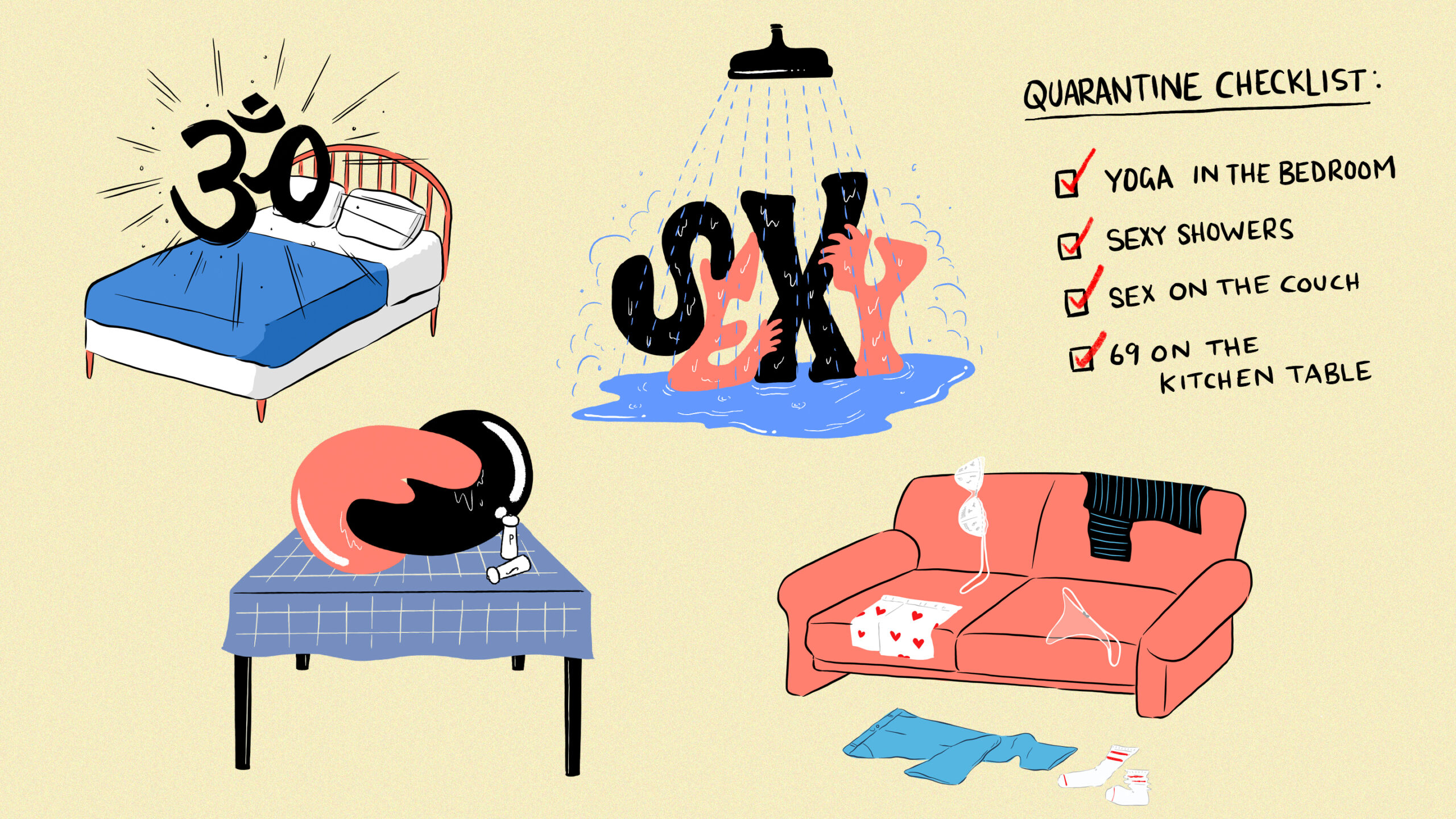
The people you connected with early last year haven’t vanished just because you can’t see them in person. Light up the group text. Attend Zoom parties. Chat with cuties on dating apps. Have a masked-up, social-distanced hangout at the park. Start a queer virtual book or film club. There are many creative ways to quench your thirst for interaction until the pandemic ends and we’re all able to properly rage again. You may find the relationships you’ve nourished and maintained from afar are deeper and all the more worthwhile for it.
Q: One of my resolutions for 2021 is to be more confident about giving head to my boyfriend. But I have TMJ, which at worst results in jaw pain after going down on him for a few minutes and at best results in a distracting jaw-clicking sound that kills the mood. I feel alone in this problem, like it’s too bizarre to ask my friends about. Are there any solutions for this? —T.A., Phoenix, Arizona
A: First of all, no sexual problem is “too bizarre” to talk about. Once you open up, you might discover you aren’t alone in your experiences after all, and that other people have their own sexual issues they’re battling.
I understand the desire to bring your partner pleasure, but anything that causes you physical pain simply isn’t worth it. Prioritize your own well-being. If your lover is a decent dude who seeks a true partnership with you, then he should understand and accept that. Pleasure is not a monolith; it looks different for every couple. And for you two, maybe pleasure doesn’t include blow jobs—but it can include many other acts that bring connection and intimacy. There’s no “correct” way to please your partner, so don’t compare yourself to what others may be doing. Perspective is really important here.
I don’t know the severity of your TMJ, but I encourage you to experiment with other blow-job techniques that might be pain-free: Move extra slowly, try different positions that relieve pressure on your jaw (for example, keep your head still as he does all the work of moving) or alternate between using your mouth and a suction toy that mimics fellatio (like this one or this one). It might also be a good idea to chat with your doctor or whoever diagnosed you with TMJ to see what work-arounds might exist.
Whichever path you take to deal with this, communication and care are paramount. If your relationship doesn’t have those key elements, whatever you’re able to do or not do in the bedroom ultimately won’t matter—regardless of resolutions.
Q: I started taking antidepressants in the fall. As a side effect, it’s been difficult for me to stay hard as long as I used to. My wife has been super understanding and nonchalant, but I still feel inadequate that I’m not able to give her the type of sex she’s come to expect. Do you have any advice? —P.W., Newark, New Jersey
A: I can’t tell whether your goal is to sustain erections longer or to find alternative ways to satisfy your partner, so I’ll address both! The past year brought on or exacerbated mental health challenges for many people, so it’s great that you’re prioritizing your well-being by going on medication. It sucks that this important step toward getting better comes with a side effect that impedes your bedroom life.
The statistical truth is that most women don’t orgasm from penetration alone, which opens up the menu for other meaningful activities you can both explore.
As we’ve shown at Playboy, there are countless avenues to pleasure that don’t involve or rely on penetration. I might go as far as to say that always focusing on penis-centric sex leads to repetitive, unimaginative sex. Although penetration can feel great, the statistical truth is that most women don’t orgasm from penetration alone, which opens up the menu for other meaningful activities you can both explore. Oral sex, manual stimulation, dildos, vibrators, sensual massages, dirty talk, sexy shower time, role play and erotica consumption are just a few ways you both can experience pleasure without an erect penis. Your penis can be erect, flaccid or at half-mast, and it would be neither a measure of your desire for your partner nor your ability to satisfy her.
As for maintaining erections for longer once you have them, a mix of lifestyle changes along with medication or sex aids can help. Eliminate stressors, get a full night’s sleep and exercise regularly—stress can worsen erectile problems, as can a lack of sleep or exercise. Limiting alcohol and nicotine consumption also can boost your sexual performance and improve your overall health. And lidocaine sprays or benzocaine wipes, which desensitize the penis, can be a godsend in helping erections last longer.
Finally, let your doctor know what’s going on. Perhaps there are other medical issues at play. It’s also possible that a lower dose may be in order, or a switch to a different medication that is less likely to have sexual side effects. Talking to your doctor is key here: Absolutely do not adjust medication dosage on your own.