
Your bag is empty.
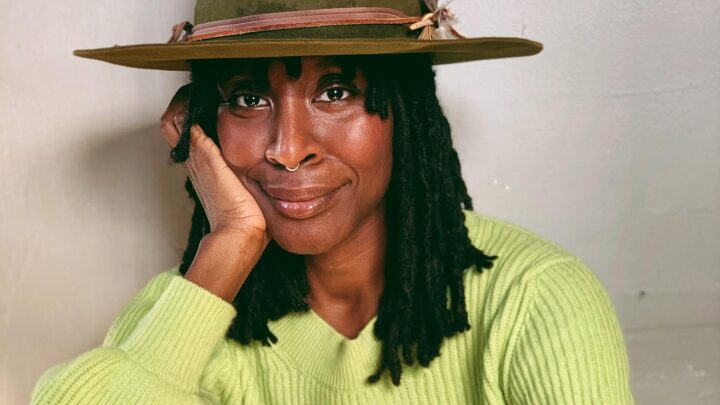
Macklemore, Bryony Cole, Chris Hadfield, Esther Perel, Cristina Mittermeier and more contribute
Space tourism. Robots with feelings. A new war on drugs. If the past is a foreign country, the future often looks like a whole new dimension. Here, a crack team of forward-thinking artists and intellectuals—from Chris Hadfield to Esther Perel to David Guetta—weigh in on what comes next.
Bryony Cole ON SEX AND TECH
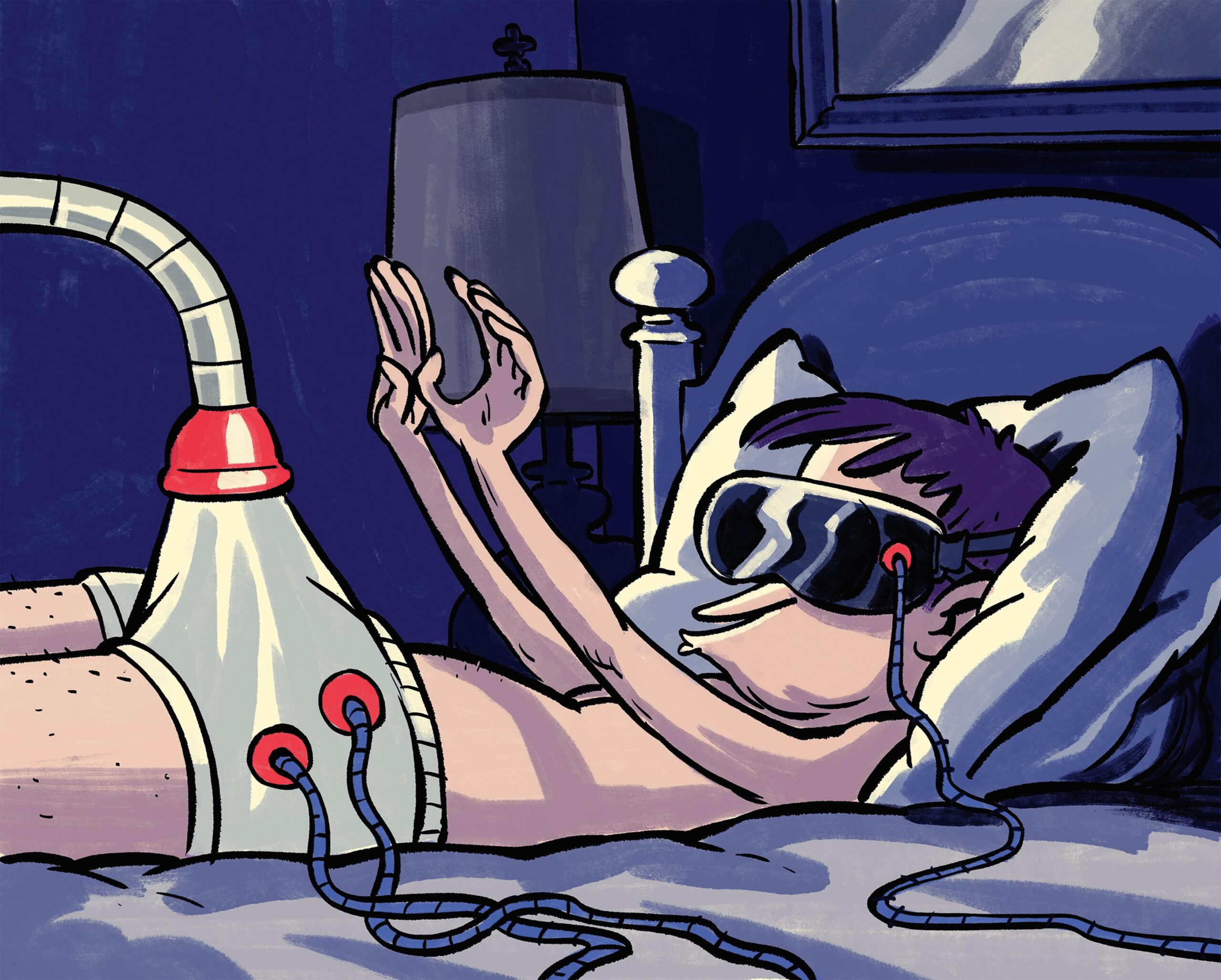
When you dig beyond the headlines of virtual-reality porn and robot girlfriends, you find that the relationship between sex and technology is considerably more nuanced than two nerds building their dream girl in a garage. Teledildonics enables us to exchange sensations with just about anyone with a vibrator; the only connection you need to worry about is your Bluetooth signal. Want to be better in bed? Download an app to connect with a sex coach. Want to feel better in bed? Wet your whistle with some cannabis lube. If you can dream it, it’s probably in development. The long and storied marriage of sex and technology—now an industry valued at an estimated $30 billion—presents possibilities that are infinite, awe-inspiring and at times terrifying.
Of the many technologies to consider, from haptic suits to robots to augmentation, one of the fastest growing is virtual reality. With today’s millennial-plus audiences growing up with porn in their pockets, VR offers a creative combination of erotica and enlightenment on topics ranging from health to gender swapping to consent. BaDoinkVR’s Virtual Sexology, for example, is a VR course designed by a sex therapist (and hosted by a porn star) to treat premature ejaculation.
Quebec filmmaker Emanuel St.Pierre’s Do You NO the Limit? Consent in 360 Degrees takes you on a VR journey through the lens of a young woman. An encounter with a peer that starts out fun and flirty turns sexually aggressive, giving a different perspective on the nuances of consent. Similarly, researchers at Emory University and Georgia Tech partnered on a virtual app that leads college-age students through a nightclub experience; the program is aimed at young women, who practice identifying “at-risk behavior” and how to express consent if they decide to take things beyond the club.
In Australia, the VR workplace-training tutorial Equal Reality offers a chance to “literally see from the point of view of others.” Leveraging VR’s deep immersiveness, it enables users to experience a different gender or race.
In addition to educating, VR simply makes sex and dating more fun. Virtual-reality speed-dating is expected to arrive within the next few years. And VR is shifting sex to a new sensory level by engaging the nose and skin with scent releasers and tech that replicates touch. You may fear you’ll never leave the couch again, but therapists argue that VR sex may help us shift gears from the increasingly explicit, 2-D world of online porn into a more personalized sexual world in which we transform from passive consumers to active participants.
Like all technology, sex tech comes with unique risks, including privacy and personal-data breaches. It also raises questions: How does sexual harassment translate into virtual worlds? Will AI devices eventually know more about our preferences than we know ourselves? And do we care? From cosmetic innovations like scrotox to apps that share STD tests, the future of sex tech is as vast and unpredictable as sex itself.While the possibilities grow, there’s a larger story around the future of sex, and it has nothing to do with technology; it’s about being human. The keys to great sex are human qualities such as open communication, empathy, intimacy and erotic intelligence. How do we hone these skills as much as we do our Instagram Stories?
Scientists have proven that touch is important for sustaining a healthy relationship, but it’s also essential for our survival. We might want to blame technology for distracting us with its orgasm shortcuts via apps, sexbots and VR, but the real mission is to take responsibility for our own pleasure. See technology for what it is: an additive to your sex life. Can it replace the real thing? Probably. Would you want it to? Probably not.
Bryony Cole is the founder of Future of Sex a multiplatform brand that explores the intersection sexuality and technology. Season two of her podcast debuts March 15 on Futureofsex.org.
Macklemore ON RECOVERY
Millions of people in this country struggle with addiction. I’m one of them. Today the disease claims an unprecedented number of lives. More than 64,000 people died from overdoses in 2016, and opioids were responsible for more than two thirds of these deaths. We are facing a public-health epidemic, and so far our collective action to address the issue has fallen short. But there are concrete things we can and should do now that will help us move in the right direction.One thing I’ve experienced personally is the lack of training or awareness some doctors have about addiction issues. Numerous physicians have offered me prescriptions for opioids without asking me about my history of drug addiction. It sounds obvious, but it should be part of standard medical procedure to ask patients about their addiction history before prescribing drugs. This is part of a larger issue that needs to be addressed: Doctors are prescribing too many pills and are prescribing them for longer than necessary. We know opioids are extremely addictive, and we need to find a better way to treat chronic pain.
Another thing we can do is shift away from incarcerating people with addiction issues—recognizing it as a disease that needs to be treated, not a crime that needs to be punished. Too many people are in jail as a result of drug use and addiction, and they are disproportionately people of color. It’s not a coincidence that opioid-overdose deaths have gained national attention now that they’re impacting middle- and upper-class white families. The intersection of addiction and incarceration is just another example of how institutional racism manifests in our society.
And maybe most important, we need better and more affordable access to treatment. I was lucky: I could afford high-quality treatment when I needed it. But for too many people, a spot in an inpatient treatment facility is simply unavailable and too expensive even if they do get in. If someone’s ready to enter treatment, we can’t tell them to wait 90 days. For me and so many others, this could be the difference between life and death.
When I’m on drugs, I consume them in abundance. I went to rehab in 2008. Pills, lean, weed and alcohol had led me into isolation. I had forgotten what happiness felt like. I always believed I was alone with my disease; my girlfriend and the drug dealers were probably the only people who knew how bad it was. What was once 30 minutes of euphoria became 10, then five, and then it just became about maintenance. I hated myself and had no purpose. Couldn’t write a song. Couldn’t find the motivation to open the blinds. Just me and my drugs.
We think of drugs as a coping mechanism, something that helps us escape. But my truth is the drugs led me further from contentment. I didn’t escape anxiety, self-hate and depression; the drugs made all those things worse. The temporary relief they brought me would always lead to more pain than I was originally in.
When I’m in my active addiction, my disease tells me not to tell anybody so I can keep using. It tells me that I don’t need help, that I can do it on my own. But I can’t do it on my own. I tried for years, stuck in the cycle of addiction.
Going to rehab was the best decision I ever made. If it weren’t for rehab I wouldn’t be here. That’s not speculation; that is my truth. And for me, the rooms of recovery are what keep me sober. Some would say I’m not supposed to publicly mention them, but people are dying and need help. I wish I had been introduced to the rooms sooner. My recovery is centered on those programs. When I prioritize anything above them, that’s when the self-hate creeps back in and a drug sounds like the best solution. It isn’t. It never is.
Addiction issues are multilayered and complex, and each individual has different needs. Chances are your family is touched by addiction in some way. I know from personal experience the toll it has taken on the people I love the most. But I’ve also experienced the many blessings of recovery. I have a community of people who understand me, my story and what I go through on a daily basis. Our drug of choice might have been different, but we speak the same language of addiction. I feel understood when I’m in the rooms.
The opioid epidemic is personal to me. I’ve lost nine friends to overdoses. It’s not an understatement to say that I could easily have died too. If you know someone who is struggling, ask them how they’re doing, and be honest with them. When you’re in the midst of addiction, sometimes it takes someone else’s lens to be able to see how far gone you are. And if you’re struggling, know that millions of other people are struggling too. A huge part of my recovery is finding others who share my disease and understand on a personal level what I’m going through. We can make progress only if we’re honest about the problem.
Ben Haggerty (a.k.a. Macklemore) is a four-time Grammy-winning artist. In 2016, the rapper-activist teamed with Barack Obama for the MTV documentary Prescription for Change: Ending America’s Opioid Crisis.
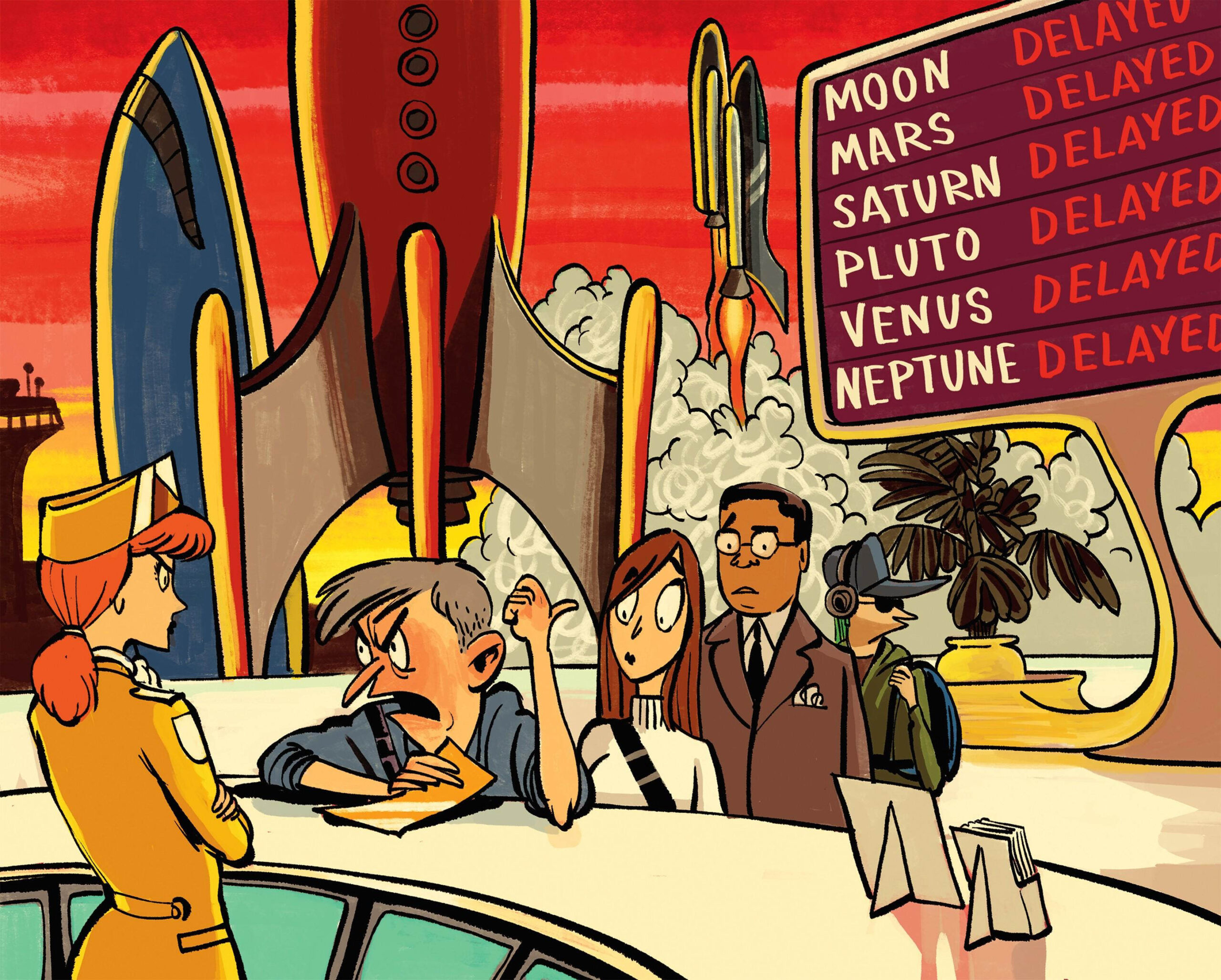
Chris Hadfield ON SPACEFLIGHT
Way out in interstellar space, a tiny satellite is speeding into the unknown. Voyager 1 has traveled 13 billion miles from Earth, past the edge of our solar system, zipping along at 38,000 mph. It’s the farthest-ranging spaceship we’ve ever built, and even after 40 years it still sends a weak signal of how it’s doing—helping us understand the rest of the universe.Between there and here is everything we’ve ever done. From controlling fire to building the pyramids to typing on an iPad, our entire existence has occurred within this tiny corner of our galaxy. And humans have taken just the smallest of steps: Six astronauts are currently orbiting Earth on the Space Station, and only 12 have walked on the moon. Just 562 of the 110 billion people who have ever lived have flown in space.
But that is about to change.
This year, several companies are poised to enter the business of launching people into space. Boeing has built the Starliner and SpaceX the Dragon 2, proto-airliner-like ships capable of blasting tourists (and a few highly trained crew) all the way into orbit at 17,500 mph—30.5 times faster than a Boeing 787. Jeff Bezos’s Blue Origin and Richard Branson’s Virgin Galactic are about to rocket the first paying customers above the air and back, weightless for several minutes as they glimpse the blackness of space and the curve of the horizon.
With tickets starting at $250,000, the cost of space tourism, which the FAA predicts will become a billion-dollar industry by 2022, is still high, but risk and price are dropping as the technology continues to improve. NASA has not only made this privatization possible through a century of danger-filled research and testing, but it is now taking advantage of it. With low Earth orbit accessible to commerce, the space agency can focus on what lies beyond. Recent policy announcements have also set NASA on a path to build the Deep Space Gateway, a space station that will orbit the moon. And with probes and rovers teaching us about Mars, we’re getting ever closer to the reality of an astronaut standing on the surface of the red planet.
But these advancements raise two questions: What do we still need to invent, and why explore space at all?
We are all explorers. You learned to walk long before you learned to talk. The necessity to go see, to touch, to lick, is fundamental to human development and understanding. It’s why we grabbed earrings as babies and left home at 18, and it’s why our ancestors left Africa and wandered the world, from Tasmania to Tierra del Fuego. It’s also a key part of societal progress.Some parts of the planet were only very recently discovered. The first humans paddled ashore in New Zealand just 750 years ago, and footprints didn’t appear at the South Pole until 1911. Space exploration began in 1961—just 57 years ago—with Soviet cosmonaut Yuri Gagarin’s launch.Our exploration has always been enabled and limited by the technology we’ve invented. To leave the tropics we had to be able to control fire, make clothing and construct shelter. We built rafts to ferry us to islands and eventually ships to cross oceans. Cars, trains and planes now transport us to all corners of the globe. And for the first time in history, our rockets and spaceships allow us to venture beyond Earth itself.
So why aren’t we living on the moon? Where are the jet packs and flying cars of The Jetsons? What are we waiting for?
Engines. Rocket engines.
When I flew the Space Shuttle and the Russian Soyuz, the huge motors exploding violently below me (as recently as 2013) were basically the same technology that John Glenn rode in 1962—essentially crazily souped-up jet engine afterburners. To get to space we still burn gigantic tanks of fuel as fast as we can, just to escape Earth’s gravity. Elon Musk has been improving basic rocketship design, simplifying it and making it reusable, but we are still in the coastal sailing ship era of spaceflight.
Getting to Mars with today’s best designs still takes six months, each way, with no option to turn around if something goes wrong. We need rockets to evolve as boat motors did, from paddles to sails to propellers.
Fortunately, some of our brightest inventors are working on it right now. In a laboratory near Houston, a magnetoplasma rocket is undergoing the final stages of testing for spaceflight, which could take place within three years, depending on NASA funding. The brainchild of seven-time Space Shuttle flier Franklin Chang-Díaz, this engine has the potential to cut the travel time to Mars to less than two months.
But for a voyage that demanding, the rocket needs a concentrated power source, such as a nuclear reactor, which is heavy and risky to launch. The interplanetary answer will probably lie in improvements in nuclear power, and the Advanced Research Projects Agency–Energy has laboratories across the U.S. working on fusion as a solution. We are tantalizingly close to rocket engines that can take us farther, and more safely, than ever before.
The moon and Mars are patient; they’ve been silently waiting billions of years for us to come visit. We’ve sent probes and made a few footprints, but for the first time in history, we are nearly there to stay.
The year 2018 is an exciting time to be a space explorer.
Chris Hadfield is the first Canadian to command a spaceship. The astronaut and bestselling author currently hosts National Geographic’s One Strange Rock and produces Rare Earth on YouTube.
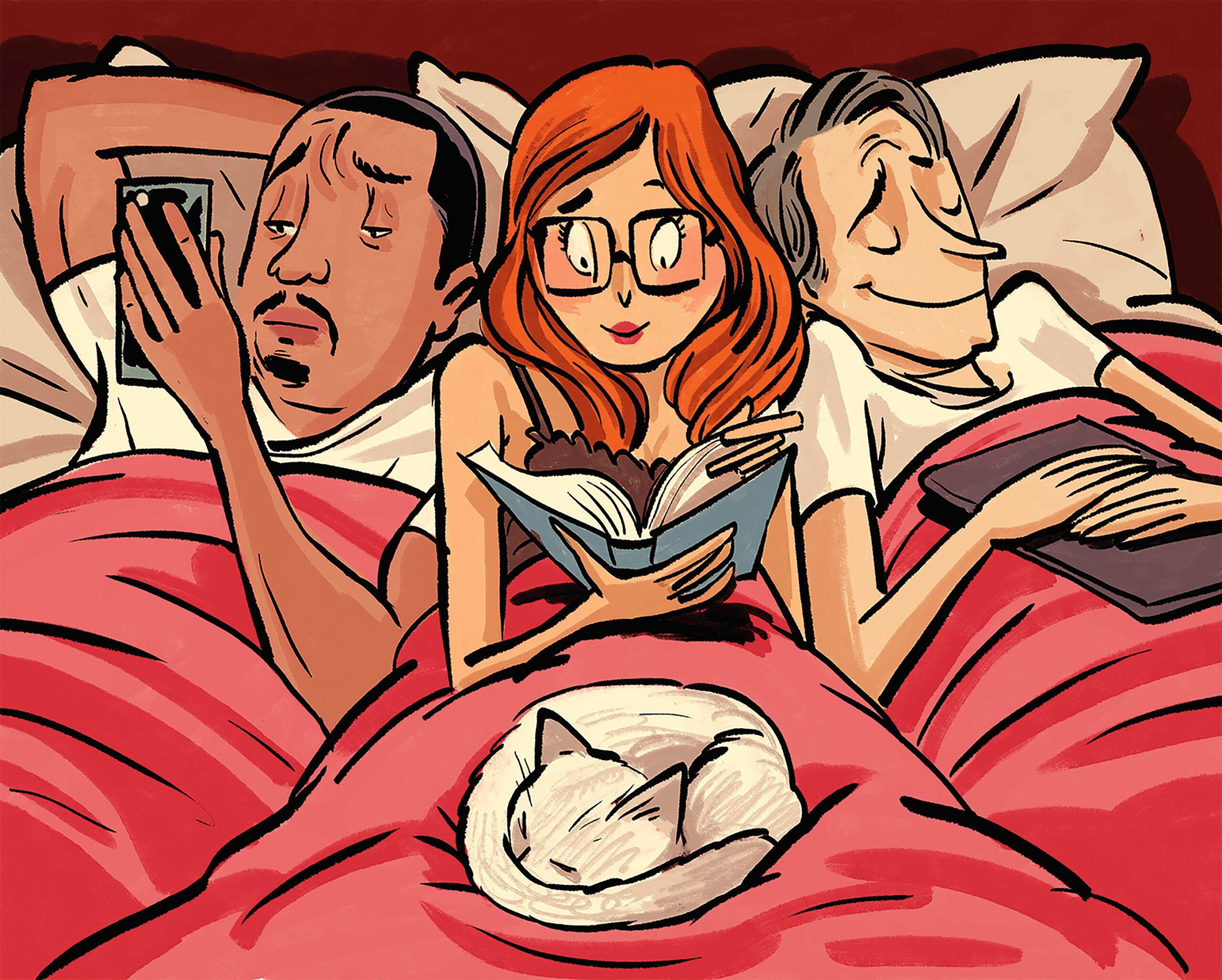
Esther Perel ON MONOGAMY
The quality of our relationships determines the quality of our lives. So it pays to cultivate an erotic intelligence, which is less about sex than about our ability to infuse our relationships with a sense of aliveness, curiosity, playfulness. Erotic intelligence is sexuality that is transformed by our imagination. It is the poetics of sex—that which gives it meaning and color. In other words, sex is not just something you do, but a place where you go inside yourself and with another. It’s the element of sex that actually fulfills desire. And it is an intelligence, meaning that it’s something you can acquire—you can learn it, cultivate it—for a healthy relationship.
We need this intelligence in order to navigate accelerating changes in the way we connect as sexual beings. Sex is no longer just for procreation or simply a woman’s marital duty; now it is primarily rooted in pleasure and connection for both partners. People at 60 act as if they were 40. Relationships have become much more egalitarian, and there is a much greater interchangeability of roles. Social media and the internet have given people more options, more temptation. Today you can have an affair while lying next to your partner in bed. You can escape without having to leave the house.
In this environment, all relationships require a certain level of openness. A healthy relationship will have fluidity, adaptability. A system that is alive and healthy can respond flexibly to changes—to change that comes from within, to change that comes with new goals, to change that comes with health conditions. If you’re aging, for example, you don’t make love the same way you used to—but that doesn’t mean the satisfaction can’t be equally deep.
The meaning of monogamy itself has deeply changed. For most of history, monogamy meant being with one person for life. Today monogamy means one person at a time. People tell you they are monogamous in all their relationships, plural, and that makes sense to us in a way it wouldn’t have 50 years ago. It’s a revolution—a concept that has fundamentally changed its meaning.
Monogamy in heterosexual relationships is still primarily defined as sexual exclusivity. But there is a big shift taking place in that monogamy is now considered a continuum, not a fixed line. That continuum needs to be explored, negotiated and defined by every couple. They must ask: Where do we draw the boundaries? Where would we experience a breach of trust? For some people monogamy is about emotional, not sexual, commitment to a primary partner. Plenty of people consider themselves deeply monogamous even if they are not sexually exclusive. The only way to know what your partner thinks is through safe conversations about difficult questions.
Today the term the new monogamy is fast becoming established, and alternative arrangements are burgeoning. Couples are exploring different agreements around boundaries, from totally closed (excluding sexual, sensual or emotional connection with others outside the relationship) to totally open (in which both partners may fully explore these connections with people besides their primary partner, so long as the primary partner retains top priority in the relationship). Some couples share fantasies or read erotica together. Others have license to flirt but draw the line at realizing the possibilities. Some make a distinction between sex for love and sex for fun, reserving the latter for swingers’ weekends or sex parties.
The possibilities are endless, but they are rarely discussed. Not long ago, when people were divorced they were embarrassed to talk about it. We used to think divorced people were inferior or that they had failed. Now people have no problem telling you that they are divorced, but the majority of people who are exploring alternative renderings of monogamy are not open about it. In the future, perhaps we won’t just assume that sexual exclusivity is morally or emotionally superior.
Tools to help people build healthy relationships will evolve in new ways. I think podcasts represent an amazing technology. They’re intimate, and yet they’re collective. I produce and host a podcast called Where Should We Begin? in which couples allow a one-time therapy session with me to be recorded and edited (with names changed for their privacy). It has become a sort of public health campaign for relationships. Millions of people listen, from Chad to France and from Australia to the U.S. People love it because they can learn from listening to others, from hearing the conversations they may want to have. And the podcast is just the tip of the iceberg when it comes to what technology can do for couples therapy.
In the years ahead, we will see the roles of apps, websites and even robots and dolls continue to expand at the intersection of technology and relationships. To me they’re creating a new vocabulary that will give us new ways to connect, as writing letters or making phone calls (or even faxing) once did. Relationships are changing so rapidly, and there is a tremendous need for guidance. That is one thing likely to remain the same.
Esther Perel is the best-selling author of The State of Affairs and Mating in Captivity. Her latest project, Rekindling Desire 2.0, is a curriculum of e-courses for couples and individuals; it launches this spring at EstherPerel.com.
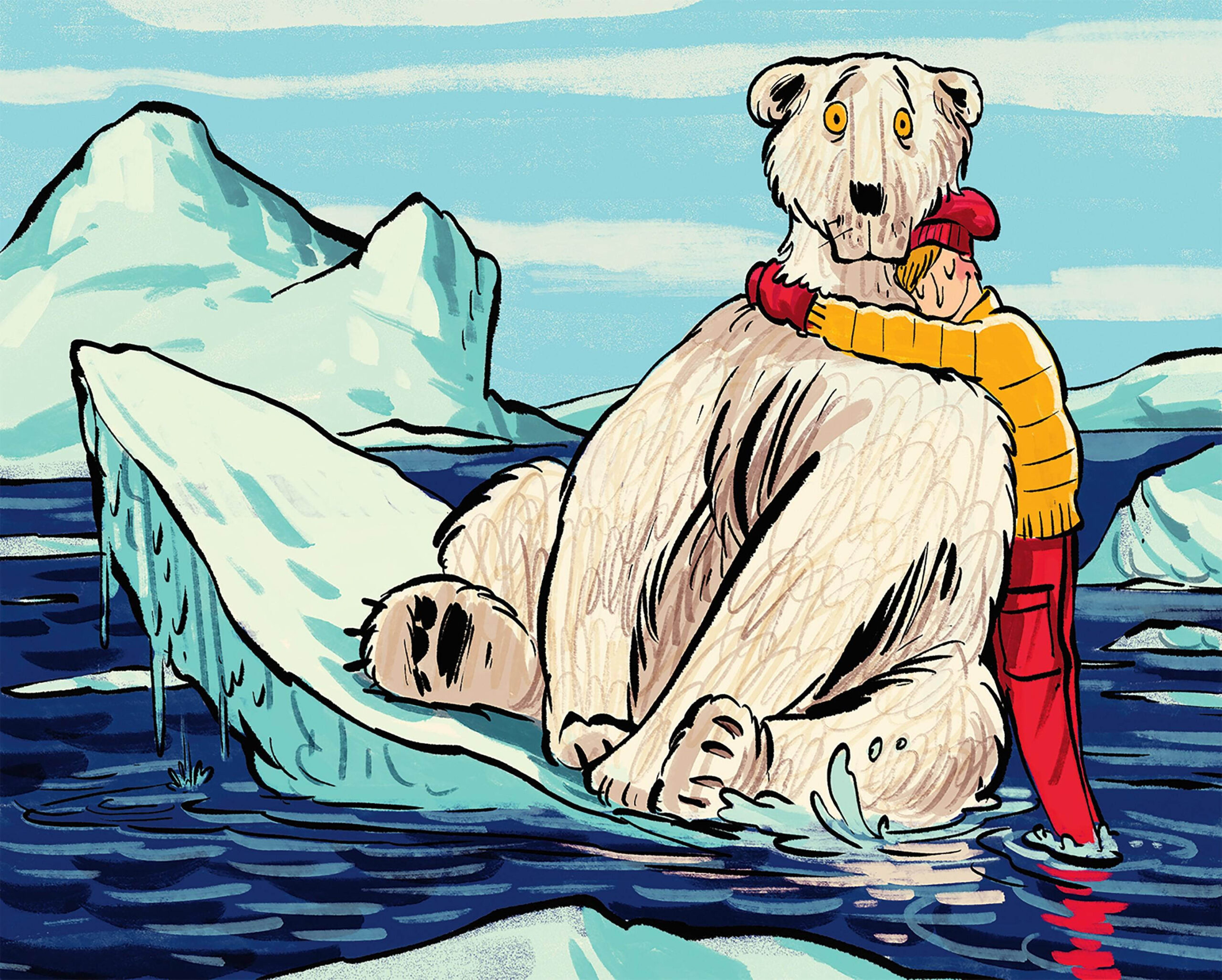
Cristina Mittermeier ON ENVIRONMENT
We are all living in a house with a burning roof. Our planet is suffering the consequences of increased carbon dioxide in the Earth’s atmosphere, decreased oxygen in its oceans, the disappearance or decline of many species, the wholesale destruction of entire ecosystems. All these problems are linked to human activity, as science has unequivocally shown.
What’s our plan to put out the fire? It’s as if we sit stunned, watching the flames and naively waiting to be saved by Superman. Shall we wait for government to formulate a plan or for industry to find some profit motivation to save Earth? How can we ensure that our planet remains livable 100 years from now?
To consider the future, let’s first take a look at the present. Our oceans, for example—the planet’s largest habitat—are choked with plastics. Coral reefs are threatened and dying. Ice caps and polar habitats are shrinking at an alarming rate. It’s a troubling picture. Government and industry will need to step up and take bold action to protect our environment. But the truth is, we cannot wait to be saved. Each one of us, individually, must become the superheroes of our own story. And we need to begin now.
The good news? This is doable. We can all become advocates for a sustainable environment. There are concrete steps we can take—easy things. Stop using single-use plastics (such as drinking straws, water bottles and ear swabs). Buy wild-caught fish and fish from sustainable fisheries only, instead of farmed product. Commute via bicycle or public transportation whenever possible.
Changing our behavior to help save the planet will require a cultural shift, but we have achieved this before. Remember the ozone layer? Back in the mid-1980s it became an unavoidable topic at dinner parties and the water cooler. Scientists, alarmed by data showing a growing hole in that segment of the atmosphere, were the first to raise the red flag; soon the story made the six o’clock news and the daily papers. A ban on ozone-destroying chlorofluorocarbons, found in many consumer products at the time, was denounced by big industry. But the public heard the warnings and quit buying products containing CFCs. Industry noticed and eventually removed the chemical compounds from their wares. Today the ozone hole is healing.
Thanks in part to social media and other advances in communication technology, today cultural shifts can take place with remarkable speed. Meanwhile, reconnecting with nature helps motivate us to protect it. Taking friends snorkeling in a river can open their eyes to a world of conservation. Beachcombing with a child can instill a lifelong love for nature. Sharing photos and stories about the environmental issues close to your heart on social media can generate interest and change minds. Posting about the Earth you love on Instagram or Facebook is not slacktivism; it’s engaging with your community. It matters. So pull on your imaginary superhero spandex. We can save our home.
Cristina Mittermeier is a contributor to National Geographic, the executive director and vision lead of SeaLegacy, and the founder of the International League of Conservation Photographers.
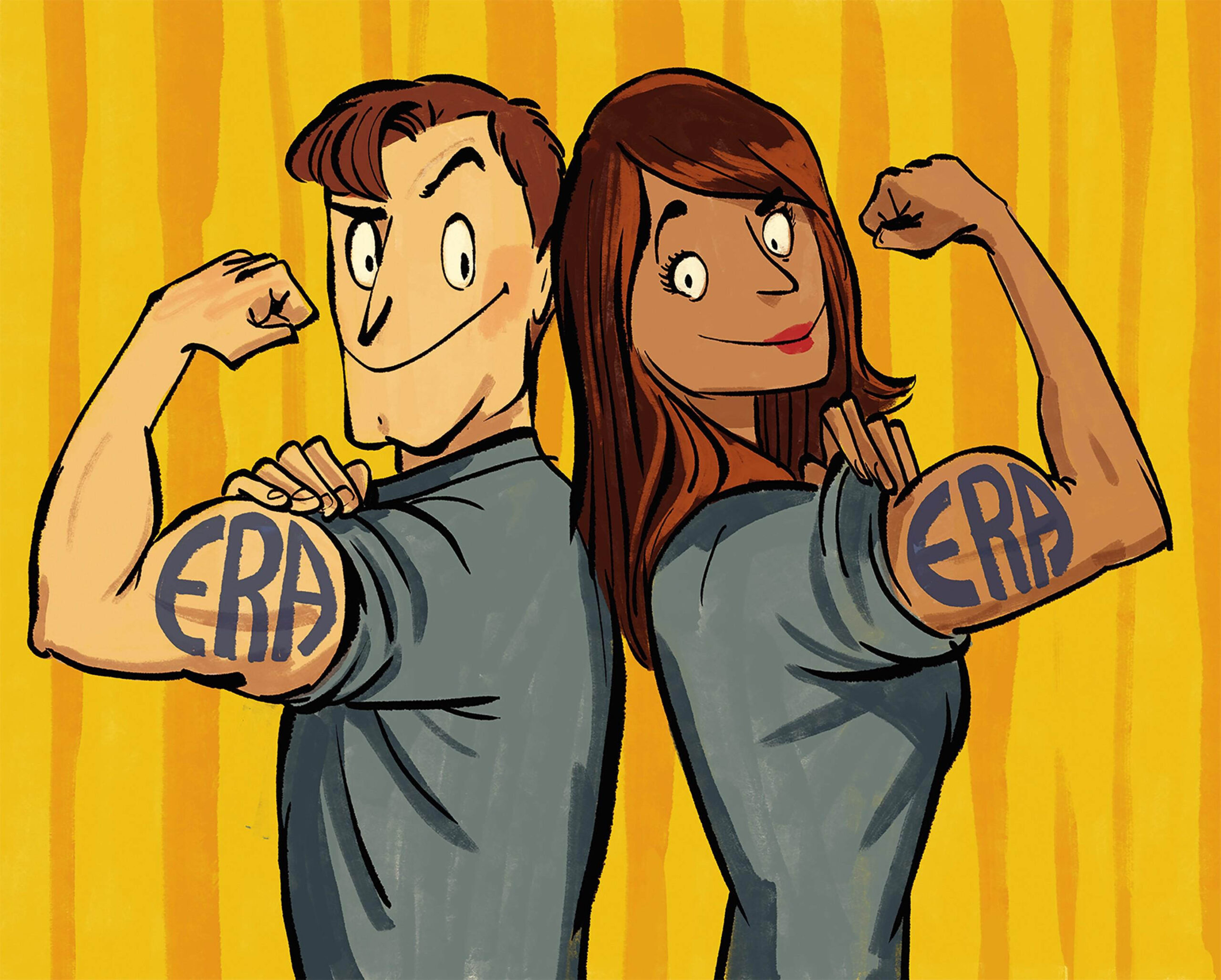
Kamala Lopez ON THE EQUAL RIGHTS AMENDMENT
Did you know women do not have equal rights under the U.S. Constitution? If you didn’t, you’re hardly alone. In fact, though 94 percent of Americans believe that men and women are inherently equal, 80 percent mistakenly believe that constitutional equality is guaranteed, according to a recent poll commissioned by the Equal Rights Amendment Coalition. As surprising as this may sound, women are still not guaranteed basic equality under federal law.
“Certainly the Constitution does not require discrimination on the basis of sex,” the late conservative Supreme Court Justice Antonin Scalia once explained. “The only issue is whether it prohibits it. It doesn’t.”
So women don’t have equal rights in the Constitution. Big deal. We’ve established all kinds of other legal rights and protections. We’ve reformed or phased out the antiquated “spheres of influence” laws, which stipulated that a woman didn’t have a separate legal existence from her husband and limited women’s rights to the home. So it doesn’t matter, right? Wrong. Well, not wrong, but not enough.
Enter the Equal Rights Amendment, or ERA, a 95-year-old piece of legislation that was buried in Congress in 1982, three states short of the 38-state ratification requirement. Had it received passage before Congress’s deadline, the ERA would have become the 27th Amendment and constitutionally guaranteed comprehensive equal rights for women for the first time in history.
Its exclusion from our foundational law document has major negative implications in all women’s lives, not the least of which is a persistent gender wage gap that increases based on race, with white American women making 79 cents, African American women 63 cents and Latinas 54 cents on the white male dollar for work of the same or greater value.
The ERA can kick off the change; without it, no real change is possible. Constitutional amendments, unlike laws and statutes, cannot be changed by a simple majority vote. They cannot be dismissed with the flick of a pen or the wave of an arched wrist or used as a political football. They are the only guarantees that last from one generation to the next. American women and girls don’t have this guarantee, and we need it more than ever. We need it now.
With women performing more than 110 million hours of unpaid labor per year, our obligations at home have changed little since the 1950s, yet we’re joining the workforce in record numbers—not by choice but out of necessity. According to the U.S. Department of Labor, 75 percent of school-age children today have working mothers.
Our time and our bank accounts are not the only things at stake. According to the National Network to End Domestic Violence, at least three women die every day at the hands of intimate partners, in part as a result of the Supreme Court precedent that police departments may respond to mandatory restraining orders at their discretion.
Opponents of the ERA repeat tired arguments that sound like an Archie Bunker rerun. The main complaint—that the amendment somehow opens the door to abortion rights—is ignorant. In reality, abortion rights are already constitutionally guaranteed, and not on the basis of gender equality but on the right to privacy. From warnings that women would risk mandatory draft requirements to claims that widows would forfeit their rights to social security, the majority of dissenting arguments are either irrelevant or unsubstantiated. But the most disingenuous anti-ERA argument of all is that we simply don’t need it anymore.
If the past two years in America have proven anything, it’s that the level of cognitive dissonance for women has reached its breaking point. We are contending with the stark contradiction of electing a Pussy Grabber in Chief while filling streets, cities and countries with our bodies, our outrage, our multitudinous demands and our #MeToo movements. What many of us have not realized is that our government, systems and institutions operate on the premise that women shall not have equal rights. The bottom line: The game is rigged, and it’s time to change the rules. Step one: Ratify the ERA.
So where is the ERA today and what can we do to push it over the finish line? In 1982, when the deadline Congress imposed on the ERA expired, so did most efforts to complete ratification. After more than 35 years of inaction, Nevada ratified the ERA last spring. We are now only two states away from the 38 needed to finish the job.
As I write this, I’m in Virginia, urging the state legislature to pull the ERA out of committee and put it on the floor for a vote this legislative calendar year. Activists are gearing up to do the same in Arizona, Illinois, North Carolina, Georgia and the rest of the 14 states that remain unratified.
Whether achieving ratification after the deadline will result in the immediate implementation of the ERA remains to be seen. Opponents argue that the original deadline must stand and that the federal time line trumps states’ rights to ratify. Supporters and legal experts are confident of legal victory based on precedent, including recent Supreme Court rulings favoring basic civil rights protections despite strong opposition.
To those who do not agree, the Equal Rights Amendment is not going away. Woe be to the state legislator willing to publicly oppose basic equality for women. We’ll see you in November.
Kamala Lopez is the creator of the 2016 documentary turned movement Equal Means Equal. She is currently developing Lady 8, a television series about girl gangs, with Gini Sikes, journalist and author of 8 Ball Chicks: A Year in the Violent World of Girl Gangs.
David Guetta ON MUSIC
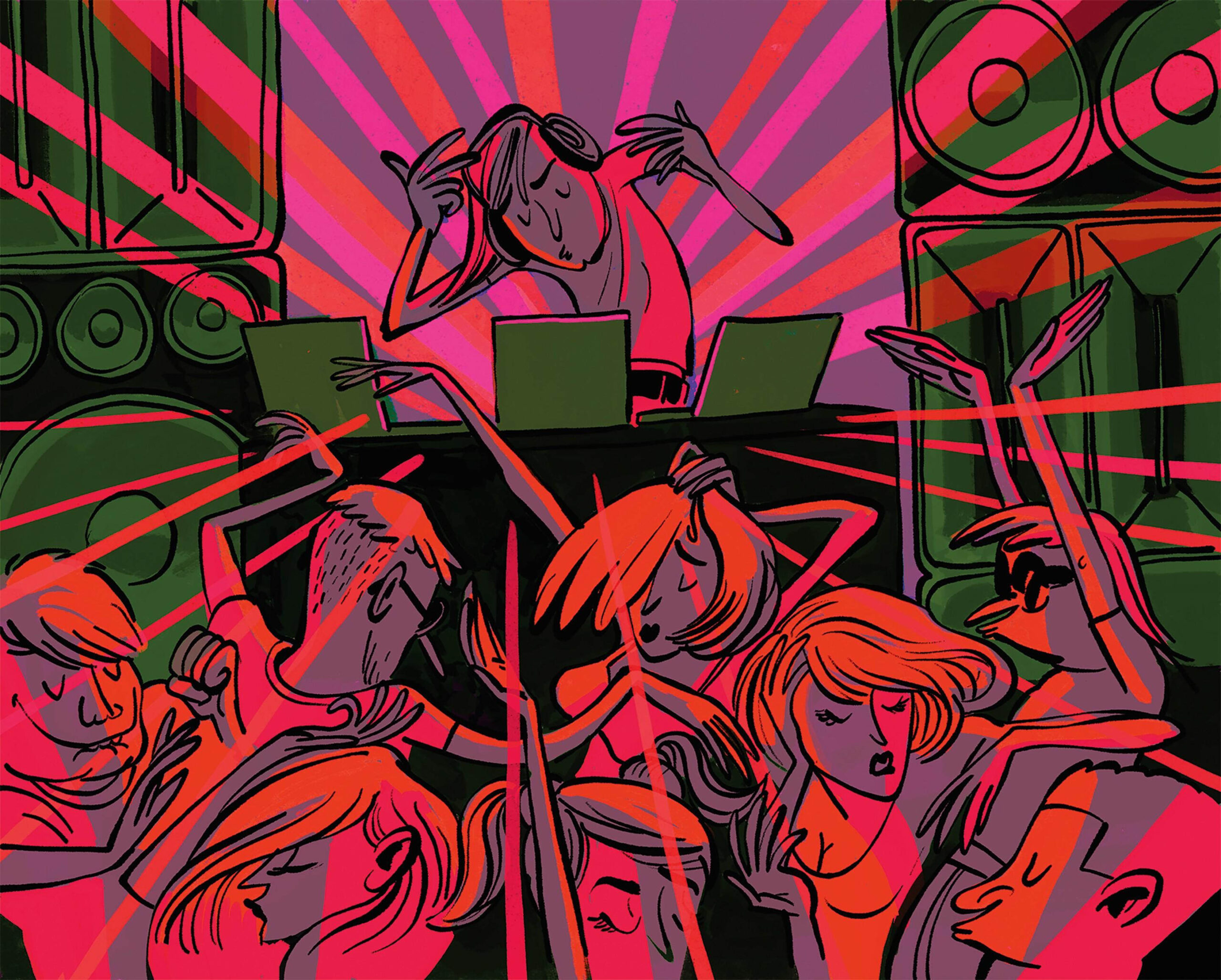
I often wish I could see what the future will bring, because new sounds always excite me the most in music. That’s why I became a producer.
I have a few guesses as to how you and I will experience music a few years down the road. For one, I’m optimistic about how we’ll listen to recorded music—and how artists will be compensated for their efforts. Streaming has completely changed the industry in the past few years, so much so that illegal downloading is less of a threat, in my opinion. In the past, it was far easier and far cheaper to download music illegally than legally, but now listeners are able to enjoy music through services that are relatively inexpensive, convenient and easy to use. Better yet, they work. Thanks to these streaming services, record labels are able to make money again, which is of course good for everyone. I wish these profits were being shared more fairly with artists, but I believe we’ll get to that point soon.
Meanwhile, live shows remain the primary source of revenue for artists, and albums have become less relevant from a commercial point of view. Don’t worry: That doesn’t mean artists will stop shaping their work into cohesive packages. I keep making albums for artistic reasons, because I believe this format allows for more creativity. The formats and economics might change, but the satisfaction of a killer full-length never will.
Electronic music festivals are still successful and are evolving with the times. It’s pretty spectacular, for example, to see the development of Ultra around the world. Tomorrowland is another festival killing it right now, along with many others, but multi-genre festivals are really on fire at the moment. Now that connecting and collaborating with artists across the globe is as easy as opening your laptop, I expect festivals to feature more and more fresh sounds in more and more places.
As far as what specific sounds will emerge and catch fire—well, no one can reliably predict that. Latin music was definitely the dominant new crossover style in 2017, with Brazilian funk also becoming more popular internationally. Underground club music (house-techno) is super trendy at the moment and will probably get even bigger this year. But as much as we might like to peer around the corner and catch a glimpse of the next big sound, remember: Knowing what’s around the corner would rob us of the thrill of discovery! And the core qualities of music—connection, emotion, movement—remain as strong as ever. Even in our hyperconnected and ever more virtual age, some things don’t change.
Two-time Grammy winner David Guetta is one of the world’s most successful DJ-producers. His seventh album is due out later this year.
Swoon ON LIFE AFTER DEATH
My life changed once I experienced dying.
Early one sunny June morning in Istanbul, I awoke inside a dream to falling snow. The snow passed through my body and blossomed into beautiful, light-filled kaleidoscopic forms. Out of these forms came my mother’s voice. The light’s radiance filled me with so much love and joy, I felt as though my mother were embracing me from another realm. A few hours later, I learned that she was: That same morning, on the other side of the world in Florida, my mother was passing away. The experience left a profound impact on me, as well as a hunger to understand what it was and how it had happened.
My work as an artist and activist has always been about increasing connection between people and deepening the connection we have with ourselves, because I sense that through greater connectedness we become whole. This philosophy has led me to help people rebuild their homes after natural disasters have struck and to create art with people facing life sentences in prison, as well as to explore my own deepest traumas and share them in a way that helps myself and others find healing.
My mother’s death was no different. In addition to processing it through art, I began to find answers to my questions in the testimonies of the thousands of people who have had firsthand experience with death.
Advances in medical technology in the past 30 years, and especially in the past 10, have enabled us to resuscitate some patients as long as 45 minutes after they’ve been declared clinically dead—after the heart has flatlined and the brain no longer registers activity on an EEG. Many of these people come back with stories to tell. With very few exceptions, they describe experiences that are positive and transformational. They recount radiant landscapes and encounters with loved ones. Some then go into remission from the diseases that brought them to death’s door.
The medical community characterizes these experiences as “near death” or, as Sam Parnia, director of resuscitation research at NYU Langone School of Medicine, prefers to call it, an “actual-death experience.”
“What we have found over the last few decades is that many millions of people have come back,” Parnia recently told CBS News. “Many of them have reported that they have been able to see and hear things going on, even though from our perspective they should have been dead.”
As I studied these actual-death experiences, many of them felt deeply familiar. The radiance, the love, the points of light and kaleidoscopic forms, the way the experience seemed to stay with them for months or even years afterward—all this resonated with what had happened to me as my mother was dying. I was able to understand and believe their accounts because I had gone through something similar myself.
In my reading, I learned of another category of experience for which doctors have no medical explanation: the shared death experience, wherein family members and loved ones, or sometimes even the attending doctor, share a part of what a dying person experiences as they pass on.
It’s my hope that experiences like these may go on to have a larger impact on our culture. It’s no secret that Western culture is death-phobic and that we have very few ways to celebrate and embrace this supremely inevitable part of our life cycle. To some degree this fear comes from not knowing what may or may not come next. I suspect that as more people face death and live to tell about it, the stories they bring back will deepen our cultural understanding of death.
I am in no rush to die. I love my life and want to live it to its fullest, but what I’ve learned from my own experience, and from the experiences of others who have touched death, is that death, far from being something to fear, may be something to embrace with joy and even to look forward to. I believe it could change the day-to-day quality of our lives if we knew with certainty that our own death was to be a truly magnificent part of life.
The message we repeatedly hear from people who’ve experienced death firsthand is that a deep and embracing wholeness awaits us and that the ultimate goal of this life is to love and be loved. This may be a truth we’ve heard many times, but these travelers tell it in new and fascinating ways, allowing us listen with an immediacy that feels like the first time. I for one want to live in the world that we create when we sow the seeds of this understanding.
Caledonia Curry (Swoon) is a Brooklyn-based mixed-media artist and founder of the Heliotrope Foundation, a nonprofit that helps communities recover from natural disasters and social crises. She recently unveiled The Canyon, her first-ever career retrospective, at the Zaha Hadid-designed Contemporary Arts Center in Cincinnati.__
Tim Kreider ON THE FUTURE
“Ultimately there will be scheduled areas [for outdoor sex]—we give it another five or six years.” That quote, from The Joy of Sex by Alex Comfort, only seems more poignant as time passes. First published in 1972, the book was populated with a pair of hirsute lovers illustrated by Chris Foss, an artist better known for his chunky, bristling spaceships on countless science-fiction novel covers. The Joy of Sex turned out to be a sort of science fiction too, depicting an overly optimistic sexual utopia—an enlightened free-for-all where sexual repression and jealousy would be vestigial.
It’s a common fallacy of science-fiction writers and other futurists to extrapolate from the present moment in a straight-line trajectory: If we went from the Wright brothers to Neil Armstrong in only 66 years, then surely by 2035 we’ll all be living in bubble-dome cities on Mars; if we got from Kinsey to Lovelace in 24 years, then by 1978 we’ll be fucking in the Sheep Meadow in Central Park. But history isn’t linear. It’s more like climate: It may be inexorably trending warmer, but that’s not to say there won’t still be blizzards. The manned space program kind of petered out after Apollo, and there were, alas, no reserved sections for sex in public parks by 1978. A decade after its initial publication, the ethos of The Joy of Sex was already dated. In 1988, Hunter S. Thompson, in Generation of Swine, wrote, “What do you say…about a generation that has been taught that rain is poison and sex is death?”
In a way, we’re now living in what would have seemed like a sexual utopia to people in the 1970s. If you’re halfway decent-looking you can, in theory, swipe through profiles of potential partners and pick one to have sex with within the hour. It’s also a far better world for those who fall outside the narrow band of visible wavelengths on the Kinsey scale that used to be called “normal.” When I was in a suburban high school in the 1980s, “gay” was just a generic epithet and being “out” as homosexual would have been unimaginable. Now being gay, bisexual, transgender or nonbinary is accepted across growing swaths of the country.
But there’s also a certain bloodlessness about hookup culture, a dread of intimacy that might seem creepy to the evangelists of free love. The phrase to catch feelings (as in “Oh shit, I caught feelings for him”) equates love with a virus. The kids of this decade might also seem weirdly prudish and inhibited in ways that would’ve shocked Comfort’s hippies. I understood that I was living in a different world when a 20-something guy told me the story of how he and his girlfriend met in college: They’d started making out at a party, but then they were like, “Whoa, we’ve both been drinking; we better stop and wait till we’re sober.” My first impulse was to tell him, “Neither you nor anyone else would be alive if everyone before you had thought that way,” but I felt I would be speaking out in defense of drunk driving or smoking on airplanes—a reactionary crank longing for the bad old days.
Likewise, our pornographic dystopia might make 1960s champions of free expression second-guess their absolutist stance on the First Amendment. The extent to which porn has permeated the landscape is almost invisible to us now; I still remember my own priggish wince the first time I saw a store called Shoegasm. I can count on one hand the number of images of naked women I had seen by the age of 13 (including the archetypical tattered Playboy Centerfold in the woods). It’s hard to imagine how it must deform the psyches of adolescent boys to have seen 800,000 digitally airbrushed women displaying their gaping anuses, or to assume that the natural culmination of the sex act is the facial. I know of a woman who actually bought her teenage son a subscription to Playboy as a healthy corrective to internet porn. Imagine telling that story to your 13-year-old self.
It’s easy to mock or abhor the taboos and mores of 50 years ago; it’s a lot less obvious which of our own obviously right ideas and sane values our children will mock and abhor. Take Lolita. “What a fabulous shiny moral barometer that movie looked like in 1962, when it was new,” Michael Herr writes, speaking of the film adaptation in his book Kubrick, “and how we loved which way we thought the wind was going to blow.” (Herr wasn’t waxing nostalgic about social acceptance of pedophilia but rather, I think, about that film’s knowing smirk at Eisenhower-era hypocrisy, its insinuation that the real perverts are the “normals” all around Humbert.) Audiences in 1962 were scandalized by the sexualization of 14-year-old Sue Lyon in that film; now you can buy your pubescent daughter pants with PINK or JUICY written in glitter across the ass.
Right now, in the early days of 2018, it seems as if the more control conservatives gain over the government, the more ground they lose in the culture. The wind is blowing leftward—the definition of marriage expanding, the very concept of dimorphic gender eroding, the careers of sexual predators imploding one after another. But winds have been known to shift, and the weather, as we all know, is getting strange.
Tim Kreider is a New York–based writer and cartoonist whose new essay collection, I Wrote This Book Because I Love You, is out now from Simon & Schuster.