Your bag is empty.

Critics are saying the program is nothing short of ethnic cleansing through over-policing
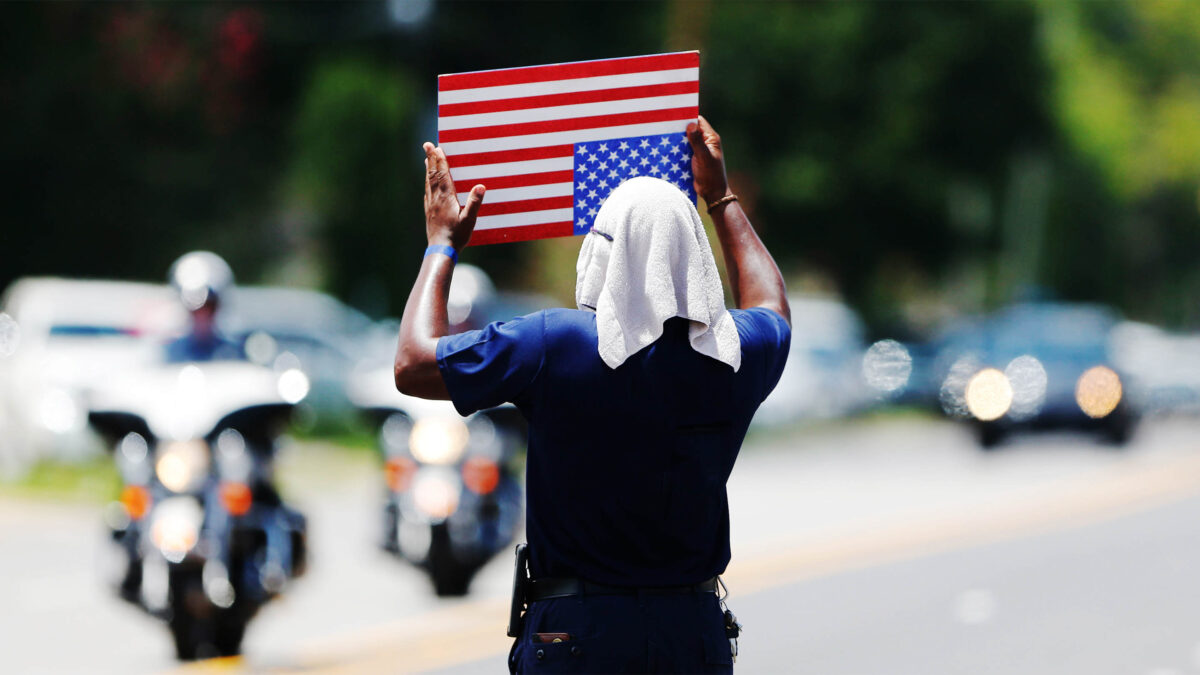
The City of Jackson, with the help of the office of the Attorney General of the United States, thinks it has a solution to ending crime: eject criminals outside of Mississippi.
During a press conference at the end of last year, United States Attorney for the Southern District of Mississippi Mike Hurst announced a new partnership—called Project EJECT—between the Jackson Police Department, the Federal Bureau of Investigation, the Bureau of Alcohol, Tobacco, Firearms and Explosives, and other federal agencies.
Then in late spring, the Department of Justice boasted about a surge-like operation enacted in Jackson that resulted in “45 individuals, 31 of whom were documented gang members, including Gangster Disciples, Vice Lords, Simon City Royals, Latin Kings, and the Aryan Brotherhood, among others.” The identities of those arrested are yet to be publicized, but some are expected to be prosecuted under Project EJECT.
This isn’t happening just in Jackson. In the past two decades, several cities have adopted similar measures. But this latest move shows Attorney General Jeff Sessions’ influence on local police forces can greatly impact people of color for the worse, particularly in a city that is predominately black. According to data collected by the 2010 Census, Jackson’s population is approximately 80 percent African-American.
The new initiative stands for “Empower Jackson Expel Crime Together.” Project EJECT “is designed as an enhanced violent crime reduction program that incorporates decades of experience in bringing various levels of law enforcement together with stakeholders in the community, with the overall goal of producing a long-term, meaningful reduction in and prevention of violent crime as a multi-disciplinary, holistic approach that combines law enforcement arrests and prosecutions of violent criminals with prevention efforts, rehabilitation and reentry, educational initiatives, and improved communication.”
At its core, the goal of EJECT is to send community members to prisons outside of the state, making it difficult for the community left behind (including family members) to keep in touch with them. Such physical distance—which can often be achieved even with prisons in the same state, which are hours away—will always be detrimental, because it further isolates someone from their families and communities. It also makes the re-entry process even more complicated and difficult.
“Jackson is deliberately depicted as a crime capital due to the large African-American population. Mainstream media’s agenda gives the impression that we cannot govern ourselves and wherever we are, crime and drugs follow.”
Jackson Clarion-Ledger columnist, Rachel James-Terry, coined an op-ed opposing Project EJECT shortly following the project’s announcement. She says its tactics target black Americans unfairly. “Jackson is deliberately depicted as a crime capital due to the large African-American population,” James-Terry tells Playboy. “Mainstream media’s agenda gives the impression that we cannot govern ourselves and wherever we are, crime and drugs follow. However, the minority population is often most impacted by socioeconomic factors, lack of resources and overwhelming racial discrimination, which lead to poverty, which directly correlates with criminality. That’s never taken into consideration when problem-solving.”
The federal government also calls on “community, faith-based, non-profit, neighborhood association and business leaders” to be involved as well, although these partnerships haven’t been publicized yet. The mayor of Jackson—who since hosted a town hall with Bernie Sanders on the 50th anniversary of Martin Luther King Dr.’s assassination and previously has emphasized “we will be tough when it comes to crime”—remains silent on the issue. Defense attorney Adofo Minka called out Mayor Chokwe Antar Lumumba in an op-ed in January, a month following the project’s announcement.
“Project EJECT’s plan to address the root of the issue is more ambiguous, i.e., work with community leaders, create positive programs, deal in the concept of hope, etc,” James-Terry adds. “It sounds like confetti, cotton candy and filler until they get around to figuring it out.”
In order to be “ejected” to an out-of-state prison, that person needs to be tried in the federal (rather than state or local) court systems, which will result in a mandatory minimum sentence. In federal courts, firearms offenses are higher than those in Mississippi. A firearm offense on a “prohibited person” (such as someone convicted of a felony) can result in a minimum sentence of 15 years, if the offender has three or more prior convictions. Additionally, parole—or the early release from prison for demonstrating good behavior—is also not offered by federal courts, since they were eliminated under the Sentencing Reform Act of 1984.
Mandatory minimums for firearms offenses disproportionately affect black Americans. The United States Sentencing Commission reports that in 2012, 51.7 percent of “U.S.C. § 922” offenders (possessing firearms, ammunition or explosives) were black while only 27 percent were white.
The State of Mississippi allows “constitutional carry,” or the ability for anyone 21 years and older to carry a handgun, open or concealed, without obtaining a government-issued permit of any kind. However, those who have been convicted of a felony are not allowed to carry a firearm, according to Mississippi Code 45-9-101. Additionally, those who “chronically and habitually” drink alcohol and/or use a controlled substance (such as cannabis, heroin or another scheduled drug under the Controlled Substances Act) are also prohibited from carrying.
“They want this money to flow into Jackson, they want to develop Jackson, but they don’t want to develop it for the people who have always been in Jackson. They don’t want poor black people in Jackson.”
“I don’t know if I can credit [this] to Project Eject per se, but there’s been a number of checkpoints popping up in the city of Jackson and most of the time, there’s a situation in West Jackson, which is one of the poorest areas in the city,” Minka adds.
As a defense attorney, Minka is no stranger to how checkpoints can be used to search people’s cars, especially when they have been convicted of a felony. Checkpoints are part of a strategy called “hot-spot” policing, which focuses on areas characterized by high rates of crime.
This narrative of “predictive policing” has been recited by Hinds County Supervisor Robert Graham, a former JPD spokesman in an interview with the Jackson Free Press: “I believe that you have to concentrate on hot spots and hot people. Because what is making this spot hot is this guy.”
Youth of color have also been subject to targeted harassment by law enforcement, which has been enabled by recent legislation. According to the Jackson Free Press, anti-gang legislation—Senate Bill 2868—which was supposed into effect this July but was killed, would have allowed police to identify youth as gang-affiliated because they’re wearing similar clothing.
“This Project Eject is really just a local variant of Project Safe Neighborhoods, which is being survived and resuscitated under the Trump administration,” explains Kali Akuno, founder of the grassroots organization Cooperative Jackson.
Project Safe Neighborhoods dates back to 2001, when President George W. Bush first announced the initiative at the Pennsylvania Convention Center. Fifty million was proposed over a two-year budget to “hire new federal and state prosecutors, to support investigators, to provide training, and develop and promote community outreach effort.” Bush cited a few programs in that same speech: Philadelphia’s Operation Sunrise, Richmond, Virginia’s Project Exile and Boston’s Operation Ceasefire.
The Washington Post reported Operation Sunrise targeted 70,000 residents in a 2.5 mile radius area in North Philadelphia, which was the largest “anti-crime” program since the bombing and displacement of the MOVE organization. Launched at dawn on June 15, 1998, cops would roll through the Kensington and Fairhill neighborhoods and round up community members en masse with the aid of other federal agencies, including the Federal Bureau of Investigation, the Drug Enforcement Agency and the Behavioral Health Care Division of the Department of Public Health. By August 2, 1998, authorities had a total of 325 drug arrests, 456 cars towed, 268 abandoned houses sealed, 114 empty lots cleaned and 2,157 tons of debris hauled, which included 92 tons of discarded tires, according to a 2008 Temple University study by John S. Goldkamp.
“This county has a president who is a real estate mogul, and moving populations has been his business model since he and his family have been in the businesses of real estate in Manhattan.”
Operation Sunrise was later transformed into Operation Safe Streets in 2002, which replaced mass arrests with constant police surveillance through their constant physical presence of cop cars and the like. Today, North Philadelphia still faces heavy policing and surveillance as more storefronts open and abandoned buildings are transformed into new housing developments.
Project Exile—which has a narrative and name closest to Project Eject, which also has been praised by the National Rifle Association—was launched in 1997 to specifically target “former and would-be” firearms offenders in order to reduce gun violence. Additionally, Operation Ceasefire was implemented from 1996 to 2000 in Boston, Massachusetts. The program was later implemented in Chicago, Cincinnati and Indianapolis as well as Baltimore.
And these programs didn’t halt under the Obama administration. Yet another similar program implemented in January 2013, Operation Hustle City, failed to reduce violence in St. Louis, Missouri. And in 2014, the Justice Department launched the Violence Reduction Network to address crime in urban areas, which Jackson was added to in September 2016.
Project Safe Neighborhoods has since been reinvigorated by Attorney General Jeff Sessions. The Department of Justice has stated that Project Safe Neighborhoods is “not just one policy idea among many [but] the center piece of our crime reduction strategy.”
“Jeff Sessions has made it very clear that they’re targeting folks that are ex-felons or folks that have prior convictions for gun-related crimes, but it seems to be very clear with how Hurst in Mississippi is going after both a gun-related, but also interstate [crimes], which is very, very serious,” Akuno adds.
Akuno says it all comes back to the president’s legacy: real estate.
“This county has a president who is a real estate mogul, and moving populations has been his business model since he and his family have been in the businesses of real estate in Manhattan,” Akuno stresses. “Moving people to and from [an area] is a core part of what he does.”
Minka agrees that the program is nothing short of ethnic cleansing through gentrification. As businesses develop and build in historically poor parts of town, people who have been living in these neighborhoods for generations are vulnerable to displacement.
“They don’t want poor black people in Jackson, so they’re going to use this Project EJECT program to try to sweep poor black people out of Jackson.This is a situation that white elite in Jackson and beyond want to have, and this is also a program that the black political class in Jackson wants to have,” Minka elaborates. “They want this money to flow into Jackson, they want to develop Jackson, but they don’t want to develop it for the people who have always been in Jackson.”