Your bag is empty.
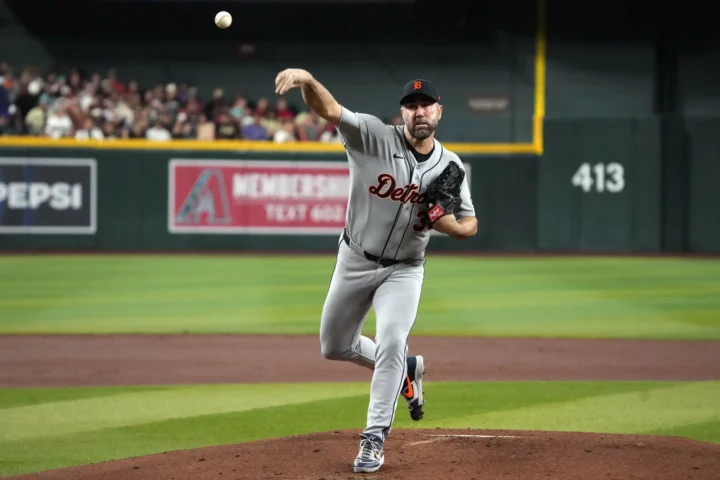
You don't have to understand every new number on the broadcast. A pro pitcher explains the ones that actually matter.

In the early 2000s, the Moneyball-era Oakland A’s found themselves on baseball’s vanguard by looking beyond the stats you’d find in a box score, but in 2026, teams have trashed the box score entirely. And, for baseball savants (or at least those who are familiar with Baseball Savant, MLB’s advanced stats hub), this is great. But for the average guy who just wants to have a nice afternoon at the ballpark, the sprawl of new-fangled initialisms and acronyms is alienating—people with rich, fulfilling lives shouldn’t know what the hell xwOBA means. To make sense of it all, we talked to Josh Hejka, a reliever for the Frisco Roughriders and Johns Hopkins University graduate who doubles as a research & development analyst at Driveline, the most sophisticated pitching lab in the country, to decode the numbers that actually matter.
Forget ERA. Here’s what teams actually track.
For most fans, ERA is the most prominent pitching stat, conveying how many earned runs a pitcher gives up per nine innings (if a pitcher gives up three runs in six innings, they’d have a 4.50 ERA). Still, ERA doesn’t account for whether those runs come from good hitting or bad defense, whether the pitcher is benefitting from hard-hit outs or getting punished for allowing hits on soft contact. It only looks backwards; the only thing you can glean from a pitcher’s ERA is whether or not they have a good ERA.
“Across my seven years in pro ball, I’ve never had a team mention my ERA,” Hejka says. “They just don’t care.”
Instead, what they care about is Stuff+, a model that grades pitchers based on the velocity, movement, and release point of their pitches, with 100 representing the league average. This is all fairly intuitive—the best fastballs are fast; the best breaking balls have the most break. For reference, Tarik Skubal, the two-time reigning AL Cy Young winner, led all starters last year with a 123 Stuff+ rating (meaning that his “stuff” is 23 percent better than the average pitcher’s), thanks to his 98 mile-per-hour fastball and an untouchable change-up that dropped more than two feet on its way to the plate. The best pitchers, it turns out, are the ones who throw the best pitches.
The new terms are really just the old stuff, named better.
Analytics are often just “new ways of quantifying old knowledge,” says Hejka.
“There’s a communication issue where the industry uses these esoteric, jargony phrases,” he says, “which makes it harder for fans to understand what’s actually going on. When an old-school coach says that a pitch has ‘late break’ and seems to dart away from a hitter at the last second, he’s really talking about seam-shifted wake.”
In this sense, analytics aren’t redefining conventional wisdom so much as refining it. Managers and players have always chased any possible strategic edge—the only difference in 2026 is that we now know for certain where those edges can actually be found. Even if baseball is described in new terms, the game is still outwardly the same game.
“We’ve always said that pitchers have good ‘stuff,’” Hejka says, “but now we can actually define what that means by looking at the speed and shape of their pitches. Hitters have always altered their approach depending on whether they’re ahead or behind in the count, but now we can optimize their swing decisions within an at-bat.”
Hitters are still playing catch-up. Here’s why.
Pitching development has been transformed by analytics. Hitting, less so. Much like Stuff+ grades pitchers on pitch quality, xwOBA (expected weighted on-base average) measures hitters on the quality of their contact—exit velocity and launch angle—regardless of whether it results in a hit or an out. A screaming line drive caught by a diving outfielder scores better than a pop-up that drops in for a single.
“So many hitting gurus are obsessed with the aesthetic of the swing and ignore the outcome of the swing,” Hejka says. “I think there’s a certain ego aspect where guys want to feel good about their swing, when our knowledge of motor learning suggests that you actually need to fail in practice in order to succeed in the game. They can crush soft toss lobs in batting practice, but that isn’t reflective of what they’ll experience in a game when they have to face a pitcher who throws a 100 mile per hour fastball and three different offspeed pitches.”
The best pitch today might be average by next year.
When the sweeper emerged around 2022—a nearly-horizontal breaking ball—hitters had never seen anything like it. “They were a huge advantage for the pitchers who threw them,” says Hejka. “But as the pitch became more common, hitters adjusted and, last year, sweepers were less effective than a regular slider. League-wide, individual hitter to individual hitter, individual pitcher to individual pitcher, they’re all recognizing new strategies and opening up different possibilities and it creates a fascinating equilibrium.”
That’s the game now: constant adaptation, and no fixed answers. “Some people say this quantitative aspect has killed some of the game’s romance and artistry,” says Hejka, “but there’s a lot of beauty in the science.”