Your bag is empty.

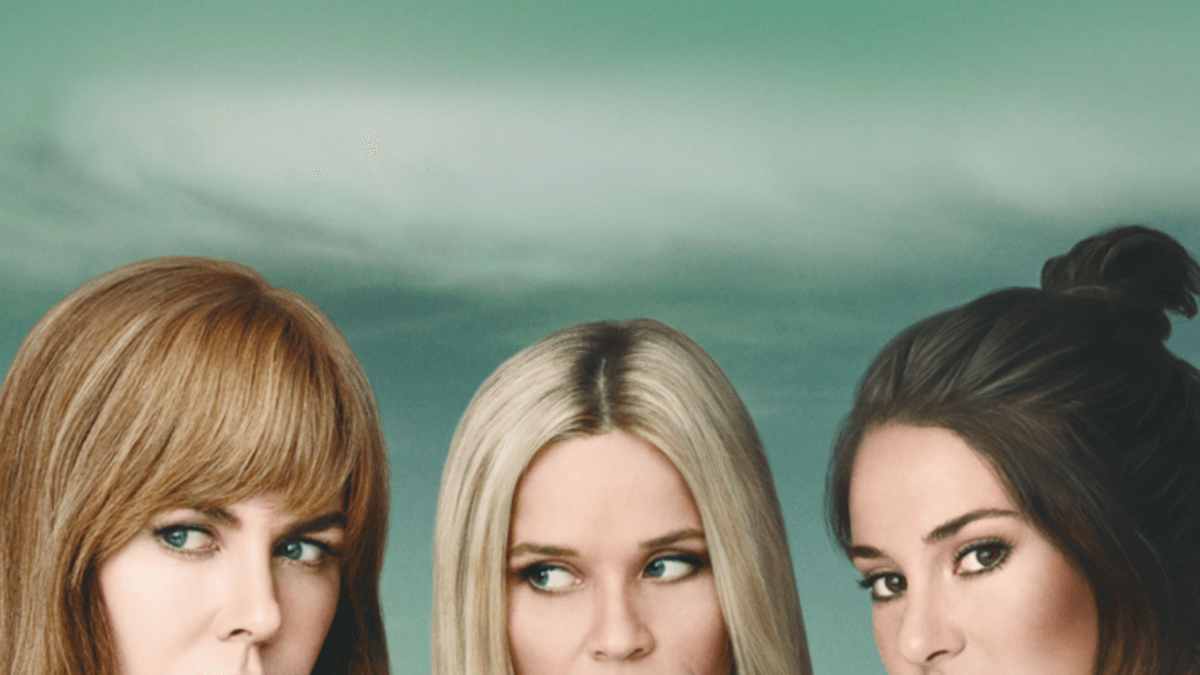
'Big Little Lies' has blazed a new trail at HBO—in front of the camera and behind the scenes
Whenever a movie or TV show hits with audiences, the inevitable wave of copycats is never too far behind. There’s nothing Hollywood loves more than a proven model of success—which explains why there are likely dozens of executives all over town already on the hunt for the next A Quiet Place as we speak.
Since it usually takes between two to three years to get a project from the development stages onto the screen, we should be seeing the effect of Big Little Lies—arguably last year’s most popular show—at the tail end of 2019. That’s when the rush of upcoming movie star-led series—to name a few, Maniac starring Jonah Hill and Emma Stone; Today Will Be Different with Julia Roberts; and that still untitled drama about the world of morning television, led by Jennifer Aniston and Reese Witherspoon—make it to our living rooms.
But Big Little Lies’ legacy runs far deeper than the continued legitimization of prestige television in the eyes of film actors and their agents. Aside from its historic ratings and ensuing awards-season sweep, the show became inextricably linked to the Time’s Up movement, thanks in part to the way it artfully explored the realities of domestic violence against women, and for the way two of its executive producers—Reese Witherspoon and Nicole Kidman—championed the movement every chance they got.
The most pronounced of the Time’s Up initiatives’ many stated goals is to end systemic sexual harassment in Hollywood and beyond. But it was also created to shine a light on the lack of gender pay parity that many actresses have been forced to deal with, often in hushed tones and behind closed doors. Thanks to Time’s Up, the plights of actresses like Michelle Williams and Claire Foy—both of whom were paid less than their male costars for recent projects—became the source of major public scrutiny. Established institutions like Netflix and the William Morris Endeavor agency, respectively, were forced to publicly reckon with how such egregious pay disparities were allowed to happen in the first place.
In the wake of Time’s Up, actresses have become emboldened, openly lamenting the gender pay gap—like Ellen Pompeo did in an essay for the Hollywood Reporter—in an attempt to upend the status quo. “We have been siloed off from each other,” Reese Witherspoon told the New York Times on January 1, the day the Time’s Up initiative was unveiled. “We’re finally hearing each other, and seeing each other, and now locking arms in solidarity with each other.”
“To achieve real and lasting change in an industry where inequality has been endemic for so long, you cant just trim the hedges.”
To no one’s surprise, HBO’s announcement that it was moving forward with a second season of BLL was accompanied by the news that its stars would be receiving a major pay increase as well. But the network hasn’t stopped there. In a new interview with the Hollywood Reporter, the network’s president of programming, Casey Bloys, revealed that Big Little Lies and its inextricable relationship to the Time’s Up movement has spurred the network to reexamine how it pays its female actors across all of its shows.
“One of the things that’s come out of thinking about the movement and some conversations with Reese, who’s really at the forefront, is something we’ve done recently,” Bloys said. “We’ve proactively gone through all of our shows—in fact, we just finished our process where we went through and made sure that there were no inappropriate disparities in pay; and where there were, if we found any, we corrected it going forward. And that’s a direct result of the Time’s Up movement.”
While Bloys didn’t specifically mention which shows may have undergone salary adjustments, he did explain how the feminist ethos of BLL and its creators has influenced HBO at large, specifically in relation to a recent incident in which drama chief Francesca Orsi said that the network had been “raped” by the high salary demands of the show’s stars. Bloys said that it was an “unfortunate statement” because it’s “not reflective” of how HBO feels as a network. He added that while dismayed by Orsi’s choice of words, the BLL team was utimately forgiving. “It actually has led to larger conversations about the choice of the word [‘raped’] and why it’s used,” he said.
Of course, to achieve real and lasting change in an industry where inequality has been endemic for so long, you cant just trim the hedges. You have to tear out the roots out and plant new seeds. In that spirit, Bloys has ensured that HBO’s upcoming lineup is not as male-dominated as in years past. With female-centric shows like Sharp Objects (starring Amy Adams, based on Gillian Flynn’s novel) and My Brilliant Friend (adapted from the novel by Italian author Elena Ferrante) coming down the pike, Bloys also told THR that he’s working toward getting the network’s ratio of male-to-female writers and directors to 50 percent.
That includes Big Little Lies season 2, which will be helmed entirely by the British director Andrea Arnold. And with the addition of Meryl Streep to the show’s already star-stacked cast, the second run is poised to be an even bigger cultural phenomenon than the first. So while HBO might technically be run by a man, it’s the ladies of Monterey, Calif., who are leading the way.