
Your bag is empty.

The woman behind Daisy “Skye/Quake” Johnson talks diversity, time travel and her emotional last day on set
All good things must come to an end—including, to the dismay of countless of Marvel fans, Agents of S.H.I.E.L.D., whose final season premieres this week on ABC.
Developed and co-created by Joss Whedon (The Avengers, Avengers: Age of Ultron), the series is produced by Marvel Television and ABC Studios as a small-screen outpost of the Marvel Cinematic Universe. It explores the inner workings of the S.H.I.E.L.D. organization (Strategic Homeland Intervention, Enforcement, and Logistics Division) and has introduced us to new agents such as Melinda May, played by Ming-Na Wen, and the enigmatic Daisy “Skye/Quake” Johnson, played by rising star Chloe Bennet.
From her mysterious origins to her many tragic love story lines, Daisy has become a standout character and fan favorite. (Don’t worry, Fitz and Simmons; we love you too.) Her transformation from the awkward rookie agent Skye to the formidable Inhuman known as Quake has been a rewarding journey—for loyal viewers of the show and for Bennet herself.
Prior to S.H.I.E.L.D., Bennet had a brief stint as a pop star in China. (Look up the video for her “Uh Oh” single under her former name, Chloe Wang; it’s a hoot.) She would later shift her focus to acting and land a co-host gig on TeenNick’s The Nightlife, followed by a recurring role as Hailey on ABC’s Nashville. But her character on Agents of S.H.I.E.L.D. was the dream role that catapulted her into the spotlight gazed upon by legions of Marvel fans. Since S.H.I.E.L.D. debuted in 2013, Bennet has also nabbed lead roles in MGM’s 1980s-set musical rom-com Valley Girl and voiced Yi in the animated DreamWorks feature Abominable—a role special to her because of its representation of Asian Americans. Next up she’ll star in the drama 5 Years Apart, which currently has a to-be-determined release date. Bennet is also the co-founder of RUN (Represent. Us. Now.), an organization devoted to being a political and cultural voice for the Asian American and Pacific Islander community.
With S.H.I.E.L.D.’s swan song arriving in a matter of weeks, a major chapter of Bennet’s life is coming to a close—something she’s still coming to terms with. Bennet, who like us is currently practicing social distancing, spoke with Playboy about her emotional final days on the show that made her a star. She also discussed how her own half-Asian heritage made its way into the story line, along with her thoughts on diversity in Hollywood, time travel and whether she believes in extraterrestrial life.
PLAYBOY: Let’s get the obvious question out of the way. How are you handling this whole quarantine situation?
BENNET: I’m just doing the best I can. I wake up, panic, eat breakfast, panic. Scroll through Instagram, panic. Try to journal and do something healthy, panic. I think that’s normal. I do puzzles now—like a thousand-piece puzzle. And it’s honestly harder than I thought. I’m just trying to not be panicked about the fact that I panicked, and I think that’s been the best way of doing it. But honestly, seven seasons of S.H.I.E.L.D. prepared me for something like this. It feels like we’re living out a real-life S.H.I.E.L.D. episode, so luckily I’m relatively used to it.
PLAYBOY: Let’s talk some S.H.I.E.L.D. I don’t know what the script-reveal process is like, but what was your first reaction to reading the script for the very last episode?
BENNET: I’m almost always the last person to see or read anything. We get them very last-minute. I actually have video footage of me before reading it. I don’t know why I’m super dramatic, but I vividly remember the last script. I remember seeing it pop up in my e-mail—to have that finally pop up after seven years, knowing it was the last one, was pretty surreal. I kind of made a moment out of it: I lit a candle, I got a glass of wine, I read it, I cried. It was odd knowing we still had to shoot it, and it’s a big, big episode. Agents of S.H.I.E.L.D. moved very quickly. Quarantine has been interesting, because it’s giving me a lot of time to reflect on how crazy, chaotic and special that experience was.
PLAYBOY: Overall, are you satisfied with Daisy Johnson’s ending?
BENNET: I would say I’m pretty happy with it. Obviously it’s an ensemble show, so I’m invested in the other characters as much as I am with Daisy. It’s really hard to wrap up everyone’s characters, but they did a really sweet and wonderful job at giving the actors and the fans some closure for each character. And they do it in a cool way. I think for anyone who has been watching the show since season one, it’s a very rewarding ending.
PLAYBOY: Can you hint at whether Daisy finally finds true love? She’s had some bad luck with men.
BENNET: It’s an understatement to say she’s had bad luck. I’m pretty sure all her boyfriends have died or been murdered or tried to murder her or, like, kill her parents, something like that. I’m rooting for her to find love, for sure. There’s that classic saying: If you can’t find love in the present, you time-travel to every decade and try to find it there. And that might work out for her. We’ll have to wait and see.
PLAYBOY: You’ve had some surprise visitors over the years, including characters Nick Fury, Peggy Carter from Captain America and Lady Sif from Thor. Since this is the last season, are you guys going big in the cameo department?
BENNET: What’s fun about the show is that our fans are so much more interested in what’s happening with the lead characters now. Obviously we have a lot of people come back who have been on the show in past seasons. During the first season we got asked that a lot. Like “What Avenger is going to come by?” Now it’s “Are Fitz and Simmons going to make it?” Or “What’s going to happen with Yo-Yo and Mack, or Coulson and Daisy?” So it’s been fun to see different versions of characters we’ve been with for seven years. I’m sure we have certain scenes everyone will come to know and love once the finale airs—scenes where everyone was together. It’s surreal. Fans are probably going to be more excited about that than anything else.
PLAYBOY: You talked about how emotional reading the final script was. How emotional was the very last day on set with the cast and crew?
BENNET: Oh my God. It was wild. It was kind of a bummer because I was shooting fight sequences the whole time, and fights are the worst thing to shoot when you’re emotional. It’s like opposite sides of the brain. I was basically on the verge of tears all day, and it was emotionally draining. We had our wrap parties the same day. So as I was shooting these fights, we literally had actors from every season just showing up. It was a good 20-hour day; I’m still tired from it. And then cleaning out my trailer and walking off those stages—we shot on those stages for the past seven years, and like two days later they took them down. That meant it was really the end, and it has taken me this entire time in quarantine to kind of come to terms with that.
PLAYBOY: You’ve gone through rigorous martial-arts training for those action sequences. Now that it’s all over, will you stick with the training regimen so you’re always prepared for other action roles?
BENNET: Right after we wrapped shooting, I was like, “I never want to sweat again in my life.” It was so much fun to shoot those scenes, but it was a lot of hard work. I don’t think I realized how much of a toll it took on my body. I’m fighting in heels, and you’re on your feet all day. That was physically draining. I’m not going to lie: It’s been nice to not move that much in quarantine. We moved at such a fast pace that we would have about 45 minutes to go over a fight, and then we’d go straight into shooting it. But that just makes me prepared for anything. I feel like any movie could come my way and I would know how to do it, just because of that. It’s so ingrained. But I will say it’s been really nice to trade in my Quake suit for a tracksuit and watch Netflix.
I vividly remember the last script. I remember seeing it pop up in my e-mail—to have that finally pop up after seven years, knowing it was the last one, was pretty surreal.
PLAYBOY: Do you think we’ve seen the last of Daisy Johnson/Quake? Back in October Brie Larson said that some of the female stars of the MCU were bugging Kevin Feige about an all-female superhero movie. Would you be game for that?
BENNET: If they would have me, I would love to be part of that. She’s an Avenger in certain comic books, so I would absolutely love that. With the Marvel universe you can never say never. Look at Clark Gregg: He has died probably 800 million times as Coulson and comes back to life. I’ll always have room in my heart for playing Daisy. I’d be very excited if that opportunity came to me.
PLAYBOY: You star in the new comedy-musical remake of Valley Girl. After seven years of Marvel action, are you branching out into other genres?
BENNET: Definitely. I would love to. People don’t realize how physical the role of Daisy was because we have stunt doubles, who are incredible, but I pride myself on doing all my own stunts, so it was incredibly physical. Honestly, I can’t even believe I got cast to play a superhero. That’s kind of hilarious. I have six brothers, so I was always terrible at sports, which is why I got into acting. I actually loved and always wanted to do comedies and romantic comedies. Those are the things I love to watch, so I will definitely be moving forward with something a little different—maybe something where I don’t get beat up every episode.
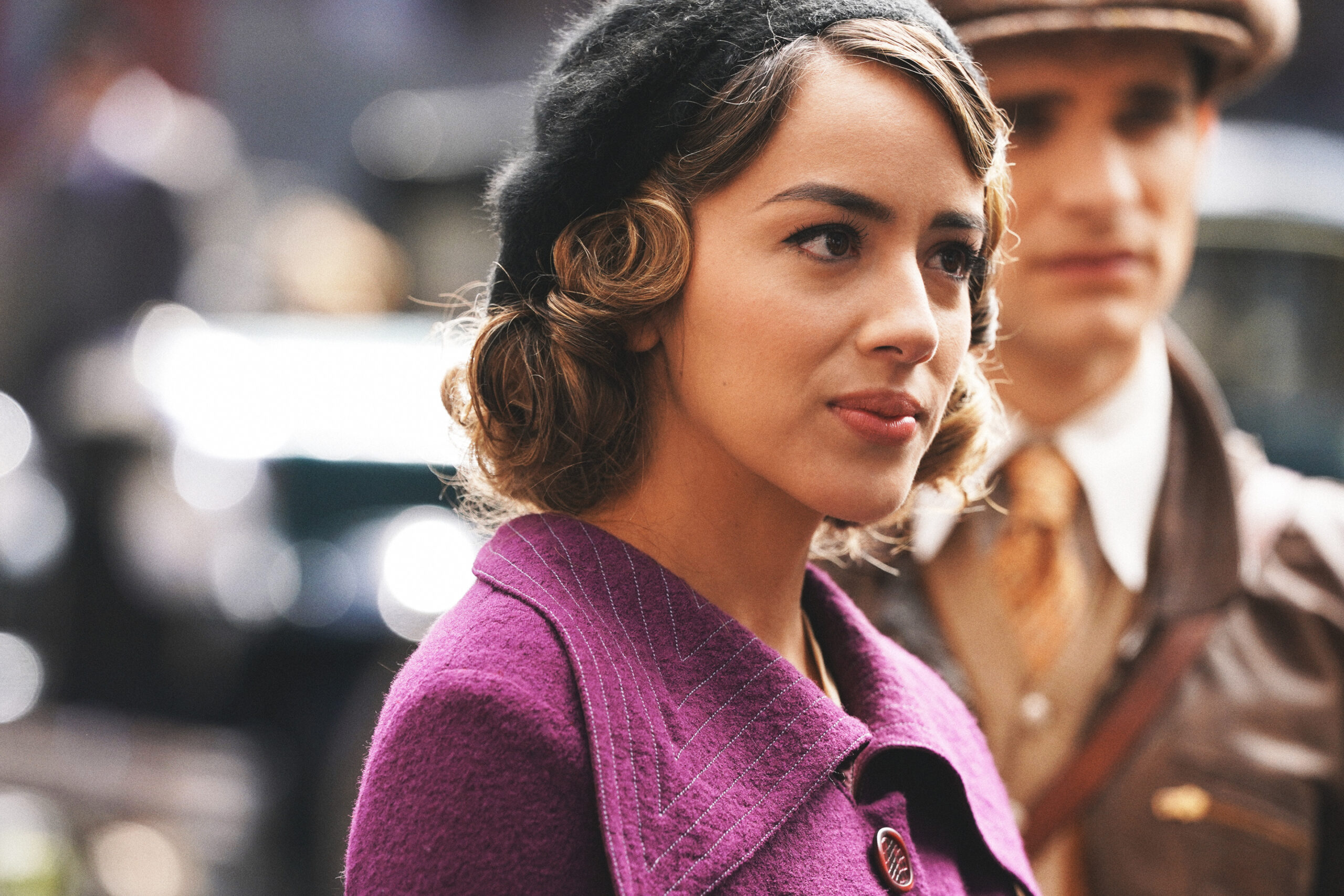
PLAYBOY: In this season of S.H.I.E.L.D. time travel plays a big role. You get to go back to the 1930s and play dress-up in costumes from that era.
BENNET: It’s so much fun.
PLAYBOY: If you had the opportunity to legitimately go back in time, are you the type who would change anything, or would you leave everything as is?
BENNET: That’s a good question. It’s one we struggle with on the show, but absolutely. There’s an inside joke among my friends that I’m obsessed with period pieces. As a kid I would be so mad that I couldn’t go back in time. A big part of why I wanted to start acting is because it’s pretty much the closest thing to feeling like you’re going back in time.
PLAYBOY: In Valley Girl you basically got to teleport back to the 1980s.
BENNET: As a half-Asian girl, I always thought they weren’t going to necessarily need me in a Renaissance movie. Things have changed now, but I thought I was never going to have the opportunity to be in these period pieces. Now with S.H.I.E.L.D., I get to skip around and basically do several different decades. Every episode was so much fun. It just changes the energy on set. All the props are different; the set is completely different. To go through the specific looks and decide which kind of character, what kind of girl I would be in each time period, and what kind of style I would have. There are a lot of things I would probably want to do if I really did go back in time. But it’s also a dangerous thing to mess with.
Fights are the worst thing to shoot when you’re emotional. It’s like opposite sides of the brain. I was basically on the verge of tears all day, and it was emotionally draining.
PLAYBOY: On Agents of S.H.I.E.L.D. you’ve encountered robots, artificial intelligence, aliens and other extraterrestrial life. What’s your personal belief about alien life?
BENNET: I definitely think there’s life out there. I don’t know who said it, but what’s the quote? “Two possibilities exist: Either we are alone in the universe or we are not. Both are equally terrifying.” I love that, and we deal with that a bit in this season. But I do believe in aliens. They’re in my dreams all the time. Listen, quarantine has me dreaming some weird shit, to be honest.
PLAYBOY: On your Instagram and Twitter accounts you’ve been vocal about diversity and equal opportunity in Hollywood. The cast of Agents of S.H.I.E.L.D. has been pretty diverse since the show debuted in 2013, and Marvel even altered Quake’s backstory to fit your real-life heritage. You voiced one of the leading roles in DreamWorks’ Abominable, which features mostly Asian animated characters. And now Marvel has its first big Asian superhero coming in next year’s Shang-Chi. Are you overall satisfied with the progress so far?
BENNET: We have more work to do, because it’s still a topic. Once it’s not a topic, our work is done. That’s going to take a long time, but we’re definitely taking steps in the right direction. People should be cast because they’re good at what they do and are right for the role. And that’s that. Part of that is a systemic issue: Certain actors or certain people get more experience and can grow and become better because they were allowed to have that experience. So it’s really about giving people the chance, especially Asian actors. For me, as a mixed-Asian actress going into the show, I was really proud that they cast me because I was right for the role. And then within that, they made my character fit me. They really played into that and the Chinese culture of Daisy and the fact that she was half Asian and half white. That’s really special.
We need to cater more to things like that to make it more a unique experience rather than forced diversity. People can tell when content is forced. We don’t need to do that. Talented actors of all different colors are out there. The more we can come together as a community, whether you’re black, white or Asian, the better. I’m proud of what the show has done in that regard, especially being a female character. As much as we want to see Daisy find love, this was definitely a discovery of self for her. And that resonated with a lot of young women. What our show never really did was “Strong female characters, yeah!” It just is. And when things are just the way they are and we’re not talking about it, that’s when things have changed. No one else could have played Mack but Henry Simmons, and he happens to be black. That’s why everyone was so good. And so I hope we go more in that direction.