Your bag is empty.

Playboy film critic Stephen Rebello reviews the violent mob drama that stars Robert De Niro, Al Pacino and Joe Pesci
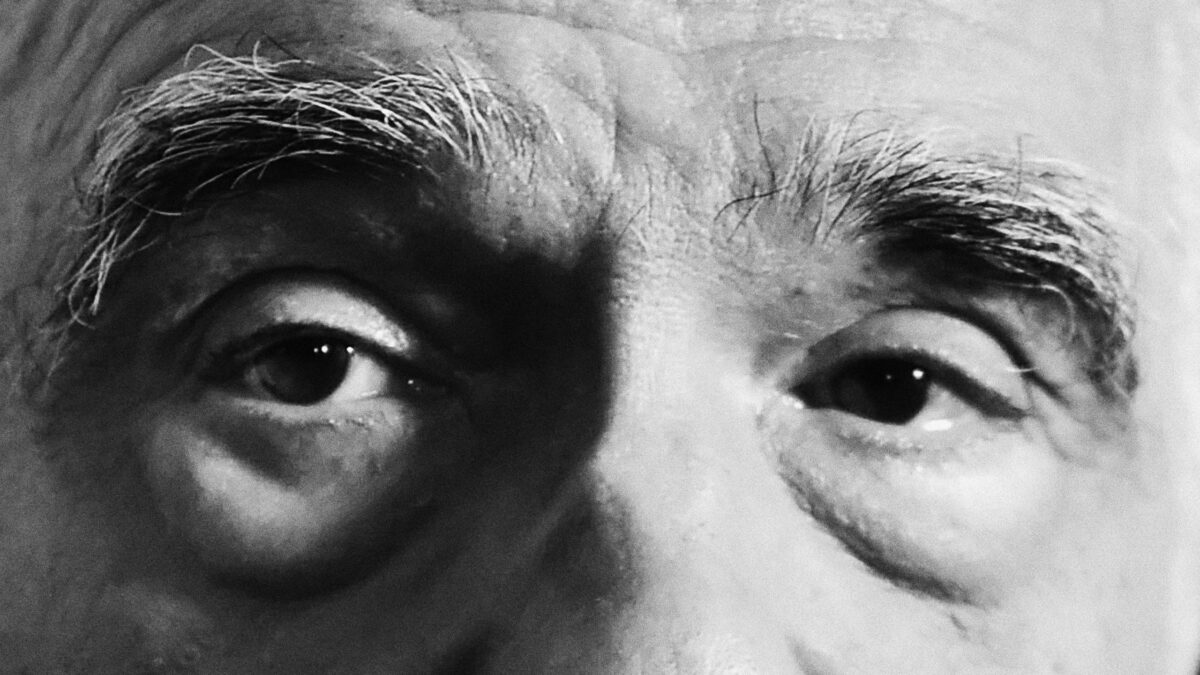
Lots of people who haven’t yet seen Martin Scorsese’s new mob movie, The Irishman, keep saying the same few things about it. It’s the director’s first Italian-American gangster movie since the glory days of Goodfellas and Casino, but can it possibly be anywhere near as good? They also talk about its being a movie on which tons of its huge budget got spent trying to CGI de-age its leading men, Robert De Niro, Al Pacino and Joe Pesci. They’re talking and talking about how it runs three and a half freaking hours long.
Turns out that, after seeing the movie, those are probably the least important things about it. The Irishman is based on Charles Brandt’s could-be-true book I Heard You Paint Houses (that title, not The Irishman, begins and ends the movie). In the faithful, painstaking, graceful screenplay by Oscar winner Steven Zaillian, we live through the rise and fall of hoodlum Frank Sheeran (De Niro). This begins with a long, long tracking shot—no, not through the glamorous, seedy Copacabana nightclub, as in the famous shot in Goodfellas, but down an austere nursing home corridor and into a spare, institutional room where Sheeran begins to tell hair-raising tales to some as-yet-unidentified off-screen interviewer.
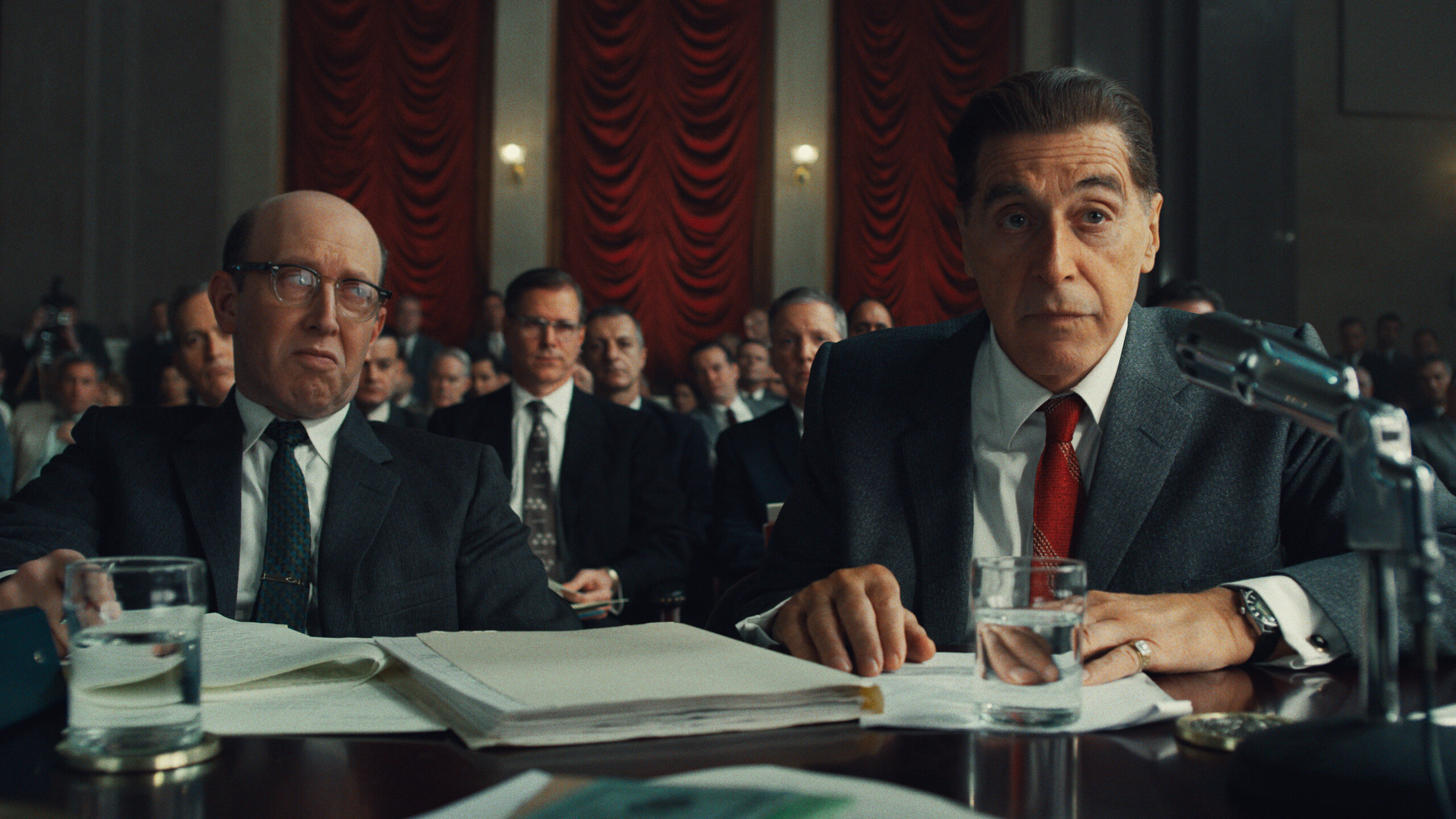
For almost an hour, Scorsese plays variations on his greatest hits. De Niro starts off as a youngish WWII vet and meat-company truck driver, featuring CGI that is good enough but cannot disguise an older man’s physicality and body language, no matter how many times someone calls him “kid.” He becomes a favorite son of Russell Bufalino (Pesci), the gentlemanly, scary scion of a Cosa Nostra crime family that rules, and terrorizes, Pennsylvania.
As the movie shifts from present to past and back again, Sheeran moves up and up the ladder of organized crime. Because of him, many men get shot in the face, hundreds of cars explode, lots of cigarettes get smoked, much funny/scary conversation ensues over steak dinners in the red leather-booths of Italian restaurants and a store owner gets beaten to a bloody pulp for accidentally bumping into one of Sheeran’s young daughters.
The movie is slow, but also so completely involving that it is unmistakably the work of a master at a peak of his artistry.
To the delight of longtime Scorsese aficianados, almost all of this action is balletically edited (by the invaluable Thelma Schoonmaker) and kinetically staged to pop hits of the 1950s like “In the Still of the Night” and “El Negro Zumbón,” and photographed in Kodachrome hues by the gifted Rodrigo Prieto. It’s jazzy, pure adrenaline stuff, but as fun as this replay is, we’ve seen it all before from the director, and thanks to stuff like The Sopranos and Boardwalk Empire, a lot since him.
Happily, all that blood-spattered Scorsese mayhem and razzmatazz are just a set up for the sucker punch. Once the movie hones in on Sheeran’s tight, ever-shifting, paternal relationships with Buffalino and Jimmy Hoffa (Al Pacino), president of the International Brotherhood of Teamsters, the good times begin to curdle. We learn how mighty politicians and kingmakers make decisions that cost them their lives.
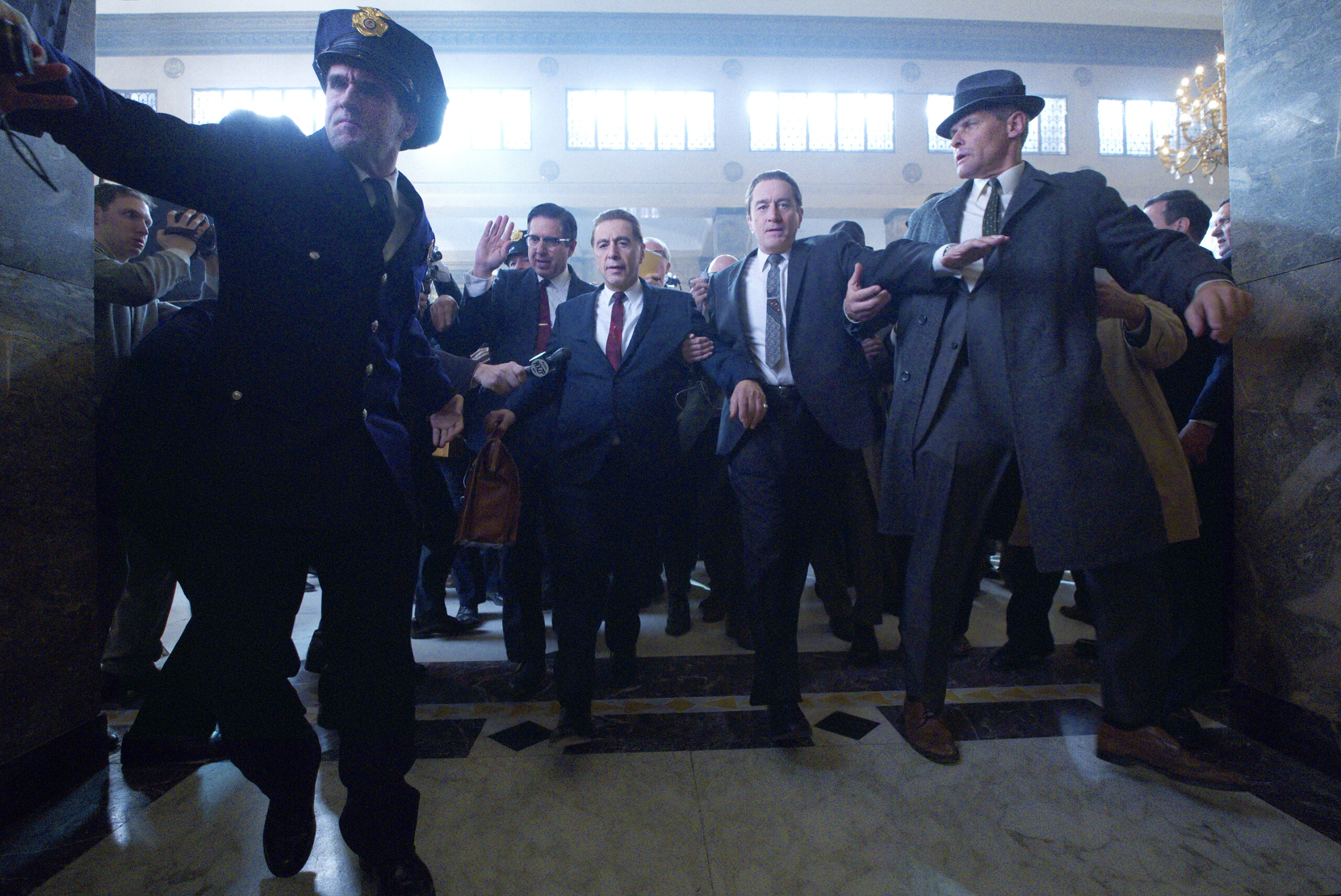
Long shadows fall, the color palette desaturates, the laughs stick in the throat and The Irishman becomes something much different—better, richer and, finally, revelatory. Especially in the film’s Ingmar Bergman-bleak last hour, when Sheeran fumbles toward some comprehension of the chaos and damage he has brought upon himself, his family and the lives of others, we come to understand what’s really weighing on Zaillian’s and Scorsese’s minds.
The movie is dark, sad and contemplative—not just a meditation on regret and loss but a stark, unblinking stare into the face of aging and death. The performances are exceptional across the board, as is to be expected from Harvey Keitel, Bobby Cannavale, Ray Romano and Anna Paquin, who portrays one of Sheeran’s daughters, the one who sees right through him. Pesci and De Niro, toned down and stripped of their usual tics, tricks and jitters, are compellingly watchable; meanwhile Pacino, all tics, tricks and jitters, is funny, unhinged, fascinating. His performance, part-clown, part-monster, is the best, most gonzo and enjoyable thing he’s done in ages.
The movie is slow, meditative—sometimes frustratingly so, yes—but also so completely involving that it is unmistakably the work of a master at a peak of his artistry. It may ramble along longer than it needs to but is so powerful, grabby and haunting that my first thought on leaving the theater was When can I see it again? The Irishman opens its limited theatrical release on November 1 and begins digital streaming on Netflix on November 27. Wait if you must, but this film belongs in movie theaters, and that’s where you should see and savor it. It’s that good.