Your bag is empty.

A candid conversation with the outspoken homosexual playwright about gays and straights and life and death in the age of AIDS
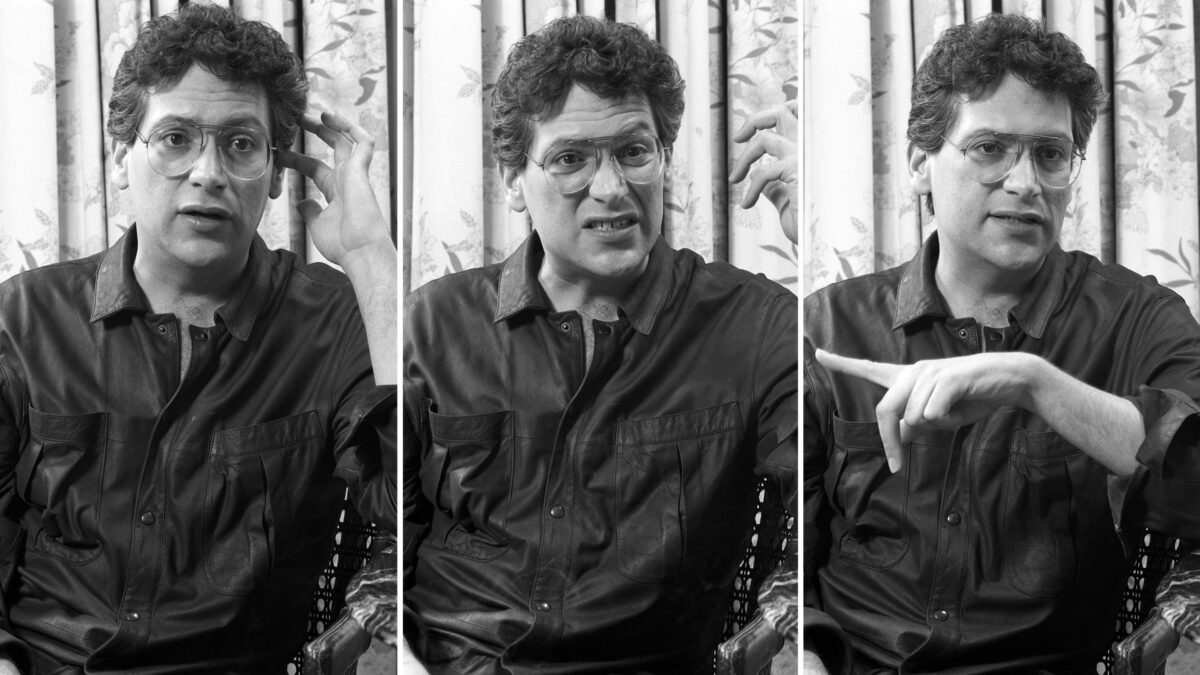
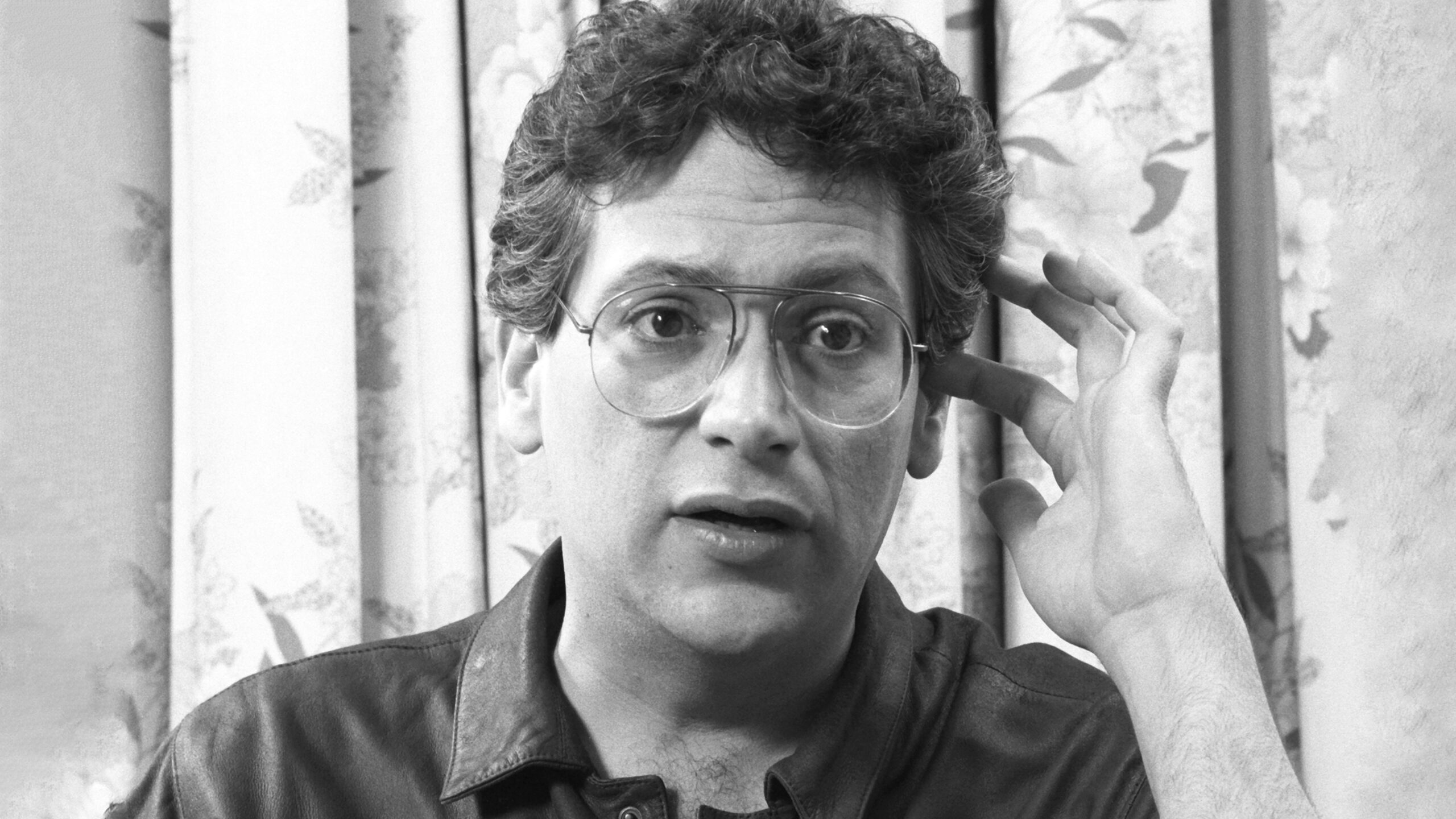
It was on a Sunday evening in June 1984 that Harvey Fierstein first imposed himself upon the national consciousness. Just announced as the Tony award winner for Best Book of a Musical for La Cage aux Folles, he rushed onto the stage, smiled into the network-television camera and, in a Brooklyn rasp that has been variously likened to the mating call of a bulldog or a backed-up vacuum cleaner, declared his everlasting gratitude to his male lover.
Such was the force of the impression he made that almost no one recalled that something similar had occurred just a year earlier. In fact, it was a preshow admonition to the audience by the executive producer to “please, please avoid last year’s embarrassment”—when someone had quietly thanked his male lover—that prompted Fierstein to say what he did.
“Before that,” as he later recalled, “I couldn’t have cared less if I won, since I had two Tonys already; but suddenly, the gauntlet was down. I had to win just to prove that we ain’t gonna take that kinda shit.”
Not that anyone who knew him was at all surprised. Fierstein has rarely hesitated to stand up for the proposition—summed up in the rousing anthem for La Cage, “I Am What I Am”—that gay people don’t need the straight world’s approval.
That stance, however, has often proved to be a professional inconvenience. A situation comedy Fierstein developed about a gay couple—-“It was going to portray them as people,” he says, “instead of caricatures”—could not get past top network executives. The Wall Street Journal killed a profile of Fierstein after he refused to allow his use of the word gay to be changed, in accordance with the paper’s stylebook, to homosexual. Nor, he claims, is he any longer welcome on Late Night With David Letterman, following a famous on-air duel of put-downs with the comedian: When Fierstein remarked that he assumed everyone was gay unless told otherwise, Letterman snatched up a pencil and a pad and wrote, “I’m not,” and turned it toward his guest; but Fierstein directed his written response—”Would eight o’clock be okay?”—at the camera.
The attention accorded to Fierstein as a representative of gay pride, and the considerable flair he brings to the role, sometimes conspire to draw attention from the gift that brought him to public notice in the first place. In fact, at 34, he is recognized as one of the most eloquent voices in contemporary theater.
That reputation is predicated, above all, on Torch Song Trilogy, the nearly four-hour-long, frankly autobiographical opus that won 1983’s Tony for Best Play. It also won Fierstein a Best Actor award. In the role of Arnold Beckoff, a nice Jewish boy whose mother had wanted him to grow up as anything but a drag queen, his performance was a tour de force. Yet it had taken four years for the play to make its way uptown from off-off-Broadway, perhaps because, he says, his homosexual protagonists “don’t commit suicide at the end or repent their evil ways.”
In fact—and this certainly had no small part in the play’s eventual success—for all its candor and the depth of its gay sensibility, Torch Song‘s values are essentially traditional ones. “Arnold Beckoff wants what most people want,” the play’s coproducer, John Glines, once observed. “He’s very middle class, and he wants a job he doesn’t hate too much, enough money to live comfortably and someone to share it with. He wants a family life. What Harvey proved was that you could use a gay context and a gay experience and speak universal truths.”
Oh, yes. *Gay*. I was so gay, they don’t make them any gayer.
“Gay liberation should not be a license to be a perpetual adolescent,” as Fierstein himself noted at the time, adding a postscript that struck a chord within as many straights as gays: “If you deny yourself commitment, then what can you do with your life?”
Not, finally, that any of that should have been surprising. Fierstein grew up middle class and, unlike many social activists, has never disavowed or disparaged that background. Although he was a fat kid—by adolescence, he weighed 240 pounds—he more or less fit in.
It was to please his parents that after high school, Fierstein studied painting at Brooklyn’s Pratt Institute. But by then, having already made his stage debut—as a drag queen in Andy Warhol’s Pork—he was in love with the theater. For a while, he worked, like Arnold Beckoff, as a female impersonator before turning to writing. “It’s a fine old theatrical tradition,” he would later explain, “of uncastable people who get frustrated and start writing for themselves.”
Fierstein’s early efforts—Flatbush Tosca, Cannibals Don’t Know Better, In Search of the Cobra Jewels (the last featuring a cockroach chorus)—tended toward camp. It was only with Torch Song, first produced at the tiny downtown La Mama Theater (and slated for release this year as a film, with Fierstein playing Arnold and Anne Bancroft as his mother), that he displayed his range.
As a blockbuster musical, La Cage aux Folles confirmed not only his broad-based commercial appeal but his status, as he characterized it, as the first “real-live, out-of-the-closet queer on Broadway.”
But by then, the AIDS epidemic had already begun to take its ghastly toll. Although he had never professed to be a spokesman for anyone but himself, Fierstein soon found himself regularly called upon by the media to speak out on the crisis, cast, despite himself, as a kind of emissary from the gay community to the straight, laboring to dispel the pervasive misconceptions about the disease and those who have it. When he would later appear with physicians and AIDS researchers on programs such as ABC’s Nightline, often it was Fierstein’s vivid remarks, more than the figures and the science, that made the strongest and most memorable impression on viewers.
Fierstein’s next play, Safe Sex—actually, a trio of one-acts—was also largely autobiographical and dealt with, among other things, the dehumanizing impact of AIDS on all of us. In the words of New York Times drama critic Frank Rich, “If it would be grotesque to suggest that anything good has come of AIDS, it can be said that the theater has found its own voice in rising to the disease’s challenge.”
With evidence of public confusion about the role of homosexuals in the spread of AIDS, and a backlash against gays in some parts of society, PLAYBOY sent writer Harry Stein to see Fierstein. The former “Ethics” columnist for Esquire, Stein is the author of One of the Guys: The Wising Up of an American Man. His report:
“In a sense, Harvey is the easiest interview in the world. It is rare to run across someone both so at ease with his convictions and so adept at expressing them. His passion, even his intense dislikes—for the Reagans, for example—are never tempered by the caution that comes as second nature to most of those in the public eye.
“Yet it is that same quality—the tendency to come on so strong, to engage in verbal overkill and, sometimes, deal in generalities—that makes talking with him such a challenge. Harvey is a gifted performer, and at the beginning of our conversations, it was hard not to sense that what I was getting was something of a creation, the public Fierstein.
“In retrospect, it ought to be acknowledged that part of the problem—probably more mine than his—had to do with our different sexual orientations. Although we are roughly of the same generation and social background, in fundamental ways we have inhabited different worlds; and, like most straight men, I approach his with a certain trepidation. It took a little while to get beyond all that. But, eventually, we established considerable rapport.
“Fierstein spends a lot of his time alone these days, with a pair of dogs in rural Connecticut—a seeming anomaly for a man whose life and work are so closely linked to the beat of the city. In fact, although he has by no means surrendered all his compulsions—he continues to chain-smoke and to punish himself with a variety of diets—he is extraordinarily at ease there, more than once interrupting our conversation to point out the window at some natural magnificence. ‘You should hear the Canada geese honking late at night,’ he noted at one point. ‘It sounds just like the Belt Parkway in Brooklyn. Then you go outside, and they’re flying against the full moon, and you’re in a Walt Disney movie.’
“But, no, the man will never be confused with Marlin Perkins. For although the gentleness of spirit has much to do with his distinctive voice, it plays off a gritty, often outrageous honesty.
“A couple of weeks after our first meeting, I found him in his other new home, a duplex in a just-completed building on New York’s Upper West Side, surrounded by paintings and prints waiting to be hung, making plans to head up to Toronto to shoot one of the Safe Sex plays for HBO.
” ‘You know,’ he said, nodding toward the bedroom upstairs, ‘I’ve got no curtains up there yet, and this morning, when I got out of the shower, I noticed there were all these workmen on the roof of the building across the way, staring in at me. What could I do? I walked over to the window and stared right back.’ He smiled and shrugged. ‘I figured they were the ones who ought to be embarrassed, not me.'”
PLAYBOY: We understand that as a child, you were a regular reader of this magazine.
FIERSTEIN: Incredibly enough, yes. We had some relatives in Ellenville, New York, and the two boys were the same age as my brother and I. They had some books there, really dirty books. Every other word was fuck and shit.
PLAYBOY: How old were you then?
FIERSTEIN: Oh, I had to be, like, nine, ten. Anyway, one time, my mother opened up one of these books and she practically had cardiac arrest. So my parents made a deal with my brother and me. If we didn’t read these gross books anymore, they’d get us a subscription to PLAYBOY.
Of course, what my parents didn’t know was that very few of the pictures really enticed me. I liked only the Sex in Cinema features. Those were the only pictures that I found at all sexy, because they had men in them.
PLAYBOY: So you already knew you were gay.
FIERSTEIN: Oh, yes. Gay. I was so gay, they don’t make them any gayer.
PLAYBOY: How was it to be surrounded by all the heterosexual stimuli as a child? What did you feel about yourself then?
FIERSTEIN: I would say that anybody who is an out-of-the-closet gay, or even a practicing gay person, has gone through more analysis in his own head than he’d get from paying some Freudian analyst $4,000,000. Because what happens when you’re a kid is that you go through an identity search. When straight kids go through it–boom!–they come up with the answer and they fit right in.
What happens with a gay kid is, you go through this identity search and you come out with the wrong answer. Then you go through it again and you come out with the wrong answer. And then you come out again with the wrong answer. So you’re constantly rethinking your feelings, figuring out where you fit in. Am I a man trapped in a woman’s body? Am I a woman trapped in a man’s body? Is homosexuality normal? Am I gay because my mother yelled at me and my father didn’t? I mean, you deal with all these questions on a basic level before you even know that psychological theories exist.
I wanted the entire world to see that homosexuality is normal.
PLAYBOY: Do you remember your first homosexual stirrings? Was there a moment when you said to yourself, I’m attracted to boys as opposed to girls?
FIERSTEIN: No. I just always was. I always had more in common with girls in the sexual games. And was always attracted to men. I remember at sleep-away camp that many nights I used to fake not being able to sleep and being homesick so that I could get into bed with my counselor. He must have been 18, but, to me, he was this big man and he wore this cowboy hat and this butch-looking outfit and all the girls carried on with him. But I slept in bed with him. And this was before, obviously, I knew anything about sex.
PLAYBOY: Did you talk with anyone about it? Could you confide in your brother?
FIERSTEIN: No. You know, I always thought I was extremely honest with myself. Then, all of a sudden, something happens. I’ll give you an example. A while back, my mother came to visit me for the weekend and–you know how mothers are–she brought this big bag full of old junk she thought I might want to have. There was one piece of paper in an envelope. I opened it and I freaked. It was one of those notes family members leave for one another on the kitchen table, saying where we are and when we’ll be back. My handwriting was on it, but I didn’t consciously read it. I just started yelling at my mother to stop dragging up ghosts. “If you want to save this kind of crap, go ahead!” I shouted. “But don’t inflict it on the rest of us!”
Even I couldn’t understand why I had reacted the way I had. So a few days later, I mentioned it to my brother, and he asked what was in the note. “I don’t know,” I said. “All I remember is that I quoted a Joni Mitchell song–you know: ‘I’ve looked at life from both sides now.'” He said, “You don’t remember the ‘both sides now’ note? It’s when you came out to the family.”
And, of course, I had totally blocked it. Because, in my case, there were no fights to remember, no screaming. Maybe fighting it out would have helped at that age. I don’t know.
PLAYBOY: How did your father react?
FIERSTEIN: The only thing I specifically remember was, we were taking the dog to the vet in Jersey, and during the car ride, he asked me if I wanted to try a prostitute. I was 13 years old. And I said no, it wasn’t necessary. I don’t know how painful it was for him, but it was definitely never dealt with by that screaming, yelling crap that you see on television.
PLAYBOY: You were very lucky.
FIERSTEIN: Yes, I was extremely lucky. But, in a funny way, my parents had no choice, because that’s how they brought us up–that whatever you believed in you should stand behind.
PLAYBOY: It seems like an extremely untroubled childhood.
FIERSTEIN: Just bizarre. Because the entire time, I was also going through these stages of trying to figure out who I was in this world that didn’t match. Back then you never saw a homosexual anywhere.
PLAYBOY: There was no guilt, no feeling that there was something wrong with you?
FIERSTEIN: Not at all. You know, people say how brave I am about what I’ve done and all that. I say it’s the opposite. Everything I’ve done is out of cowardice, out of fear of being different. I was too stubborn to go along with the world, so I made the entire world gay. I wanted the entire world to see that homosexuality is normal and this is the way a lot of us are.
Abridged from the August 1988 Playboy Interview.