Your bag is empty.

We haven’t elected an unmarried president since the late 1800s
During the first months of the campaign, I was lingering at the edge of a crowd at a New Hampshire art gallery when a woman wandered up to me with a smile and asked me if I was Chasten Buttigieg. When I told her that I was just another jet-lagged member of the press corps, she frowned and sunk back into the crowd waiting for Chasten’s husband to appear on the stage where he would deliver his stump speech for the second time in an hour.
That New Hampshire visit was in the opening stages of Pete-mania, which came right after Betomania and just before Warren-fever. And despite the candidate’s rising popularity, it still floored me to discover that a rank-and-file voter in Manchester, New Hampshire knew Chasten Buttigieg nearly a year before the state’s primary election. Though, admittedly, I hadn’t yet figured out that the rank-and-file New Hampshire voter carries much more knowledge about presidential candidates than the Washington press corps inside the shelter of the Potomac River.
Chasten Buttigieg is, of course, the husband of Pete Buttigieg. The couple met on Hinge and their first date was to a minor league baseball game in the town where Pete Buttigieg is still, technically, the mayor. Chasten is the most visible and most popular of the 2020 spouses, but he’s not the only better-half who became a figure in this race. Political junkies can probably rattle off a few: Jill Biden, Amy O’Rourke, Bruce Mann, Jane Sanders and maybe even Kamala Harris’ husband, Douglas Emhoff.
Candidates have tried with varying levels of success to introduce their spouses to voters for a number of reasons, but mostly because it humanizes the candidate. The voter sees the candidate on the stage with her husband and the voter realizes that, at some point, this candidate isn’t solely a politician—she’s also somebody’s wife. Relationships are that rare sort of common thread that we understand through our own experiences and, as such, make perfect fodder for the I-am-just-like-you pitch that candidates are constantly tweaking until it resembles something believable.
We believe that spouses are iconic and inspirational even when the president sometimes isn’t.
During the weeks in which his campaign crumbled, Beto O’Rourke was accused of ignoring his wife to run for the presidency. The Texan was forced to apologize after he told a crowd in a cafe that his wife is raising their three children “sometimes with my help.” O’Rourke later repented: “not only will I not say that again, but I’ll be more thoughtful going forward in the way that I talk about our marriage.” Before he ultimately dropped out of the race, Beto’s campaign hands later began pushing fans to follow Amy on Instagram but the moment seemed to have passed.
In early September, after the mass shooting in El Paso, Amy began appearing without her husband on the campaign trail. She even endured the required tour-of-a-small-New-Hampshire-business, which is the sort of campaigning that feels more like a penance than a profitable excursion into ballot box America.
Jill Biden is as seasoned on the campaign trail as her husband, I watched her deliver a polished stump speech a decade ago during the Obama campaign. But the front-runner in campaign prowess is still 30-year-old Chasten Buttigieg. He has nearly 400,000 followers on Twitter—a few thousand less than Julián Castro, who was on the Houston debate stage as a candidate.
The simple shrug-off that you’ll hear from older pundits is that Chasten is young and hip and, therefore, just “good at” the internet. But he’s more than just a figure in the background—the Buttigieg campaign has held 15 fundraisers in which Chasten appeared alone and worked the crowd for cash. There is no doubt that he’s raised the most money among the 2020 spouses.
Though Jill Biden is the most experienced spouse, she’s not above the occasional gaffe. And she proved that presidential spouses can stumble into gaffes when she told a New Hampshire crowd that they should “swallow” and vote for her husband. Which brings about the obvious bummer–political spouses are fair game.
The idea that a president needs a spouse is simply ground into the American conscious.
Of course, the spouses of presidential candidates have never really been out-of-bounds, despite how much the press has insisted that they are. In the 1972 race, Senator and presidential contender Ed Muskie tearfully defended his wife after an editorial claimed that she—as an Associated Press obituary recounted—“liked to tell dirty jokes and smoke cigarettes.” Muskie’s campaign never recovered.
In late September, Elizabeth Warren appeared with her husband, Bruce Mann, in a softball interview on CNN telling the story of a romance. Warren watched Mann teach a class at the University of Connecticut and, immediately afterward, asked him to marry her. It’s a good story because, like Pete and Chasten Buttigieg in the stands of a minor league baseball game, Warren’s doesn’t feel manufactured. And maybe none of these stories do. Consider Amy and Beto O’Rourke on their first date in the Mexican city of Juarez—it feels real, if it’s left unexamined. But, it feeds into the narrative that we’re guilty of constructing around these couples because we need a storyline to help us make something identifiable of the madness.
The elephant on the campaign trail is obviously that this narrative splinters and fractures and sets itself afire when you glance at the current White House occupant. He is a man who does not sleep in the same room as the First Lady and, relatively early in their marriage, paid off an adult actress to keep quiet about an alleged affair.
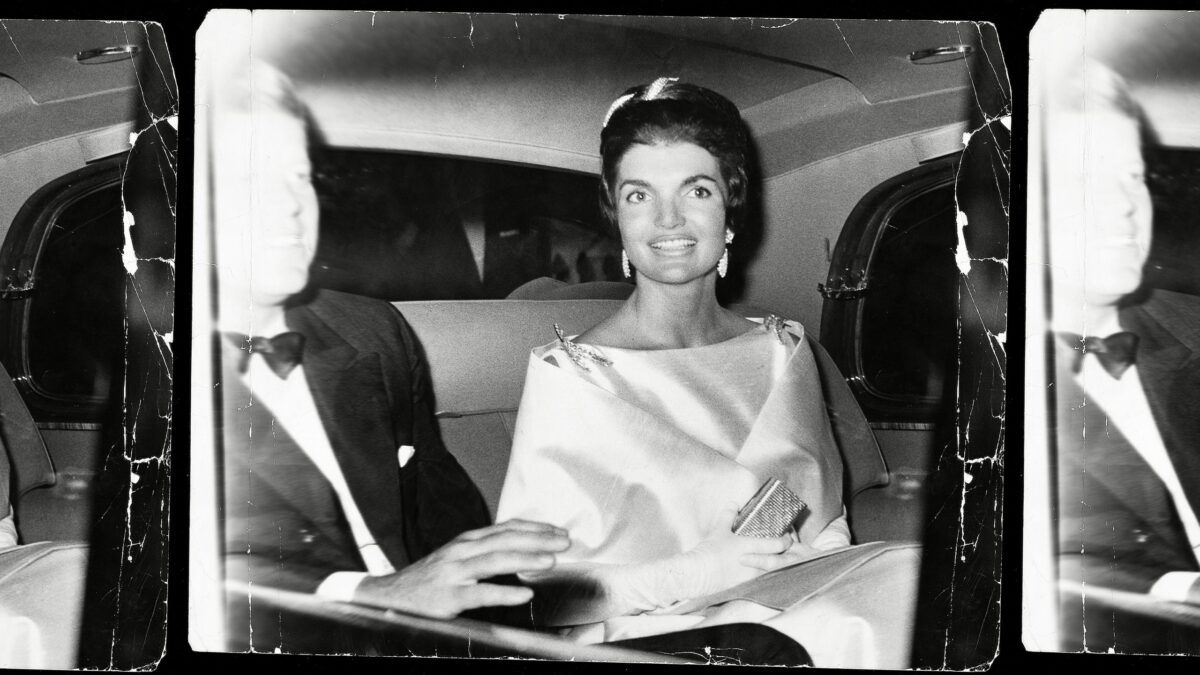
Despite Trump’s cloudy relationship with Melania, the idea that a president needs a spouse is simply ground into the American conscious. We haven’t elected an unmarried president since the late 1800’s and over the last hundred years, through Jackie Kennedy and Eleanor Roosevelt and Nancy Reagan, we’ve just decided that president needs spouses. Because we believe that spouses are iconic and inspirational even when the president sometimes isn’t.
Over the next few months, we can expect to meet more of the spouses. A few of them may even be able to raise money for the candidate and the very best ones will be able to convince us that they belong in the White House.