Sometimes, policing art—film, specifically—in the name of cultural sensitivity is necessary. Take director Craig Zobel’s The Hunt, a movie that had been slated for release this September and which focuses on elites killing rural, common folk for sport. Though ironically linked to Trump—an elite who has vaguely suggested that Hollywood makes films like The Hunt to mock his base—few can argue with Universal Pictures’ decision to shelve The Hunt post-El Paso and post-Dayton, out of respect for more horrific realities. Another send-up of conservatism, Bombshell, Lionsgate’s December 2019 release about the Roger Ailes sex scandals at Fox News, may indeed get recalled much sooner—if not by the studio, then by audiences. While Oscar buzz is mounting for Nicole Kidman’s spin on ex-anchor Gretchen Carlson and Charlize Theron’s uncanny embodiment of Megyn Kelly, some are crying foul at the fact that Bombshell was written and directed by men. Read: This #MeToo movie has a #TimesUp problem.
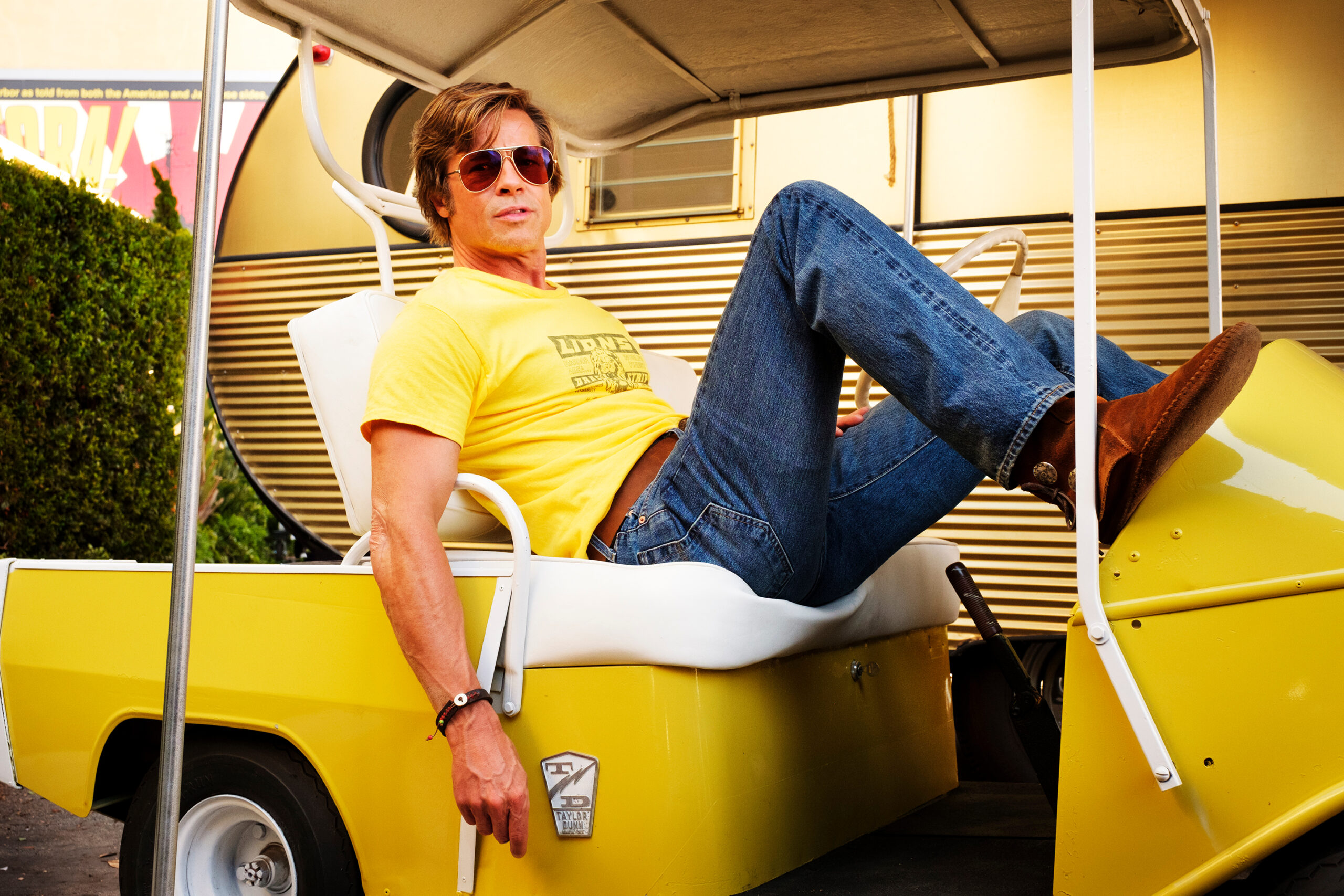
When does policing filmic art go too far, and who is truly served by this policing? This summer, two thematically different movies became shrouded in thematically different controversies. A common factor—from the Twitter boycotts to click-bait headlines—was a collective effort to drag the films and their makers through a muck of public opinion. The first was Once Upon a Time…In Hollywood, Quentin Tarantino’s latest slice of revisionist history, set in the fictional 1960s lives of actor Rick Dalton (Leonardo DiCaprio) and his stuntman Cliff Booth (Brad Pitt) and hinged on the fate of real-life actress Sharon Tate (Margot Robbie). Critics generally loved the sprawling, sun-soaked bromance and it yielded more than $100 million in box-office returns. But it also sparked ire, including from Bruce Lee’s daughter, Shannon, who balked at the film’s farcical depiction of her father (played by Mike Moh) and how it reinforced decades of Hollywood racism. Here at PLAYBOY, writer David Dennis Jr. also took Tarantino to task for lavishly celebrating white maleness and relishing an era when white male dominance was more pervasive than it is today.
Courtesy of Sony Pictures
There’s nothing inappropriate about these critiques. Art is made and given away to be dissected, debated, loved, hated, interpreted and re-interpreted, especially when it comes from an artist as unapologetic and polarizing as Tarantino. At least…that’s the way it’s supposed to work.
But we are in the age of representation, of identity politics; the age of reprimanding moral injustice and inequality wherever they coalesce. Of course, that reprimand usually originates on Twitter until it becomes pervasive enough for the media to react. As writer Emily Todd VanDerWerff summed up in a Vox piece, “the way we talk about Quentin Tarantino and his latest movie is the way we talk about art in 2019.”
Broadly speaking, Hollywood is changing. Tarantino hasn’t. But should he be expected to? So long as Hollywood continues its relatively new and frustratingly slow efforts to make inroads for non-cis-white-male stories and storytellers, should one of the industry’s few reliable auteurs be policed into changing his filmic voice?
The biggest controversy to emerge after Once Upon a Time‘s release involved Tarantino’s treatment of female characters. It’s an issue that’s followed the director for years, from Uma Thurman’s car crash on the set of Kill Bill to the near-constant onscreen beatings of Jennifer Jason Leigh’s character in The Hateful Eight.
I have no intention of telling Tarantino what he should or shouldn’t be doing, and I have total faith in him as an artist. This was about presenting the facts.
Top grievances related to Once Upon a Time involve Robbie’s minimal screen time and dialogue as well as the outlandishly brutal, climactic murders of two young, female Manson Family cultists. The latter sequence, while fully on brand for Tarantino and his penchant for cartoonish, violent justice, is enough to test the morals and gag reflex of even the least squeamish nihilist in the theater. But the former point prompted some curious and questionable articles, namely a August 2019 post on Time.com, in which two journalists, Anna Purna Kambhampaty and senior editor Elijah Wolfson, led a small team who watched all 10 of Tarantino’s films, counted the lines of dialogue spoken by women, and presented the data in infographics. To few people’s surprise, the findings showed that women have far less dialogue—but this reader was left wondering what this retroactive (and laborious) exercise was for. Did the reporters believe they’d somehow influence Tarantino in how he should make his next (and reportedly final) movie?
“I went into that project with good faith,” Wolfson tells PLAYBOY, adding that he’s a diehard Tarantino fan. “The goal was never to take somebody down. Before we jumped in, there was already a conversation online about this issue, and we wanted to add a useful, objective data point to it. I think it’s a legitimate conversation to have: The directors who have been given the opportunity to achieve greatness have not represented the public in its entirety of diversity.”
True, but the trouble with the Time.com piece, “How Often Do Women Talk in Quentin Tarantino Films?”, is that it outlines the terms of an experiment, shows graphs of the results, discusses those results and ends abruptly. Without Wolfson’s contextual background, and when digested on its own, the piece reads like a bad report card. “I have no intention of telling Tarantino what he should or shouldn’t be doing,” Wolfson says, “and I have total faith in him as an artist. This was about presenting the facts.”
Sheila O’Malley, a writer and critic for RogerEbert.com and a columnist for Film Comment, has seen Once Upon a Time three times, and she feels strongly that the amount of dialogue spoken by a character is immaterial to that character’s crucialness. “One of the first things John Wayne and Humphrey Bogart used to do when they got scripts was sit down and take out as many lines as they could,” she says. “They knew that the number of lines had nothing to do with the importance of the character. In acting, if you can communicate something with a gesture or a close-up, you’re much better off than you’d be with talking.”
Before she was a writer, O’Malley spent 20 years as an actor, primarily on stage, and she says she stopped counting her lines after high school. When watching the scene in which Robbie, as Tate, watches herself onscreen in a barely filled theater, O’Malley was brought to tears. “Whether or not she speaks much is irrelevant to her purpose in the film,” O’Malley says. “She is the heart of the film—the center of it—and what she does with her smile, looking around as the audience laughs, is so much more important than any words she could say.”
The cast of ‘Adam.’ Photo: Katie Jones/Variety/Shutterstock
O’Malley adds that when she thinks of Tarantino’s characters, the women come to mind first. “I think of Kill Bill, Jackie Brown, Uma in Pulp Fiction,” she says. “Overall, this backlash feels like a weird target situation, like the target is him and not the issue of gender equality. He’s created some great parts for women and brought them to new levels in their careers. They aren’t merely playing love interests and they aren’t objectified. They’re bizarre characters with unique lives or revenge-driven badasses.”
As for Robbie in Once Upon a Time, O’Malley invokes a recent discussion Tarantino had with Paul Thomas Anderson, in which he says he intentionally didn’t make Tate a “Tarantino character” but tried to show a real person living her life, because that’s what was robbed from her. “He treated her differently,” O’Malley says, “and I think he has every right to do that. He has every right to make the film he wants to.”
And, Tarantino’s privilege aside, making the film one wants to make—from a fresh place untethered to established brands and/or intellectual property—seems rarer than ever, particularly now, when Hollywood all but refuses to challenge viewers with any stories that aren’t cozily familiar. As Dennis Jr. observed, “Once Upon a Time‘s simple existence near the top of the box office as an original script starring maybe the only two actors left who haven’t signed up to play a superhero is in itself a rebellion against remakes and movies about people in capes.”
And yet, we still tried to sound the alarm on this originality instead of allowing our minds to wrestle with its moral and narrative ambiguities.
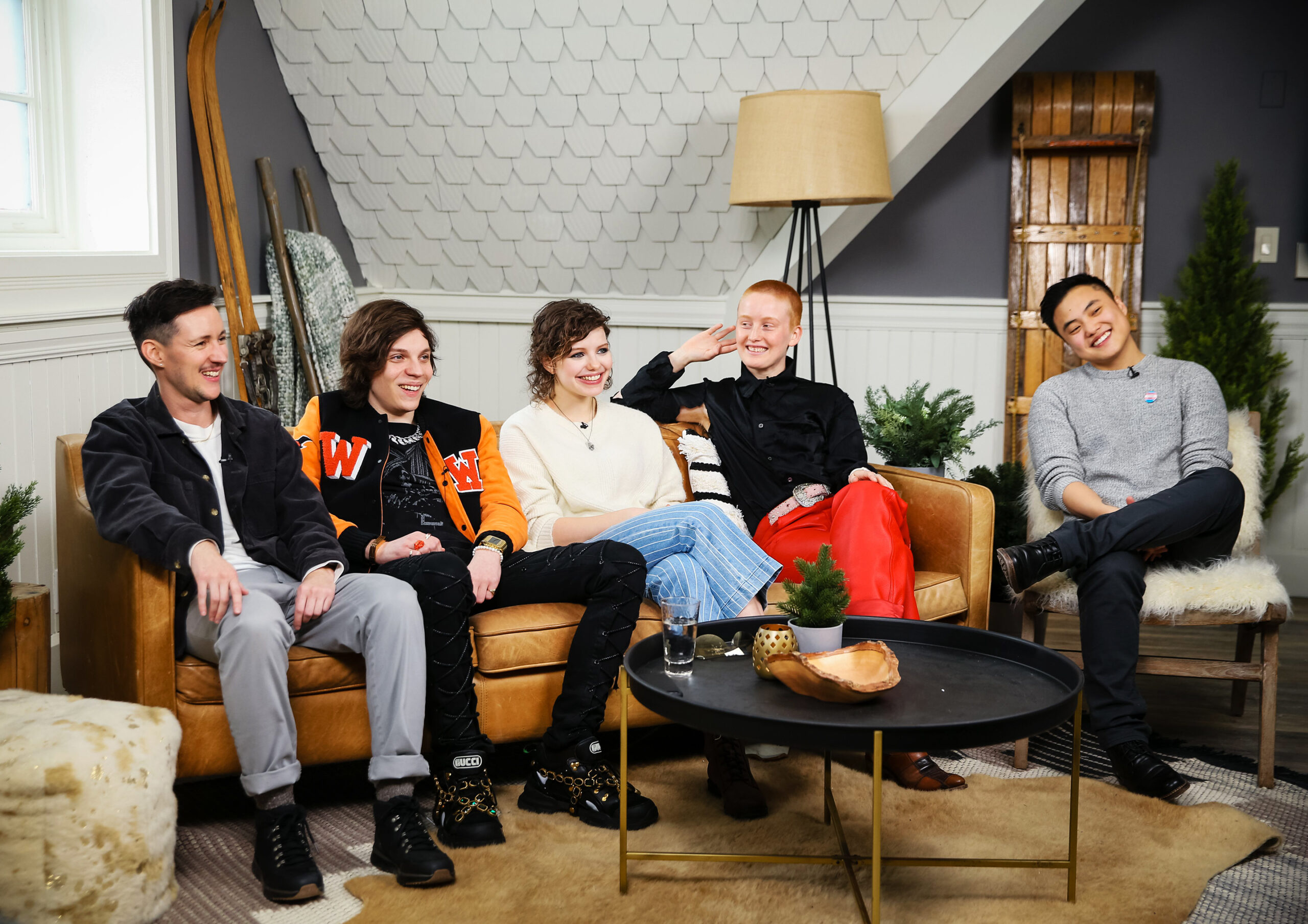
If Tarantino’s film is Goliath, director Rhys Ernst’s risky summer film is David—or Adam, rather. Adam is a comparatively minuscule queer teen flick set in 2006 Brooklyn about a straight cis boy (the namesake character is played by Nicholas Alexander) who’s mistaken as a trans male and goes along with the presumption, mainly to court Gillian (Bobbi Menuez), a girl he likes whose lesbianism is veering into sexual fluidity. On paper, the premise of the film—adapted from the controversial 2014 book by Ariel Schrag, who also wrote the screenplay—has trigger warnings galore for trans folks. They’re arguably more complex than amounts of dialogue or a dicey depiction of a non-white icon.
More than a year ago, Ernst, who is trans, publicly shared his own apprehensions about making the movie. Schrag’s book is a story that involves willful trans deception, and though the lesbian author made updates in her script, such as removing a third-act sex scene with a major consent problem, Adam is still a largely trans-focused film that positions a cis white male in the leading role.
Why aren’t we letting ideas and expression breathe? Why are we so hungry to scold a director’s artistic prerogatives?
This information, along with a Tumblr post from user “die terfs” that condemned the film, was enough to cause explosive rage among queer people on Twitter. #BoycottAdam began trending as early as May and gained fiery momentum through its August 14th release.
Multiple Change.org petitions were created, labeling the movie transphobic and protesting its distribution. “I knew the timing was kind of white-hot,” Ernst tells PLAYBOY, “but I didn’t expect so much vitriol.” The petitions gained thousands of signatures plus tweets ranging from “This thing is a garbage truck on fire headed straight for us” and “This is absolutely fucking disgusting” to “No one will be happy about this other than the transphobes” and “Adam is every kind of discrimination to the LGBT community.”
The filmmakers—which include Ernst, producer James Schamus (Brokeback Mountain) and producer Howard Gertler (How to Survive a Plague)—responded with an open letter in late July, reading in part: “We know that making daring and complex work from emerging artists risks the hasty approbation of folks who will issue judgment before giving themselves the chance to see the work.”
Unlike those who took issue with Tarantino’s movie, the vast majority of Ernst’s critics had not seen Adam before demanding its demise. Thus their witch hunt, understandable in part for a long-oppressed community, left no room for consideration of what could improve amid adaptation, and no acknowledgment of what Ernst’s trans lens could bring to the project. “There’s a reason for that vigilance,” Ernst says. “It comes out of a long history of trans trauma. The trans community can sometimes even be overly hostile to one another because of that.”
We’ve entered a phase of “trans saints,” meaning “you can have a trans person in your movie or project but they need to be extremely positive.”
Ernst also observes that while representation of all types has seen historic growth in the last two years, we’re only five years past the “transgender tipping point” of 2014, when shows like Orange Is the New Black and Transparent (on which Ernst worked as a producer) brought positive trans visibility to consumers. And Ernst recognizes that five years is nothing compared to history, wherein trans characters were shown as either villains (Silence of the Lambs) or victims (Dallas Buyers Club). Today, Ernst says, we’ve entered a phase of “trans saints,” meaning “you can have a trans person in your movie or project but they need to be extremely positive, with stories that are affirmative and aspirational. I understand why we’re in this phase, and I think it’s important, but as a filmmaker, I don’t want to be tied to it just because it’s the step we happen to be on this year.”
Alongside Menuez (who identifies as non-binary), Ernst filled his cast and crew with trans and gender-nonconforming talent, including Mj Rodriguez of Pose fame. Despite all the misgivings about having that talent surround a cisgender, heterosexual white male protagonist, what Ernst does with Adam’s immersion into a joyous ultra-queer world amounts to one of the most educational and non-patronizing portrayals of allyship ever filmed. He may be clumsily perpetuating a lie, but as this insecure, virginal, outsider delves deeper into the friend group of his queer older sister (Once Upon a Time… co-star Margaret Qualley), his eyes open, his mind widens and his budding definitions of manhood are nurtured in wonderfully progressive ways.
“It’s great for a straight cis audience to see Adam learning all of this,” says Jude Dry, a trans-masculine writer and critic who disagrees with the backlash. “The film shows this reversal in which transness is what’s trying to be emulated. Transness becomes the desired quality.”
Dry can relate to the argument that 2019 might not be the best time for a cis-led trans movie, but they also share Ernst’s concern about trans boycotters vilifying the work of one of their own community members. “I don’t think a lot of these people understand the film industry,” Dry says. “Adam has some big producers behind it, and they took a gamble on Rhys. That’s a huge fucking deal. There aren’t a lot of trans filmmakers making movies of this size, and it’s not even that big. It’s a pretty small-budget movie, and it’s probably not even going to make that much money. What do these people even think they’re boycotting?”
Menuez, who felt a lot of trust in Rhys’s “ability to contain levels of nuance while holding Adam accountable for doing things that are not okay,” ultimately believes that “to have a different standard for what a queer filmmaker is allowed to explore in their art has its own problematic elements.”
Unlike claims by other actors and extras involved with Adam, Menuez says they were never misgendered, that the production was “a beautiful example of what allyship can look like on set,” and that they see the movie as one that celebrates queer friendship. “I have so much understanding for instant response to anything that looks like a threat. Marginalized communities are in danger all the time, to some extent. But there seems to be potential for it being a self-sabotage of the communities. In this moment of identity politics, lines are being drawn between different people of all these micro identifications. I just see those places of difference as places to create bridges. I wish there was more intention toward making those bridges.”
So why isn’t there more intention? Why are we avoiding these bridges so adamantly, instead of zooming out, searching for common ground and empathy, and making space for understanding? Why aren’t we letting ideas and expression breathe? Why are we so hungry to scold a director’s artistic prerogatives—or worse, try like hell to derail a more modest artwork without giving it a fair shot? Because it challenges our biases? Because times are tough? Because anger is easy?
“There’s a lot of free-floating anger out there because of who’s in office,” O’Malley says. “And this is what happens. If everyone did their homework and studied the French Revolution, if they read A Tale of Two Cities, they would know that this is how it goes. Moral panics like this tend to consume the people who are the critics as well. For me, the classic example is Madame Defarge in A Tale of Two Cities, who’s constantly knitting the names of the the state enemies who should be next up on the guillotine. And eventually the Revolution burns out enough that she’s the next to lose her life. It’s similar with The Crucible. And McCarthyism. Eventually, the boomerang comes back around to you.”
Two Major Blockbusters Shake Up NFL World Two massive blockbuster trades shook up the NFL hierarchy. The Los Angeles Rams stunned by adding Myles Garrett. The New England Patriots finally, officially dealt for A.J. Brown.