Your bag is empty.
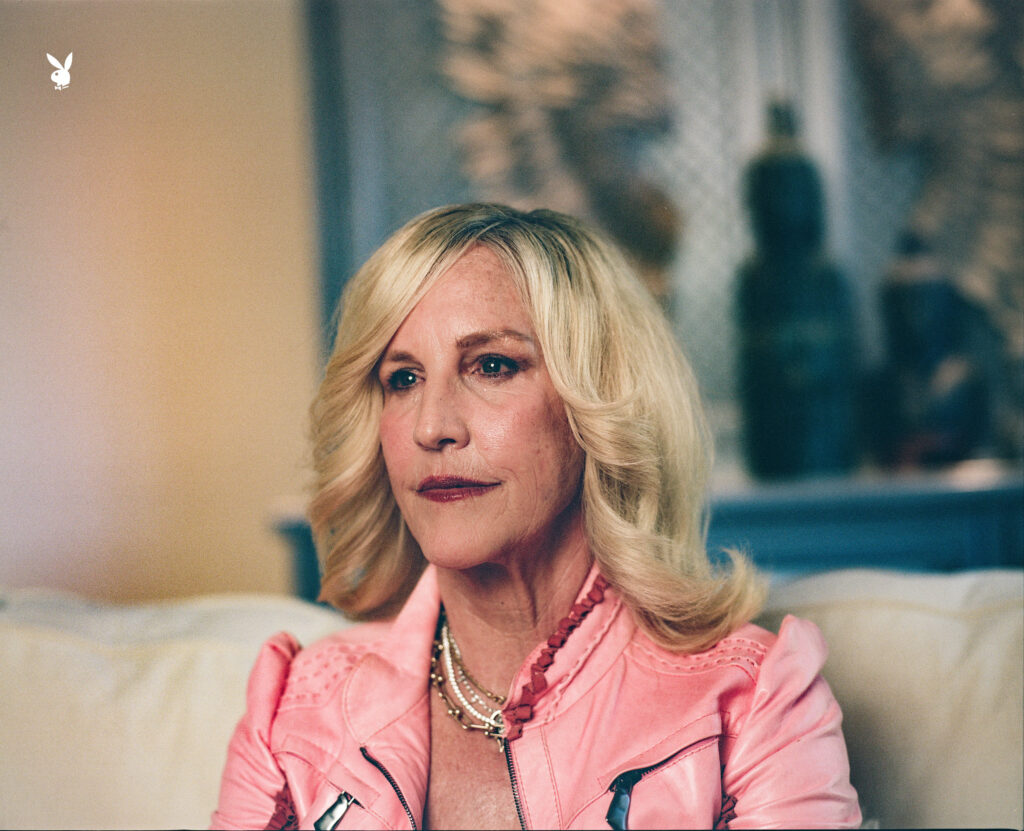
In The Playboy Interview, the environmental activist reflects on a life exposing the bad actions of powerful people.

Not much scares Erin Brockovich. As a twice-divorced, single mother to three young children, she elbowed her way into a job as a paralegal, took on Pacific Gas & Electric Company over groundwater contamination in Hinkley, Calif., and won, resulting in what was at the time the single largest direct-action settlement in U.S. history.
But when Erin Brockovich was released 26 years ago—and Julia Roberts won the Academy Award for Best Actress for her performance in the titular role—Brockovich came face-to-face with at least two new things that scared her. The first was fame. The second was a $1 million offer to grace the cover of Playboy. It wasn’t the Playboy part that scared her. Rather, it was what her father would think.
“My father was alive, and he would have been disappointed in me,” she says. When she got the call to sit down for The Playboy Interview, Brockovich thought to herself, Here we go again. “I said something to my daughter about it, and she goes, ‘Clothes on or off?’”
In the decades since the world was first introduced to her, Brockovich, 66, hasn’t slowed down. She’s spent the last 30 years exposing the bad actions of powerful people, challenging institutions over environmental injustices on behalf of communities stretching from Flint, Mich., to Beverly Hills, Calif. She’s done this while helping pass federal legislation, writing books, and becoming a star on the speaker circuit. She has a new foe in data centers, which Brockovich contends are being built without transparency and against the wishes of the residents who live in the rural communities in which they’re appearing.
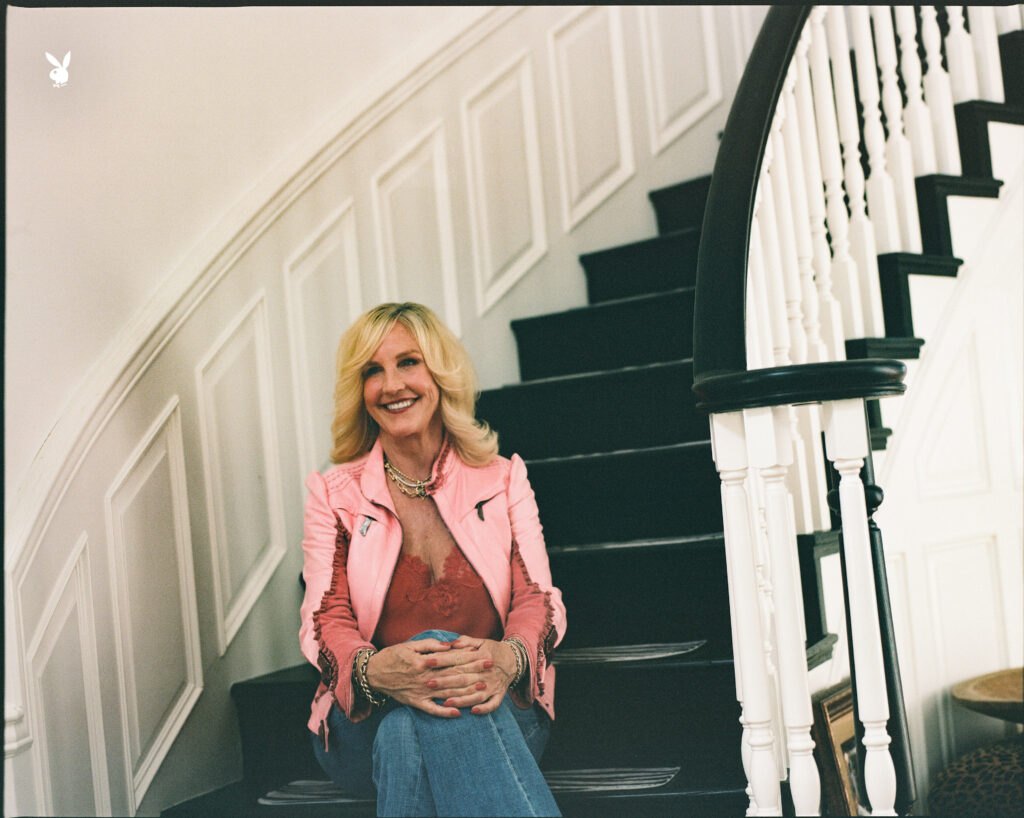
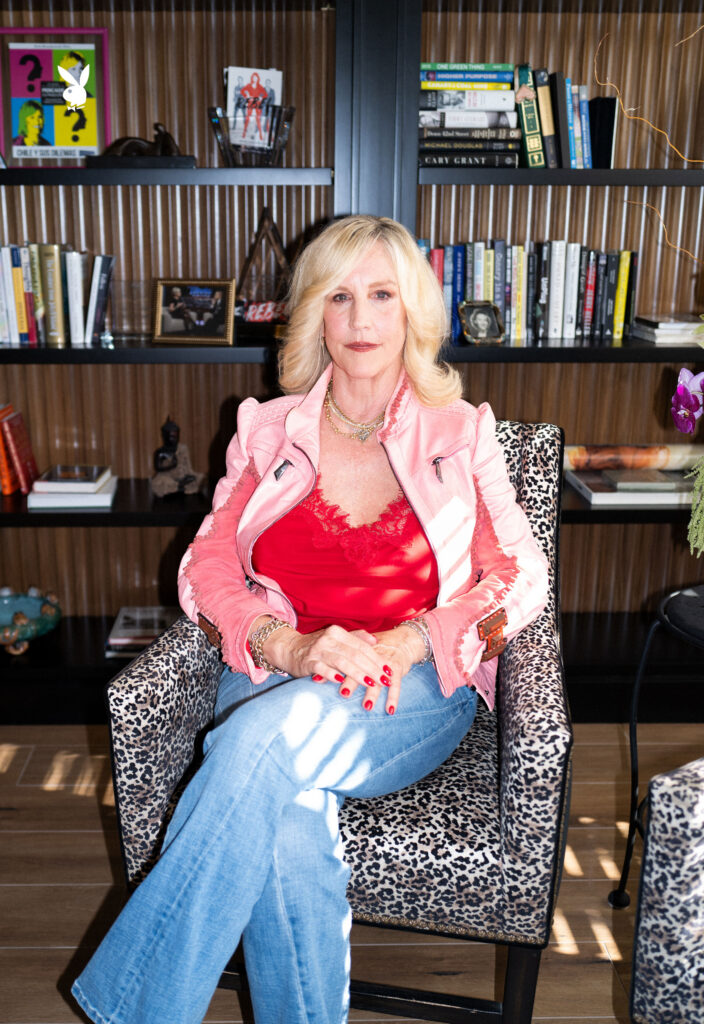
Playboy sat down with Brockovich—along with her many playful Pomeranians—at her home in Agoura Hills, Calif., to talk about her life, career, and why she believes the battle against data centers is perhaps her most important political battle to date.
This interview has been edited and condensed for clarity.
Sounds so alien. Where do you come from? I was born and raised in Lawrence, Kansas. My dad was an engineer, my mom was a journalist. Growing up in Kansas was great. I shucked corn in the summers to earn money. I used to love hanging out in the wheat fields and just watching them sway in unison. There was so much about nature that fascinated me. I used to play down in the creeks. I loved to chase water. I was fascinated by it. I was always outside. One reason was I loathed school. I was, and am, dyslexic, so I was very misunderstood, and often cast aside. So, the outdoors became my teacher. My mom and dad were married 65 years. That’s unheard of now. My dad used to joke with me because you know I’ve been divorced a few times. He goes, “You’re never going to make that record, Erin.” I’m like, “You’re right, Dad. I won’t.”
After high school, I got in trouble and had to come home. I tend to find myself in trouble. I’m not sure why, but I do. I ended up going back to school in Dallas. That’s where I learned to back comb my hair. From there, I got a job in California. I got involved in some beauty pageants.
Yeah, Miss Pacific Coast. But then I decided to get married. That was my first mistake. Eventually, we moved to Reno. I got divorced. Then, I got into a car wreck. Around this time, I met the biker dude, whom you may remember from the film. He helped move me back to Southern California, where he introduced me to Jim Vitato, an attorney, and his partner, Ed Masry. I’d been really hurt in the wreck. Ed told me, “We’re going to get him, Erin, and we’ll make him pay.” It didn’t turn out that way. I was feeling pretty distraught, so I went to see Ed again. I needed a job.
Ed came in with a big archive box full of records for a real-estate case in a town called Hinkley, and asked if I could open up a file. I had no idea what I was doing. One of the first folders I got was medical records of children, and I’m like, “Why are there medical records in a real-estate case?” The records showed large instances of cancer or disease. I said, “What would I do if these were my kids? I would want to know what was causing it.” One day I went to Ed and I said, “Do you think I could go up to Hinkley?” He was like, “Hallelujah, go, please out.” And so I went to Hinkley.
Well, the lawyers really helped there, too.
No, nothing’s changed. Matter of fact, it’s probably gotten worse. When I first went to Hinkley, and I stood there out in the crossroads of many dirt intersections with this massive utility company off to my left, I could feel what was happening. I became very present with the environment. It was almost like it was screaming at me. The trees were secreting this white oozy substance. The cattle were covered with tumors. The water coming out of the tap was lime green. They’ve got two-headed frogs. I’m like, “OK, Toto, you’re not in Kansas anymore.” But these people were being told this was normal.
By workers. At the town halls, they’d say, “There’s some chromium in the water. It’s naturally good for you.” I said, “Wait a minute, if you think two-headed frogs in green water is normal, I’m telling you, that’s fucked up.” That’s why I got involved. I could clearly feel something was wrong, and that somebody was lying about something.
Boy, I’m so glad I gave you all the backstory! I feel like I’ve really come full circle here in my life. I wasn’t looking for Hinkley. It found me. I wasn’t looking for data centers. But because of my career, when there’s an environmental issue, people email me, and I woke up one morning and I’d received from a town in Pennsylvania 30 individual emails. The minute that happens, I start to recognize patterns. I’m like, “Wait a minute, suddenly everyone in town is writing to me about data centers. Something’s going on.” Specifically with these AI hyperscale data centers. Something was just not sitting right with me, and I’m like, “Oh God, is this another Hinkley?” I felt compelled.
I may not always know what I’m doing, but when I get the call to go in, I’m going in. I needed to go further. After getting those 30 initial emails, I wanted to create a map [charting new data construction across the country] to see the big picture. We all live in our own bubble, in our own town, our own family, our own lives, our own problems.
Absolutely, and we will read the news, we hear the news, and you’ll see this town, Hinkley. But we think it’s never going to be us. I wanted to see the big picture, so I launched the map. The first day, it crashed twice, and by Day Three, multiple counties and cities from every single state in the United States of America were now submitting to this map. This was not, “Oh, I’m standing in a town dealing with an aquifer and a utility.” We’re now looking at an entire country dealing with multiple utilities, multiple tech giants, all of our natural resources at once are under jeopardy. So I got kind of thrust into it, and I felt compelled to do it.
We are a very small team here at the Brockovich Data Center. We read—I read—each submission. And we vet it, and then it’ll go to another team member who gets it up onto the map. And we’re getting a lot. AI is the new industrial revolution. I have 20 countries now submitting to me. So now I’m like, “OK, this is not even just the United States. This is the whole globe.” The frustration we’re hearing is all the same: “This is being done in secrecy. We had no idea. Our city council has shut us out because our city councils had to sign non-disclosure agreements.” I just find this mind-blowing. How, how did this all happen at once? That an entire country, or an entire globe, got put under some non-disclosure agreement? That’s how I stumbled into data centers.
I could be honest with you and tell you I haven’t a clue what I’m doing, but I’m getting involved because it was the same way I felt about the box in Hinkley. I’m going to read what’s in the box. I have a task. I’m curious. I want to know. People need help. If nobody else is going to show up, why not me? That’s my attitude.
“I may not always know what I’m doing, but when I get the call to go in, I’m going in.”
We get them through secrecy. They’re also very concerned about water, about their water consumption. People are reporting their wells are running dry. People are reporting that their well is contaminated, and there’s already a couple of lawsuits going on asserting that, during the construction phase, wells are getting contaminated. There are concerns about electricity, and I hear reports of utility bills going up 200 percent, 400 percent.
We are. We are going to have to pay the ultimate price for the richest companies on this earth, so AI can operate. You cannot have AI without these AI hyperscale data centers. I have veterinarians calling me about when they’re up and running. You know they’re running 2,500, 3,000 diesel generators, so we’ve got air pollution going on. We’re definitely seeing water contamination. It’s completely destructive to the land. Their wildlife is gone. Their sanctuary is gone. The birds are gone. The animals are gone. I even have people working inside as whistleblowers of these massive data centers, and they said, “Listen, when this is done, these aren’t long-term jobs for us. We could be an electrician. We’ll be done in a year, and we’re out. Same thing with the plumber. When the whole thing’s built, it only requires a few people to be in here.” And you’ve now decimated an entire town. What could we possibly be thinking?
Once they’re up and operational, there’s this constant humming and buzzing 24-7. Talk about almost torture. These people feel like they’re going insane. And this is where like the veterinarians are writing me out of Texas, out of parts of the Midwest, where they’re beginning to observe stillbirths in animals. You could wipe out dairy farming or cattle farming for miles. This is your new industry, and it’s all being done in secrecy. So don’t think that people aren’t upset; they are.
Well, I’m really proud of just creating the Brockovich Data Center because it helped elevate the conversation. It helped elevate voices. When I first got involved, there were maybe 30 municipalities that were looking at a pause, a ban, or a moratorium. … From those 30 moratoriums, we’re now at almost 700 bans, moratoriums, and pauses across the country. You now see 12 states involved at a legislative level, and I think that’s a good thing.
I wrote the book Superman’s Not Coming, and it was about a national water crisis. I realized when I was writing that book, I can’t be everywhere at once, and neither can I be with the data-center situation. But what I can do is share information and share tools, so people in these communities can be Superman, because they will need to show up. And by gosh, that is exactly what they’re doing. I have never in my entire career seen an entire country start to show up in opposition.
Sometimes, I used to look at PG&E and I’m thinking, “Who the hell do you think you are?” Because you have money, you can keep secrets, and you can fuck up the land and the water and the animals and human health. That’s exactly what’s happening here. This is PG&E on steroids.
That is exactly right. I think what it took was, this is not a story that they’re hearing about somebody else. It’s now them. It’s now in their backyard.
There are solutions to it, and that’s an excellent thought and question. AI doesn’t have to be the enemy, and I don’t know that any of us want to slow down innovation, but we are going to have to understand it first. You can’t have AI without these AI hyperscale data centers. So how do we build them? Well, that’s another thing that just gets my goat. There are countries that are trying and somewhat successfully with experiments, like building data centers in the ocean. You have all these open caverns that people are now proposing. Some companies have proposed building data centers on ships. You don’t have to build these in people’s backyards.
Some of these things are going to be controversial, but there are solutions. The key thing is honesty. For people to lose all their land and their resources, the stakes are too high. This is the thing that makes me mad at these huge companies: It’s always your lie, and you always want us to conform. You can hear some of them now saying, “We should have approached this differently.” But many keep doing the same thing over and over again, expecting a different result.
They’re starting to. We know at a federal level that they’re starting to talk about it more. Senator [Bernie] Sanders is out there. I don’t like to get involved with politics, but this issue is becoming a big political issue, which is a change. I think there’s an important lesson there. We think this is all a product of some huge federal oversight and fixing things starts at that level. Actually, the opposite is true. Change starts at a very local level and pushes its way up.
Pundits are definitely saying that, and it makes sense. Data centers have been around for decades. They’re generally smaller and in more suburban areas. What’s happened now is you’re coming into rural areas. You’re coming into acres and acres of land, and threatening every resource there. Voters there have said they’re willing to break that rank. They will shift. Now we’ll see what they do.
Mayhem. I’ll wake up in the morning and I’m like, “Oh no, there are 500 new submissions to the map.” Now my day consists of reading, and as I read, I’m getting agitated. I can’t believe this is going on—How did we get here? I feel bad for these people. At the same time, I feel bad for me, because if any one of us thinks we’re going to get out of this unscathed, I just think you’re wrong.
So I ask myself, “Am I prepared enough? What’s my plan? How am I going to implement it? Am I being realistic about my goals?” And if not, you better get prepared for what might and could really be coming. So I do that.
I’m still out on the keynote circuit, so I make sure I get all my submissions done, and then it’s hectic. I got to catch my plane. I’m off to a keynote. I’m writing another book. There’s my own family life. I’m doing 80 things in a day.
“I did not vote for Elon Musk or Sam Altman or Anthropic or Peter Thiel to run the world. I didn’t, and I don’t want that to happen.”
Kind of yes, but it was a lot more fun then. I was younger, and it was very exciting. There were other cases I was involved with, but I had teams. Attorneys, people that were doing what I’m doing now. The work felt a little more structured. Now, not really having those teams around, I honestly feel like I did back in Hinkley when nobody believed in me.
Show up. Show up at a local council meeting. Run for office. Really get involved. I have my own adult children now who are worried, and they’re worried about jobs. Worried about their future. There’s such division. There’s such fear. Why not? Why would they not say, “Why should I care?” But I think you should care because I think this is an important moment in time, and I think history has shown us that we can get through these things. But we’re at a window here where we’ve learned enough, we can get a slowdown right now using this new momentum. Don’t divert back to the gloom and the doom. Don’t go there. Be smarter than AI. Be your own best critical thinker. Reconnect again to this amazing planet we live on. We can fall, but we will always rise.
This is my Wizard of Oz theory: The idea that there is some magical government or entity or agency out there that will save us. When, in fact, the only thing that’s going to save us is ourselves. We have to show up. Whether you show up at city council or whether you ask that question that irritates somebody else, do it. Some people don’t want to, but I don’t think we should any longer be afraid to be who we are and to say what we need to say, and we can do it without riots and beating each other up. But show up, and show up to vote, and decide for yourself what the most important issues are for you.
That’s who I am. I think this is going to go right back to the dyslexia. I got to a moment where I was really tired of being judged and labeled and perceived when I just owned myself. If I’m wrong, who cares?
My mom and my dad, and Ed [Masry, the lawyer]. Ed was the best friend and the second greatest mentor I ever had. My greatest mentors were my mom and my dad. My dad was an engineer who built and ran the pipelines for Citigroup in Texaco, yet he’s the very one that taught me everything about the environment. He said, “Erin, you have to understand the greatest gifts that all of us have are your land, your air, your water, and your health. That’s it. And it is incumbent upon you to be a good steward of that.” I’ll never forget it.
My dad taught me all about honesty and respect, and it’s something that I think we have clearly lost. My mom, she was my biggest cheerleader, and she was a journalist. I think that’s where I get my snoopy behaviors from my mother and a sociology major. She would always tell me, “Erin, you know, when the going gets tough, the tough gets going … You gotta have stick-to-it-iveness.” I had no idea what that meant till she read me the definition: a propensity to follow through in a determined manner, dogged persistence born of obligation and stubbornness.”
Yes, Beth Dutton. If I had to get into any fashion, it would be her fashion. And her attitude. She does things unconventionally because something wrong was done. She wants to make it right—and she does it with style.
This has consumed me, kind of like Hinkley consumed me. We’re in a new era, and I think we need to be prepared to usher it in, and we need to show up because we need to have a say in that. I am not going to watch another community get bullied around by big corporate tech giants that have all the money in the world.
Absolutely, the stakes are too high. I check in with AI, and I asked once about data centers. I went [to one of the platforms] and I said, “Hey AI, you’re so smart.” I always say that you’re so smart. I asked the AI, “Hey, what is the deal with all these data centers and these non-disclosure agreements, and why would companies, your creators, do that?” And its answer: To stop public opposition. I would ask again: Where would you build all the data centers? Its answer was, “If I had to redesign and rebuild the data centers in the United States of America, I would do it based on one simple rule: Zero contact with human resources.” Are you kidding me?!
Another time I got on there and I said, “So if we’re able to stop even half of the hyperscale data centers in the United States, what will that do to you, AI?” And it wrote back: “Exponentially stall my growth and development, but… give great relief to the water and our electrical grid.”
I did not vote for Elon Musk or Sam Altman or Anthropic or Peter Thiel to run the world. I didn’t, and I don’t want that to happen. The fact that your creation is telling us that you shouldn’t be doing things this way? Something’s really broken here, and something’s really wrong. Most of us want to go into the future and we want innovation. But you’ve got to do it a different way than the way you’ve always been doing it.
“I am not going to watch another community get bullied around by big corporate tech giants that have all the money in the world.”
Dude, what are you thinking? Talk to me. Talk to somebody. Be real. Is there a human in there? That’s all I want to know. You want us to think AI is the best thing since Wonder Bread, and it’s smart and it knows everything. OK, so if I just read this to you, especially about where to put data centers, AI hyperscale data centers, and your own creation is saying it’s not a good idea to build them around human resources, what are you going to do? Listen to it or not? Which is it? That’s all I want to know.
You should have come out the gate doing it more responsibly and openly and honestly with all the communities. We haven’t even talked about the fact that sooner or later these data centers will be obsolete. This type of technology, and how we build it, will be obsolete sooner than later. Why would you not either scale to a smaller size and learn about what is not going to work or not when it comes to land consumption, electricity consumption, all of those kind of things, and be willing to work with local leaders to determine what is the safe, most effective way moving forward with this new technology? It’s going to have to be a conversation, but these companies are going to have to be willing to compromise. They’re just not going to get everything they want.
Correct, which is something corporations have never done.
Listen, call me a sap. I love this planet. I love life. I love living. I love watching my grandchildren grow up. I think we all do, and I think we all love and value this planet, and maybe sometimes it’s not that we disrespect it, but we take it for granted. These resources that sustain our life—our water and our land and our air—they’re worth fighting for.