Your bag is empty.
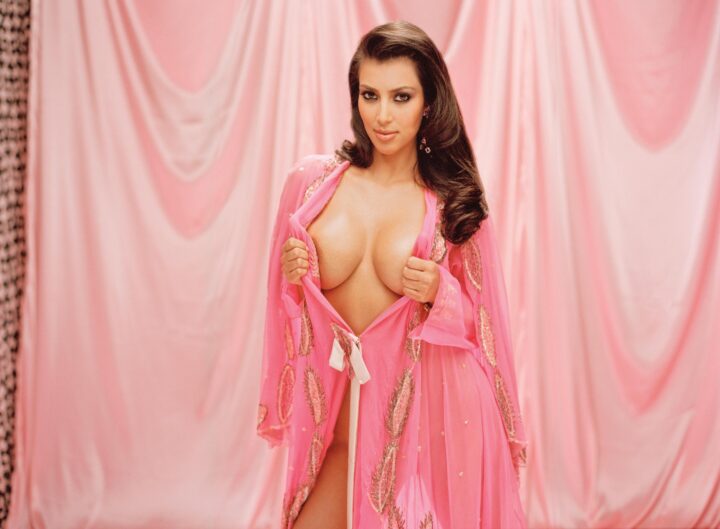

The All Elite Wrestling star known as the Toxic Spider doesn't hold back on her days in the punk scene, scandal in Japan, and rivalry with Mercedes Monè.

Since her All Elite Wrestling debut a little over a year ago, Thekla has become one of AEW’s most beloved figures. With her “take no prisoners” attitude and penchant for aggression, she has become known as the “Toxic Spider.”
Born in Austria, Thekla Kaischauri grew up in the art world, practicing ballet and violin, and in 2020, graduated from the University of Applied Arts in Vienna. But she made her name in the Austrian Punk and DIY scene, playing and singing in a band called Death Row Groupies. She decided to pursue wrestling after watching a match in a venue basement. Kaischauri’s training took her to the Silk Ribbon Dojo in Japan, where she landed a spot in Japan’s female wrestling promotion, Stardom. But in April, after finding success in Stardom, Kaischauri attacked Stardom president Taro Okada, bringing an end to her four-year tenure. Kaischauri debuted in AEW during an episode of Dynamite, became an anti-hero superstar and became Women’s World Champion and leader of the Triangle of Madness. In October, the Toxic Spider lost the championship to the title-holder Mercedes Monè, but she’ll be back on November 14 as part of AEW’s Full-Gear. In the meantime, Thekla will wrestle on AEW’s weekly shows, Dynamite (Wednesday nights on TBS) and Collision (Saturday nights on TNT), both streaming on HBO Max.
Kaischauri talks here about her life in and out of the ring, aura farming through aggression, and her love of strip clubs and spicy margaritas.
So the story starts basically with me and my best friend. We were both starting to really get into going to gigs and just going to punk shows, hardcore shows, like three or four times a week, and kind of noticing a couple of things. One thing was that we were somehow the ones who were going the hardest in a very small scene. Also, some of the very few females attending in general. Another thing we noticed was that there were never any girls playing, or if they were, they were kind of token. After a year or two, we started actually putting up bands too, so we started organizing, gathering the scum-of-the-earth-type bands from Serbia, Australia, the States, England, all over the place.
Then we were like, hey, what if we started a band? The problem was we were very shitty at playing our instruments. We didn’t know how to play them, but we knew good music. So we’re like, okay, if we write really good songs and just bring that energy on stage, we’re gonna be nailing it, right? That’s carried me throughout my career as a pro wrestler, too. Navigating myself through a boys’ club kind of started as something I was scared of and just didn’t know how to deal with. It became kind of like, “Ah shit, I love being king of the boys.” That’s what you end up being if you don’t give a fuck.
I remember the first concert I ever went to. I was about 13, and the band was Flogging Molly. It was open air, packed with people, and you could barely get anywhere. It was half an hour before the gig started [but] everybody was starting to mosh. The first thing I know is I just got smacked straight in the face, and my nose starts to bleed like crazy. And then I just rushed out and got some tissues. Went back inside. That’s when the band started, and I was right back in doing the same thing as before.
Once I found wrestling, I was like, Oh, I’m clearly cut out for this.” I think I’m still that 13-year-old kid going to that gig and getting smacked straight in the face.
Yes. Everything is choreography. Everything is art. Everything is pleasing to the eye. [You’re] supposed to be in tune with the music you’re hearing. It’s about creating a piece that works on every level, even to the point where you can smell the fire on stage.
That was awesome. I spent a lot of time doing my stuff in Japan and feeling undervalued and, you know, not getting the results I wanted, until I realized that I just have to do things my way. You know, that’s sometimes very hard to just accept.
Idol Killer came from a place that was true and real from my experiences in Japan and what I thought about some aspects of Japanese wrestling culture, so doing that in AEW, being able to continue to tell my story of mischief from Japan and having it recognized and made understandable over here felt really cool. I’m just gonna do it my way, betting on myself, and getting the recognition I felt I deserved.
I would say I had been showing it in AEW already because I would be taking my belt off and whipping bitches left and right, referees and whatever. I used to be even worse in Stardom. I told them about a long, very thorough story from Japan. We had to cut everything; spitting on the Stardom logo was clear and easy for everybody to understand.
I think I’ll try to break her nose again, then help her put it back in place, and break it again. Mercedes is Mercedes, and she deserves all of her flowers; I just refuse to kiss ass. Mercedes versus Thekla is a money match; we’ve never been in the ring together, except when we’ve wrestled on the same side.
I feel like she’s gotten some edge, finally. Bell to bell, she’s always been great, and obviously, she always looks astonishing, but I feel like I never get a glimpse of what’s going on inside her, even with the belt swinging. From my point of view, I feel like she’s adopted some edge, maybe from a certain toxic one.
I do think that. Women have, for a very long time, tried to make up for a lack of technique and stamina in the ring. We just have to get a little bit more insane. Just come up with crazy shit that we can do to humiliate each other, use psychological warfare and weapons, whether it’s a crazy happy Skye Blue covered in blood or if it’s Julia Hart misting left and right, or if it’s me getting out my belt and starting to punish the referee.
I used to play Risk, and when I was a little older, I got into Civilization. I was always big into strategy games and that kind of stuff. If you look at my work in the ring, it’s a lot about teasing somebody. I love to play mind games like that, [but] physically.
I used to draw everything I would wear, completely design every little detail,
I take inspiration from all sorts of things. I look at big costume people like Lady Gaga, punk legends like Grace Jones, and futuristic things like industrial punk rock. I take inspiration from movies, too. My next thing is very Mad Max-inspired.
That was something I think started in Japan. When I was living there, I went into this crazy headspace where I was like, I need to learn everything there is to know about Japanese culture, as in, like, parasocial culture. [But] I realized it was killing me, and you can’t learn that in a short time. You have to grow up in it, and there’s really nothing to gain from that other than knowing how hard it is to be part of Japanese society. I went and did a 180 and just went fuck it, I’m going to actually work on being the obvious foreigner again, right? And there is nothing better [for that] than, you know, dyeing your hair blonde and wearing a pair of cowboy boots.
Yes, of course. We played my favorite place, Venster 99, in Vienna. It’s the deepest little punk, hardcore, techno, alternative space that is very inexpensive, and we used to put on shows there before we even played. Another is Arena Wien, because that’s where I saw my first wrestling show.
No, I don’t actually. It doesn’t work for me like that. I have to take a complete break, a clean cut from what I’m doing. Whenever I got injured and could rest for a little bit, I’d happily take the opportunity to start getting back into art. [But] I don’t like doing both at once.
We’re having a big museum show in Saint Petersburg, Florida, in about a year, 2027. So I’m just trying to get back into art again, and I’m really excited to get into painting again. I really want to release a zine. I released a book about two years ago, and I want to make a part two. The focus is gonna be on me and Lee Moriarty, and then a lot of other names, like even prints by Andy Warhol, that type of stuff. You know, just anything that fits the theme of wrestling.
I’m terrible at mixing drinks. So don’t let me do that. It’s always like, Oh, way too much alcohol. Whoa, way too much jalapeño. I let other people do that.
I do spend a lot of time at the club with my dear Dogs, formerly War Dogs. We went through a bunch of them in Japan, in Tokyo, and we continue to do that on the road here. My favorite, Atlanta, is pretty good. I love the Claremont. That’s where shit reminds me of my dirty punk days. It gets a little more real over there. I did have a phenomenal time at a place, I forgot what it was called, a really good spot in Philadelphia. Oh, and Vancouver is the king of strip-club cities.
I don’t think dancers are usually that into wrestling. [But] I love the art of stripping. It’s just phenomenal to watch. I hate people who disrespect that. If you go, you gotta tip well—don’t be an asshole, and have a good time. Another place: Tijuana. You know what happens in Tijuana stays in Tijuana. That’s advanced strip club visiting. I don’t recommend it to everybody.
I did one of my famous dumb bitch quotes. There’s this clip of me saying it on the stage, and there’s like two small children standing right next to me as I’m calling this girl a dumb bitch, and everybody cheering, and those kids just look at me. For a long time, people pointed out how hilarious and wrong the whole situation is, and Reene [Paquette] asked me in an interview, I think you know, jokingly, “Is Thekla for the children?” And I said, “Hell yeah, Thekla is for the children. You know, shout out to my toxic toddlers.” Now it’s becoming a bit. I love kids. The father of those two little children actually tagged me in a comment like, “Hey, I’m the father, and the kids are big Thekla fans.” They were just like, “Daddy, what is a bitch?” We have got to figure out how we explain that to the young ones. I’m sure somebody will, you know, teach them the hard way, anyway, at some point. Let it be Auntie Thekla.
I can’t tell you because I’ve spent a decade refusing those things, or longer than I can remember. I’ve always been a, you know, a little bit of a tomboy, and then I went through a very girly phase. You can’t put me in a box, and I don’t want to talk for other girls and other women.
I think if you just refuse to be boxed up, that’s gonna be you, you know. Other icons have done it. Lady Gaga does it. Grace Jones does it. X-Ray Spex do it. If you’re going to be insecure about it, people are gonna point it out. [But] if you just say you can’t tell me what to do, so fuck you, then people are just gonna want to see you have fun with it. People will say, “Hey, you can’t say dumb bitch because there are children next to you. And I was like, “Yeah, and I get it, but you know, I think it’s cool. Don’t worry about it.” Do some weird shit and apologize later if you need to.
I’ve seen a bunch of shit, I’ve lived a bunch of different lives, and I know a lot of things. I spend a lot of time by myself learning about what I am and what I’m not, and what I’m afraid of, and trying to eliminate all these fears one after another. I’ve stepped into many scary places. I have a weird sense for other people’s insecurities, and I can feel them before they open their mouths. I like to advocate for stepping out of your comfort zone and, you know, jumping in the cold water because it makes you a stronger, better, and smarter person. I think people spend way too much time being worried and afraid and keeping it safe. I encourage everybody to be as extreme, loud, crazy, feminine, masculine, insane, and colorful as possible, because life’s short, and you gotta have as much fun as possible.