Your bag is empty.
Spencer Ostrander is consciously disarming. He likes to use a silent camera so the sound of the shutter doesn’t distract. He can bend artificial light to his will—a skill he developed as first assistant to Magnum photographer Christopher Anderson. But he often chooses to work with natural light, not just because of how it looks but because it puts people at ease. After years of assisting on high-stakes photo shoots, including portraits of Obama and Trump, he knows the delicate art of helping people relax.
Having a portrait taken by a photographer who can coax out what’s hidden is an experience often reserved for the privileged. Yet as Ostrander’s deeply empathic work suggests, intimate portraiture can serve a powerful political function for marginalized groups—like the trans community. For them, dissolving the barrier between the surface and what’s beneath is never a luxury.
Ostrander, 34, didn’t set out to be a trans portraitist. But after realizing there were no such images in his portfolio, he approached a few trans women on Instagram. (He was spurred on in frustration by Donald Trump’s July 2017 tweets about banning trans individuals from military service.) One of the people he approached was Jari Jones, a Brooklyn-based multi-hyphenate.
“I hesitated for a split second, because it’s very common for queer people of color to become projects for a lot of white photographers,” says Jones, who most recently served as a script consultant and associate producer for the Martin Scorsese-produced film Port Authority. “But the more I browsed through his work, the quicker I was falling in love with his aesthetic and how he provided the space for the subjects to just be.”
“When I’m shooting, I’m not trying to appease something else, some other idea. I’m not trying to take on another character outside of us.”
For the sessions, Ostrander suggested his models bring in three to four outfits that they regularly wear, with everyday hair and makeup as light as was comfortable. His aim was to create work that could serve as a counterpoint to what he feels are the dominant clichés of trans portraiture: hyper-sexualization, victimhood and caricature. “When I’m shooting, I’m not trying to appease something else, some other idea,” says Ostrander. “I’m not trying to take on another character outside of us.”
As those he photographed shared their portraits on Instagram, the images took on lives of their own. He developed a reputation as a safe photographer and others in the trans community began to approach him, including rapper/actor Aoki Lee Terrell, who describes Ostrander as a “rock star.” A few, like Imma Asher, returned to have their portraits updated as they got deeper into their transitions.
Ostrander views his process as collaborative. He wants to show his subjects in the light they want to be seen. If someone isn’t happy with an image, he won’t use it. This approach has given Ostrander credibility in the trans community, for which he is grateful—but as a cis white male, he doesn’t want to take up too much space. He’s not trying to be another white man with a savior complex. “I’m not trans and I can certainly not speak for anyone else,” he says. “I am, however, a photographer, and I can create a compelling image.”
Ultimately he’d like to mingle these photos—several of which you’ll find below, paired with commentary from their subjects—with others from his oeuvre, so that trans and cis portraits sit side by side. But taken as a single body of work, they stand as a testament to trans beauty and the power of portrait photography. If visibility is what matters in the battle for trans rights, then photographers like Ostrander have a place on the frontlines. Jones puts it best: “I use my images as war flags, waving a symbol of everything against societal norms, right in the faces of people who want to keep the status quo. A black fat trans girl, proudly, radically and publicly being celebrated by her growing community and herself.”
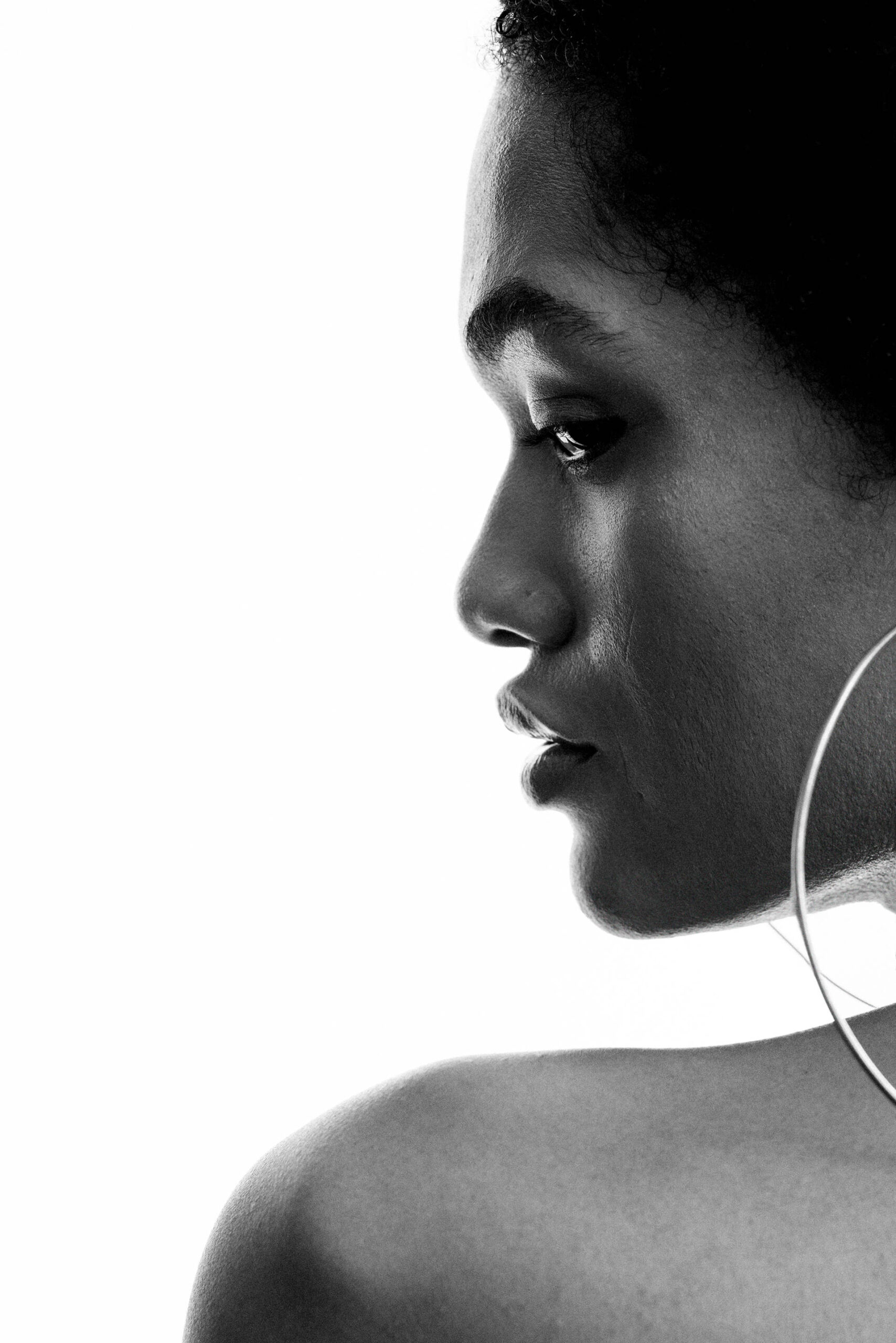
Ava Grey
@ava.a.grey
I wanted a portrait that I could look back on as a moment where I simply just was—just being, living, loving, creating. What was captured was the truth. When I think back to that beautiful day with Spencer, I remember a feeling that I was “in transition.” That shoot helped activate my potential and strength as a woman. Instagram allows me to freely talk about gender identity, toxic energy and solutions, the trans experience and what that entails. I like to be expressive and true in my form while maintaining a level of privacy—I am an artist and that is what is up for display. I love the audience knowing the Ava Grey that my friends know. I want my followers to come to my page and connect with the honesty. I am a woman trying to navigate her own jumbled life while trying to leave a positive imprint. Sometimes it is that simple. Work on yourself always and see the beauty this world is offering us.
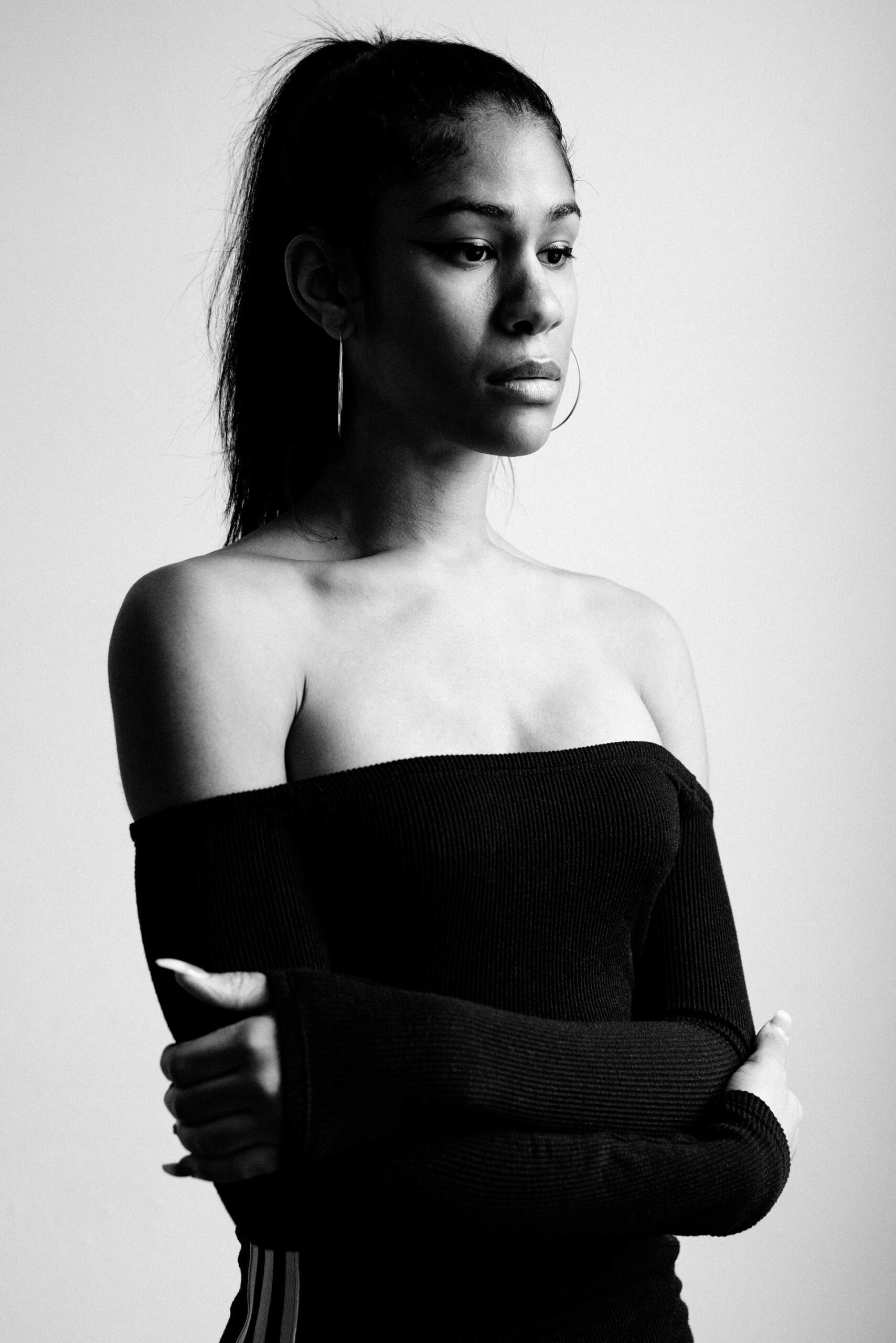
Kya Azeen
@kya.azeen
I’m a 25-year-old woman of trans experience from the Bronx. I’m a trained dancer and I’m an aspiring model. I hope to grow as a versatile artist who creates art that moves and motivates others. My goal is for people to look past my identity and focus on my talent as well as my creative expression. I was initially skeptical because of past experiences of men claiming to want to work with me artistically but having other ulterior motives. After seeing Spencer’s work, I noticed familiar faces and realized I was in good hands. Working with him was so spectacular. It was my first time feeling completely vulnerable and comfortable modeling.
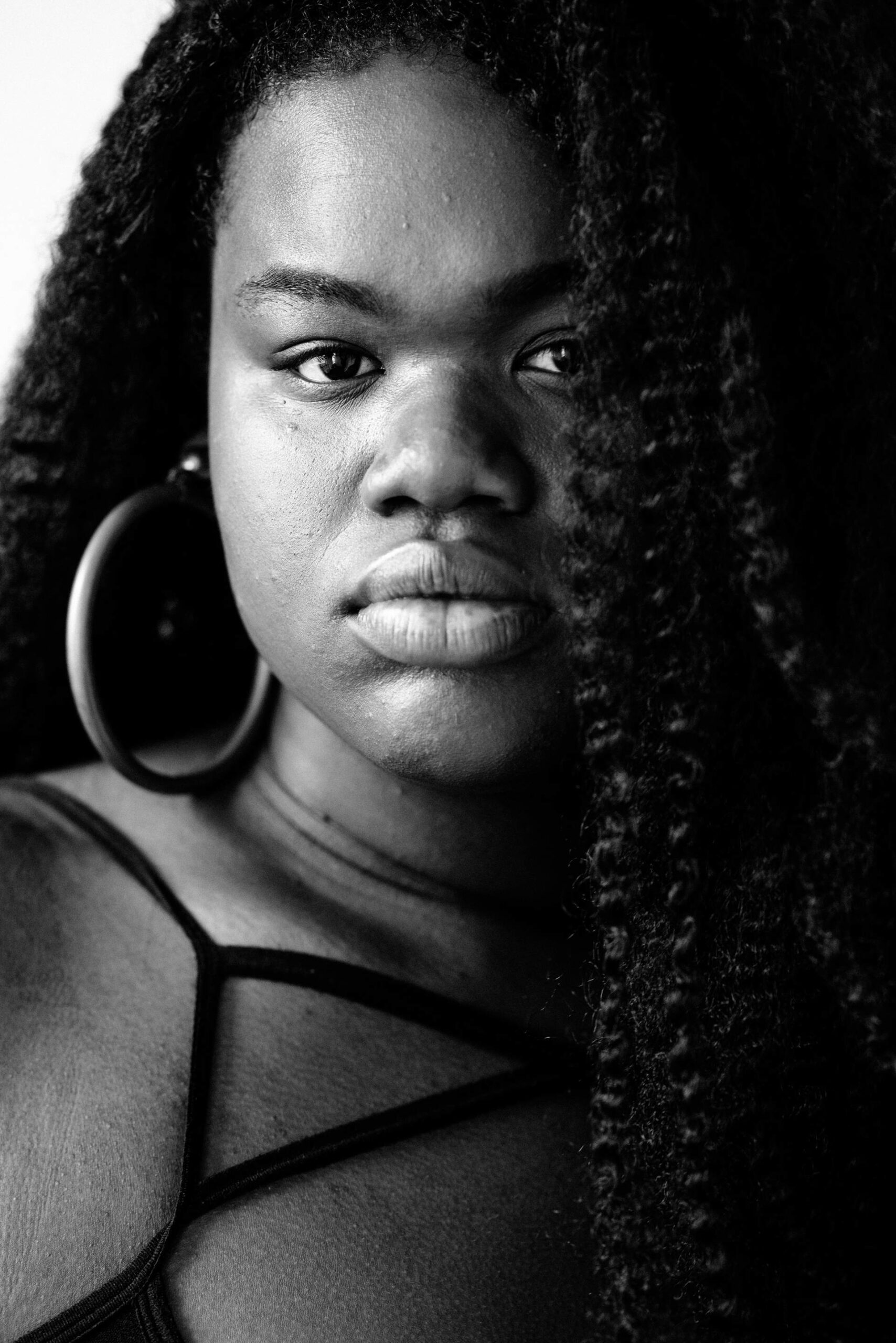
Jari Jones
@iamjarijones
Instagram started for me as just another social media extracurricular activity, a space to connect with current friends and create new friendships on the way. It was also a way for me to express myself more authentically because the person inside wouldn’t be possible, considering my environment. I wasn’t ready for those kinds of consequences. Slowly but surely, the person I portrayed on platforms such as Instagram emerged into the real world as the fearful young queer woman faded. And with truth comes openness and with openness comes opportunity. Within a couple of years, my platform became less about me and more about a movement, more about being the representation of people who looked and felt like me, and that made the upkeep of my profile worth it. Photography, even before I became a model and before I transitioned, has always been a mouthpiece for me. There was a time where I spoke less, spoke quieter, didn’t give my opinion as much, and I allowed my art to do that all for me. I always took daring images of other people, always trying to convey a message of how I was feeling, but never allowed it to connect directly to me. It has now been a 180-degree journey! Today I speak up more, I speak with power, I speak unapologetically and use photography of myself as a stamp to help embed my message in the hearts of my community.
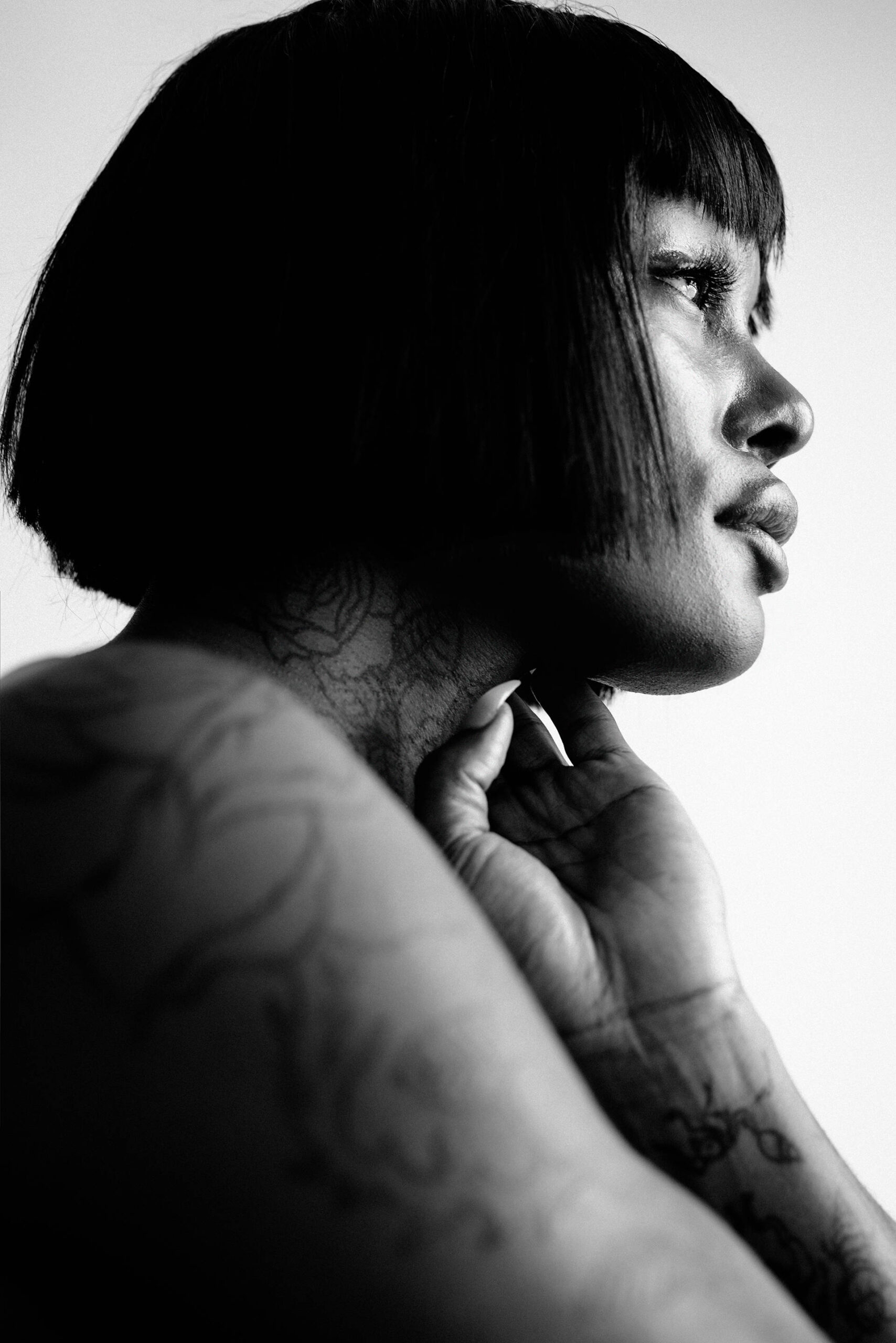
Imma Asher
@ikr_shes_so_ugh
Photography is powerful if you’re able to let it breathe. I think the most important thing is to try and compile all the important components together and just direct the camera in right direction. The rest should be innate. Whenever I’m sharing an image online, I hope that it’s able to speak about a very particular moment in time and bring forth the feelings that I felt while taking it so acutely that the viewer feels as if they themselves could have taken the picture or were there. Also, I like the sense of nostalgia imagery brings, regardless of how recently a photo may have been taken. A good image always holds a sense of belonging to a moment in time, whether it be past or present. My first session with Spencer captured a brief moment of happiness prior to having facial feminization surgery. I hate my nose in the images cause it was still extremely swollen; however there’s an honesty there and an optimism.
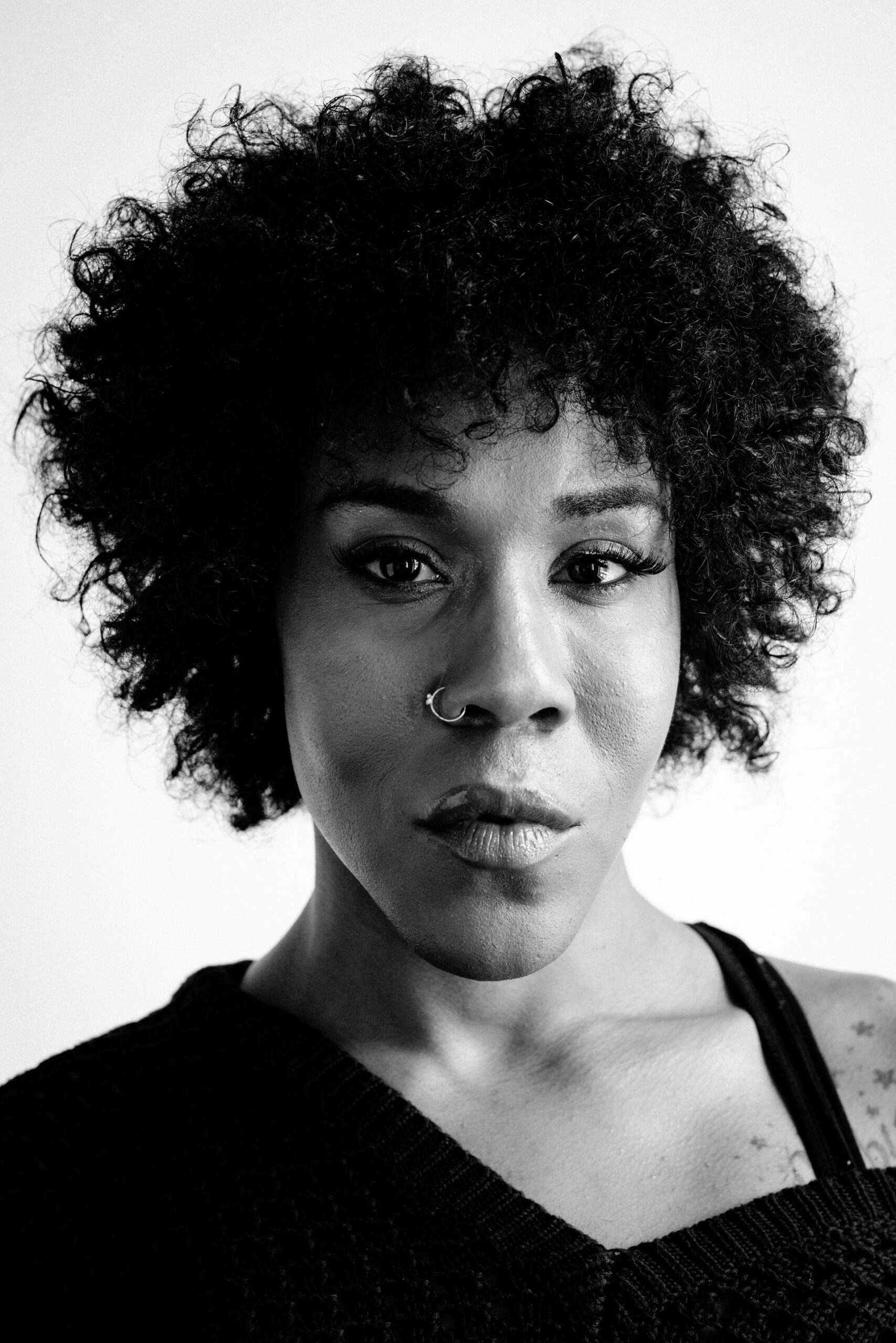
Aoki Lee Terrell
@aokilee.terrell
I’m a rapper and actress, originally from Newport News, VA, but currently residing on the Upper East Side of Manhattan. I split time between my rap and hip-hop career and my love for acting. My goals are to break down social expectations of transwomen in the entertainment industry. I want my Instagram to show that transgirls are women, period! But also to show that we are people with feelings and hopes and dreams. I use Instagram to showcase what I do as an artist. Visuals are life for me, cause I’m always trying to show people growth and pictures do that for me.
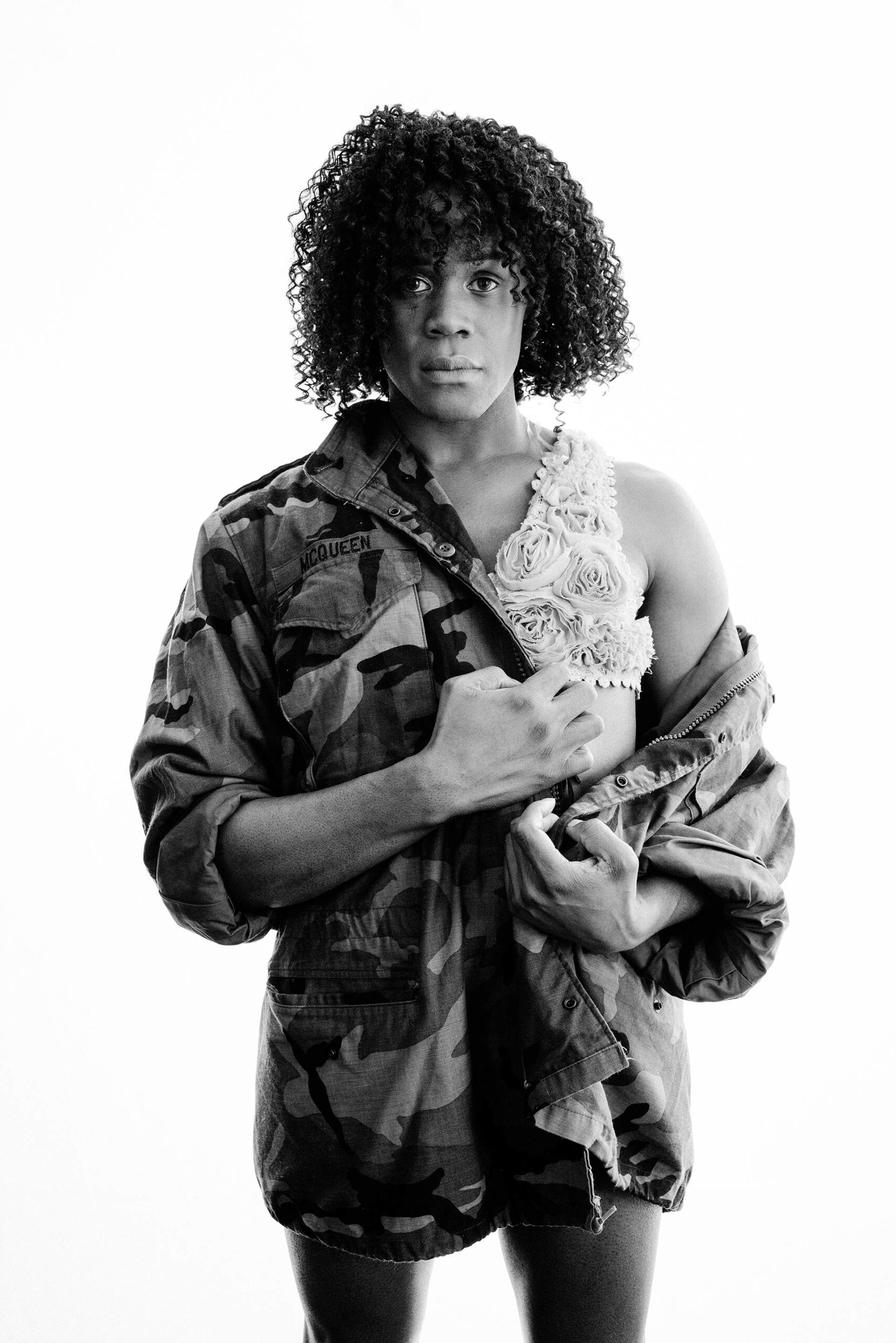
Xaxa
@xaxabianca
My full name is Gxiana Bianca Dominique McQueen. I am a trans-woman of African and South Asian descent. I grew up extremely sheltered but superbly cultured. I like to say I was born in Miami, raised in the Midwest and grew up in Hawaii. I would describe myself as a siphon and prism of energy and a sponge of language, which makes me a conduit of communication and cooperation. I’m a writer, model, part-time actress and contributing editor at Salty magazine. My main purpose in life is to broker understanding between those of differing races, classes and genders. I wanted my portrait to convey that I am a trans-woman—non-passing, beautiful because of her androgyny, not her lack of it. Having my portrait taken made me realize how restrained I really am—but also that I’m willing to break those restraints and inhibitions in the quest for more trans-visibility. I feel the more we saturate the media and social media with transwomen, the less salacious or sensational our mainstream presence will be.