

Your bag is empty.
Five years ago, Ellen Jareckie found a dying raccoon in the back of her garage. He lay on her dog’s bed, and he was enormous. The game warden wouldn’t be able to make it to the house for a day or two.
The inability to ease an animal’s suffering was unusual for Jareckie, who had a state wildlife-rehabilitation permit and who’d nursed pigeons, mice and once a great blue heron back to health. She couldn’t bring herself to smack the raccoon over the head with a two-by-four. She also couldn’t touch him for fear of rabies. Maybe her brother had a point, she thought: “Get a gun,” he’d long suggested. Jareckie, a self-employed painter who lives in the rambling arcadia of Vermont, initially had no interest. But she often encountered sick and dying animals that needed to be safely euthanized. She bought a handgun and a fireproof safe, and she signed up for a basic pistol course.
Three years after she’d come upon the raccoon, she met Marsha Thompson. They’d both gotten involved with the local branch of the National Rifle Association’s Women on Target training program. Women who’d taken the course began to volunteer to train others, and in 2016 Thompson took the reins of the Vermont division. Her course became the first of its kind nationwide: firearms training exclusively for women, taught exclusively by women.
Women are the fastest-growing demographic inside the NRA. Both inside the organization and around it, training courses, blogs, podcasts and product ranges are aimed at women, featuring taglines such as “Where the Feminine and Firearms Meet” and “Where Style and Self-Reliance Coexist.”
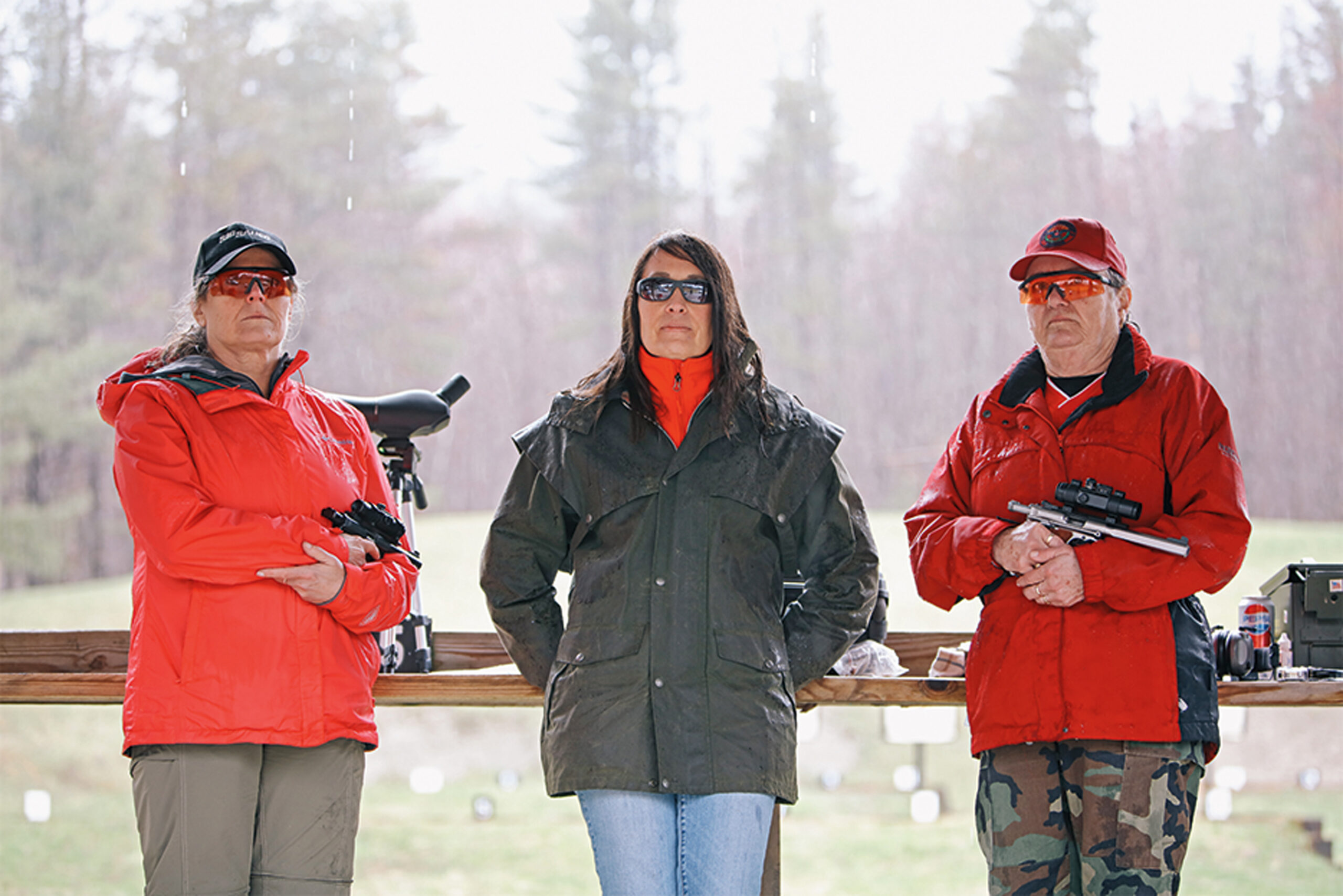
“A lot of women haven’t found a safe space—safe being a strange word to use—where they can learn to shoot and not deal with men’s egos,” Thompson, a 39-year Army veteran, told me when I called to ask her for some shooting instruction. I’d visited a backyard range once before and enjoyed it; this time, I wanted to learn what the experience would be like with no men involved. I also wanted to understand what Thompson and Jareckie and their team had activated up in Vermont—and how the conversation around guns might differ among their cohort.
In the post-Parkland debate over gun legislation, women’s voices have grown louder across the political spectrum. Picture mothers lobbying for the freedom to send their kids to school with neither fear nor bulletproof backpacks while speakers at the Conservative Political Action Conference call gun rights a feminist issue and NRA spokeswoman Dana Loesch tells a CNN town hall that packing a gun keeps a woman safe from rape. In Vermont, the stakes were suddenly high: As the state moved toward passing a raft of gun laws in April, hundreds of protestors lined up at the state capitol days before their passage to collect 1,200 30-round magazines for AR-15 and M4 weapons, donated in protest by a firearms-accessory manufacturer.
The April morning I drive to Marsha Thompson’s farm is a stark Vermont idiosyncrasy. A light whisking of snow, a scrim of ice at the river’s edge, morning sun bright and warm by eight A.M. but the air still well below freezing. Thompson lives on 43 acres with an impressive array of animals: horses and chickens, a Rottweiler named Zelda and a bulldog named Winston.
When Thompson joined the Army in 1973, the women wore skirts and weren’t permitted to shoot guns. Over the course of her career, she became an instructor, earned a science degree, entered the reserve and worked for the state as a land surveyor. By the time she’d retired from both Army and state jobs 39 years later, Thompson had spent a decade as the only female marksmanship instructor in Vermont.
After retirement, she started to go to the firing range with the Burlington Rifle & Pistol Club “for the camaraderie and the fun and all that kind of stuff,” she tells me as we sit in the living room of her 200-year-old farmhouse. Pastoral murals on the walls, painted by her partner, pull the countryside indoors.
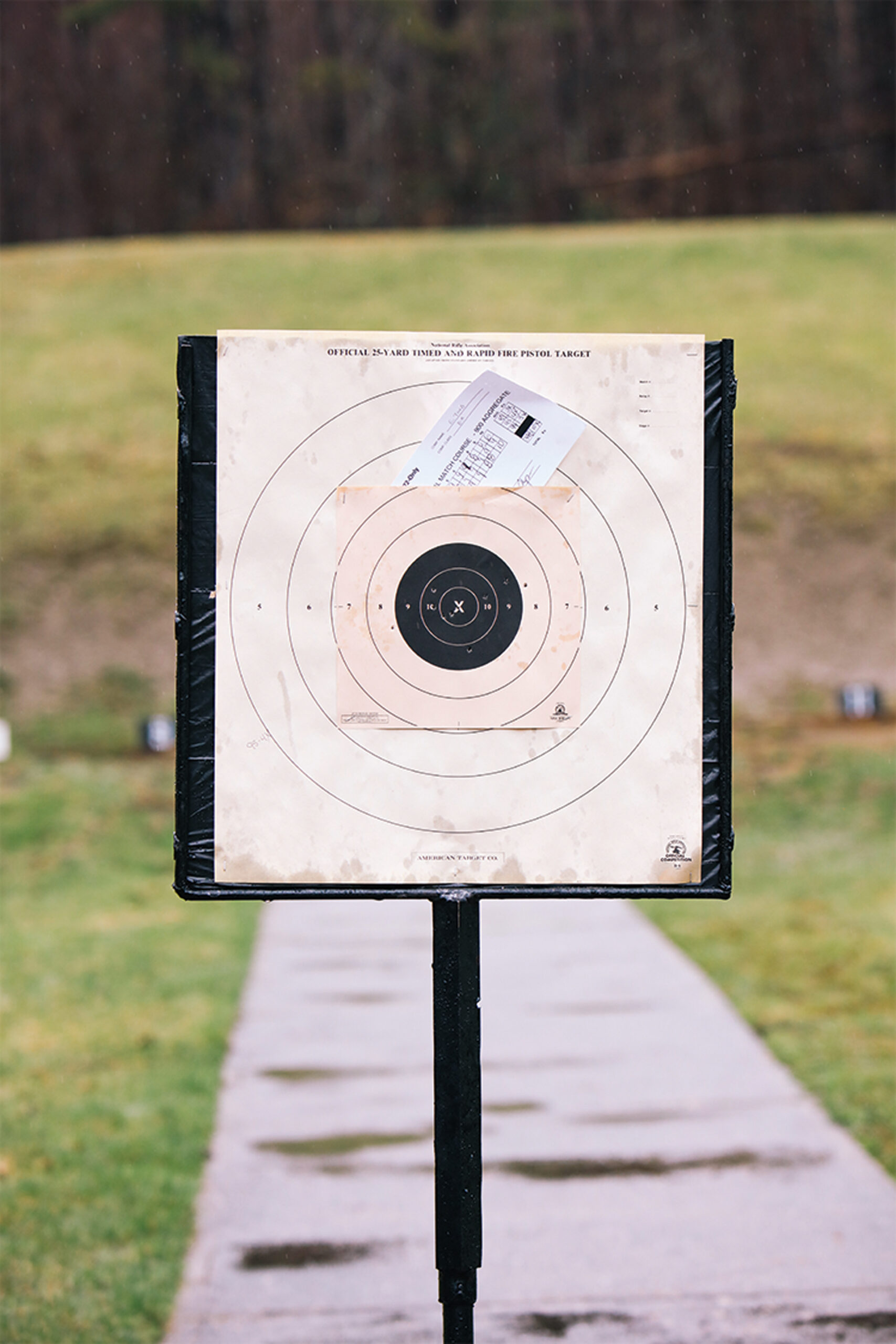
At the range, teaching civilians was both natural and unanticipated as she practiced for competitive matches. “I had women coming up to me because I seemed to know what I was doing, I guess, and asking where they could get training,” she says. “They didn’t want to get training from the men, particularly.” Men got competitive. Men—the fear of assault or an aggressive ex—were the reason many women wanted to learn to shoot in the first place. That Thompson is calm and matter-of-fact, with a face that appears impassive even when it cracks into a smile and then just as quickly out of it, probably helped.
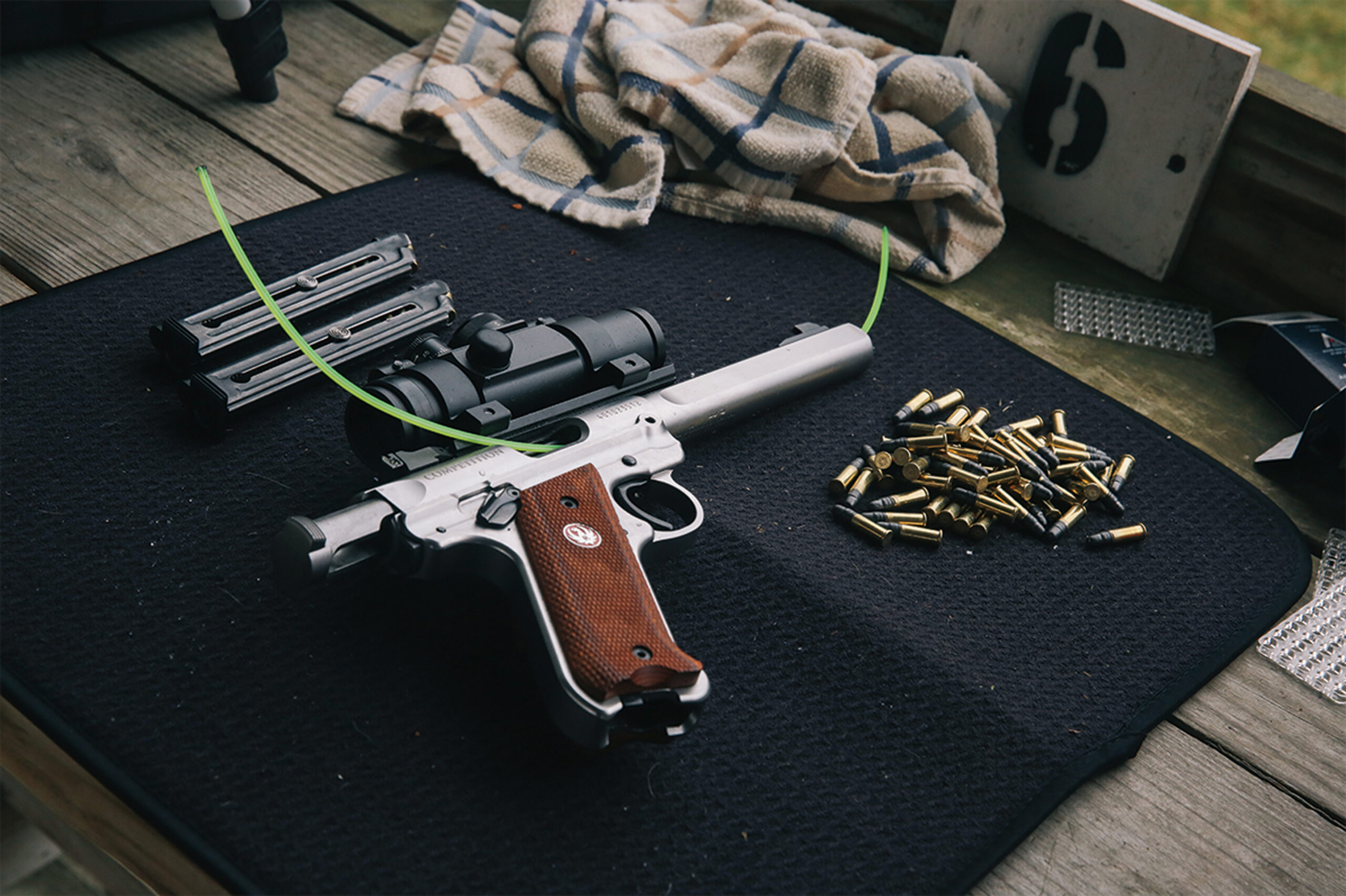
In a yellow field behind her house she sets out three guns: a Ruger compact .22, a .38 revolver and a .45. She explains how the size and shape of each firearm will feel different in my hand before setting it in my palm and tells me how each will feel to shoot: heavier and lighter, more and less kick. Load a magazine like so. Never, ever point a gun at a human I’m not prepared to shoot. Push with my right hand and pull with my left. Thumb down, hips squared, shoulders relaxed. After squeezing through the five shots in the magazine and emptying the chamber, slide a bright yellow piece of plastic through the chamber and barrel.
We don’t speak much as we shoot. I like the quiet between blasts, the technical challenge, the way it makes me conscious of my muscles, my breathing and my surroundings. I miss the target on four of my five first shots, but by the end of our session, Thompson’s easy interjections help me invert the ratio.
“Most girls are good at shooting,” she says as we walk back from the target on our last round. “They have more attention to detail; there’s less ego. They’re always thinking about what’s going on around them.”
Attendees at Thompson’s courses have ranged in age from 12 to 82. They’ve been motivated by wildlife rescue, safety concerns, curiosity and the desire to learn more about a specific kind of firearm. Some have said their husbands wanted them to learn to handle a gun; others have told Thompson that their husbands thought they were out shopping. Only about a quarter have wound up buying a gun. Fine by her—Thompson is about knowledge, not purchasing power. Though she remains a staunch NRA supporter, she rankled at some of the organization’s tactics when she worked with the Women on Target program. How they were “always pushing product” and online courses versus hands-on practice guided by knowledgeable instructors. The NRA didn’t like small clinics, which Thompson didn’t understand; the association didn’t approve of the army pants she wore either.
Last year, Thompson and Jareckie and a number of the other women involved in the Vermont Women on Target clinics split from the NRA to found the nonprofit Vermont Women’s Shooting Association. Thompson asked local fish and game clubs if they’d serve as hosts, and they eagerly agreed. Thompson built benches and target frames, Jareckie designed a logo, and they started advertising. Over the summer, 27 women attended eight beginner and intermediate clinics. Thompson’s goal was education, but she wouldn’t complain if she could get a few more women to be competitors.
Bureaucracy appropriate to a national organization seemed at odds with Vermont, a state whose culture defies easy stereotyping. Vermont is rural and among the least populous in the nation. It’s the only state where high gun ownership statistics do not correlate directly with national voting trends. Independent senator Bernie Sanders, reelected with more than 70 percent of the vote in 2012, got flack during the 2016 presidential primary from Hillary Clinton about his relatively pro-gun platform. Conservative commentators have called the state “safe, happy and armed to the teeth.” Which isn’t entirely true, especially for women—Vermont also has startlingly high statistics for domestic violence. More than 60 percent of violent crime in the state takes place in the home.
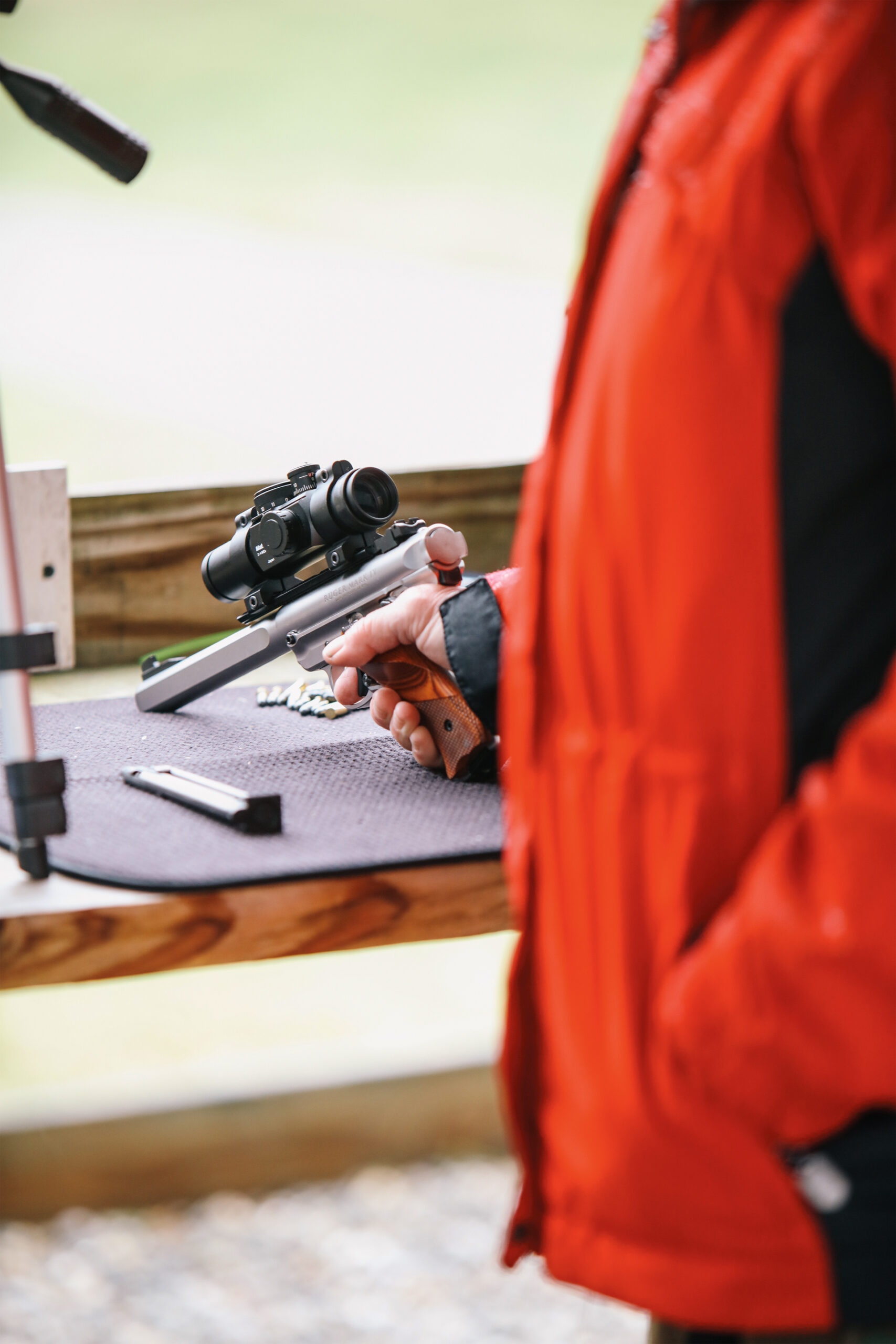
Among the one in five American females who own guns, self-protection is the most commonly cited reason for keeping firearms. But whether owning a gun makes a person any safer is a matter of debate. According to the National Institutes of Health, armed individuals are 4.5 times more likely to be shot in an assault than those not in possession of a gun. Statistics may not bear out the assertion that a gun makes the human who holds or owns it safer from crime, but for the women with whom I spoke—all of whom have gone through extensive firearm training, practice target shooting regularly and said they wouldn’t have bought a gun if they weren’t deeply confident in their ability to use it safely and effectively—a firearm certainly makes them feel safer.
“There was a 180 in my emotional landscape when it came to ‘Oh my gosh, I’m in my house and I have nothing but a flashlight to protect me’ versus ‘I’m in my house with a loaded gun,’ ” says poet and professor Jillian Weise. She tends not to talk about guns in her circles, though I’d read her lucid writing on guns in the literary review Tin House. But she often finds her perspective absent from the national dialogue: Weise is female and small, and she has one leg made of flesh and one prosthetic. Disabled people in the U.S. are three times more likely than the general population to be victims of violent crime.
She purchased a gun six years ago at the age of 30. She’s usually the only woman at her local South Carolina range, logging her practice hours. “I’ve never had to use my firearm,” she tells me, “but then I wonder about the question, because it almost feels like I use it every single day of my life by default of it being in my house, loaded, no safety, ready to go.”
Feeling safe can shape how a woman understands the world and her place in it: Jareckie and the wildlife she loves; Thompson and her competence in a male field; Weise and how the world perceives her vulnerability. Most of these women are aware that feeling safe is not the same as being safe. But for now, I hear beneath their words, it’s what they’ve got.
The air has warmed to a balmy 40 degrees two days later, on April 11, the day Governor Phil Scott signs Vermont’s new gun laws. Scott has arranged for a public signing on the Montpelier capitol steps. The move feels like a benediction granted to his most vocal critics and supporters, or at least those who have the luxury of showing up at two P.M. on a Wednesday.
The day after the Parkland shooting, Governor Scott, a Republican, pledged not to change the state’s lack of restrictions on firearms. But then police picked up a Vermont 18-year-old whose journal laid out plans for a school shooting in tiny Fair Haven. He’d bought a shotgun and four boxes of ammunition. “I will gear up and let loose my anger and hatred. It’ll be fantastic,” he’d written.
“Everything should be on the table at this point,” Scott said shortly after. Within two months, three new gun-control bills were drawn up and approved. They allow police to remove guns from people considered a risk and those with domestic-assault citations, ban bump stocks and high-capacity handgun magazines, raise the legal purchasing age to 21 and require universal background checks.
Party lines did not hold as state legislators voted on the bills. Some lawmakers took issue with the difficulty of enforcing the high-capacity magazine ban, which places restrictions on magazines sold or possessed in the state after October 1, 2018. Others had problems with the age limit; in a state with steep income inequality, some families teach their tweens to hunt to help put food on the table. “It drove the leadership crazy,” Representative Susan Buckholz had told me earlier. Now, in Montpelier, we walk together toward the gold-domed capitol and the signing.
A few hundred Vermonters have amassed on either side of the capitol steps, with journalists scurrying between camps of protestors and supporters of the new legislation. THANK YOU, GOV. SCOTT, declares a sign on one side. THIS IS WHAT A HERO LOOKS LIKE.
On the other side of the steps, hunters’ orange pops against the gray of stone and sky. NON LAW-ABIDING CITIZENS DO NOT FOLLOW THE GUN LAWS, reads one sign. MY RIGHTS DON’T END WHERE YOUR FEELINGS AND MISCONCEPTIONS BEGIN! reads another. Underneath, in small letters, MVGA (Make Vermont Great Again). To these citizens, Scott is, in their words, a traitor, a liar, a pansy. Many wear stickers that read, DON’T NEW YORK MY VERMONT GUN RIGHTS.
Few women have come to protest the bills. I speak with a voluble, warm, middle-aged woman named Lorraine who tells me she thinks armed guards will do more than legal restrictions to dispel school shooters. As we speak, her husband pushes between us. “If you’re talking to her, you’re talking to me too,” he says. She shoots him a look and keeps talking.
A woman named Elizabeth tells me she’s been the victim of domestic abuse. After she’d disentangled herself from the abusive ex, she bought a gun. She supports the ban on bump stocks but not the age restrictions. Nearby, a handsome 40-ish man named Eli says he’s at the capitol for a variety of reasons. “I believe that self-defense is a basic human right. Also I have a daughter who’s almost seven and I’m very, very concerned about the direction that these things are going,” he says. “When she gets older and she’s out on her own, especially when she’s very young, just starting out, she may not be able to afford the best housing or things like that. I want to make sure that she’s still able to protect herself.”
“With a gun?” I ask.
“Yes, with a gun,” he says. “Because a recent CDC study has shown that guns are the best way to defend yourself, that you have the least likely risk of getting injured yourself in your own self-defense. You can look that up.”
The study in question is called “Priorities for Research to Reduce the Threat of Firearm-Related Violence.” Released in 2013, it’s actually about the lack of reliable research on the risks and rewards of gun ownership. Depending on where you look, the study points out, estimates of defensive firearm use range from 108,000 to 3 million instances each year. “The lack of comprehensive data sets and…the fact that the data lead to contradictory conclusions call into question the reliability and validity of gun-violence data,” write the authors.
In the absence of reliable statistics, it begins to seem like feelings are what men are talking about too.
To discuss guns with responsible, thoughtful people who own them is to invite flamboyant suggestions and sensitive observations. In the course of reporting this story, I’ve heard a male gun owner propose that all fellow owners should be legally liable for whatever their firearm does. I’ve heard a female gun owner suggest that men have proven themselves unworthy of the technology, so only women should be able to own guns, which should be issued—along with a year’s worth of training and a driver’s license—upon a young woman’s 16th birthday. I’ve heard an avid hunter, the father of a toddler who will grow into a gun-proficient woman, refer to his ambivalence toward the “ersatz masculinity” of gun aficionados of both genders.
Although Representative Buckholz and her husband own guns, they didn’t store them at home when her now-grown son lived with them. These days, Buckholz has been logging hours at the range; at the age of 61, she has a stalker. She tells me she isn’t sure what she’ll do if he shows up on her front step. Feeling safe not only means different things to different people but can shift with changing circumstances.
Most girls are good at shooting. They’re always thinking about what’s going on around them.
As my interviews wrap up, a number of women point out to me that they identify as political independents. “I’m not a Trump supporter,” one says. “I tend to vote down the middle,” Jareckie tells me. In this they are indicative of a national trend, especially where gun laws are concerned. In a 2017 Pew Research Center study, six in 10 Republican and Republican-leaning female gun owners reported favoring a ban on assault-style weapons and creating a federal government database to track gun sales, as compared with about a third of their male counterparts. Nearly 90 percent of the same group of women favored barring gun purchases by the mentally ill and people on no-fly lists, as well as background checks for private sales.
Over and over, in every interview with a female gun owner, legislator or activist, a single word comes up: fear. The right to live unafraid; the fear of losing rights. Male fear, female fear; true fear, manipulated fear; fear of the hypothetical and the tangible.
“We’re scared shitless in this country right now. I can’t remember a time that I’ve ever felt everything to be so destabilized,” says Buckholz. “We’re allowed to be afraid as women. Encouraged, supported in it. But if you are a white male, you’re not supposed to be afraid. You’re supposed to be in charge. And you’re terrified.”
Given room to breathe, fear can flourish into dialogue, another state legislator points out to me. “Women come to this conversation having lived our lives physically, literally vulnerable, and knowing that that is a normal state of being,” Sarah Copeland-Hanzas tells me as we sit inside Vermont’s capitol building. “So we’re willing to have conversations—how do you balance someone’s need to protect themselves with society’s need to defend against the errant or the crazy or the temporarily insane?”
And fear plus a firearm equals scenarios that can and do go tragically wrong based on an unpredictable matrix of reality, anxiety and bias. That same April week in Michigan, a white homeowner shot at a 14-year-old black boy who’d knocked on his door to ask directions to the high school after he’d missed his bus. Black Americans are the victims of more than half of all gun-related homicides, though they constitute only 14 percent of the national population.
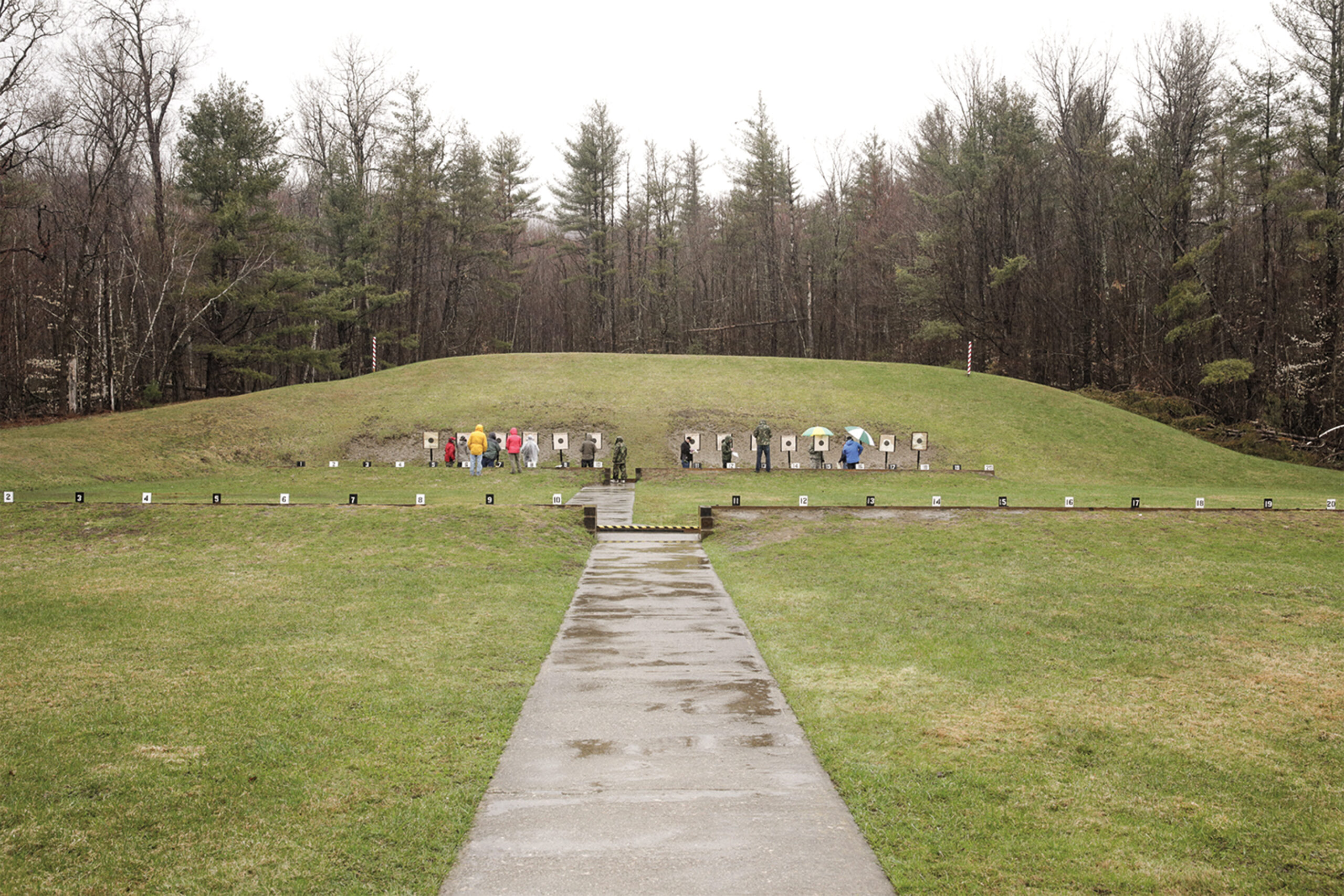
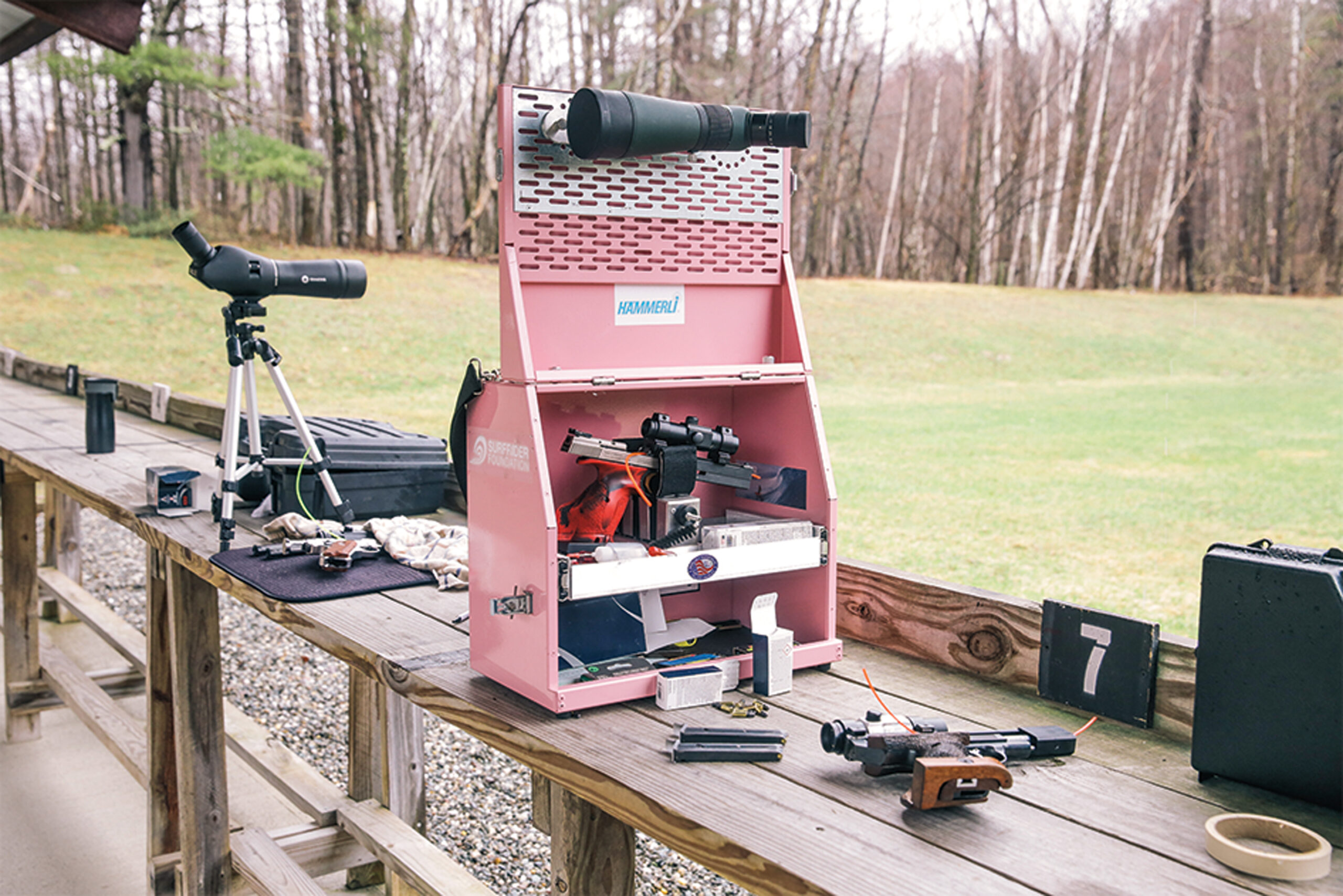
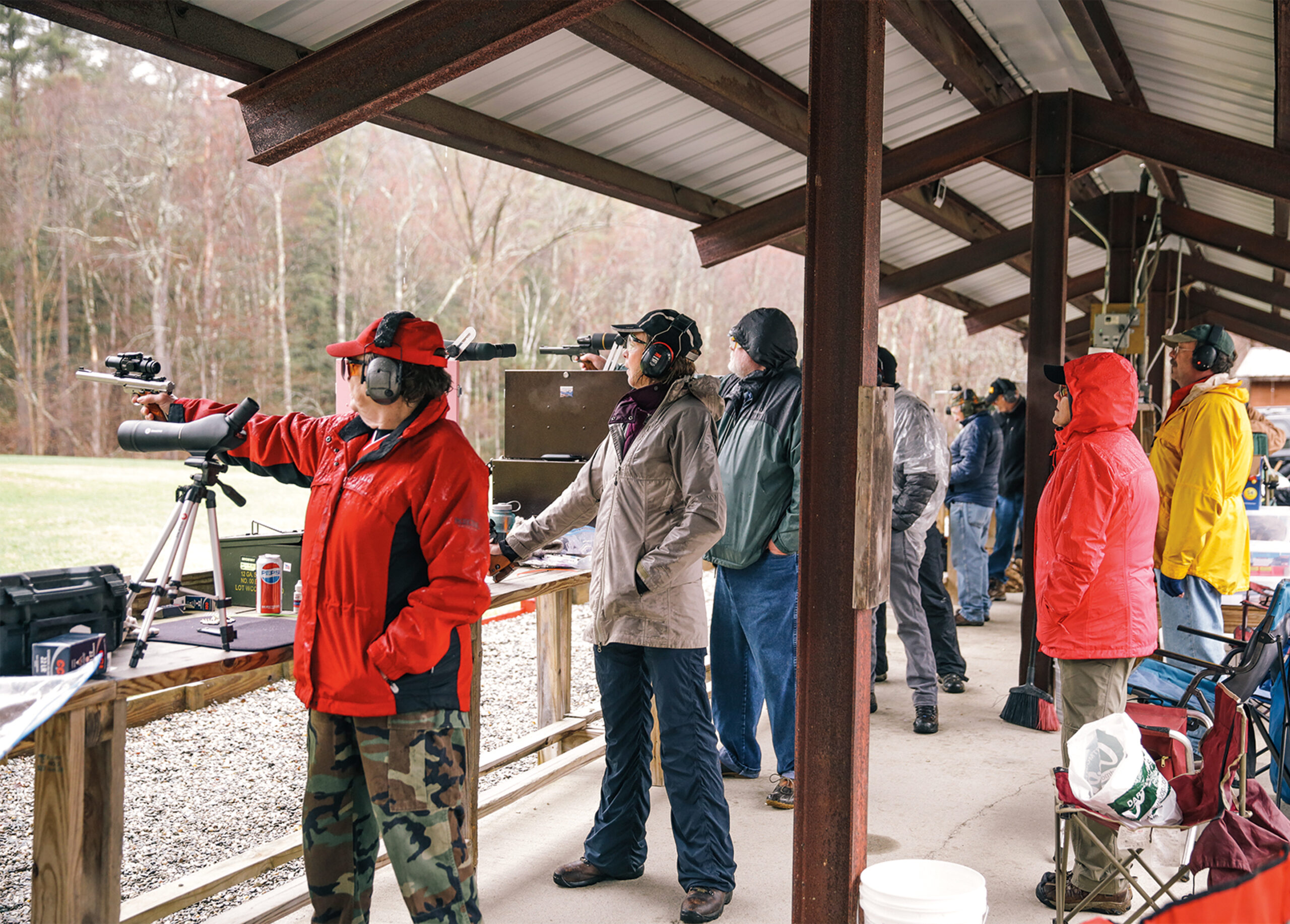
A few days after our first shooting lesson, I meet Thompson and Jareckie for target practice with the Burlington Rifle & Pistol Club at the National Guard’s Camp Ethan Allen Training Site. As we set up, my target flanked by theirs, discussion whirls around us about Vermont’s new gun rules and regulations. I overhear one man telling a trio that the 17 state senators who voted “against your Second Amendment rights” were transplants from out of state. “Flatlanders,” they’re called here.
We begin to shoot. At first, the sensations—the unfamiliar rat-a-tat of many bullets in tandem, the sudden scent of gunpowder—unmoor me. I am no longer one person on a bucolic backyard range. When I set my gun down, I forget to thread the empty chamber indicator through the gun. Jareckie reaches silently into my range of vision and does it for me. “Remember to push and pull,” Thompson says coolly. Before long, I am immersed in the challenge, silent and focused. Having fun.
“You think you’d ever want to carry?” one of the men nearby asks me at the end of the session.
“I very much doubt it,” I say.
“I’ll give you three months before you change your mind,” he says with a chuckle.
This is the fundamental difference, I suddenly understand, between shooting guns with men, or white men, at least, and women. Women have skin in the game—our vulnerable bodies—and yet few gendered expectations around our expertise with or enthusiasm for the technology in our hands. The result is a conversation that can center, at its best, on technologies and their capabilities, actions and their consequences. A group of Americans, as Copeland-Hanzas implied, uniquely qualified to lead the way on an issue riddled with fear and misinformation.
An examination later that day of the biographies and voting records of Vermont state senators revealed no correlation between state of birth and yea or nay votes on the new gun laws. Still, even on the left, some were wary of a triumphal tone about the gun laws’ passage. “Everyone’s feeling like we’ve done something great here,” Buckholz, a Democrat, had told me before warning that some related challenges—Vermont’s mental health facilities, the socioeconomic and cultural polarities of a proudly rural state—had gone exactly nowhere.
Her caution was appropriate. Before the end of April, gun-rights groups had filed a constitutional challenge to the magazine ban.
Thompson, meanwhile, was busy firming up her summer plans. She hoped to add a defensive clinic to the lineup, since so many women last year had requested one. The year’s first beginner clinic, in May, had attracted 17 signups in three days. The event represented a step up: bigger numbers, sponsored by the Vermont State Rifle & Pistol Association, at the National Guard range. She’d opened the attendance to both genders—three men and three boys had signed up—and enlisted a few guys from the pistol club to help oversee the large group.
But the women were in charge.