Your bag is empty.
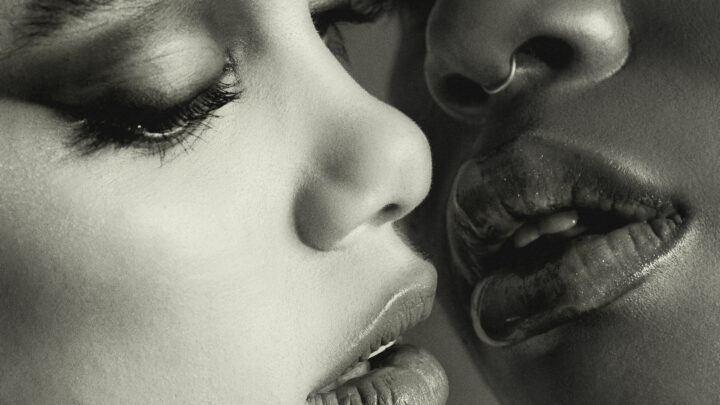
Playboy exclusively debuts Brown's new video 'Self-Pollination,' and talks with her about honeybees and death threats ahead of her Art Basel performance
British-born performance artist Millie Brown rose to fame at the age of 17 when she created a pastel-rainbow splatter-painting by triggering her own gag reflex over a period of two hours, spewing out successive batches of food-colored milk onto a large, blank canvas. The paintings made a strong impression and were shown in galleries, selling for as much as $20,000.
Known today as “Lady Gaga’s vomit artist” (to distinguish her from the other Millie Brown, a child actor who does not puke for pay, nor appear in PLAYBOY), Brown reached a new level of notoriety in 2014. That’s when she was hired by Lady Gaga to puke neon green milk onto the singer’s breast, followed by black-dyed milk, as the two rode together on a mechanical bull at South by Southwest.
For a young artist, proximity to superstardom can be life-changing. The visibility! The connections! But for someone like Brown, whose performance art pushes social taboos, it can also invite a wave of public scrutiny. As a result of the Lady Gaga performance, Brown received hateful messages from private citizens and celebrities alike. The singer Demi Lovato, who has been vocal about her own struggles with bulimia, tweeted “Bulimia isn’t cool. … Bottom line, it’s not ‘cool’ or ‘artsy’ at all.” And an online petition calling for Lady Gaga to formally end her professional relationship with Brown gained just 38 signatures shy of it 25,000-signature goal.
Brown is careful to make clear that she does not suffer from an eating disorder, and that the vomit series was a primitive act more akin to a hunger strike, an artistic release of the emotion and trauma we store in our gut. She has since stepped away from the vomit medium—and from milk as a whole, having gone vegan at 21 (Gaga was doused in soy).
But that doesn’t mean she’s done with using her body as a tool and canvas for creativity and expression. In her 2016 piece Wilting Point, Brown spent 168 hours on a bed of fresh flowers in a New York gallery space, subsisting only on water and coconut water, and leaving her flower bed only to use the restroom once a day, speaking with no one the whole time. It was a meditative experience for the artist, and yet another opportunity to use her body as both instrument and art. She emerged at the end of it with a renewed enthusiasm for the sensory experience of existing in the world, and with recovered memories that filtered up into her consciousness in the still and unsuspecting moments alone with herself.
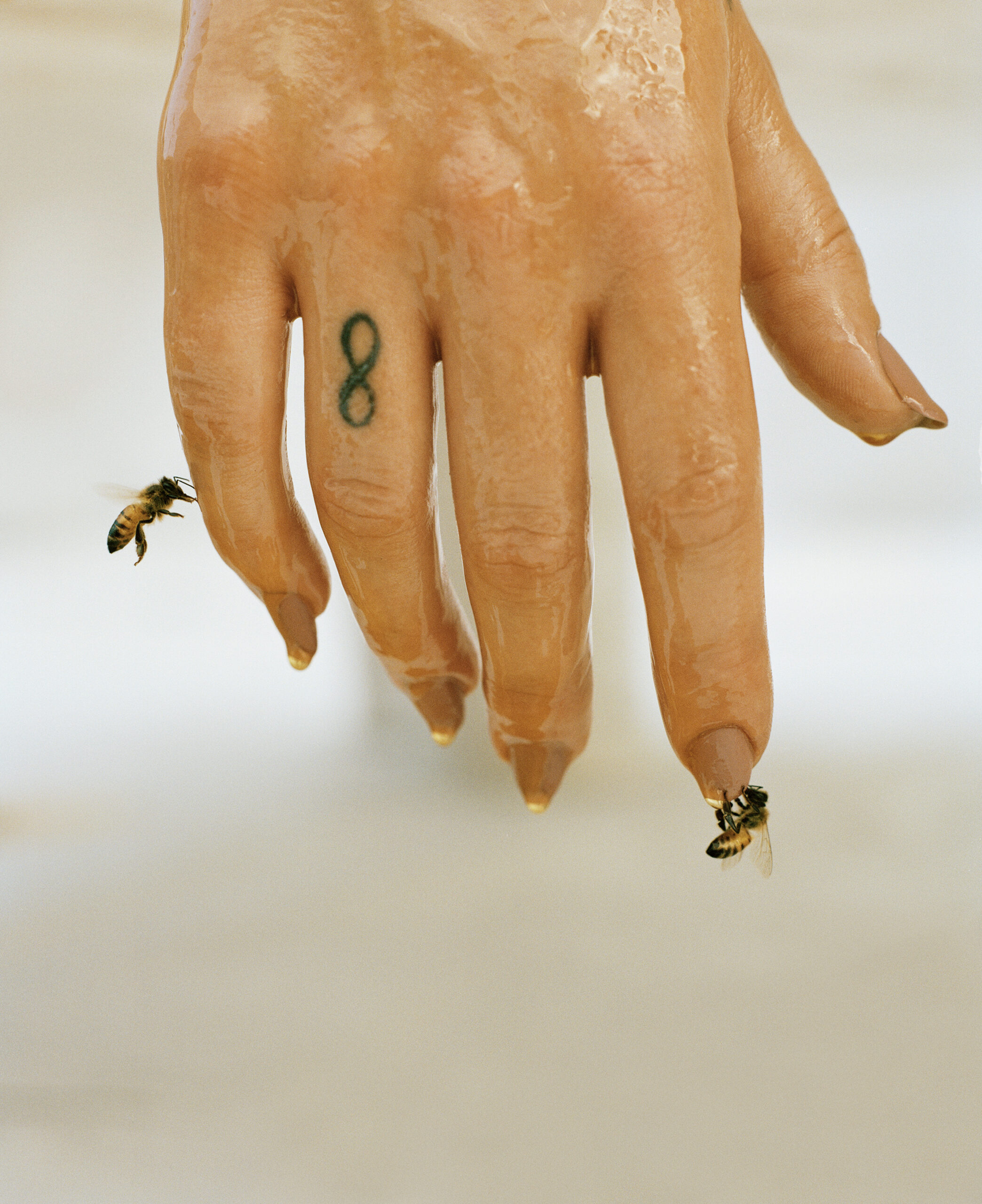
Self-Pollination, a video project debuting exclusively on PLAYBOY, is Brown’s latest piece. The video’s director, Mary Rozzi, first got to know Brown photographing her in 2018, and saw Brown as a fitting collaborator to explore seduction and pollination. “I’ve become fascinated with the queen bee’s importance as the only sexually developed female in the colony, as well the honey bees’ vital role in every aspect of our ecosystem,” Rozzi tells PLAYBOY. “Simultaneously, I had been thinking about what seduction meant, and how we seduce others and ourselves in a post-#MeToo climate. How do my sexual desires and allure translate, and how are we able to express ourselves freely in a positive way without fear?”
Ahead of Art Basel, where Brown will perform a portion of the video this week in Miami, I sat down in L.A. with the artist to find out about her latest work and off-duty life, how she takes care of her original art instrument (i.e., her body), and her favorite piece of criticism.
PLAYBOY: Tell me about your inspiration for this latest piece.
BROWN: I found this quote that’s somewhat tied into it. It’s this 16th-century quote, and it says, “Wisdom is as a flower from which the bee its honey makes and the spider poison, each according to its own nature.” That is very much the premise of the video. It’s got one side to it that touches very much, obviously, on the subject of seduction and sexuality and humans, and also how that translates to a greater premise of seduction in terms of the environment, how we continue life on Earth. I think what that quote talks about, basically, is that we own this knowledge, and what we do with this knowledge is up to us. We can use this force for destruction or construction. Right now, we have all of this knowledge, and we’re watching the opposing forces at play.
PLAYBOY: Can you walk us through the scenes of the film, and how you translated that concept visually?
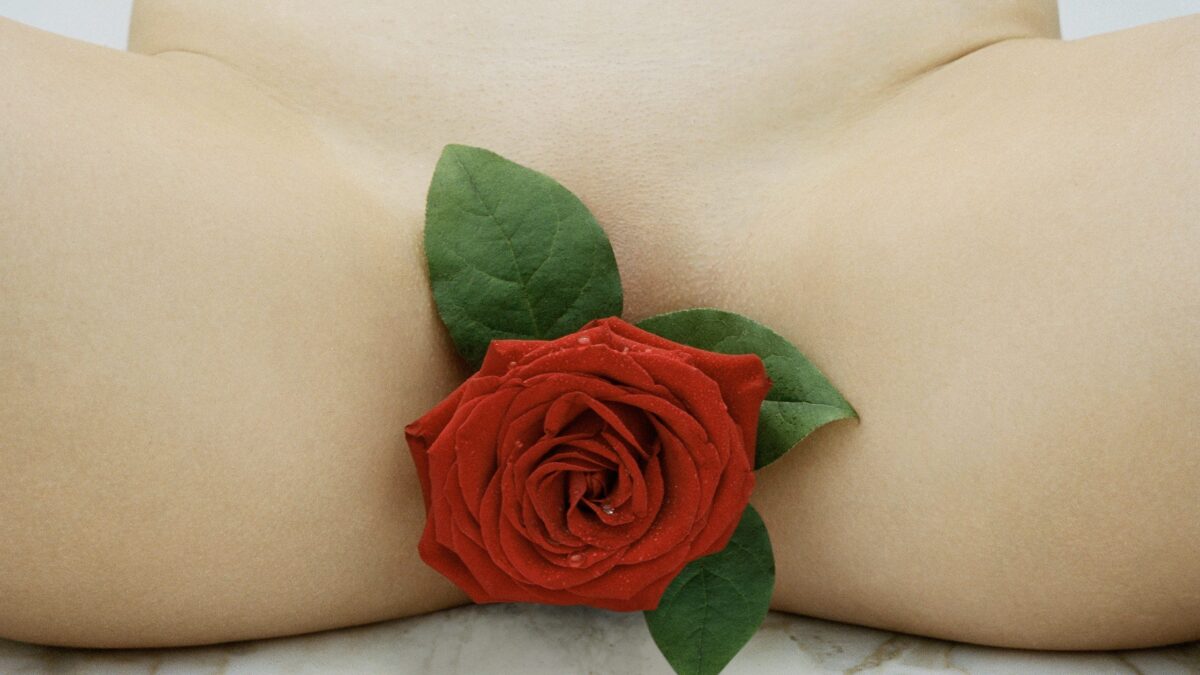
BROWN: I always use myself as the canvas for the artwork because that was what I was born with, that was the first tool I had to create art with. The main subject of this piece is the female form, and in this moment in time, the female body is the subject of political division and opinion, but the female force is the creator of all. The first scene [of the film] with the rose, it’s the sun, the pussy; the sun is the creator, the womb is the origin of all. I wanted to see this life growing out of it, to be celebrated, because I think we bizarrely put restraints on female sexuality and how a woman must feel about her body and how she must show her sexuality. That’s something that I personally have a lot of issues with.
I feel like I’ve been criticized for using myself in a sexual way, but it’s fine for everybody in advertising or what-fucking-ever to use sexuality for profit, which mainly profits men. When you look somebody in the eye and you are completely on the same page as your sexuality, that frightens people. That was a really strange thing to realize, that when you are in charge of your own sexuality, that threatens people immensely.
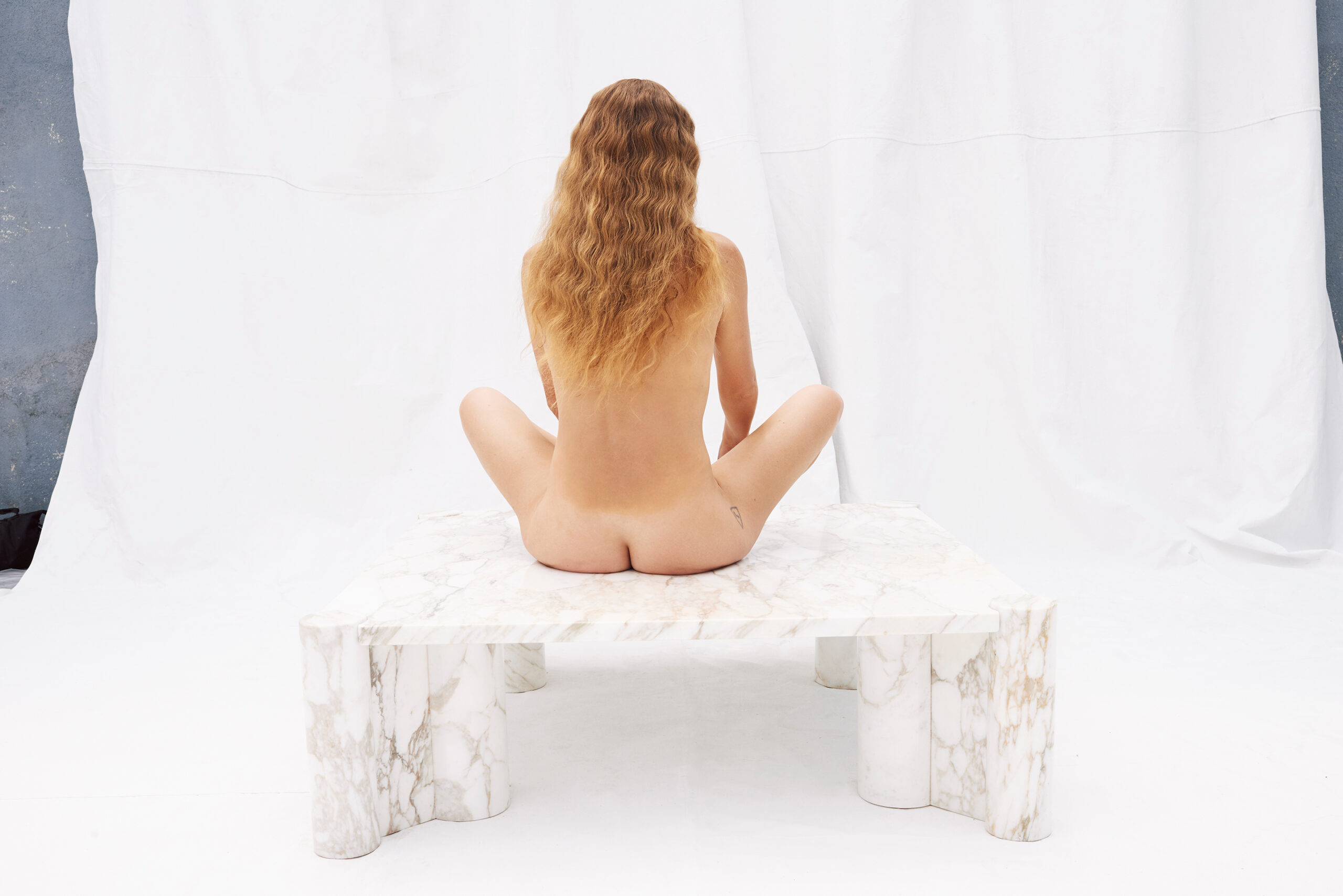
PLAYBOY: L’Origine du monde … and then you gave it a second and third act.
BROWN: With the bees, they’re basically our future. It’s inseparable to remove one element of this organism that is life on Earth, without it having massive repercussions. I really want people to lift the veil from their eyes and see what we can do. The bees are going to be extinct, and we’re going to be extinct—everyone’s going to be fucking extinct—and all of the money is going to burn, and what are we going to say for ourselves? The bees are responsible for how we eat and how we nourish ourselves, they’re responsible for one third of our crops, and the government is messing with them and how that is used to control the population.
It’s not that the knowledge doesn’t exist, but some have held the knowledge secret to themselves, for their profit. This is my idealistic view of one day, when the knowledge is truly free and people are taught how to live and thrive, as opposed to this strange society that has been built not for the betterment of the people, but for the betterment of a small percentage—almost like a bee’s nest, but more organic.
PLAYBOY: So the rose is the origin of life, the bees are knowledge, and what about the honey?
BROWN: The honey itself is a symbol of health and wealth and fertility and the male orgasm. It is also like this stolen gold—that we’re using these bees as little slaves to keep us well. We’re stealing their gold.
PLAYBOY: Power and control—
BROWN: It’s interesting how all of these things tie in. Control and sexuality. I feel very controlled as a woman in terms of owning my sexuality. And it’s so strange to me because I grew up in a very liberated, somewhat hippie upbringing. I naturally was born with feminist points of view without it being spelled out that this was a seperate viewpoint from what was commonly accepted. I got this from my mother. I was raised by my mother—she raised four kids by herself on a teacher’s salary. And it wasn’t easy, but she was very careful are prioritizing what was going to be important for us to have as human beings. Information, knowledge, travel, empathy—all of the things that make the world a beautiful place.
My favorite death threat was, ‘I hope you die by fucking.’ I was like, ‘Me, too!’
PLAYBOY: You’ve gotten a lot of criticism in response to your art, for using your body in ways that others might find problematic or triggering. How do you square the hypocrisy, then, as a woman in a society that also demands women to appear a certain way, often at the cost of their own physical wellness? You’re damned if you throw up, and also damned if you don’t.
BROWN: Liberals love to point a finger at other liberals. This is something that’s been at the forefront of my mind: People are very black-and-white about things. “This is bad,” or “You can’t say this.” But let’s put everything on the table, and let’s talk it all through. Let’s always challenge everything. You don’t just agree because that’s what the popular thought is, or because that’s what the liberal good people—the goodies—are saying. We have to really use our brains more, and not be so afraid to do that.
That goes the same for using your body. You can’t be afraid to say something that’s true to yourself because you’re afraid of what they’re going to say, or because it could be seen as too sexual or too aggressive. That’s no way to progress as humanity. The way that I used my body, specifically talking about the vomit series—that was very much a primitive act. It was about bringing something light from the darkness. Ancient tribes would go and drink all these herbal poisonous substances and regurgitate as a way to liberate, because you hold so much emotion and memory and experience and trauma. And so releasing it through this act is something that’s almost like an ancient medicine to better ourselves.
What I was doing was more in line with someone who was on a hunger strike for a political situation, versus me hiding away in the secrecy of my own bathroom and being sick after eating french fries. It’s a very separate thing. I understand that it can be controversial, but honestly, I think if I baked a vanilla cupcake and presented it, people would find that controversial.
PLAYBOY: The criticism is already there—it’s just waiting for a target.
BROWN: I’ve had death threats for painting a BMW! It’s bizarre. I did a performance for BMW where I splatter-painted this BMW with my mouth and body, and the video went viral. I had all of these messages, hundreds of thousands of comments, saying things like “How dare you disrespect this car!” and “You deserve to die for this.” The amount of death threats I’ve received, from each different project … It’s kind of incredible. I’ve kept some of them because they’re hilarious.
PLAYBOY: What’s been the best?
BROWN: My most favorite one was, “I hope you die by fucking.” I was like, “Me, too! I would love to die that way!” It was potentially an error in their language, but 100% I would love that. I have a couple of good favorites, actually. Another one is, “You are why terrorism exists.” That was incredible literature. The thought process behind that one was brilliant.
Watch Self-Pollination by clicking here. As part of Art Basel, Millie Brown performs Self-Pollination on Wednesday, December 4, at 5 p.m. Location: Curio at Faena Bazaar, 3400 Collins Ave. in Miami, Florida.