Your bag is empty.

A new retrospective at the Whitney showcases the subversive, visionary portraiture of women by the artist Roy Lichtenstein.
This story appears in our Fall 2026 issue featuring cover star Charli XCX, on newsstands September 28th. Want us to come to your place? Subscribe here to get it delivered to your door.
The pop art pioneer Roy Lichtenstein—famous, and controversial, for his comic book–inspired paintings that his critics found vulgar and insipid—captured the fraught malaise of the early 1960s. Coquettish, verging on desperate, the women he portrayed seemed to anticipate the coming eruption of free love.
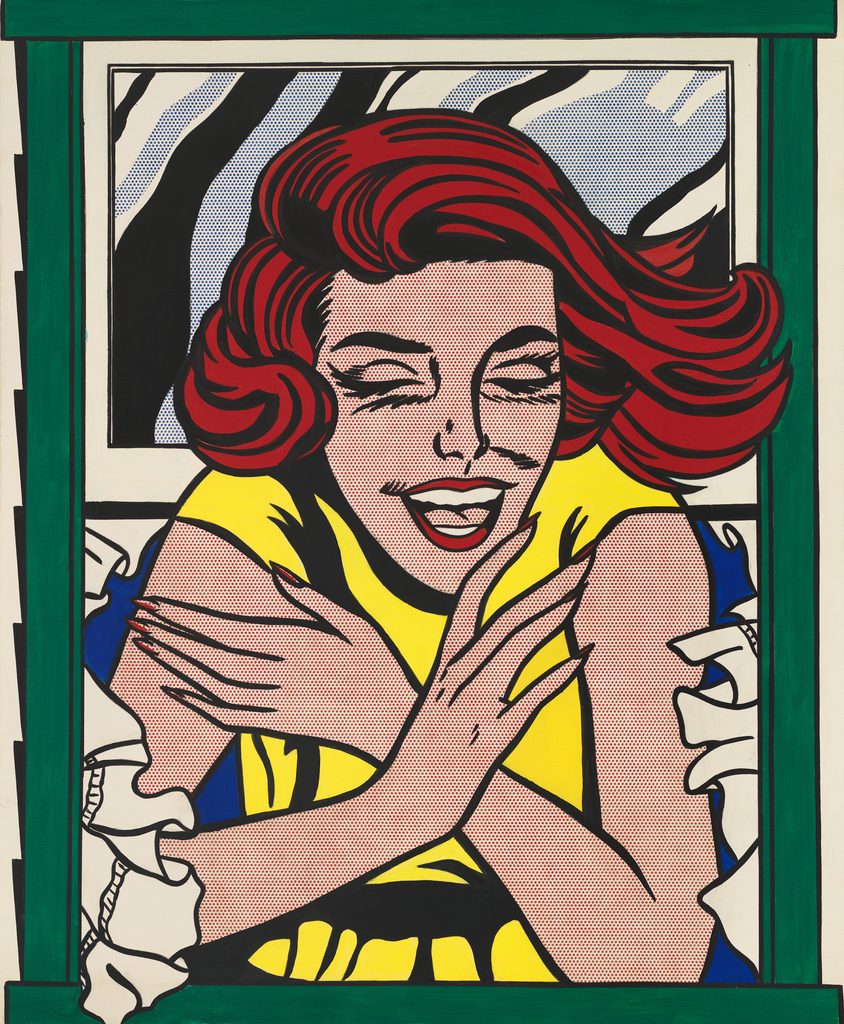
Roy Lichtenstein: Like New, which opens at the Whitney Museum of American Art in October, is the artist’s first major survey in New York City since 1993. The exhibition gathers more than 130 works, among them his signature dot paintings. They are often sly and subversive, particularly his melodramatic portrayals of women. “He’s not really capturing what women looked like in real life,” Meg Onli, the Nancy and Fred Poses Curator at the Whitney, says. “He’s capturing the depiction and portrayals of women in media.”
The show reintroduces Lichtenstein’s first famous woman, the 1961 painting Girl with Ball, which was inspired by a model in an advertisement for a Poconos hotel. She holds a red beach ball raised above her head, exposing her curvaceous swimsuit-clad physique, her red mouth gaping open against a yellow backdrop.
Drowning Girl, considered among his most important paintings, mines Tony Abruzzo’s 1961 DC comic “Run for Love.” While the prim ’60s-era works are chaste, Lichtenstein revisited archival comics in the 1990s as full-on nude paintings.
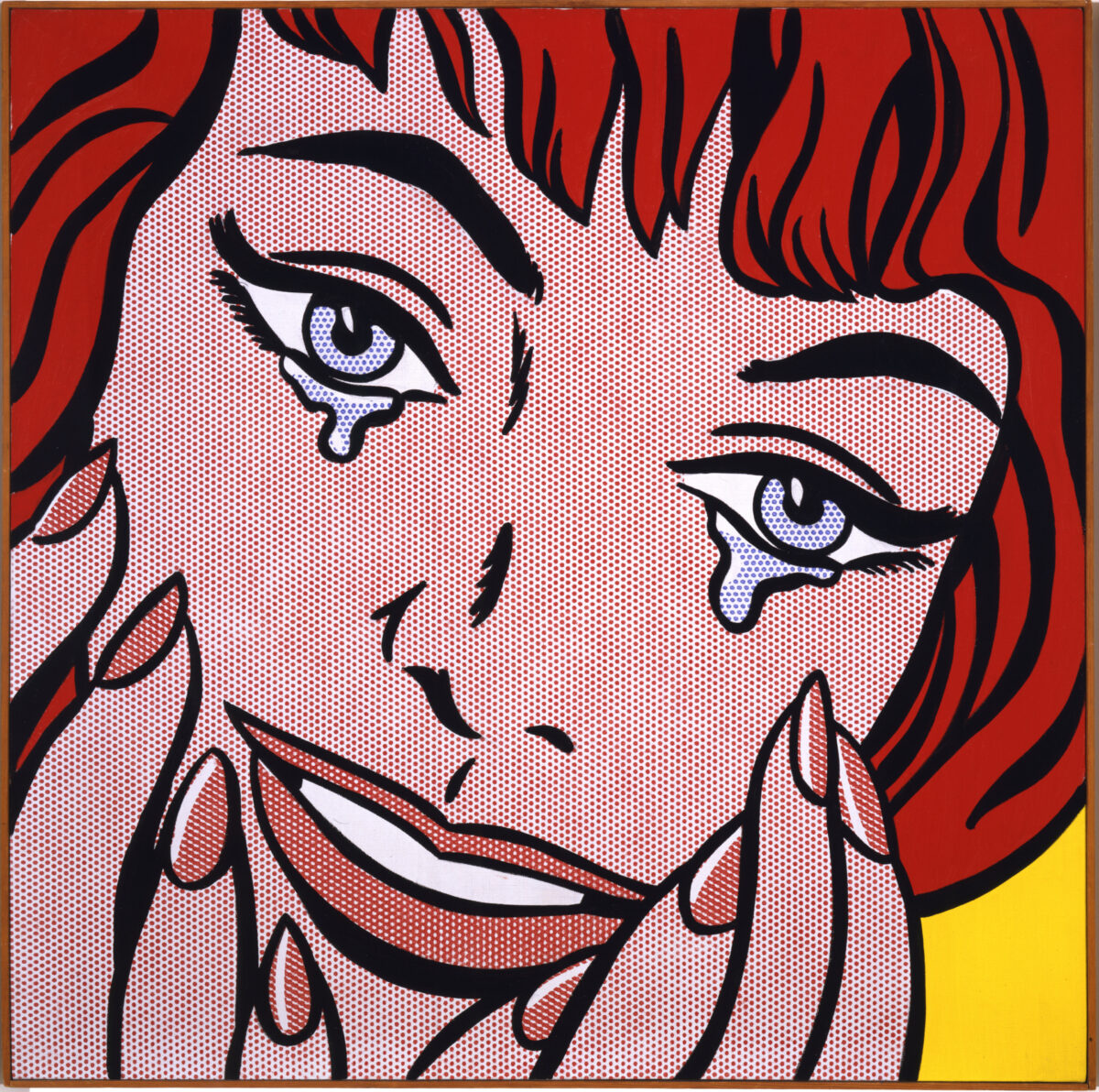
Lichtenstein’s paintings may be decades old, but they are not dated. In Happy Tears, Lichtenstein zooms in tight on the subject’s face, anticipating an image all too familiar today online: The crying selfie—a trope that, Lichtenstein-like, precariously balances real emotion and stagey performance.