Your bag is empty.

Meet Reed Duchscher, the power broker behind some of YouTube's biggest stars.

This story appears in our Spring 2026 issue, on newsstands now. Want us to come to your place? Order the issue here to get it delivered to your door, or become a member to get digital access to the issue and early access to paywalled content.
Pythagoras believed that geometry was the knowledge of the eternally existent. Michelangelo saw the angel in the marble and set it free. Homer begins The Odyssey: “Muse, sing in me.” For as long as humans have been capable of creation, the role of the creator has been to recognize that there’s beauty and progress, art and understanding, just waiting to be received.
“We had our eyes on Hasbulla very, very early,” says Reed Duchscher, the founder and CEO of Night, a digital-creator management company in Santa Monica, California. “We saw what he could become.”
Even if you haven’t heard of Night, you’ve probably encountered its work. Surveys show that the average American spends two hours and 24 minutes per day on social media, more than twice the time the average parent of a grade-schooler spends with their child on leisure pursuits. And Night dominates social media. Its client roster, headlined by superstars like Kai Cenat and the Kalogeras Sisters, produces content that accrues 8 billion monthly views across YouTube, Twitch, TikTok, and Instagram—the rough equivalent of a view from every single person on the planet.
As the silent hand of the attention economy, Night shapes how people talk (Cenat is credited with popularizing the term rizz), how people eat (Night launched the snack brand Feastables in 2022 with MrBeast, a former client), and even how people vote. Ahead of the 2024 election, Donald Trump and Bernie Sanders sat for interviews with comedian Theo Von, who hosts his show, This Past Weekend, on Night’s podcast network; another Night client, left-wing political streamer Hasan Piker became a central figure in last fall’s New York City mayoral race. In many ways, the story of Night is the story of today.
I wanted to work with people who want to build something substantial.
On an uncharacteristically overcast Santa Monica afternoon, Duchscher, 36, is letting the muse sing. Born and raised in Rugby, North Dakota, Duchscher was a walk-on wide receiver for the North Dakota State University football team and got his start as an NFL agent, landing a job at Fritz Martin Management in 2013. Despite dreams of becoming the next Jerry Maguire, he soon grew disillusioned when he learned that, at a sports agency, sports always comes before agency.
“Early on, I brought [my clients] a lot of investment opportunities,” remembers Duchscher, “and they didn’t care. They didn’t want to do commercials; they just wanted to play football. There was a little bit of a disconnect for me early on, because I didn’t want to be a football agent who just does one thing. I wanted to work with people who want to build something substantial.”
Nursing the sting of thwarted ambition, Duchscher, like millions of young men, found solace in watching YouTube. Almost immediately, he fell in love with Dude Perfect, five college friends from Texas whose viral basketball trick-shot videos midpointed the distance between the Harlem Globetrotters and Jackass.
“If you found Dude Perfect in 2013 or 2014,” says Duchscher, “once you watched one video, you couldn’t stop until you watched 10 more.”
After cold-pitching Dude Perfect about collaborating with his NFL clients, Duchscher realized that he didn’t merely want to collaborate with Dude Perfect, he wanted to work for them. Although Dude Perfect is now a multimillion-dollar institution, they were just a five-man operation at the time, shooting, editing and promoting everything themselves.
In 2015 Duchscher became Dude Perfect’s brand manager, quickly helping to negotiate a deal with golf giant Callaway—netting himself a $30,000 commission in the process. That same year, he launched Night (then called Night Media) from his bedroom, obsessively trying to reverse-engineer the next generation of perfect dudes.
“My mind just kept telling me that Dude Perfect wasn’t going to be the last one to achieve this success,” he says. “I would go to bed thinking about YouTube, and I would wake up thinking about YouTube.”
Soon after setting up shop, Duchscher inked his first client, Typical Gamer, who still remains one of Night’s marquee names. Although Duchscher initially “couldn’t believe that people were watching kids play video games online,” he noticed video game streamers were underserved by the existing talent agencies, much in the same way that Dude Perfect had no support system when he met them.
Old Hollywood tropes would pit Duchscher (tall, looks like he could still give a slot cornerback some trouble) and Typical Gamer (a typical gamer) as natural enemies, but by the time Duchscher left Dude Perfect in 2017, Night had built a strong stable of video game streamers. Then, in 2018, Duchscher signed MrBeast, who had started to attract attention for stunts such as counting to 100,000. Heading into COVID, signing MrBeast made Night successful. Coming out of COVID, representing MrBeast made Night undeniable.
“When I got started,” Duchscher says, “[the big creators] were kids in the basement playing video games. Just as hip-hop replaced rock as the cultural center in the ’90s, we always thought it was just a matter of time before the cool kids would take over the internet.”
If Night’s clients are the cool kids of the internet, Night likes to consider itself the cool kids of digital representation (or, as a former staffer quipped, “they think they’re the hottest shit ever”). Befitting a company that, per Duchscher, “understands internet culture better than anyone in the world,” Night’s Santa Monica headquarters is unmistakably Gen Z. Zyn pucks rest atop standing desks. Memos often assume the form of memes, says one of Night’s social media managers, as he scrolls through a meme-filled office-wide Slack channel. Across the open-floor plan, guys wear streetwear and women wear white sneakers; in his office, Duchscher, his Heron Preston pants cropped above high-top Air Force 1s, wears both.
“Night has always been an absolute pioneer in the creator space,” says Taylor Lorenz, the prominent tech journalist who runs the User Mag Substack. “They took it seriously way before a lot of companies did. Even with traditional management agencies, like CAA, WME, and UTA, trying to build out their digital departments, the new wave of young managers grew up watching YouTube, so Night is seen as the cool place to work.”

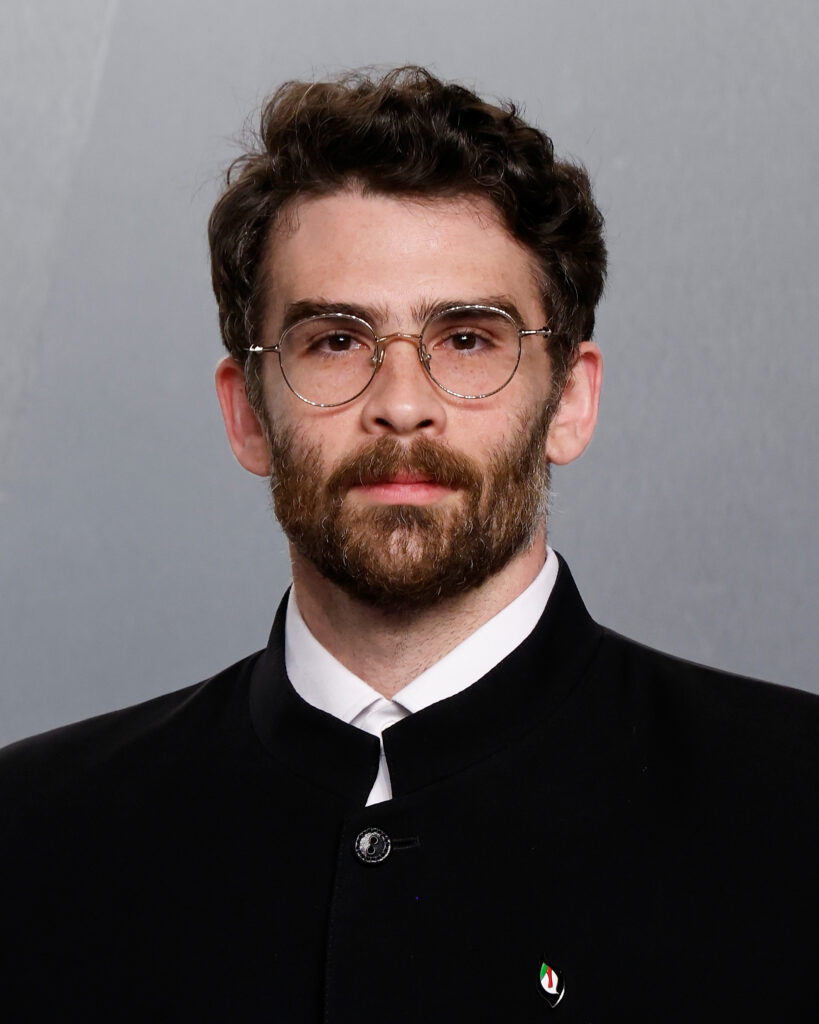
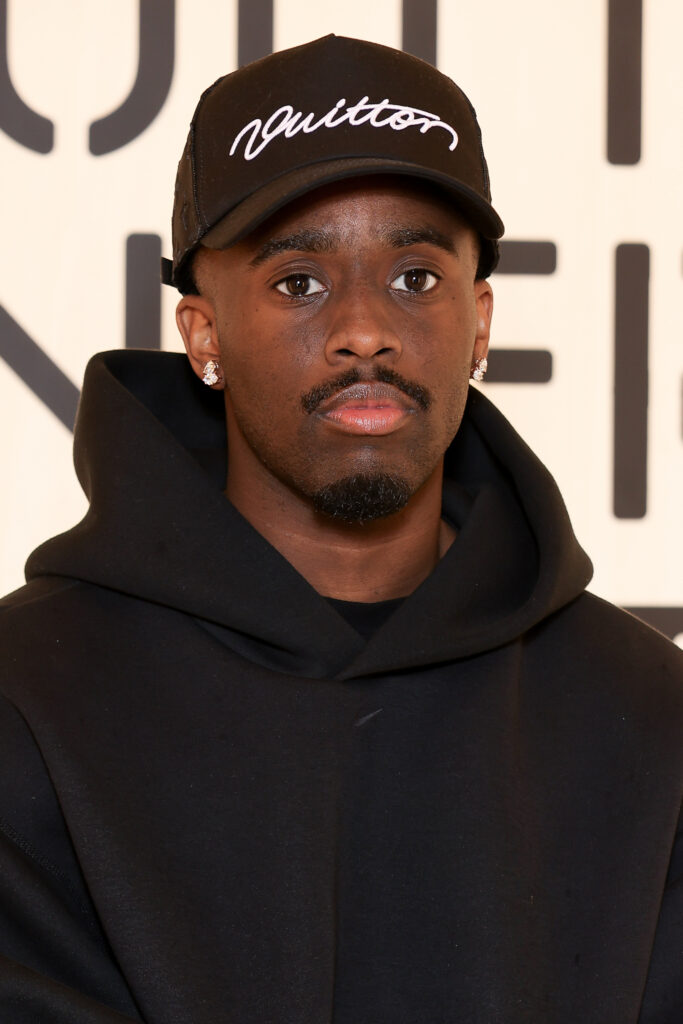
While Night’s success has thus far been driven by its early embrace of influencers, the next decade hinges on its ability to become a nexus of influence unto itself. Since partnering with the Chernin Group in 2022 to launch the $100 million investment firm Night Capital, Night has expanded rapidly, launching Night Labs (a venture studio that helps creators build their own companies), Night Studios (a production company, which folded in 2024), and Night Advisory (a consulting firm that helps brands like NASCAR increase their online presence). Similarly, Night has acquired the Roost (a podcast network) and Experiential Supply Co. (an experiential marketing agency), and absorbed Bottle Rocket and LFM, two smaller talent management companies. Five years ago, Night had 10 clients; now it has over 250.
During its MrBeast-fueled ascendancy in the early 2020s, Night pursued only clients who had a long track record of success, according to the former staffer. But MrBeast’s departure in 2024 as well as changes to social media algorithms in general have forced Night to reinvent itself. Night was once powerful because of its strong client list; Night now has a strong client list because it’s powerful.
“The dominant social media platforms would rather have 100 creators with 1 million subscribers than one creator with 100 million subscribers,” says Taylor Kelly, Night’s chief strategy officer. “You don’t want a single person to represent too much of your platform because then you lose leverage and you’re beholden to them.”
As social media algorithms get more sophisticated, it’s become more difficult for creators to reach outside of their target audience.
“Creators aren’t really breaking through to the mainstream anymore,” Duchscher says. “They’re all in niche markets. I don’t know the biggest female clients or the biggest automotive channels on the internet because I don’t see that style of content ever on my For You page.”
In turn, Night maintains an internal document monitoring the status of thousands of creators. Rather than chase people at the peak, Kelly says, Night targets creators at an “inflection point.” With the stars having been dimmed, Night has learned the art of the moon shot.
“They’re really good at spotting talent and turning them into household names,” explains Lorenz. “So often, when a creator pops on my radar, I’ll see them start to rise and, boom, they’re signed by Night.”
Since “fandom is a function of time spent,” Kelly says, creators must simultaneously chase both connection and awareness. Long-form content, like YouTube videos or podcasts, should be full of easily clippable segments that can be packaged into punchy short-form TikToks, which then drive inter- est in the original long-form content. “If you’re a short-form-only creator you might reach a lot of people,” Kelly says, “but do they give a fuck about you?”
When Duchscher or Kelly or any of the dozens of people at Night talk about Night, it’s easy to get swept away in waves of jargony vagueness. In that regard—the ambient friendly bro-iness, the evasive chattiness—Night is the same as any high-level management or marketing outfit. This makes sense, considering that many of Night’s new hires are defectors from the major agencies and studios. They came to Night because it loves YouTubers, because it wants to create the future of culture.
“Night are winners,” says Lorenz, “because they’re fighters.”
The future stars of every art form are going to come from the internet.
Night doesn’t create content or have fans or write the checks. Instead, Night is something like a broker: It helps creators develop an audience, so that creators can connect with brands, so that brands can connect with the public. The promise of Night is a future where your time can be frictionlessly converted into someone else’s money.
So what does this future look like? An acceleration of the present, mostly. Already, the creator industry generates over $250 billion a year. By 2027 that number is projected to double to $528 billion, making creators bigger than the movie, television, music, and video game industries combined. After the failure of Night Studios, Duchscher realized that creators had outgrown the Hollywood machine.
“We had hoped the creators we represented would want to make things in Hollywood,” Duchscher says. “The majority of them didn’t care. They were like, ‘I don’t want to do something on Hulu and make a hundred grand for like three weeks of my time when I can make quadruple that just by making YouTube videos.’”
Whereas actors were once beholden to movie studios, these days a self-produced YouTube video carries just as much weight as a glossy studio production. If, as Duchscher says, “the future stars of every art form are going to come from the internet,” then creators are celebrities and all celebrities must be creators. TikTokers like Alex Warren and Addison Rae are the new pop stars; Jake Paul is one of the defining boxers of the 2020s because he was one of the defining YouTubers of the 2010s; Travis Kelce makes more money as a podcaster than he does as a tight end. Which brings us to the question: In the future, will the quality of art be solely measured by the quantities in which it is consumed?
“All you should care about,” says Duchscher, “is where people are spending their time.”