Your bag is empty.

Playboy delves into the origins of the organizing tactic and when it's actually worked
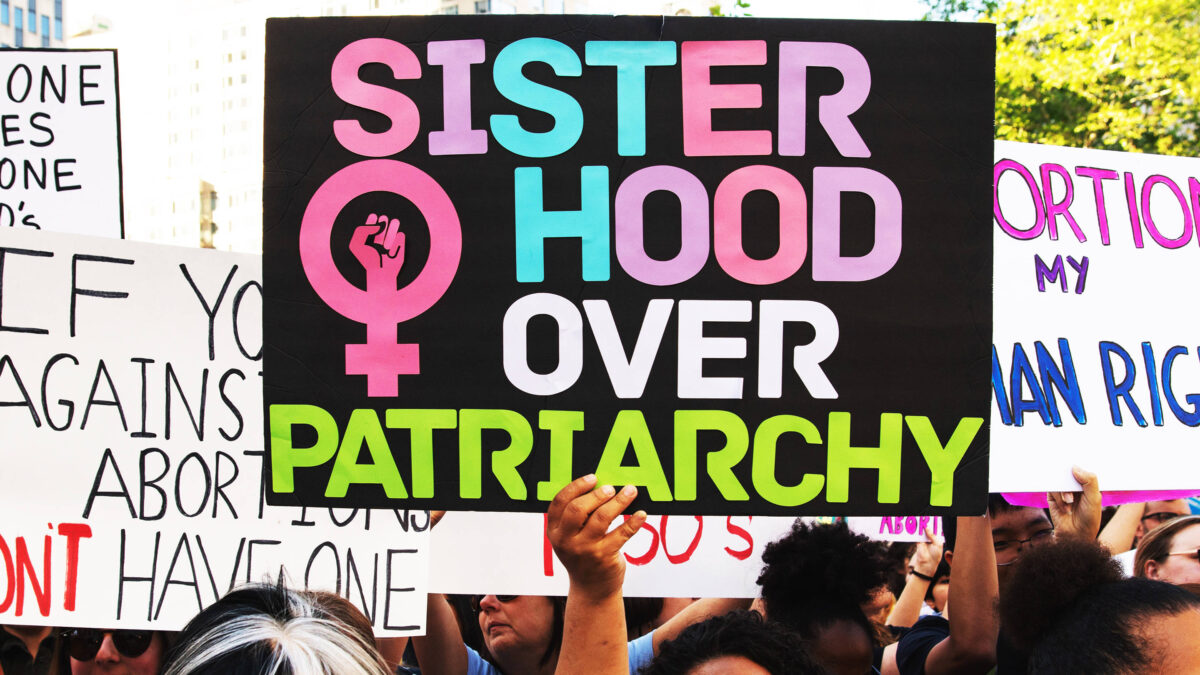
Amanda Kifferly has been working in abortion care for the past fifteen years, and is now the Vice President for Abortion Access at The Women’s Centers, an independent clinic providing women reproductive health care in five cities and townships. When the Alabama Senate passed a law calling for a near-total ban of abortion, including even in cases of rape and child sexual abuse, Kifferly says her organization received a flood of phone calls from people worried about when they could have an abortion.
“We just now had a call from a patient [in Alabama] who said, ‘I know I’m six weeks pregnant, and I have to make a decision, and I don’t know if I should just come in tomorrow, and I’m afraid I’m not going to get in next week, so should I just come in?’” Kifferly says. “Women are already feeling pressured to make a decision, and they’re trying to make that decision based off the law.”
Alyssa Milano, an actress and activist, called for women to launch a “sex strike” in protest of politicians in Georgia recently passing a “heartbeat” bill, which restricts abortion after six weeks of pregnancy. In this time period, most women don’t even know they’re pregnant, but anti-abortion advocates argue a “fetal heartbeat” can be detected. Scientists have proven the embryo does not yet have a heart at this point—the so-called “heartbeat” is actually just electrical activity in its developing cardiovascular system.
While Milano’s call made national headlines and generated awareness on the legislation, it also misrepresented sex strikes as an individual choice of not having sex in order to prevent unwanted pregnancies in an increasingly hostile climate. In the past, sex strikes have succeeded as collective action for women in a given community to pressure men into conceding to political demands.
In Pereira, a small city in Colombia, women forced men to disarm in a gang war that had resulted in the deaths of 480 people. The wives and girlfriends of these same gangsters organized to not have sex with the men until they laid down their arms. The strike was supported by the mayor’s office and led to disarmament and peace. Once the city with the highest murder rate in Colombia, Pereira’s violence declined by 26.5 percent.
“In the past, sex strikes have succeeded as collective action for women in a given community to pressure men into conceding to political demands.”
Similarly, women confronted a broken water system in Sirt, Turkey that deprived the 600-person village of regular running water. Tasked with the domestic labor of bringing water from another source that was miles away, a physically exhausting task for women who moved the water in large containers, they decided to strike by withholding sex from their husbands. The tactic resulted in the men of Sirt approaching the government to finally get the water system fixed.
Sex strikes are rooted in a history of radical community organizing, where sex and other domestic work are conceptualized as unpaid labor. By withdrawing gendered labor, women pressure men to make decisions that can better their lives. However, a call for a sex strike in the context of abortion sends the wrong message.
“I just feel like for too many years, our sexual pleasure has been used against us, so that isn’t something I want to use as a weapon,” Kifferly says. “I wish the statistic could just be bold enough for us to say, people have abortions, and it’s okay. And erase the shame and stigma from sexual experiences in general.”
Milano’s call didn’t account for women who become pregnant because of rape, and it failed to target communities with bargaining power for the sex strike but acted as a generalized call to all women. Oriaku Njoku, a patient advocate and founding member for Access Reproductive Health Care-Southeast, didn’t agree with the call but believes women and reproductive health care providers in the South facing the abortion ban need all the awareness they can get.
“With anyone who can raise awareness, my hope is that they’re leveraging whatever platform they have,” Njoku says. “And it’s definitely important for them to take their time to also contact groups on the ground, who are doing this work.”
Njoku is one of many reproductive health care providers mobilizing against the abortion ban in the South, and assisting people in need of abortions with community, support, and most importantly—the right information.
“The reality is that abortion is still legal in the United States of America, in all fifty states today,” Njoku says. “Even though these laws are being made, we need to fight for the ongoing rights and [support] the legal work that’s happening.”
Much of the advocacy for a person’s right to choose already exists on the local level, and materializes in protests and grassroots organizing. Njoku explains that her approach to organizing on abortion is intersectional, rooted in building relationships with the community in Atlanta, and designing places in which people can talk about abortion without embarrassment or fear of repercussion.
“There is a lot of fear around what is going to happen with this post-Roe reality. I’ve been trying to work creatively on how you can get to your local independent clinic, and how to access care,” Njoku says. “The encouraging part is while legislators are actively trying to build power over us, there are folks on the ground working together with independent abortion providers, and other community members who are trying to build power and make sure our needs are really being met.”
Kwajelyn Jackson, the executive director of Feminist Women’s Health Center in Atlanta, agrees and explained how the work reproductive health providers have been doing over the course of the past few years only gained momentum with the draconian abortion law. “We saw an incredible showing of support from our members, our volunteers, our patients, our doctors, our advocates during the legislative session in an attempt to stop this from happening before it reached the governor’s desk,” Jackson says. “But since it has been signed into law, these groups have not stopped working and meeting together, engaging our base, helping them to stay informed about all the next steps.”
As these anti-abortion laws inevitably go to the courts, Jackson suggests there are basic things the public can do to support those impacted by the law.
“I’d recommend folks who are living in states not currently under siege to invest in the organizations and clinics working in the states that are,” Jackson says. “Independent abortion providers as well as Planned Parenthood clinics are nonprofit organizations that need financial support and volunteers. I also recommend people give practical support like rides to their appointments, places to stay if they are traveling, and funds for food, child care, transportation. These things really provide the conduit through which people can get the care they need.”