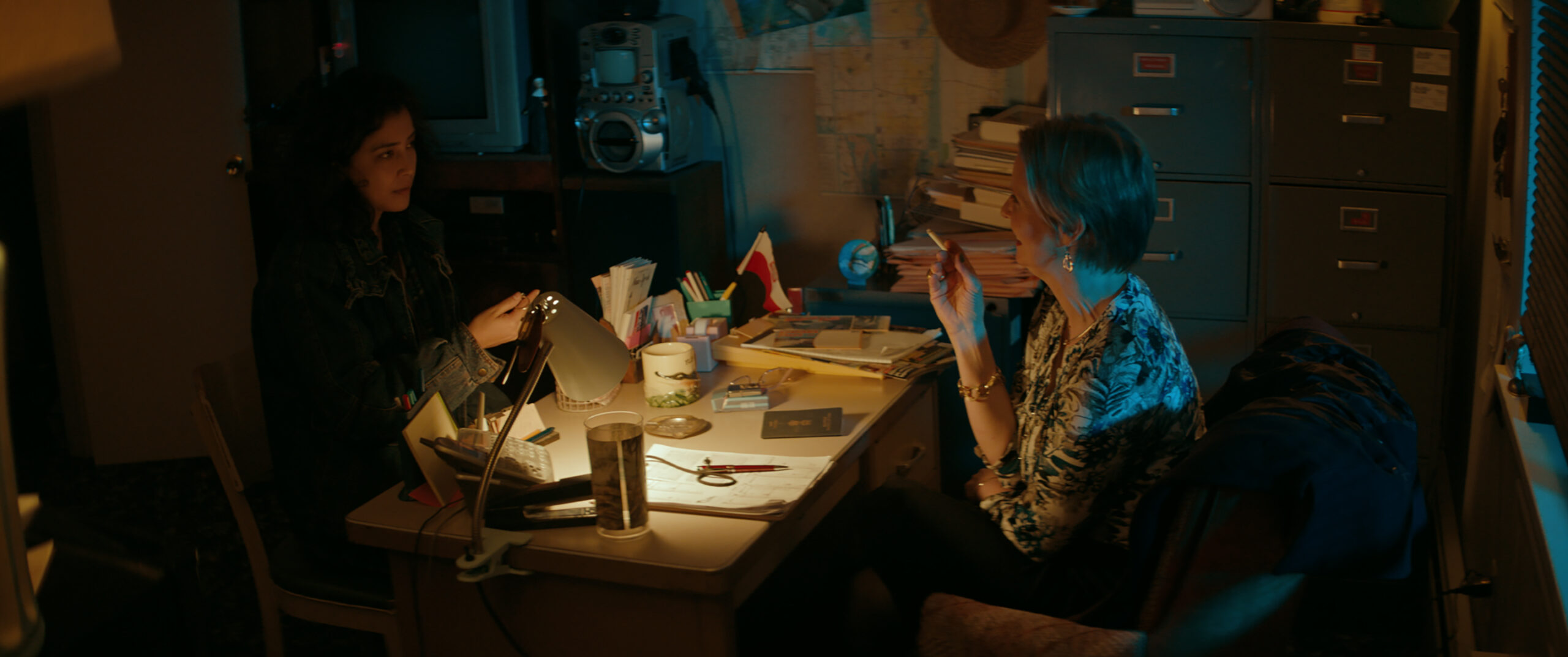
Cynthia Nixon Pierces the Veil on a Defunct American Dream
The award-winning actress and activist talks to Playboy about her latest project, *Stray Dolls,* and the dire straits of the U.S. working class—before the pandemic and now
When I call Cynthia Nixon at her home in New York, the state is in its sixth week of quarantine and Governor Andrew Cuomo has just met with President Trump to address the lack of funding for COVID-19 tests. Even though this is a press call for her upcoming indie project Stray Dolls, it’s impossible not to launch into our respective stay-at-home lives.
“I’m homeschooling, like so many parents around the world,” she tells me. “Homeschooling is now my middle name.”
In addition to keeping up with her nine-year-old son (he’s playing the role of Grandpa Joe in his classroom’s harrowing Zoom rendition of Charlie and the Chocolate Factory), the Emmy- and Tony-winning actress has been spending a lot of time thinking about her fellow New Yorkers. The pandemic has hit New York the hardest of any state in the country, with the number of confirmed cases nearing 200,000. As a former gubernatorial candidate who mounted a hotly contested challenge to Cuomo in 2018, Nixon doesn’t mince words when I ask how she would grade the governor’s response to the outbreak.
“I mean, hindsight is always 20/20, but I wish both our governor and our mayor had had a shelter-in-place earlier. I wish they’d closed schools a little earlier. That would’ve helped a lot,” she says.
“Having said that, I think that being on television, communicating with people at a time when there is so little coherent information and telling them the truth is very, very important,” she adds, referring to the governor’s daily coronavirus briefings that have become a much-needed counterweight to the bewildering statements coming from the White House.
An outspoken progressive activist, Nixon has been using her platform, before quarantine and now, to draw attention to the most vulnerable people in her state—immigrants, the homeless, the poor and the incarcerated. (Correctional facilities can be hotbeds of contagion.)
One of the things art does is take someone who is behaving terribly and show how you might act similarly if your circumstances were that dire.
Her career-long dedication to these issues explains her attraction to Stray Dolls, directed by Sonejuhi Sinha and released on VOD last month. Part Thelma and Louise–inspired queer love story, part immigration tale and part crime thriller, the film paints a stark portrait of the American dream’s underbelly. In it, Nixon takes on a unique role: a sympathetic villain named Una who’s a Polish emigre and owner of the seedy Poughkeepsie motel in which our characters toil and flail.
“She’s got a lot of ambiguity to her. She is ruthless in a certain way, but I love her because we see she’s not winning, right? She’s winning compared to some of the people she preys upon. But she’s in desperate straits herself,” says Nixon.
And then there’s the film’s heroine, Riz, played by Geetanjali Thapa. Riz is another immigrant, from India in her case, whose murky past and formidable sense of self-preservation go against Hollywood’s common characterization of South Asian women as docile and compliant. In the highly stratified pecking order of Una’s motel empire, Una’s race, legal status and time in America make her slightly better off than Riz, whom she hires as a cleaning woman. Una uses these small advantages to further exploit Riz and push her into a desperate life of crime. Riz’s Sisyphean attempts to stay afloat only push fantasies of social mobility further out of reach as the plot takes one hard left after another. Viewers can ditch any hope for a “bootstraps” story.
“This is a survivor, a person of tremendous resources who will choose to survive, even if it means breaking the law,” says Nixon of Riz. “Almost every person in the film behaves in a way that we would condemn, right? But I think one of the things art does is take someone who is behaving terribly and show how you might act similarly if your circumstances were that dire.”
The feeling of working-class despair is palpable in Stray Dolls. It permeates all the characters, driving them to actions that are difficult to watch. In one of the film’s opening scenes, a chain-smoking Una says to Riz, “You work hard, you make it here. You believe that?” One can’t tell if it’s meant to inspire or condescend.
The timing of the Stray Dolls release also stands as a stark reminder of how many people were already squeezed before the pandemic and are being shoved off the socioeconomic precipice now. More than 30 million Americans have filed for unemployment since mid-March, and the country is on track to experience its highest unemployment rate on record since the U.S. Bureau of Labor Statistics started collecting monthly data in 1948.
“This moment that we’re in, it’s not like anything I’ve ever seen or ever expect to see again. One of the things it does is lay bare all the cracks and fissures that were already there,” says Nixon, who has joined the call to cancel rent and mortgage payments during the quarantine. “People who have tons of money are doing just fine, and they’re even getting big handouts from the federal government to their companies, whether they need it or not. People who are living paycheck to paycheck, if they don’t work for a week, they can’t pay their rent.”
Many Americans received $1,200 coronavirus stimulus checks in April, an amount that will likely have to stretch impossibly far given how long some of us have been laid off, furloughed or working with reduced income. Although it’s clear to economists and policymakers that a one-time check won’t cut it for a months-long pandemic, Democrat-led efforts for additional payments are being stymied.
This moment that we’re in, it’s not like anything I’ve ever seen or ever expect to see again. One of the things it does is lay bare all the cracks and fissures that were already there.”
“What’s the alternative? It’s not something we can let just happen,” Nixon says.
Nixon was an ardent supporter of former presidential candidate Bernie Sanders, who was edged out of the race in April and whose platform centered on affordable health care and housing.
“That’s a whole other conversation, but I think if people hadn’t ganged up on him, he would have been the nominee and he would have defeated Trump. I really sincerely hope that Biden will be able to.”
As we end our conversation, Nixon brings up the importance of art like Stray Dolls at a time such as this. It can be escapist, yes, but it can also act as a mirror held up to society, exposing the mendacities and hypocrisies that result in calamity for an entire class of people. It can even ask us to agitate for a fairer world.
“So many of us are just trapped at home,” she says. “One of the things we do, other than cooking and cleaning and homeschooling, is turn on the TV. Stray Dolls is a really beautiful piece of art—a haunting story that stays with you.”
You May Also LIke
More From Playboy
Politics
A Warning Shot for Democracy This Juneteenth, just ahead of America's 250th, the stark disparity between the freedom promised and the freedom delivered is on full display.
Men’s College World Series is Set: UNC to Take On Oklahoma The Men's College World Series is set. The UNC Tar Heels will take on the Oklahoma Sooners. The Tar Heels have made it twice to the final before, but lost both. The Sooners have already won it twice.