Your bag is empty.
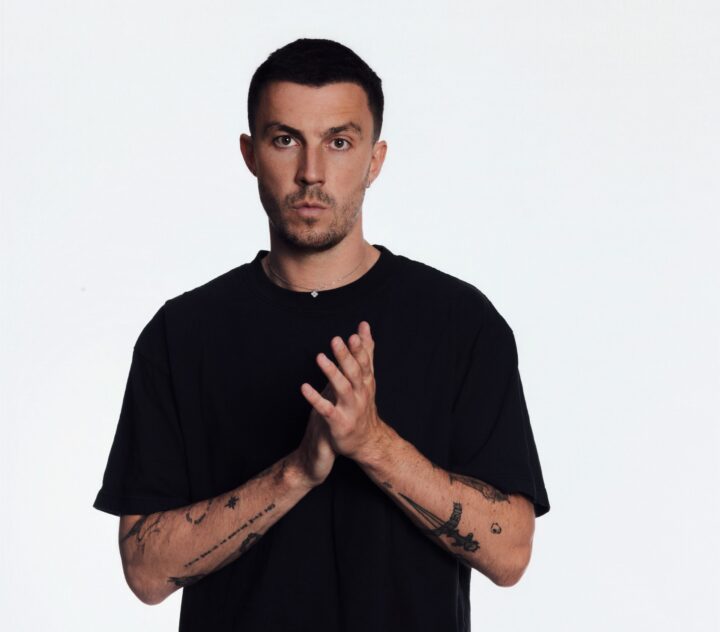
The artist Andrew Richardson doesn't. He sits down with Playboy to discuss his latest magazine—and why the world needs more adult content.

What does it mean to be a provocateur in a time where it seems every limit has already been pushed? This isn’t a question Andrew Richardson, the fashion stylist turned magazine-maker, asks himself. “It’s not a sort of a thing where I go, ‘today I want to be provocative,’” he says.
“I think what we do is pretty normal, but I’m sure that my parents wouldn’t agree with me.”
Richardson is the mind behind the self-titled magazine Richardson, now in its twelfth issue. With this magazine, the label of “provocateur” has often been thrust upon him — just about every profile of him mentions the word. And while he may not see himself as one, and though it may be a harder and harder term to evoke, Richardson Magazine still manages to get it done.
This latest issue, which was published in late 2025, was sponsored by PornHub and featured writing ranging from internet culture journalist Taylor Lorenz to Delicious Tacos. Pornstar Sky Bri appeared on the cover, with her interview conducted by Red Scare podcast hosts Anna Khachiyan and Dasha Nekrasova. Previous cover stars have included Kim Kardashian and Blac Chyna, among other familiar faces of the adult industry like Stoya. All this is to say: Richardson has always sat at a particular controversial niche, one enmeshed in a nebulous world of pornography, politics and pop culture. Last month, I sat down with Richardson via Zoom to discuss the process.
It’s partly a force of habit, and also because I come from a more visual background. It’s a shame that an image lives on social media for maybe 24 hours, and then it’s kind of gone. We’ve put on our social media very high quality images photographed by David Sims that have got as many likes as a snapshot that somebody took with an iPhone. And so in that realm, it’s where it gets redundant. But I think if you’re looking at a magazine, that’s kind of a reflection of the time it was made in, then there’s a certain amount of permanence about it. For what we publish in the way we publish, I think it’s, it’s appropriate and, and it’s effective. Publishing a physical magazine is a real pleasure. And I also think that the magazines are kind of coming back. I think that a lot of young people have sort of discovered the history of things through TikTok and through whatever it is, Instagram. You used to get a lot of boomers saying, like, ‘Oh, nobody knows their history.’ But actually, these young people now are interested in the history of music and culture.
People have certain beliefs, or a certain ideology based on what music you listen to, what you know, whatever it is. And I think that it’s almost like, if you like a certain type of music, you’ll dress a certain type of way, you’ll like a certain kind of architecture, you’ll be interested in certain kind of movies. There are sort of common threads and so those are the subcultures. I am excited to see it with Gen alpha. Friends of mine’s children, they’re telling me about stuff, and they’re talking about music that I was into when I was their age. And it almost seems that music cultures sort of have not stopped. But it’s the fact that these young people are really so influenced by music that was made so long ago. I mean, half the stuff you hear on Instagram is a clip from songs that were made 15 or 20 years ago, they were made by somebody in a basement in Berlin who didn’t really ever think about being rich. So there’s a sort of a reassessment of that kind of stuff. I think we’ve all gotten sick and tired of manufactured pop news. To a certain extent, there’s definitely a pushback against the sort of inevitability of manufactured culture.
Oh, God, I’m pretty anxious. I’m a bit of an anxiety addict to be honest. I think you’ve got to struggle and suffer. If you do that, if things are difficult, you get through them, then probably that’s an invaluable lesson. And for me, it’s probably a sign that you’re on the right track. I know there are other people who wouldn’t agree with that, but I’m Gen X. Does that answer your question?
Richard Avedon used to have this creative process called “the no will get you to the yes.” And so you have an idea, and if you can reject the idea, then you get rid of the idea. And if you get an idea that you can’t reject, then that’s what you do. So we [himself and editor Veronica Maldonado] talked a lot, and we thought “California.” I thought California was interesting, because I’ve lived here for about eight years, and kind of full time for about three years. And I really felt that there were so many stories about LA that you hear, like the fact that all the people at the Jet Propulsion Lab were into Alestair Crowley and the occult and, and then you go, “Well, does everybody know this story? Or am I the only one?” We were looking in California, and obviously there’s a big history of pornography here. When you start to take on a subject like California, you realize you can’t tell it. You can’t do everything. You kind of do the best you can.
There were all of these things that I observed living here or being here that I was interested in. I wanted to do an “AA map of the stars,” because a lot of celebrities are quite public about their recovery, and so I thought it’d be funny to do a Hollywood map of the stars, but to do it with different AA and AA meetings in LA and who would be there and when. But then I was dissuaded from doing that. It’s just a stupid imagination. You take all of the things that you didn’t do very well at school because you had certain kinds of proclivities, and if you’re lucky, they can become a superpower when you get to publish your own magazine.
They’re heavily invested in the right of somebody to be able to monetize their sexuality online. I’m not a spokesperson, but they’re cool. They’re open to trusting the zeitgeist in a way.
It’s on Europe. Today we’ve been thinking about a collaboration we may do with Pornhub around age verification and them blocking service to different regions in America and in Europe now, and 10 years ago, we did a collab with them where we had a t-shirt and it had flags on it, and the flags of countries that didn’t allow porn in them were blocked out. And now 10 years later, there are those countries that don’t allow pornography, and then there are new states and countries that have imposed age verification protocols, which are debatably ineffective. There’s this whole kind of dialogue around gaming and social media and pornography, the idea of age gating, and obviously it’s necessary, but there’s ways of doing it.
Something I’ve been thinking about recently is that as a young man growing up in in England, you know, in a kind of punk, post punk scene, the idea of progressive society was about having more of your private self allowed to exist in public. It seemed that in the sort of 60s and the early 70s, we sort of transcended some of those restrictions of the Victorian era. And now we’re sort of back in a situation where we are very concerned about what people think of us.
We’ve got more information, but we’re sort of more afraid to use it, or we’re more afraid to talk about it. And now we’re, it’s almost like a kind of Orwellian, kind of Brave New World, where there are all these codes and dog whistles. It’s quite oppressive. I’ve continued to do the magazine sporadically, I’m on the 12th, 13th issue since 1998. I don’t think I’ve ever really not published something because I was afraid that somebody would be offended, for better or worse If you live in the kind of public eye, or you have a social media or you’re somewhat public, then somebody’s not going to like you, somebody’s going to have something to say about you and and if you’re not careful, you’ll start to become enslaved to the opinions of others. You’ll be less inclined to do this or less inclined to do that. And unfortunately, I personally enjoy the thrill of being a bit naughty and being a bit transgressive. It sort of excites me. And then I maybe get a little bit of fear about it, but I’m generally excited by that kind of stuff.
It’s not a sort of a thing where I go, “today I want to be provocative.” You stumble across an idea, and that normally those ideas now are sort of born from being in and around this kind of a world and this sort of material for so long that it’s sort of not unusual to think about, to be thoughtful about this kind of stuff. We’re really trying to provoke. I think what we do is pretty normal, but I’m sure that my parents wouldn’t agree with me.
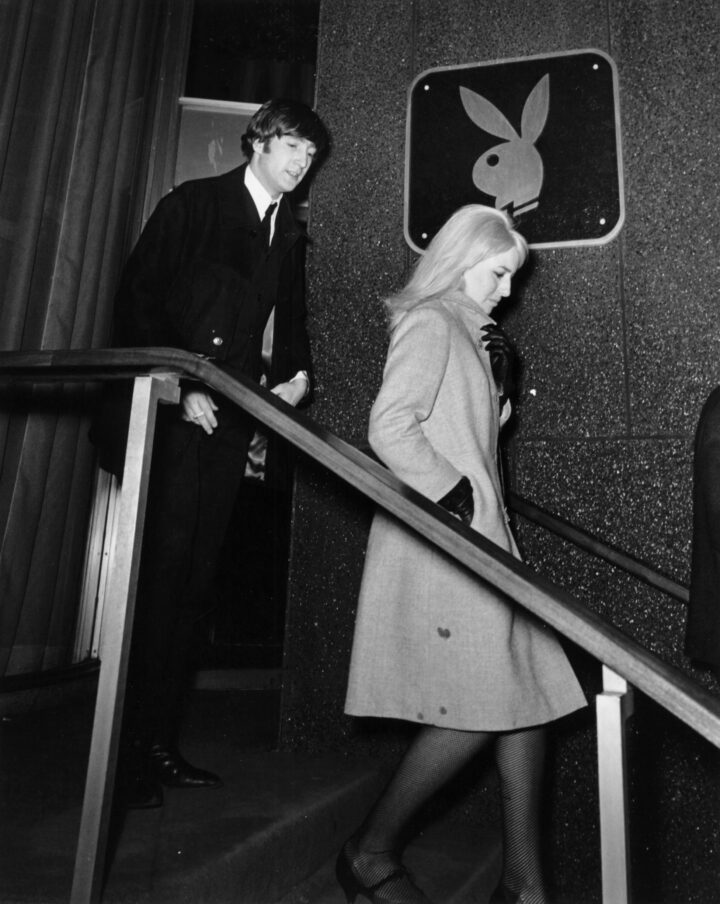
With Playboy, to be honest, when I talk about the magazine my inspirations, there’s a couple of things that I cite there. Playboy got these great thinkers on the left and the right discussing their opinions on whatever was happening at the time, and certainly civil rights and all that kind of stuff. There’s this sort of tradition, in a way, that “adult” doesn’t just mean pornography. By my definition, adult kind of means behaving like an adult and being able to have conversations like adults. I think we should be having conversations about what’s going on in the world around us. If you were an alien that came down to earth, and looking at the kind of social dynamics that exist today, it’d be very hard to know what to do. Part of the job of culture, art, cinema, music, publishing is to sort of unpack social characteristics, and give you contrary opinions and give you food for thought.