Your bag is empty.

In a Playboy exclusive, the journalist's report on the 1980 Honolulu Marathon is back in print this month with a new introduction by Natasha Lyonne.

In 1980, Hunter S. Thompson was lured out to Hawaii by Running magazine to cover the Honolulu Marathon — a “good chance for a vacation,” as his commissioning editor put it, with all expenses paid and an excellent fee. But as just about everyone who has ever heard the name Hunter S. Thompson knew, this would not be a straightforward sports story. Through his sweaty, frantic and pharmacological lens, and with the help of illustrations from longtime collaborator Ralph Steadman, Thompson turned it into a sprawling expedition through Hawaiian folklore, colonial history and the emerging culture of health-optimization — “body-nazis,” Thompson called them. As a coherent magazine feature, the story never quite worked due to his growing reliance on drugs and alcohol. His time in Hawaii was turned into The Curse of Lono, a 1983 book that oddly excerpted Mark Twain and The Last Voyage of Captain James Cook by Richard Hough. It was poorly received, with one critic at Kirkus Reviews concluding that Thompson was “just an occasionally amusing Haole and generally insufferable wise-ass.” An excerpt appeared in the December 1983 issue of Playboy, despite his editor struggling to piece it together and noting the degeneration of his work. It was later republished in 2005 with a limited run of only 1,000 copies signed by Steadman. Now, The Curse of Lono is back with a new reprint by Simon & Schuster, featuring a current introduction by actress Natasha Lyonne. It’s been 43 years since the book’s release, and more than 20 years since Thompson’s death in 2005, so The Curse of Lono feels now like a hidden shard of Thompson’s overall collection, warmed by nostalgia. Does he still read as occasionally amusing and generally insufferable? Absolutely. But anyone reading Thompson today loves him specifically for that.
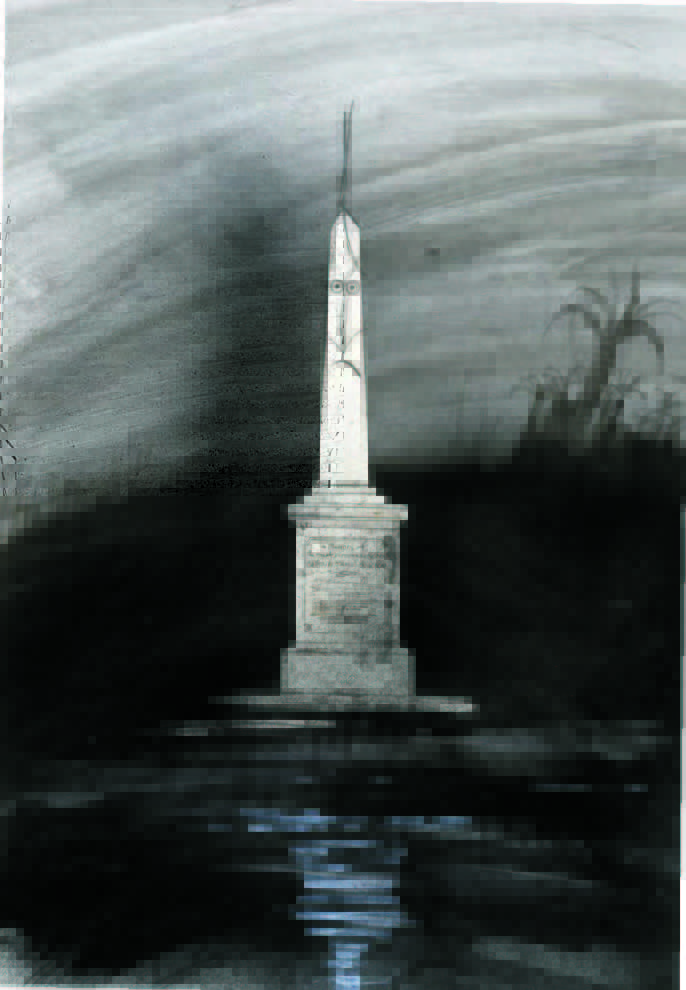
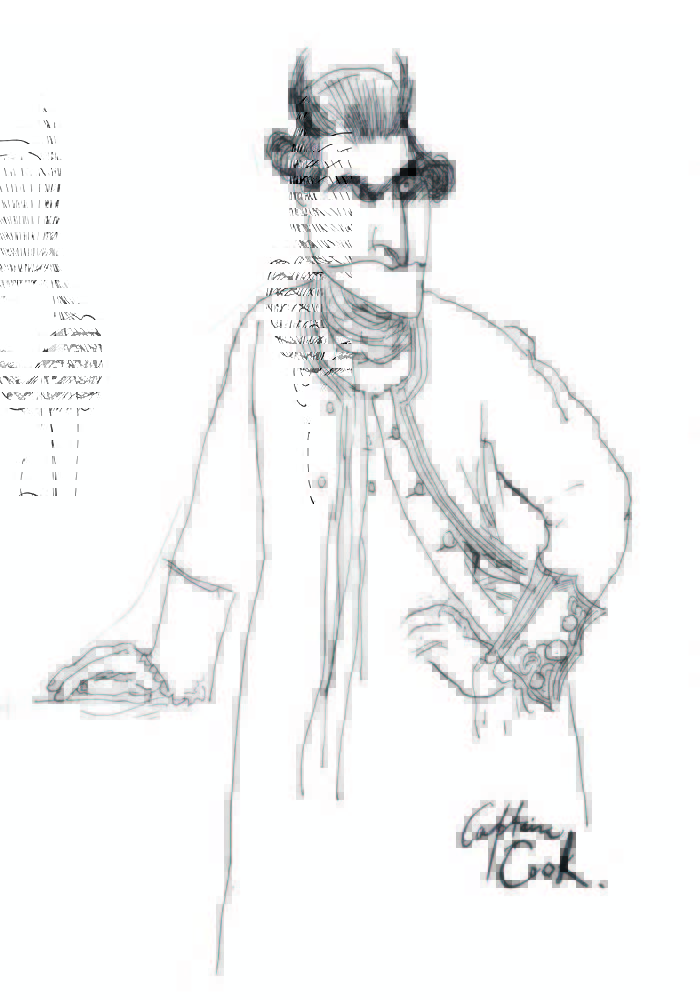
Below is Lyonne’s introduction, paired with a selection of Steadman’s original illustrations. The Curse of Lono is available on Oct. 20.

I was sixteen, taking time off from school to do a Woody Allen movie, with a tutor hellbent on giving me an intro to surrealism. It was the kind of education where everything bled together: books, films, mythology. I was grateful for it. I learned that chaos could have authorship. Or, at least, a mouthpiece.
Somewhere on that reading list, between Iceberg Slim and Hermann Hesse, was Hunter S. Thompson. The more I read of his work, the less he felt like a distant literary figure and more a frequency you could tune into if you were already inclined that way. I grew up in a city where you develop an antenna for chaos. You can tune it for survival, or you can yank it out of your skull and use it as a dowsing rod to point yourself toward the thing you probably should avoid. We both know what Hunter did with his. In those early days, it wasn’t that I wanted to mimic him so much as borrow permission: to treat life as material, to let it get messy and let it get close.
In The Curse of Lono, Hunter and Ralph were never there for the assignment, not really. The marathon was just a free flight. What they calibrated their antennae for was the slip: the moment when the story would collapse and something weirder would take over. When I’m asked about my own work, I often talk about a third space. A role, a production, a shared moment where we all agree it’s real and choose to live in it for a while. I like that space to be one of creation and humor—the kind of hard laughing that transports you off the sinking ship.
For Hunter, humor was often the prelude to disaster. That might be the truest form of journalism I can think of. Life, the whole setup, is surreal. The great cosmic joke is that no matter what we do, what we gain or lose, it all ends the same way. You have to make the joke before the floor falls out.
Hunter’s third space was a refuge from reality and the most concentrated version of it. There is an excess of life in this book—all his books. But you knew that already: your antenna brought you here. — Natasha Lyonne
Excerpted from THE CURSE OF LONO by Hunter S. Thompson. Copyright 2026 © by Simon & Schuster. Reprinted by permission of Simon & Schuster, an Imprint of Simon & Schuster, LLC