Your bag is empty.
Despite #MeToo and Time's Up, Gibson is slated to direct The Wild Bunch
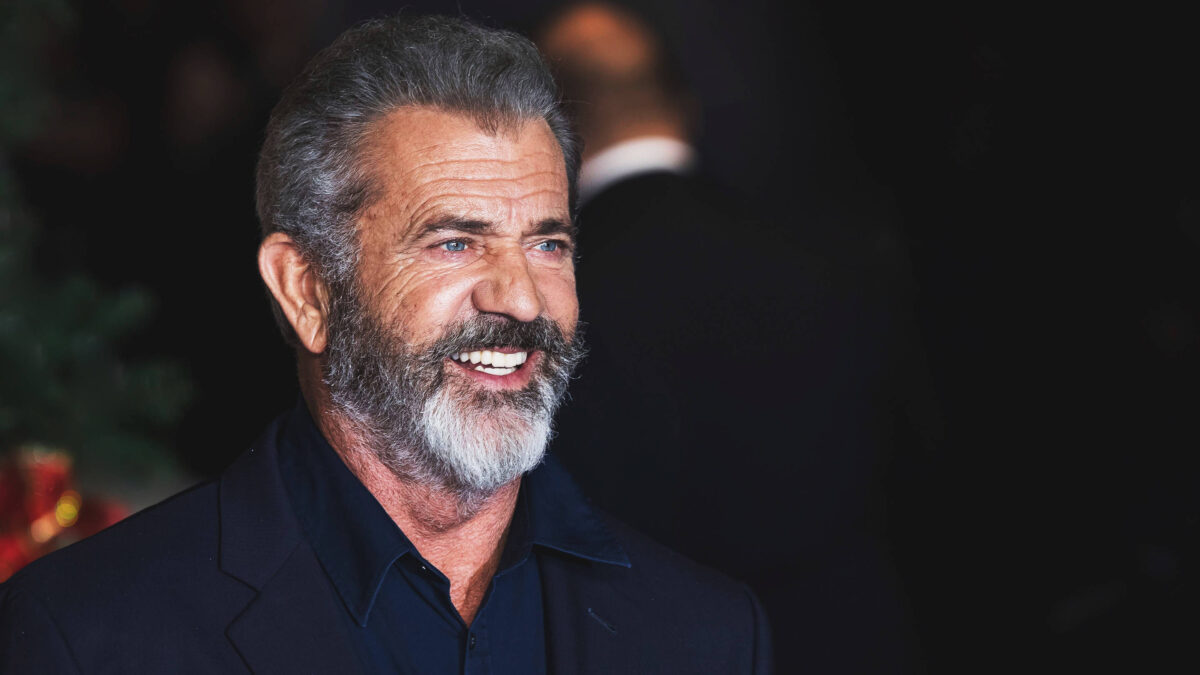
The announcement that Mel Gibson has been tasked by Warner Bros. to direct The Wild Bunch remake explicates a murkier side of Hollywood. It’s the side that lies beyond the #MeToo movement’s exposé of powerful hotshot’s and hasbeens’ frightful treatment of women summits over into racism and bigotry. We already know Hollywood hasn’t been giving a fuck about women, but where is the line? Why are so many decrepitly old, and innately average men forgiven for one single transgression let alone recidivism of offenses?
Gibson, once the quintessential ’80s and ’90s heartthrob, found himself in REAL hot water in the mid-naughts, when a slew of tapes depicting derogatory speech—and threats against women—were made public, scandal after scandal. He not only threatened to burn his ex-girlfriend Oksana Grigorieva’s house down, but also threatened rape, stating she’d “blow him first.” He told Grigorieva she “fucking deserved” to be punched in the face by him twice, while she had a child in her hands. He used multiple racial slurs, telling his ex, by her appearance alone, she’d be at fault for being “raped by a pack of n****s,” complained to Grigorieva about “wetbacks,” told a male police officer during a DUI arrest that “The Jews are responsible for all the wars in the world,” threatened to rip out the intestines of a New York Times journalist who scrutinized The Passion of the Christ and more, kill his dog. When asked by a Spanish newspaper what Gibson estimates of gay men, he mocked them—and then, when prompted for an apology by Playboy, said, “I’ll apologize when hell freezes over. They can fuck off.” Nice, normal guy here.
Gibson, after the bulk of recordings surfaced, went on a PR-stunt non-apology tour, and—you guessed it—never apologized. In speaking to Stephen Colbert on The Colbert Show in 2016, Colbert asked Gibson if he had any regrets, to which Gibson replied, “No. Not one.” That pretty much tells you all you need to know. Gibson concluded his temporary shunning from Hollywood sufficient punishment, and that he didn’t need to apologize—not for admittedly battering his girlfriend, spitting racial expletives, or for glaring homophobia. So… why the multiple chances? Because this is what you get when a man cast as a hero—a paternalistic figure in the fantasies we’ve imbued ourselves in over the decades—is accused of monstrosities.
It feels like a trick. The Wild Bunch was an iconic Western. The remake should demand adequate thought and consideration to engage a young, fresh audience who conceivably haven’t heard of the original. The deception lies in that, while Millenials came of age during Gibson’s misdeeds as they consistently made headline news, Gen Z unquestionably has no recollection of any of this. And worse, those born past 2000 won’t oppose or boycott this film or its director—maybe they’ve seen bits of Mad Max on cable television while spending quality time with Granddad, but they plausibly haven’t a clue who Mel Gibson is—or the slurs he’s been caught on tape yelling. That said, an old white man may feel it is Gibson’s time to redeem himself and won’t deem it important enough to disclose his past in order to discern if the citizens of 2018—who seem to honestly care about real shitbags getting uncanceled.
Amnesty of Gibson’s abuse, racism, bigotry and homophobia feels overshadowed by the characters Gibson’s played on screen.
We tend to be scrupulous about who we dismiss forever and who we allow back into our lives. Social media has definitely exacerbated this phenomenon; we now see celebrities as distant cousins rather than big-time stars, tracking them through news headlines and our feeds. Stranger, we tend to see older, paternal entertainers as extensions of our dads, uncles, or grandpas, and—if they were once childhood crushes—an individual too painful to let go of (and I mean for good), notwithstanding their obvious crimes and misconducts.
The generation above me, Gen X (born before the 1980s but after the Baby Boomers), essentially grew up with Gibson. They saw him as the heroic leather daddy in Mad Max, then as the sexy hero of the Lethal Weapon franchise, iconic 13th-century Scottish soldier William fucking Wallace in Braveheart, Franco Zeffirelli’s adaptation of Shakespeare’s Hamlet, the all-American Patriot of 1776, Helen Hunt’s lovable mind-reading doofus in What Women Want, and if you’re younger, like me, he was John Smith, Pocahontas‘ über-Aryan love interest in the animated 1995 film. More pressingly, Gibson voiced badass American Rocky Rhodes in Chicken Run, every 10-year-old girl’s claymation crush. There are countless more films Dad and Grandpa go fucking bonkers over; Tequila Sunrise, We Were Soldiers, Bird on a Wire, Signs. Gibson also, as discussed prior, directed The Passion of the Christ, so to many he’s responsible for bringing Christianity—furthermore Catholicism—to mainstream Hollywood. To many, this makes him a champion on its own; forget the other shit.
Amnesty of Gibson’s abuse, racism, bigotry and homophobia feels overshadowed by the characters Gibson’s played on screen. They’ve have knighted him as a hero, a savior, a protector. These characters—and Gibson’s ability to portray heroes—have, thus, protected him from prosecution ostensibly this entire time. He’s an actor you see as conceivably a fatherly or grandfatherly figure in his old age—someone you’re willing to pardon, because how could someone his age possibly be a threat anymore? And he’s not alone because the paternalization of actors and their symbolism as heroes and martyrs in films is shared by many other older, white male actors we’ve afforded mercy to, or have disregarded altogether. He’s in good company.
Russell Crowe made headlines for his racism (allegedly calling Azealia Banks, who—admit it—is omniscient, the N-word) and his rape jokes against actresses, in which he expressly referenced sodomizing a female co-star during an interview. His racism toward Banks wasn’t even the first time: In 2002, Crowe verbally harassed the New Zealand Warriors rugby league team in a London restaurant, loudly relating them to “coconuts” and “darkies.” Good news is the team beat his ass for this. Face it—the dude’s swine. I don’t care how much he looks like your dad. All of our dads look like Russell Crowe.
I can predict Spacey will sadly return from the shadows in a few years, in a film with a salvation story that will collect more than $100 in its first day.
And then we come to Bill Murray, who, for some reason, we collectively decline to address in a #MeToo capacity. Bill’s ex-wife, Jennifer Butler, divorced him in 2008, citing assault among her reasoning. What’d he do? He purportedly abused his wife on a number of occasions, on the gravest occurrence decking her in the face—this is becoming pretty formulaic, huh?—a night during which she’s stated she’s “lucky he didn’t kill her.” Here’s your king, Wes Anderson. Pick him up from the bar of old, quirky goofs and put him in the bin already. I guess canceling Murray means canceling all your favorite unbearably quirky, independent movies, so you won’t do it.
It’s intolerably selective and unethical treatment, considering Kevin Spacey got #MeToo’d so badly he literally broke records when Billionaire Boys Club tanked so severely at the box office, taking in just $126 on its opening night in the U.S. Maybe Murray has just been in the right time and place during Times Up, but I’m still perplexed why no one will do their research on him. The entire legal court complaint against good old Bill can be found right here. Look, I know you wish Murray would personally pull you into a movie screen and whisk you into some whimsical ass scenario where he stares at you in bed for way too long à laLost in Translation, but it’s never gonna happen, folks. Get over it. Your favorite eccentric is, allegedly, just as abusive as the men you actively work to cancel daily. You can’t cherry-pick here, I’m sorry.
And here’s how easy it is not to be outrageously selective: I was obsessed with Johnny Depp as a teenager. And I mean outright troubled. Beside my bedroom altar dedicated to River Phoenix (may he rest in peace), I had another altar for Depp. He was my everything. I masturbated to him, I emulated his poses in photoshoots with my friends, I utterly adored his bohemian style and attitude (which has become sad and desperate as he’s aged). I saw the first Pirates of the Caribbean 14 times in theaters and I saved every single ticket stub. I’ve seen every Depp movie (I possibly have several memorized), save those from the last few years, and that’s because it was so abjectly easy for me to believe he is no good.
Amber Heard said he battered and terrorized her, and as a survivor myself, I believe her. And let’s keep it going for the sake of patterns—he also is said to have hit Heard in the face with a phone. Because yes, it is formulaic. He’s trash. It was so easy for me to give him up. But it hasn’t been easy for others. Depp has been in every Gen Y’s Tim Burton fantasy. He’s Willy Wonka, Edward Scissorhands, the hot unavailable kid in John Water’s Crybaby, he’s Hunter S. Thompson’s self-projection in Fear and Loathing, he’s Sweeney Todd, he’s the hot cokehead in Blow, he’s the Corpse Bride’s… groom and he’s fucking Captain Jack Sparrow. Regardless of all of this, I didn’t even blink when I said goodbye.
But through his eccentric assemblage of characters, Depp portrays something distinctive to everyone who is a fan currently or once called themselves one—and his abuse has been hard for enthusiasts to reckon with, or believe, despite abundant amounts of evidence. And despite literally drawing on the wall in his own blood with the sole purpose of intimidating Amber Heard, he was still awarded huge roles, in the latest Pirates film, in Kenneth Branagh’s adaptation of Agatha Christie’s Murder on the Orient Express, in Fantastic Beasts and Where to Find Them (including the sequel that hasn’t premiered yet and is set to come out this year).
Even if not by my individual standards, Hollywood has absolved Depp, just like Gibson. Crowe has been forgiven, and Murray has never even been called out. With this knowledge, I can predict Spacey will sadly return from the shadows in a few years, in a film with a salvation story that will collect more than $100 in its first day. It’s only a matter of time because no matter how many times people call our famous men out in social media trials, airing their grievances—the antisemitism, the racism, the assault, the bloody finger-painting—if an old white man somewhat resembles your uncle, your dad, your grandpa, or more dangerously, you, the doors of Hollywood will surely swing open for them once again.
It’s almost like there’s no point in throwing up our arms in protest anymore when a canceled man reemerges, because when it’s a paternalistic figure who has played characters that resonate with you, building sweeping fantasies in your head of how said characters would treat you, and the adventures you’d get into with them (or the comfort they provide) it’s expected. Time, unfortunately, is not up for Gibson, or any of these men.