Your bag is empty.

According to Anand Giridharadas, money can’t fix a broken democracy when the checks are cut by the elite. Inside the journalist’s unexpected calling to fix a crumbling system, one speaking gig at a time
The e-mail that led to the speaking gig that led to the book deal that led to the mid-career-ish reinvention arrived in Anand Giridharadas’s in-box about four years ago, at the tail end of May. The Aspen Institute, a fantastically influential (and equally deep-pocketed) think tank, was planning its annual Action Forum—a place, as the institute’s website boasted, for “action-oriented leaders to come together, pause, reflect, refresh and recommit to doing their part to build a better world.” Several hundred people were expected to attend. Was Giridharadas interested in delivering the keynote address?
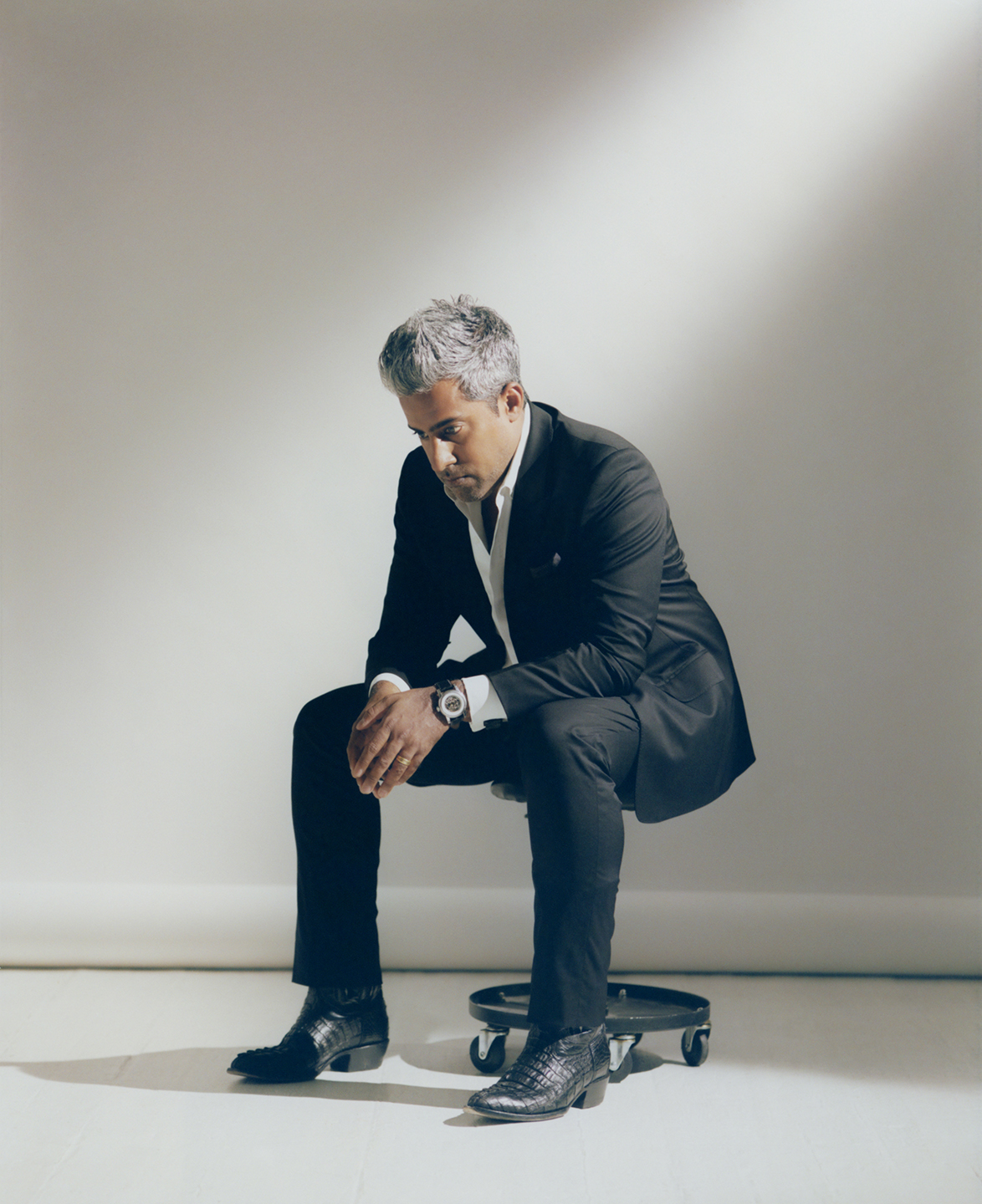
A former South Asia correspondent for The New York Times and the International Herald Tribune, Giridharadas had been involved with Aspen since 2011, when he was recruited as a fellow in the organization’s Global Leadership Network. Many summers he flew to the foothills of the Elk Mountains to take part in days of symposia and conversations about the biggest of “big ideas.” Poverty. Inequality. Migration. War. Peace. He collected rich and powerful friends and flew with them on private jets and dined with them at cliff-top mansions.
Initially, the whole experience was invigorating. But over time, a sense of skepticism set in. Unlike many of the other fellows, Giridharadas was not a professional philanthropist. He was certainly not an entrepreneur. (“Writing, if it is a business, isn’t a very good one,” he has said.) He was a journalist. His job was to question and poke holes in things. Although he admired the charity efforts of many Aspen attendees and donors—at both the corporate and individual levels—he was unnerved by what he increasingly viewed as high-level image laundering.
“It dawned on me that at Aspen we were sitting in the Koch Brothers Building, talking about making democracy better,” he tells me. “We’re talking about health, and we were doing it at events sponsored by Monsanto or Pepsi. Basically, the people who belonged to the institutions responsible for breaking the modern world were gathering each summer to talk about fixing the modern world.”
The organizers of the Action Forum proposed that Giridharadas deliver an address based on his 2015 TED Talk, which was based on his second book, The True American, about a hate crime in Texas and the (failed) efforts of one of the surviving victims to prevent a convicted killer from being executed. Giridharadas replied: He’d be happy to give a speech. It just might not be the speech Aspen was expecting.
As Giridharadas saw it, he was presented with a golden opportunity: the chance to voice his frustration—and engage in some blunt truth-telling—in front of the very people who, in his mind, needed to hear it most.
Everyone thinks ‘Winners Take All’ is about everyone else but them. I would bet a lot of white people reading Ta-Nehisi Coates’s book felt it was about all white people except themselves.
“I remember the pope had just delivered encyclicals on climate change and on capitalism,” he tells me, “and that gave me some extra courage, you know? I figured, That guy is risking assassination for saying the most unsayable things in our civilization as a leader of the most hierarchical big organization on earth. Surely I can give my trinket of a speech in Aspen.”
In late July 2015, he took the stage at Aspen’s Paepcke Auditorium. He wore a black dress shirt, the collar unfastened. His hair was combed into his usual impressive silver crest. “I was asked to speak to you today about forgiveness,” he began. In at least one important sense, he joked, he would stay true to that topic. “After I have spoken, I will need your forgiveness.”
He then launched into one of the most spectacular, outrageous addresses ever given at an Aspen gathering—a 30-minute diatribe that New York Times columnist David Brooks, an attendee, later described as “courageous and provocative.”
“We plainly live in a new Gilded Age, in which extraordinary changes in our economies and technologies have created, as revolutionary times always do, extreme winners and extreme losers,” Giridharadas said. The winners are doing great. But the losers “are watching their lives get worse day by day—sometimes, perhaps, so that ours can get better.”
Yes, Aspen existed to address these inequities, to “build a better world,” as the language on the website professed. But only on specific terms. “I call it the Aspen Consensus,” Giridharadas explained. “The Aspen Consensus, in a nutshell, is this: The winners of our age must be challenged to do more good. But never, ever tell them to do less harm. The Aspen Consensus holds that capitalism’s rough edges must be sanded and its surplus fruit shared, but the underlying system must never be questioned.”
He gave an example: a multimillion-dollar cash donation that allows “100 poor kids in the ghetto to learn how to code.” On the one hand, what a noble gesture! On the other, was the donation really dissimilar from the papal indulgences once purchased by wealthy elites in medieval times?
“The indulgence,” Giridharadas argued, “spares you from questions about the larger systems and structures you sustain that benefit you and punish others: weak banking regulations and labor laws; zoning rules that happen to keep the poor far from your neighborhood; porous safety nets; the enduring and unrepaired legacies of slavery and racial supremacy and caste systems.”
Near the end of the address, over rustles in the crowd, Giridharadas laid out a thesis statement. “Let’s just come out and say the thing you’re never supposed to say in Aspen: that many of the winners of our age are also contributors to the problems they bravely seek to solve. And for the greater good to prevail on any number of issues, some people will have to lose.” It did not escape the audience that the losers in that scenario were themselves. Or their closest friends. Or their family members. Or their colleagues and peers.
“That moment, in retrospect, was amazing,” Giridharadas tells me, “because there was a standing ovation, there were loud cheers, but when you looked a little closer at some of the people in the crowd—their eyes! Man, their eyes. They looked like they wanted to kill me.”
Like the pope, Giridharadas had said the unsayable, and he had said it loudly. As he exited the stage, a stranger grabbed his elbow and whispered two fierce words into his ear.
“¡Que cojones!” the woman said, grinning.
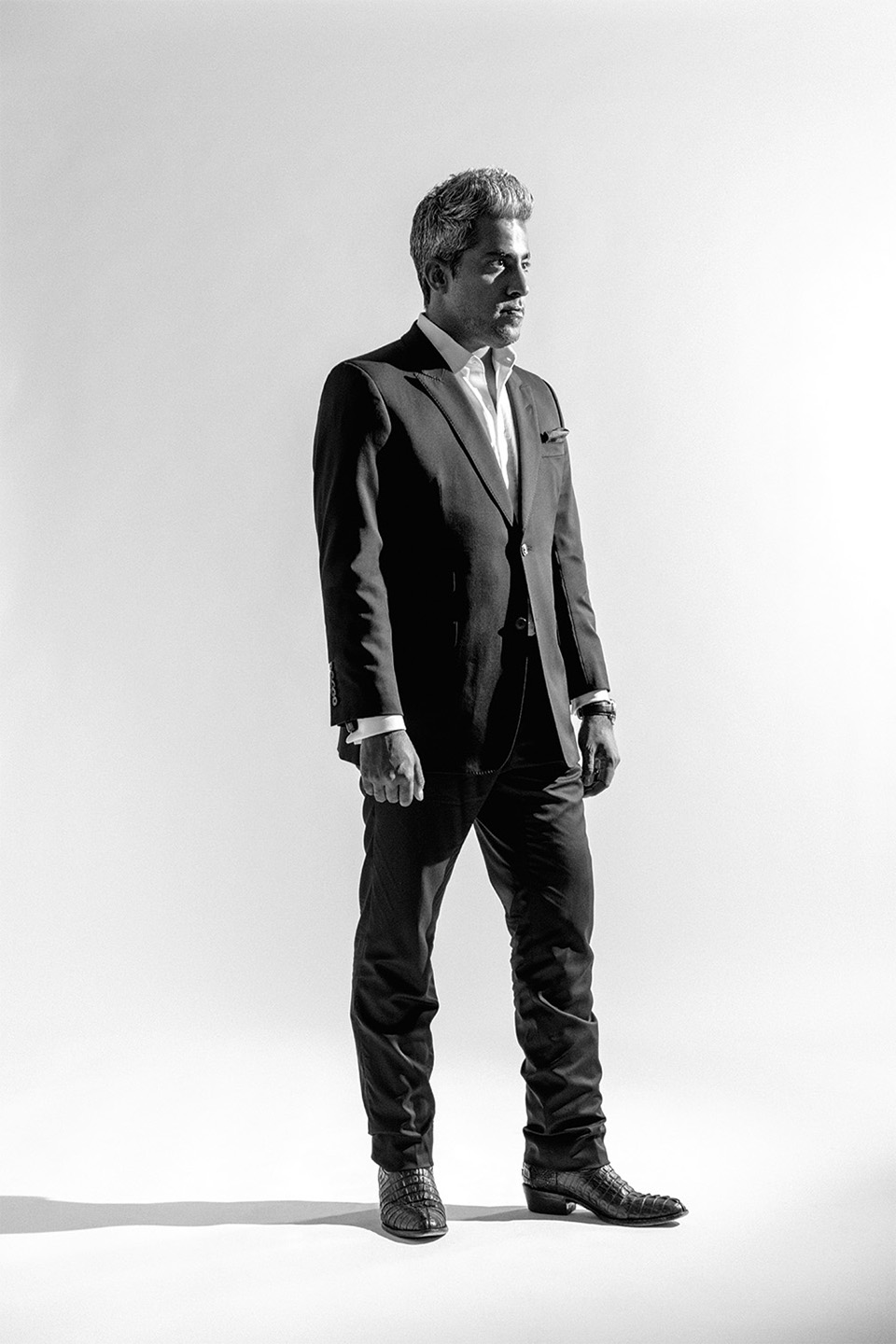
The most effective way to critique a system is to understand it, and oftentimes the best way to understand something is to have grown up within it, to speak its language fluently. Giridharadas is very much a product of privilege. He spent his teenage years in Chevy Chase, Maryland, one of the toniest suburbs of Washington, D.C. He went to Sidwell Friends School, the same Quaker academy attended by Chelsea Clinton and Sasha and Malia Obama. Many of his classmates came from families of those who “barnacle around official Washington: the PR people, the lobbyists, the lawyers,” he says.
Still, Giridharadas, whose mother was an art teacher and whose father was a consultant at McKinsey and an executive at Capital One, was a limit-pusher—a “flamethrower” from the start. “I was a difficult kid,” he admits. “My mom always jokes that she’s relieved I’m now taking it out on the richest and most powerful people on earth, rather than her.”
In his senior year at Sidwell, Giridharadas and a close friend, Tory Newmyer (now an economics reporter with The Washington Post), edited the school paper with “the idea that we were Woodward and Bernstein.” When they put together a feature on a cheating scandal at the school, the Sidwell administration prevented the issue from being printed.
“We pulled the story because we had to, but we printed a front page that read ‘For an explanation of why this front page is blank, turn to the editorial on page two,’ ” he recalls. “And then we wrote this editorial about censorship and free speech. Depending on your perspective, it was either extremely moving or extremely self-important and vomitous. Albert Camus was definitely quoted.”
Sidwell has a strong track record of getting its students into the Ivies, but Giridharadas had middling grades. Harvard and Columbia turned him down, as did six other top schools. His lone acceptance letter came from the University of Michigan in Ann Arbor, where he decided to major in history with an emphasis on politics. Throughout college, he attempted to break into journalism. As a teenager he’d had an internship at The New York Times, and during his later college years he approached then Washington, D.C. bureau chief Jill Abramson, one of his mentors, for advice.
Abramson, in his recollection, suggested he “get out into the world” to give himself an education in a particular culture or discipline and use the experience to inform his reporting. It was fantastically good advice, Giridharadas tells me. “Real writing,” he says, “comes with some kind of collision with the unfamiliar. And being a kind of careerist kid in Washington wasn’t going to supply that magic.”
He worked as a consultant for McKinsey in India, the country of his parents’ birth, for a year, making about $14,000. (“I applied for an Indian position and got an Indian salary,” he says.) Then a reporting job opened up in the India bureau of the International Herald Tribune, a paper owned by the New York Times Company. Against his expectations, he got it. Soon, he was crisscrossing India as a foreign correspondent, covering the booming economy and the ways it was transforming a society thousands of years old. That reporting became the basis of his first book, India Calling: An Intimate Portrait of a Nation’s Remaking, published in 2011. A few years later, back in the U.S. and working from Brooklyn as a columnist for The New York Times, he published The True American. Both were admired by critics, if not exactly universally read.
Between finishing India Calling and starting The True American, Giridharadas had briefly attended a political science doctoral program at Harvard. With his background, he knew he could find a decent job in public policy, perhaps at a think tank or in the government. He might also have simply continued writing articles and books. Then he gave his March 2015 TED Talk tied to The True American, which became a turning point.
Viewed nearly 1.5 million times, the speech, which Giridharadas delivered after working with a professional acting coach supplied by TED, reached far more people than his writing usually did. It showed him what might be possible if he moved away from being a writer sequestered at a desk to the forefront of conversation and debate.
“I would have loved to live in an era in which the writing spoke for itself and you could just do the book and drop it and go back to your cave,” he tells me. “But we don’t live in that age. A book’s a powerful tool, right? It’s also a very limited one.”
If the reception to the TED Talk had surprised him, it was nothing compared with the reaction to his keynote address at the Action Forum four months later.
“I’ve been lucky to have a few moments in my career, three or four maybe, where I feel like I’ve written something that everybody has read,” he says. “This was one of those times.”
Two days after the Aspen address, David Brooks devoted a column to its contents. “Anand’s speech struck me as deeply patriotic in its passion and concern,” he wrote. Soon, Giridharadas had uploaded the text to Medium, where it went viral. By that time, his previous agent had gone back to publishing and he had signed with Lynn Nesbit, a legendary force in the book business who represents such superstars as Robert Caro and Joan Didion.
“I remember Lynn said, ‘This is your next book.’ I was like, ‘Maybe. I don’t know.’ And she was like, ‘Trust me. I’ve been around a long time, and the world is telling you something. This is a resonant topic. This is your next book,’ ” he says.
Nesbit was right. Released by Knopf last year, Winners Take All: The Elite Charade of Changing the World climbed best-seller lists, selling more copies than Giridharadas’s two previous books combined. Essentially a reported version of his Aspen speech, Winners Take All uses encapsulated profiles to bolster its case. Bill Clinton is needled for trading an insistence that government is best equipped to level the societal playing field for an embrace of privately funded NGOs (shepherded by “world-traveling elites”). Meanwhile, Darren Walker, president of the Ford Foundation, is praised for his “taboo”-busting insistence on talking—publicly and in detail—about how the wealth of the current generation of philanthropists was made, whether through drugs (the Sacklers) or diabetes-inducing junk food.
“Are we ready to hand over our future to the elite, one supposedly world-changing initiative at a time? Are we ready to call participatory democracy a failure and to declare these other, private forms of change-making the new way forward?” Giridharadas asks. “Or is meaningful democracy, in which we all potentially have a voice, worth fighting for?”
He’s outspoken in a way that can help.
In the year and change since the release of Winners Take All, Giridharadas has been on the road nearly constantly, speaking at book fairs and political conferences but also in venues where one would expect him to be very much unwelcome. Think Google or Harvard Business School, that bastion of big capitalism and the launching point for many a well-compensated career in consultancy. Videos of some of these engagements have become social media sensations. At Google, for example, Giridharadas suggested to his audience that it may be better for society if the internet giant were dismantled.
This spring, over lunch in Atlanta, where Giridharadas was slated to give a talk to a local philanthropic group, I wondered—given his track record—why companies like Google keep paying him to speak to their employees.
“I’ll give you two theories,” he says, laughing. “First theory is that everyone thinks Winners Take All is about everyone else but them.” In other words, a bigwig at Google was comfortable having him around because said bigwig believed Giridharadas was indicting someone else altogether, someone far more explicitly wicked. “I would bet a lot of white people reading Ta-Nehisi Coates’s book felt it was about all white people except themselves,” Giridharadas says.
Second theory: A certain subset of powerful individuals has the self-awareness to withstand a challenge. They enjoy the debate. “They see the book as a tool to look at themselves,” Giridharadas theorizes, “which is not to say they agree with me on everything. Trust me, they don’t. They typically disagree on points like the government being any kind of solution to the kinds of problems I raised. But, to the credit of many of the people I’m indicting, a bunch of people chose to plead to the indictment and show up in court and have the proceedings.”
Winners Take All “has caused great waves in big philanthropy—this notion that some of us need to take a good look in the mirror,” the venture capitalist Freada Kapor Klein tells me.
“Achieving real change is something Mitch [her husband] and I have been trying to do for a while, and we had such a sense of vindication reading Anand’s book,” adds Kapor Klein, who founded the nonprofit STEM education initiative SMASH. “He’s being truthful, being outspoken in a way that can really help.”
When I reach out to Craig Newmark, founder of Craigslist and head of Craig Newmark Philanthropies, he says something similar. Winners Take All, Newmark tells me over e-mail, “reminds me of my values, like ‘take less and give more,’ and that a person should measure their wealth by how much they give away.”
In recent weeks, Giridharadas, a newly minted editor at large at Time magazine and commentator for MSNBC and NBC News, has trained much of his attention on the upcoming presidential campaign, penning a lengthy profile of Bernie Sanders and decrying the chaotic, calamitous nature of the Trump presidency on Morning Joe. To Giridharadas, this kind of work is not a departure from what he set out to do in Winners Take All but a logical extension. The book, he tells me, “provides a good filter for viewing” the candidates seeking to oust Trump: the ones like Sanders and Elizabeth Warren, who understand that true equality will require the rich to give up more than they’d like, and the politicians like Joe Biden, who believe, as Giridharadas puts it, that “we can pull up the disadvantaged while also helping those at the top prosper even more.”
The election of a figure from the former group, he argues, could result in real change. The alternative is not encouraging. “I think what would happen is a substantial percentage of what is disastrous about this country would indeed go away,” he says. “There won’t be gulags at the border, there won’t be ‘Muslim bans.’ But all the deeper elements of the disease that made Trump possible will remain in place. Super-wealthy people will retain a monopoly on the fruits of the future, and yes, we will keep getting Trump-like figures.”
It’s getting late. Giridharadas has to change out of his T-shirt and jeans and into a suit to deliver his next reality check. By all reasonable standards, he should be exhausted. He flew from an event in England last night, and he’s flying to New York in the morning. But the prospect of today’s event seems to energize him. It brings him to life. He relishes the idea of getting back onstage and laying into the rich and powerful in front of a fresh group of listeners.
“There’s this concept, especially in the business world, that criticism itself has been discredited, that it’s not effective,” he tells me before leaving. “But criticism, I think, can be incredibly productive. It stops us from listening to the wrong people. It helps us see people we thought were prophets as crooks. And once that’s done, a whole lot becomes possible.”