Your bag is empty.

The 'Game of Thrones' and 'Oz' actor tells Playboy about his haunting childhood serving as the basis for his directorial debut

Coming-of-age films centered around the black male experience often delve a lot deeper than mainstream rites-of-passage tales that entertainingly revisit the awkward and anguished “first times” of adolescent lives. Movies from Boyz n the Hood to Juice to Moonlight also probed those same themes but under the lens of race, identity and the search for manhood in racist backdrops. That’s what makes the stunning directorial debut by actor Adewale Akinnuoye-Agbaje so jarringly startling.
His autobiographical film, Farming, which he also wrote, produced and co-stars in, tells the story of a British Nigerian teenager in 1980s England whose intense search for love and acceptance, plus personal self-loathing, is so suffocating he joins a white, skinhead gang. In the film, a teenage Enitan played by Damson Idris is equally humiliated and demoralized by his skinhead brethren, all while terrorizing his own black countrymen. Scenes depicting a young Enitan (Zephan Amissah) attempting to erase and whiten his blackness and later absorbing a tsunami of “coon” taunts all add to the disturbingly powerful and haunting piece of filmmaking. But I admit to Akinnuoye-Agbaje that as a Nigerian-American woman, it was a very tough movie to watch.

“If you have a pure and bleeding heart, it would be a difficult film to watch. I would be worried if it was not a difficult watch for you,” Akinnuoye-Agbaje tells PLAYBOY. “Whether it’s the self-hatred, the tension between the two races that can impact a human being or the true impact of our words and actions on the human psyche.”
So, how did the man who made his onscreen debut in the 1993 Mary J. Blige classic “Love No Limit” video short, who was the object of Mary’s desire in the clip and many multicultural female fans around the world (at the height and celebration of ’90s mainstream hip-hop and black culture) not see his own beauty and self-worth as a youth? To fully answer that question, you must first understand how the seeds of such extreme self-hatred could be planted.
“Farming” was the term given to the 1960s and ’70s English practice of working or studying Nigerian parents paying white British families to informally foster their children. “It was done with the idea that once [the Nigerian parents] had become educated and saved enough money, they would then collect their children and return back to their native home of Nigeria,” explains Akinnuoye-Agbaje.
The informal fostering practice of farming continued for over 30 years in England before formally ending in the 2000s. But for the children who survived it, it proved to be a Band-Aid solution that once ripped off, left near-fatal emotional wounds. As the film Farming depicts, Akinnuoye-Agbaje was raised in Tilbury, Essex, an English community “where they’ve never seen blacks” and the Africans present were regularly subjected to racist taunts and violence. His white foster mother and caregiver who nurtured him from six weeks of age “would use joking racial slurs” in front of him. He immediately excuses his early environment: “Those are your parents,” Akinnuoye-Agbaje says. “It’s nurture over nature, and it’s all that you know.” But then at 11 years old, he was abruptly plucked from that existence, spontaneously introduced to his Nigerian birth parents and taken back “home.”
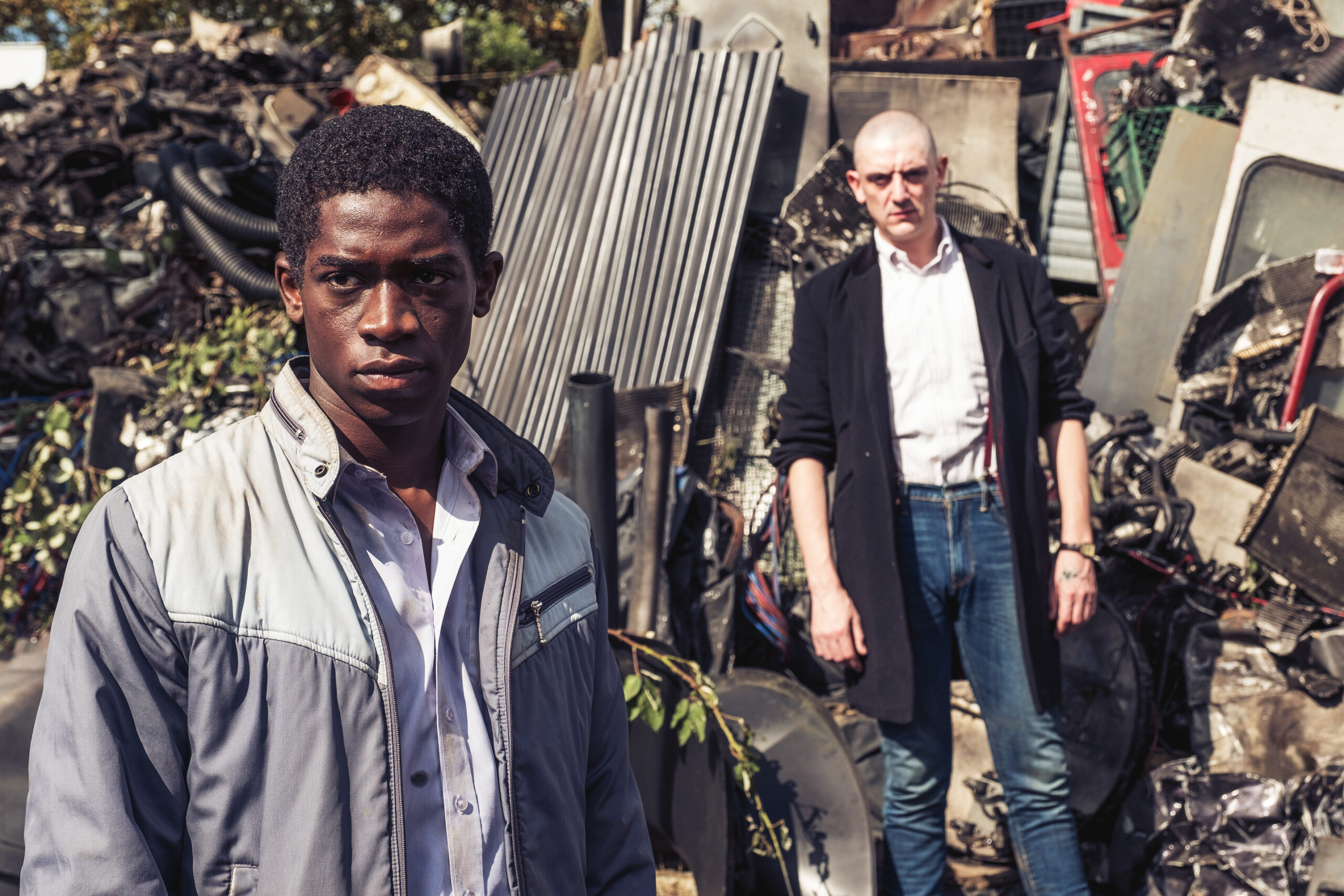
Some of Farming’s most heartbreaking scenes are when the young Enitan is transplanted back to his family’s country of Nigeria and is literally a cultural foreigner in his own homeland. “Thrust into an environment that is totally alien to you—the language, the heat, the food. I’ve been told this is my [birth] mom. But I don’t speak her language, and I don’t know her,” remembers Akinnuoye-Agbaje. “It was hugely traumatic for me as a child, and overwhelming to the point where I withdrew within myself and stopped talking. That’s what got me sent me back [to England]—they felt I would assimilate better if I returned to my foster parents.”
It was that fracture in the relationships between both sets of parents—plus the disconnect he felt from his own culture and that bleeding need for self-acceptance—which caused him to implode. He rejected his identity as a Black African man. “You were never able to form trusting bonds or connections,” he adds. “You were so afraid it was going to be broken, so it made you become introverted and self-reliant.” But Akinnuoye-Agbaje believes the overarching themes of the film resonate much broader and more universal than just his own personal experiences.
“Of course, it’s about identity, acceptance and the quest that we all have as human beings—a search for belonging. I think it’s particularly relative in today’s society. On a micro level, Farming is about a young Nigerian boy placed in a hostile environment trying to find a sense of belonging and acceptance where he’s rejected,” he says. “But it’s all about identity and wanting to belong. Whether it’s a geographical space, a community or just being accepted for who you are and validated as a human being. Farming speaks to all of these things. People, whether they’re black or white, can relate to that.”
This movie shows that you can always overcome being belittled and subjugated.
In the film, Gugu Mbatha-Raw portrays Ms. Dapo, Enitan’s biracial teacher who helps him save himself. But in real life, once the pain and torture of Akinnuoye-Agbaje’s teenage days hit dangerous lows, his Nigerian parents created a rescue network of resources that guided him in reclaiming his life.
“I had tutors, social workers and there were a couple of students who befriended me—a Black female and a Black male who were really instrumental in helping me make the transition. Number one, in understanding and appreciating myself as a black man,” says Akinnuoye-Agbaje. “And number two was self-worth. Study was key for me, and the passing of my first exam. I only got a C, but it was a life-altering experience. I never thought I could do anything. But I realized if I applied myself with focus and dedication, I could do something. I used that template throughout my life for the success [I found] in fashion, acting, writing and now directing.”
In the three decades post his own coming of age, Akinnuoye-Agbaje, who speaks five languages and earned his law degree, “was able to reconcile relationships with both my foster parents and my Nigerian parents.” He also enjoyed success as a model in Milan before carving out a very impressive career as an actor in Hollywood. Over the past 25 years, Akinnuoye-Agbaje portrayed “layered characters” on TV like Mr. Eko in Lost and Adebisi in Oz, plus had memorable film turns in Suicide Squad, Concussion and Get Rich or Die Tryin’. He credits his devout Buddhist faith with spiritually guiding his life. When I suggest filming Farming served as an extended catharsis for any unrest residue of his youth, Akinnuoye-Agbaje agrees. He believes the surreal process proved to be additionally healing for him an artist, man and human being.
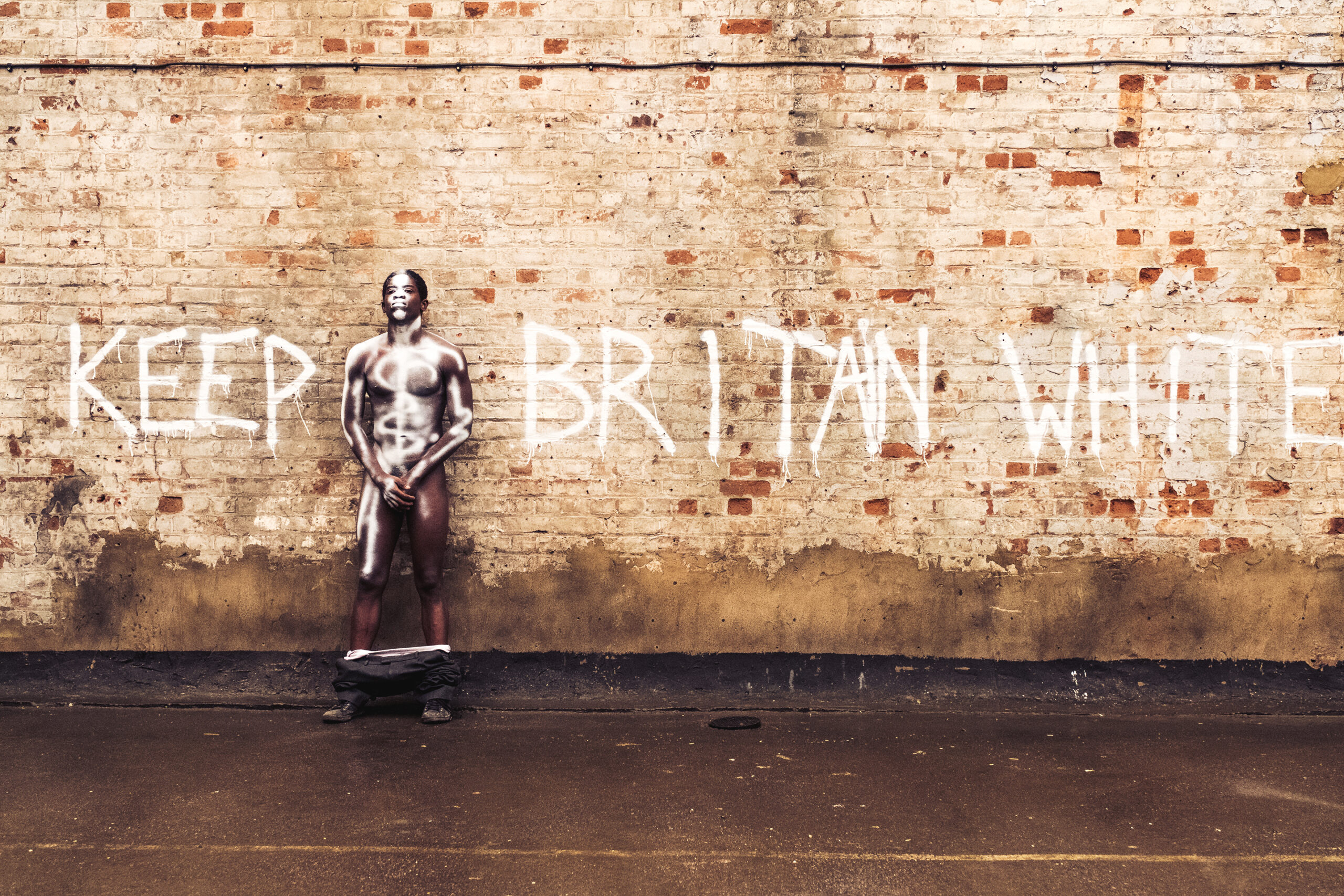
“I recall stepping on the set and not being prepared for the well of emotion that it evoked,” he remembers about shooting the film that took 15 years to make. “Once I imparted that emotion to Damson [Idris], he got it, but I had to actually relive the emotion with him to get where I wanted him to go. Things like that were tough. It’s par for the course when you’re doing a biography. But it doesn’t make it any easier.”
Ultimately, Farming represents the absolute freedom for Akinnuoye-Agbaje to tell his own story and share it with audiences. It was a full and complete experience for this Renaissance man who even produced and wrote most of the ’80s-era dub-styled soundtrack. “When I saw my actors on set, it was just this overwhelming sense of accomplishment … to have your team rallying around to manifest your vision. There’s a great joy to that as an artist,” says Akinnuoye-Agbaje. “This movie shows that you can always overcome being belittled and subjugated. You can find self-worth, self-love, succeed and become happy. The overarching message I would like people to take away from the movie is that it’s one of hope.”