Your bag is empty.
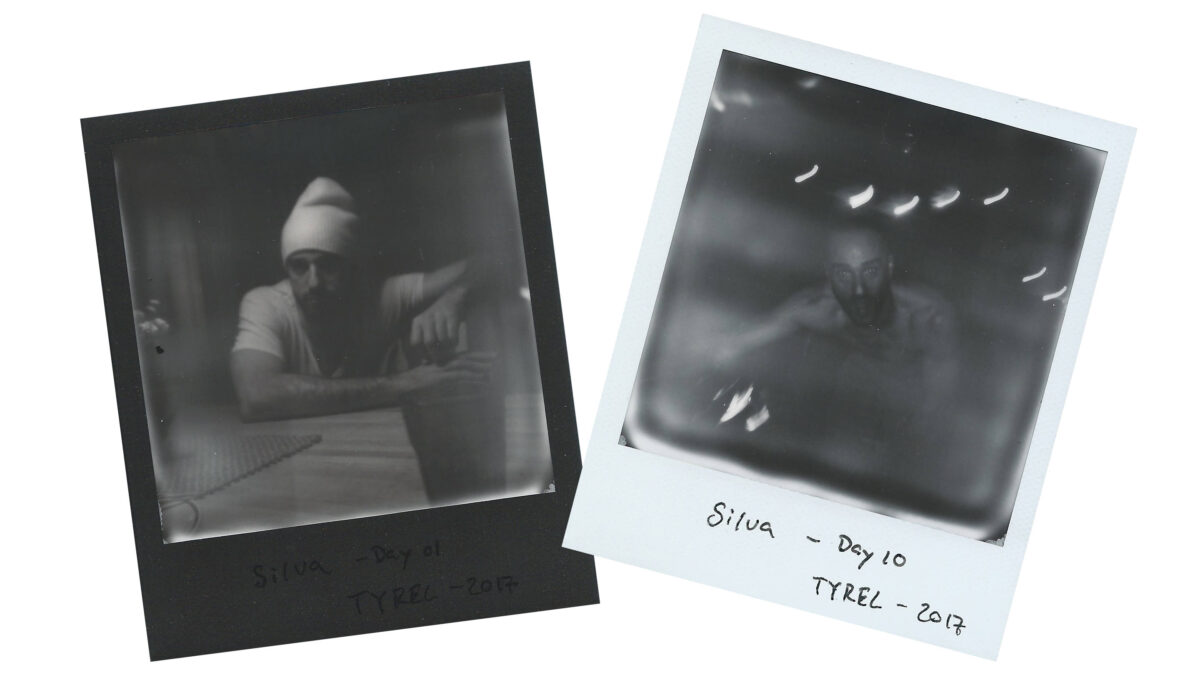
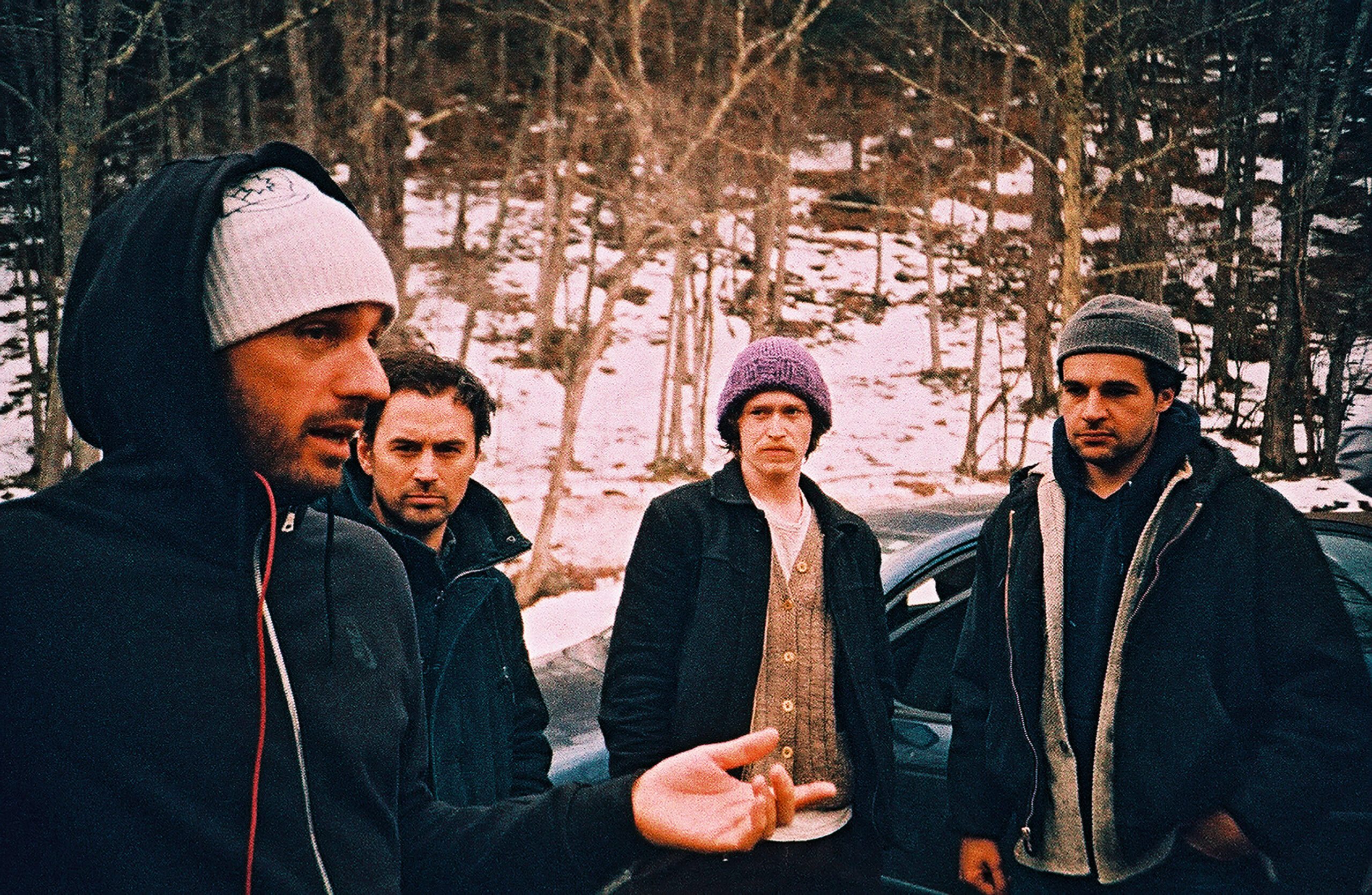
Playboy interviews director Sebastián Silva about his latest feature, 'Tyrel'
Since Tyrel premiered at Sundance earlier this year, wowed audiences have been likening it to another breakout independent film: Get Out. The film, which opens this week, also centers on a sole black man, Tyrel (Jason Mitchell) on a weekend away with all white people. The story may be rooted in similar themes, but approaches them with a different lens—one more interested in mining micro-aggressioned than venturing into the land of horror. What’s similar, though, between this quietly provocative film from OG indie director Sebastián Silva (Nasty Baby, Crystal Fairy) and Get Out is that they tap into stories confronting race, societal structure and alienation in a way more filmmakers should be doing as fearlessly.
Tyrel finds its focused portrait on Tyler, a young man whose alienation becomes increasingly exacerbated during his trip to the Catskills for a drunken birthday celebration. Surrounded by bros who shove beers in his face and make him put on a “black voice” (all in “good fun”), Tyler’s uneasiness spirals. As night comes on, the buried racial and societal aggression that arises in these types of social situations surface.
What’s most impressive about Silva’s filmmaking is how it diverts expectations, keeping its audience connected with its main subject—consistently uncomfortable and intoxicated through the handheld, yet pristine, choices from cinematographer Alexis Zabe (The Florida Project). Silva also has a knack for casting and packing loud personalities into the house that increase the frenetic energy. Michael Cera, Christopher Abbott, Michael Zegen and Caleb Landry Jones round out the weekenders, as does Ann Dowd, an unexpected neighbor.
“Americans get really terrified with this movie,” Silva told Playboy when we sat down with him at Sundance. He’d been surprised at the varying reactions, even acknowledging that Landry Jones himself played a less than friendly character in the likened Get Out. These types of stories around racial tension inherently evoke fear in audiences — something Silva is eager to unpack.
There’s a lot of discussion around whose story it is to tell in media these days. Silva, a Latino, was aware of that going into making the film. He kept a close, collaborative relationship with Jason Mitchell before shooting and during. As taboo and tricky as these subject matters are to tackle, Silva goes at them head first, asking questions even he knows may take centuries for America to talk about, let alone answer.
Dating back to one of your first films*, The Maid,* and even with Michael Cera in Crystal Fairy, you always explore these people that are the outsider or alienated in some way. Why you’re drawn to these types of characters?
Maybe I feel that alienation, social alienation and social anxiety, is something everyone goes through. We learn how to live that way, just alienated, even now. Maybe, in the back of our heads, you and I are alienated, and then you leave the interview, and we [exhale]. I feel that everybody can relate to that.
Does that come from something in your past, or that you’ve struggled with?
I guess being a closeted homosexual also helps you to understand how that makes you feel, really deeply, you know? Because you are inside yourself for so long with these secrets and a lot of things that are nothing for people, for you, they are total threats—chances that people will find your secrets. That is part of my understanding of alienation. I don’t know if I have a taste for it, but I guess I do because I keep on bringing it up.
” Americans get really terrified with this movie.”
Tell me about forming the character of Tyler.
It was the circumstances that drove me to write this story: a black dude among white dudes, and he would start feeling alienated and insecure and go through an identity crisis. He wouldn’t know exactly what was causing it. The movie states, in a subtle way, that it’s nobody’s fault but everybody’s. Or that it’s nobody’s fault but the gruesome history of this country that led up to this.
It’s interesting that you bring up the history of the country because you do feel those roots in this modern story, especially in the way you decide to end it—which isn’t what people would expect.
I feel very much understood when somebody tells me that they really appreciate [the ending], that the payoff is extremely subtle, but that it’s there. Every movie that deals with racial issues has a clear, one-sided payoff. And of course we will always agree; how could you not? You would be a total monster. But I don’t know if that is leading up to much conversation, because it is something that is such a no-brainer to agree with, that then you don’t make any effort.
Some people who read this interview will not have yet seen your movie. It’s hard to talk about plot wise, but to you, what is the story? It’s more complex than just being about racism.
There’s so much more there. That’s what is frustrating, because there are outlets from the media that seem disappointed with an approach that is more observational, more than “So then this, and then that, and then he deserves that because of that, and all of that means this.”
I get it, but with this movie, I wanted to keep it simple and subtle. The movie comes to life in the audiences’ set of expectations and stereotypes and conditions, social conditioning. I’ve noticed that, mostly, Americans get really terrified with this movie. They project that something really bad is going to happen. And I think it might be the direct influence of a movie like Get Out because the set-up is so similar.
But it’s not the same story.
No, but of course I understand the comparison, and I knew it was going to happen. But maybe because of that movie people expect things are going to turn really, really violent or crazy. But I’ve noticed that that fear of catastrophe comes mostly from Americans. Because it’s so deeply ingrained in you.
Americans are very fearful?
Specifically around something that is about race. [Characters] are in a cabin and [audience’s] minds go wild. They think that somebody is going to end up dead. Now, in retrospective, I totally understand that they would feel that way, but naively, while I was writing it or shooting it, I was not thinking about that. I was never thinking like, Oh my god, people are going to be losing their minds with this. I think it’s really an American reaction mostly, because of the history.
Jason Mitchell is an interesting choice to play Tyler.
He was so perfect. I got to New Orleans, and we hung out with his friends and his family and we drove fast in his cars and smoked weed, and went around talking about his character and why we’re making the movie, and how to make the movie.
There’s a lot of conversation around whose story is whose to tell. You aren’t a black man; did you work a lot with Mitchell to immerse yourself and understand?
I worked, but not a lot, because nothing was a lot in this movie. Everything was so fast and timing was so minimal, but that was the beauty of it. We met, we clicked, we trusted each other, and then we say goodbye, “See you on set.” And the Safdie brothers [who directed Good Time], are also friends and had worked with Caleb in Heaven Knows What and they hooked me up with him, and I sent over the script. We talked for, honestly, five minutes, and then he jumped in. And he was in Get Out, which is crazy to me. All actors were staying in the same cabin. Jason was the only black dude in the cabin of the actors regardless.
Were there any black crew members, or was he the only black person on set?
There was one friend of mine who was an A.D., and then all these ethnicities, but that’s also why I like Jason so much. He was so loud about it. He would always call it out, whenever things got weird, he would call it out. And I’m very much like that myself. If I gave him a weird direction that could have seemed slightly racially inappropriate, he would call it out immediately, and I would laugh, because we had that trust, and we still have it. He was the perfect partner to work with, and such an awesome actor, too. I was so positively shocked by his performance and his charisma. He’s so natural and really comes to life. I was so grateful he decided to join us.
“The movie is so much about this wound that’s in America about race. All of those people, including the white guys, are experiencing the effects of this wound.”
Why is the title Tyrel and not Tyler? Is that a metaphor for someone scrambling another person’s identity?
Absolutely. It’s not a coincidence. [Tyler] is called Tyrel once, in the beginning, and it goes unnoticed and he lets it go pretty quickly. For me, the movie is so much about this wound that’s in America about race. All of those people, including the white guys, are experiencing the effects of this wound.
This “wound?”
The wound of slavery and everything that came after, and mass incarceration and stereotyping black people. There is a crazy wound that is not healing, and who knows how long it’s going to take—if it ever gets healed. I feel that everybody is a little bit of a victim of that. “Tyrel” is the first micro-aggression that comes in the movie. Somebody says, “Hey, what’s up Tyrel?” and he goes, “No, it’s Tyler” and then it goes unnoticed. But something like that can set somebody up.
It’s a trigger.
It is a trigger. And this movie is somehow, very indirectly, asking whether that micro-aggression could potentially be forgiven or contextualized. Or is it fucked up and racist, just because that guy made a mistake? Same with the black accent: Is that guy a victim of his ignorance or his insensibility, or is the guy who makes a big deal out of it more to blame and it was because of the politically correct one that things got weird? Like Fruitvale Station and other movies that deal with race in different ways, this one is dealing with the very, extremely day to day life for whites and black people that share time together.
In what ways do you hope the film will be contributing positively to all of these issues you’re talking about, this wound?
Contextualizing is very important. When do micro-aggressions happen and how do they happen and under what circumstances? And also, I expect for this movie to, hopefully, open up this dialogue. I feel that there is a lot of walking on eggshells when it comes to whites and blacks talking about race, in intellectual circles even. Even in places like Sundance you know, privileged people if you want to call it, black and white. Cultured people that hang together, as sophisticated as they may seem, it’s still taboo and totally awkward. And then in the process of talking about, of course there are going to be offenses and other people didn’t mean them, or maybe somebody meant them, and there’s going to be “blood” or feelings hurt. But if it doesn’t happen, then we will never know, and then that wound will still be open forever.