Your bag is empty.

Even though her celebrity cosigns are earning her extra attention, it only takes learning her story and listening to a few notes of the R&B star's sinewy voice to be convinced of her staying star power
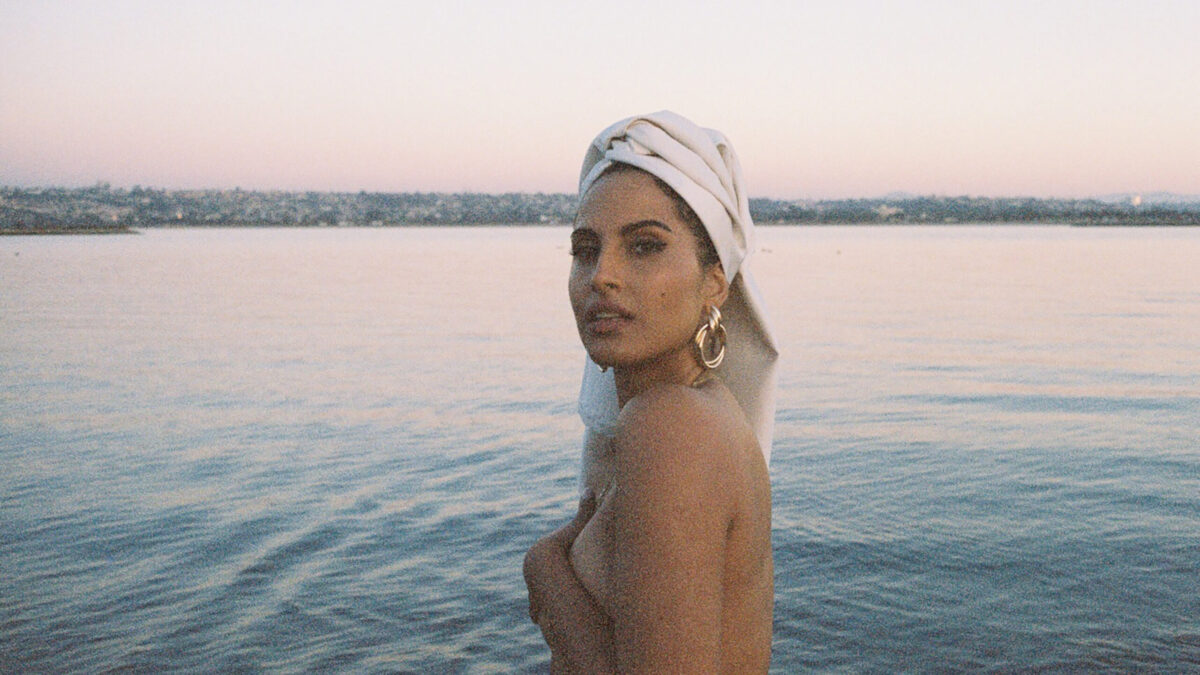
Snoh Aalegra doesn’t remember how old she was when she fell in love with music—maybe 7 or so—but the moment itself burns vividly in her memory: Gathered with her cousins in the living room of their Uppsala, Sweden home, someone puts a cassette of the Bodyguard soundtrack on the stereo, and Whitney Houston’s quivering acapella introduction to “I Will Always Love You” fills the room.
“Her voice gave me chills,” the R&B powerhouse recalls on an August morning, sipping an orange juice at Hollywood’s Groundwork Coffee Co. “I got goosebumps. I was like, ‘Wow, I want this feeling all the time. I want to be able to do this.’ I wanted to make other people feel it. It was such a grand feeling that I can’t let go of, ever.”
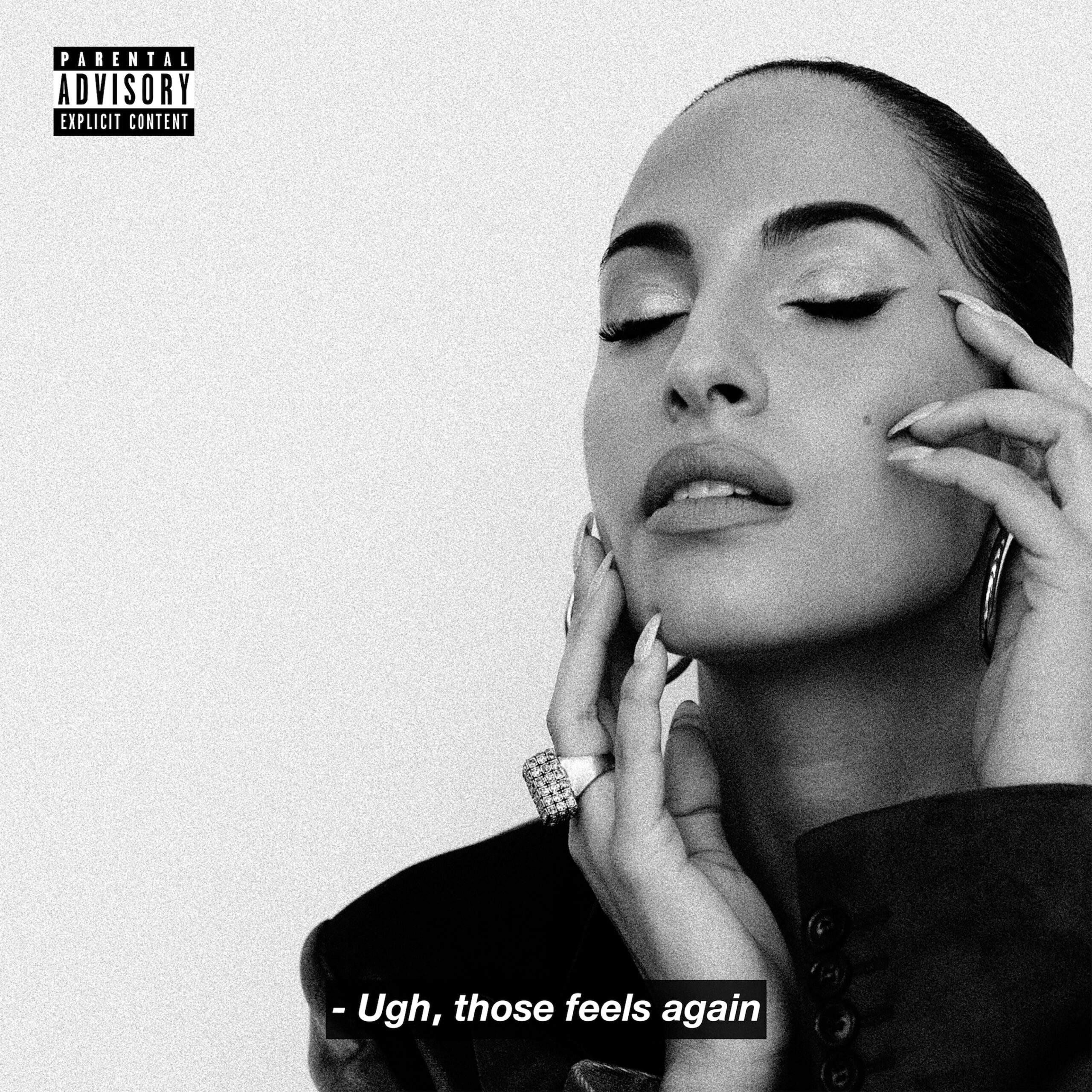
If her morning thus has been any indication, Aalegra has safely succeeded. Just a few hours earlier, LeBron James shouted her out to his 51 million Instagram followers, his eyes closed and head bobbing to her just-released second album, -Ugh, Those Feels Again, as he prepped on the set of Space Jam 2. “Yeah, that was a good start to my Monday,” the 31-year-old says, grinning widely. “I literally woke up and my phone was blowing up. He knows his music, you know? I was like, ‘Okay, I see you!’”
It’s a nice way to kick off her album release week, to be sure, but it’s far from Aalegra’s first “game-recognize-game” experience. Born Snoh Nowrozi, Aalegra’s rich, honeyed voice and precocious instinct for expression landed her an artist development deal with Sony Music Sweden at 13. She has since gone on to collaborate with the likes of the RZA, Vince Staples, Common, John Mayer and Vic Mensa, to name a few.
She’s also been sampled by Drake (on “Do Not Disturb”), and championed by Prince, who took her under his wing as a protege until his death in 2016. “He told me ‘Never change,’ that he thought I was an important artist and that I need to carry the torch when he’s not around anymore, which is words that I still can’t believe he said to me,” the Los Angeles-based Aalegra says in her subtle Swedish accent. “When I met him, I had honey brown-blonde hair. He was like, ‘Go back to your dark hair. Just be yourself.’ I instantly colored my hair dark [Laughs].”
I feel like music was my first real friend.
But heeding Prince’s advice would mean embracing an entirely different kind of roots. Born in Sweden to Iranian immigrants of Persian descent, Aalegra’s lanky frame, artistic inclinations, and dark features branded her a perennial outsider in the homogenous 40,000-person town of Enköping, where she moved with her mother after her parents’ divorced at age two.
Her schoolmates had names for a girl like her, the only non-ethnically Swedish person in her class: There was “blatte,” the Swedish equivalent of the n-word, and also “svartskalle”—“black head”—a racist pejorative for a dark-haired or non-European person. “They would be like, ‘You fucking svartskalle, go back to where you belong.’ But it was confusing because I’m like, I’m from here. This is my home. So what are you saying?” she says of her fairer, light-haired peers. “I remember not wanting to be dark-skinned. I wished that I looked like them.”
At home, Aalegra was similarly unmoored as she reckoned with the fractured aftermath of her parents’ divorce, living with a new stepfather while the majority of her extended family remained in Uppsala. Amid the tumult, music would be her only constant and confidant. Shirley Bassey and Whitney Houston were regulars on her mother’s stereo, alongside Iranian pop greats like Googoosh. On visits to Uppsala, Aalegra would spend her days huddled around the TV with her cousins, watching VHS tapes of “The Making of Thriller” and Prince and Aerosmith videos her music-head uncle studiously recorded from MTV.
“I feel like music was my first real friend,” Aalegra says. “It was my escape from everything that was happening at home or in school. I just felt very broken as a kid, and I continued carrying that with me up until now. I’m still broken. But I’m slowly healing, and music has always been healing to me. I can dream away listening to music.”
It would take walking away from two toxic, abusive relationships for that healing process to begin, and the subsequent year-and-a-half was spent making the new album to take ownership of the sense of self that so long eluded her grasp. -Ugh, Those Feels Again, is, as its winking title suggests, both a thematic continuation and rebuke of Aalegra’s 2017 debut album Feels (she previously released a studio album in 2010 under her former pseudonym Sheri).
Feels was a knockout exercise in vulnerability, all airy jazz-inflected production and intricately personal songwriting—the sound of a woman fully surrendered to and submerged in love’s whim. – Ugh builds on that sound, but arrives with refortified spirit. It’s strong and confident, a tight package of timeless, platonically ideal R&B infused with fresh production touches that keep the album moving along with the story she tells. “I had to deal with myself a lot—my mental health, my spirits, my heart. Getting to know myself better and understand why I let myself be in a situation like that for such a long time,” she explains. “I’m loving myself more. I’m putting myself first and respecting myself rather than my feelings so much.”
There’s still vulnerability aplenty—it’s not R&B if there isn’t—but here Aalegra turns that inward towards doing the hard work on herself. The album’s songwriting is frank and unadorned, often opting to look melancholy in the eye rather than romanticize it, and confront shame rather than mask it with longing. “I wish I thought before I spoke / Made up my mind before I told everybody close to me / That you were no good to me,” she sings on “You.” “They’re non believers / Cause they had to see me that way / But I only see us.” Her voice is torched and pure, underscored by heartbeat percussion and a sighing guitar melody that together feel like a confession delivered to an empty room. It may as well be a lost Prince track.
I love to shine on the fact that I am Iranian and that I am from Sweden, because that’s who I am. There’s never been a Middle Eastern singer in my genre at the forefront, ever.
From the effervescent seduction “Situationship,” to the warped emotional vertigo of “Be Careful,” -Ugh is more formal and sophisticated than anything Aalegra has released before. The album sees her helming production duties (as well as doing her own music direction) alongside longtime collaborator and hip-hop luminary No I.D., delivering a blend of old and new school that leans into tempo and experimental flourishes, and away from the rap features and smoothed edges that defined much of Feels. The result is an artist standing firmly on her own.
“It’s almost like I was asleep this whole time,” Aalegra says of musical evolution. “I was very depressed for many years. Those toxic relationships held me back in my career, because none of the guys really wanted me to really make it. I put all my focus on worrying about them and what I thought I was doing wrong.”
These days, Aalegra’s focus has shifted to proving them wrong. After a lifetime of feeling flawed, she’s found the key to success in embracing who she is. “I love to shine on the fact that I am Iranian and that I am from Sweden, because that’s who I am. There’s never been a Middle Eastern singer in my genre at the forefront, ever. I’ve had a lot of people from the Middle East that hitting me up like, ‘Yo, we don’t have many role models, so thank you for doing what you do.’ It always feels cool to hear—from anyone, any ethnicity, any nationality. It means the world to me.”