Your bag is empty.
Her perspective on love stories and LGBTQ+ culture has already earned her a loyal fan base—and she's bound to earn more adoration with her vulnerable debut album 'Cheap Queen'
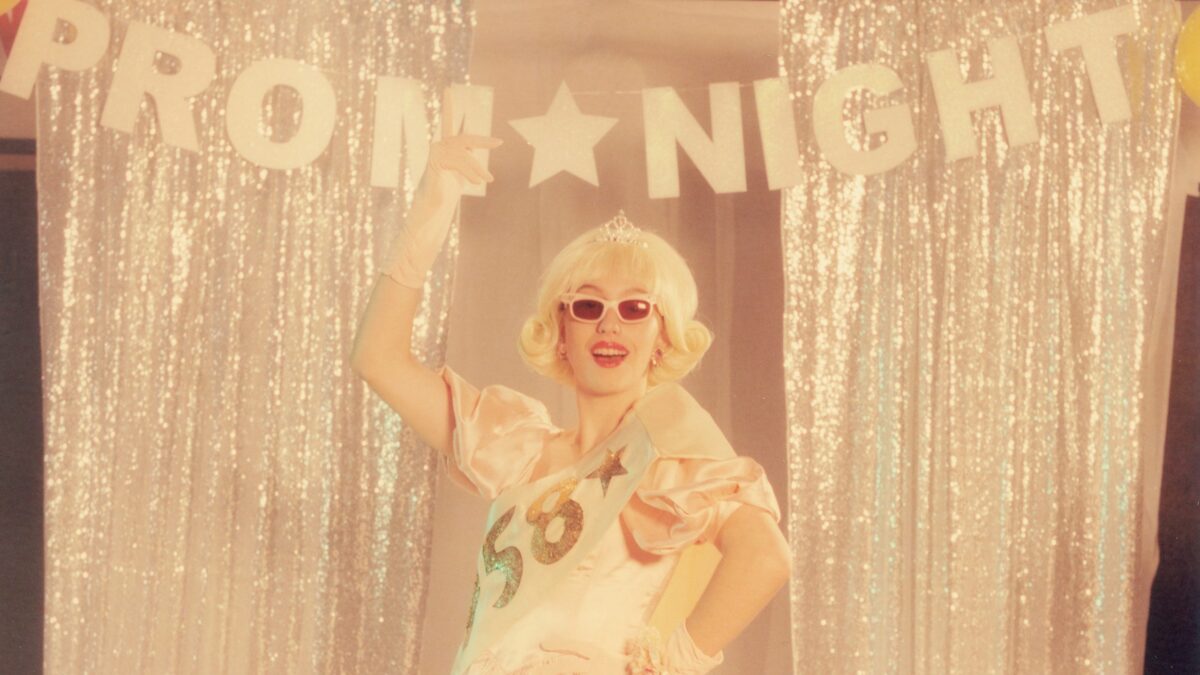
King Princess is threatening to fight me over the phone. The genderqueer rock-pop star, real name Mikaela Straus, is jokingly offended by a quote from the last time we spoke, in which she described the spirit of her live shows.
“‘It’s a fucking dyke party. Is cute tho’?” Straus repeats those words back to me from her home in Los Angeles, in semi-disbelief and with an almost audible grin. In retrospect, she thinks she might have been stoned during that interview; I’m praying she is for this one too. “Wow,” the musician chuckles, “I hope that’s included in all of the contributions that queer artists have made [throughout history]. Those long, beautiful quotes on queer culture—and then that.”
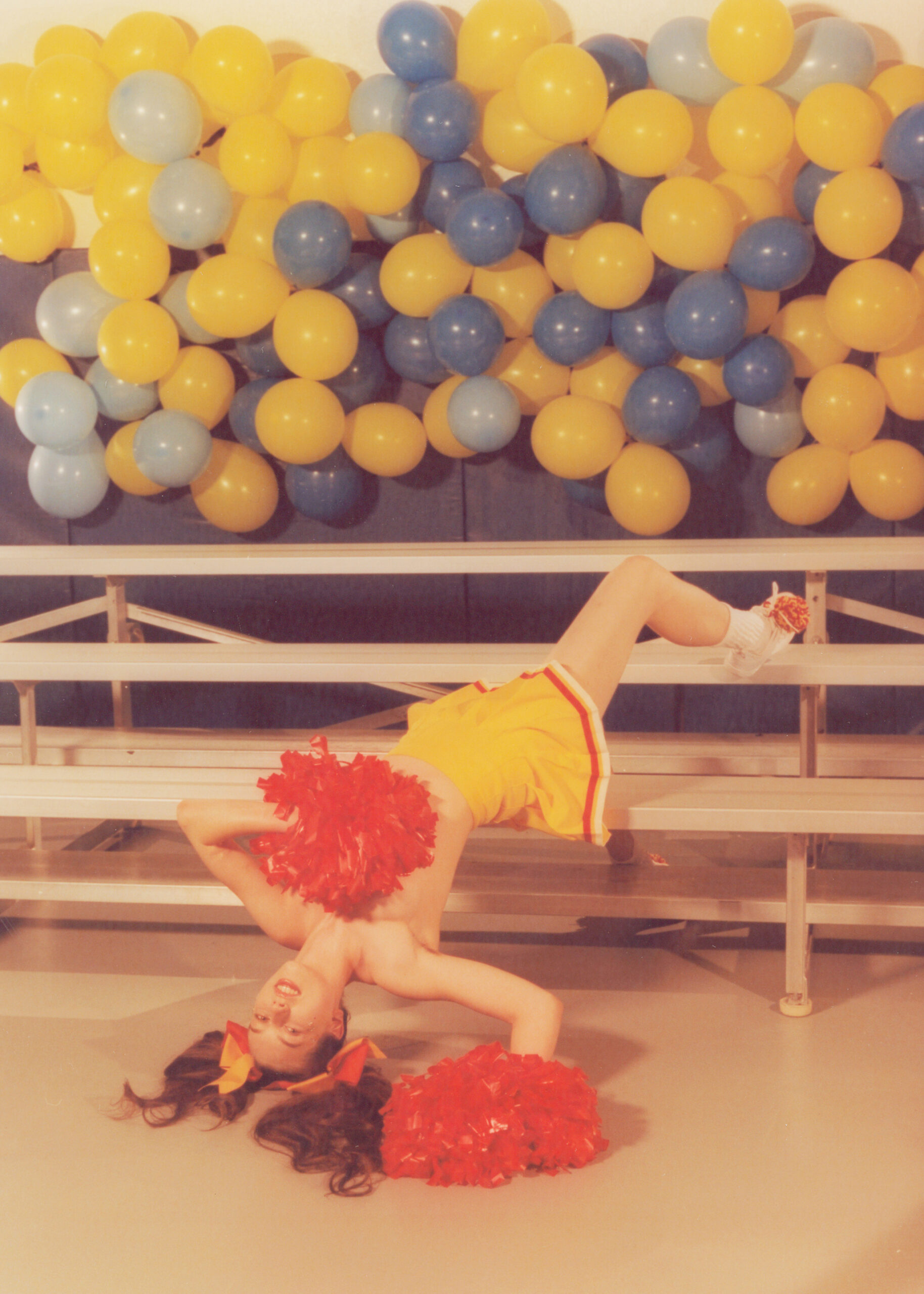
Self acceptance is an arduous process for the LGBTQ+ youth of today, but at least Mikaela Straus seems to know herself. To the army of fans who pack out her concerts and stream her music (Spotify alone counts around 6.7 million of them every month), her chilled presence is a present. But listen to her music and you’ll know she gives a fuck. Straus has performed, written and produced both mellow odes to lesbian love inspired by Patricia Highsmith novels and synth-fuelled bops about vaginas. Her debut album, Cheap Queen (out now), is just that much more personal. Beyond being credited as songwriter and producer on all 13 tracks, she’s also hyper aware that her diary-like uninhibited entries allow her fans an opportunity to make sense of themselves too.
The album tracks the journey of a single relationship from beginning to end; its vulnerability acts as evidence that Straus’ desire to give a fuck isn’t a mere ploy to pander to Gen Zers in a time when diverse identity is easily co-opted by the industry into a cool and current PR spin. She’s always harboured it. Born in Brooklyn in 1998 to two “angry liberals” (her father runs a successful recording studio; her mother is a businessperson and civil rights activist), she’s spent her whole life surrounded by the kind of free-spirited people (including a particularly high concentration of gay men) that most queer kids yearn to meet. After a few years of internalizing her feelings, put off by a sour response from schoolmates when she first aired the idea of being gay during her childhood, she came out at 13. Her parents have since divorced, and she lives full time in Los Angeles.
The oft-repeated story of King Princess’ career to date makes it seem like her ascent to fame happened quickly. It did and it didn’t. She was first scouted for a record deal at the age of 11, and—at the advice of her parents, though you gather Straus did most of the talking herself—spent much of her school years politely declining similar offers. It wasn’t until February 2017 that the then-19-year-old Straus had dinner with Mark Ronson. Soon after, she became the first signee to his label, Zelig Records.

What followed that was a year of radio silence, then the song that changed everything. In early 2018, a track called “1950” meandered its way onto the internet. Inspired by The Price of Salt, a classic of queer literature about a shy department store worker and a wealthy Jewish woman in New York both blowing off their heteronormative relationships to engage in a whirlwind lesbian affair, Straus was praised for her wise and perceptive penmanship on the track. The buzz began: “1950” got co-signs from pop blogs and fashion press before blowing up courtesy of a seven-word tweet of its lyrics from the 21st century’s foremost ‘art throb’, former boybander Harry Styles. His queer-aligning fans met hers; the combination was atomic.
Since then, she’s outgrown those co-signs. Ronson is a collaborator and Straus is far greater, more headstrong, than a ‘protege’. While most mainstream pop stars come of age in the wings of pop music, blessed with five years of development before they make it center-stage or crash out, Straus found her space in that world serendipitously. But with people now watching, she had to learn about life quick. “I threw myself—and was thrown into—being an adult without having any of the skills necessary for it,” she tells me now. The way she carries herself says otherwise. “I rely a lot on my lovely team and people around me who keep my shit in check, but I’m also growing up, and that’s manifesting itself in me getting my shit together and putting out this damn album!”
Which is the point we’re at now. Straus hasn’t stopped since “1950”: touring the world, releasing her debut EP Make My Bed, a slew of follow-up singles, and playing both Glastonbury and Coachella. But now it’s time for a full length record. To keep her sane, all of the professional aspects—the sales and streaming figures and “how it performs”—have been relegated to the back of her mind. But there is one thing that’s eating her: the memories and thoughts of the past year being out there, for her fans and the public to hear. “It’s a journal for me,” she says of the impending record. The latter, she says, is “such a terrifying concept for some men,” so she’s keen that I make a point of it.
This is deep ass personal feelings that you’re putting out into the world. It’s terrifying, but also, it’s my job.
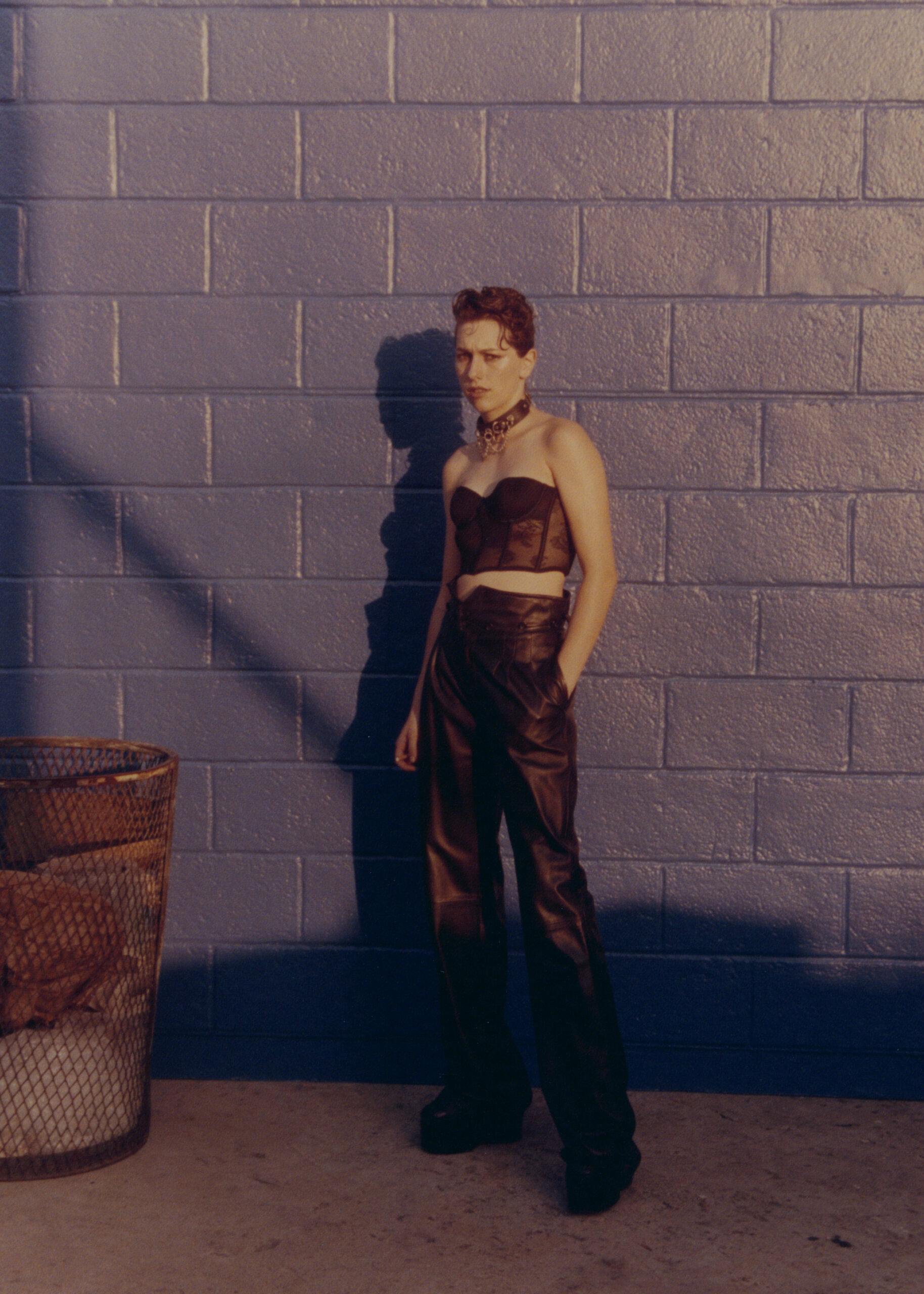
“You write songs about shit that goes down and then look back and realie [you] wrote a whole story. This is deep ass personal feelings that you’re putting out into the world. It’s terrifying, but also, it’s my job. And that’s the challenge of it: being able to say ‘This is ready’.” She’s still not sure about how to navigate it. “I’m not great at it yet,” she confesses. “I think it takes a lifetime of releasing music to become proficient at the process of putting [it] out and keeping your shit together.”
If Straus feels like she doesn’t have her shit together, she has a funny way of showing it. She is, on the surface, unwaveringly poised and confident, one of the most switched-on artists I’ve spoken to. She’s perceptive enough to know why music journalists have labeled her “the future of music”, but she’s still not quite prepared to take on that title yet. “I don’t know what that fucking means!” Her laugh is laced with a little concern. “But you know what? I’m a huge believer in the idea that music works in a circle with history and time, and what’s put out is the result of some sort of provoking of artists, by the government or [socially], y’know?” She’s really good at alluding to politics without being overtly political; the idea of being purposely preachy makes her wince. “I don’t know a better time to put out art that is queer and not traditionally accepted into the mainstream. Everyday is a perfect day for queer art, but I’m excited and I’m inspired by what the future looks like.” She ponders that before adopting her excellent, faux-cocky-frat-bro persona: “I don’t know, I’m not necessarily the future–but I’m definitely a future, bitch!”
Juxtaposing a biting rhetoric with a wry presence and vernacular (one that’s pretty unique to internet era kids) is King Princess’ forte. Straus’ music is often accidentally political, packaged in a way that’s either lustrous enough to wash over you without feeling hammered by a grander message (as “1950” does so smartly), or winking so to distract you in other ways. Her biggest hit since her breakout, the subversive “Pussy is God”, does that perfectly. “Your pussy is God, and I love it / Gonna kiss me real hard, make me want it,” she sings on its opening verse. It’s the perfect microcosm of Straus’ talent: a celebratory clit-hymn that quietly subverts religious allegory, written from the perspective of a queer, Jewish woman. For some—particularly the children who’ve been shielded from such perspectives in school—it’s an education and a revelation: “I would want my kids listening to that as a reference for how you should treat women.”
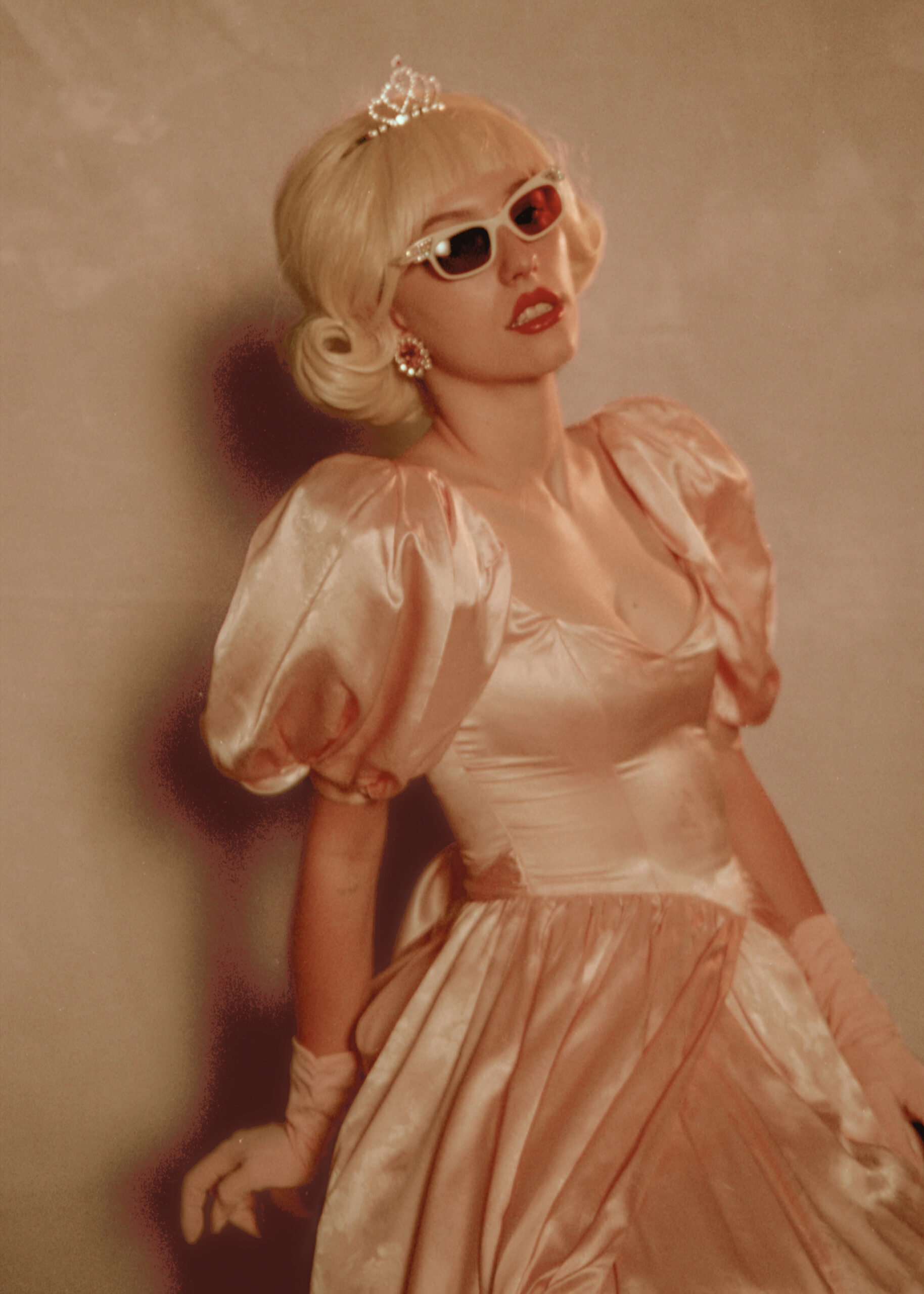
With it, she’s dismantling the way women have been objectified by the male species throughout musical history. The song samples “Oochie Wally”, a 2001 hip-hop track by Nas that is “just about getting dicked the fuck down,” Straus points out. “It was written from a man’s perspective about dicking down women, so when we used that sample we were like, ‘This is hilarious, we’re reappropriating that sample into something that’s presenting a larger message than just ‘You want pussy’, you know?” She’s keen to point out that the process was far more frivolous than that insight makes it seem: “It wasn’t like, ‘I’m sooo into politics!’,” she asserts, chewing her words like bubblegum to emulate a faux-woke kid in it for the clout. “That’s definitely not my tea.”
Her presence is de facto political, perhaps, because so is any art from any young woman who doesn’t fit the binary mold made for them by the industry. But being in that position opens you up to a different kind of scrutiny: narrow-minded questions she’s bored of being asked. I wonder if there’s one that irks her right now. Straus has the response ready immediately: “What does queerness mean to your music?” she sighs. “You wouldn’t be asking some straight fool that same question. ‘Sorry, what does you liking pussy have to do with your music, Mr. Straight White Musician?’ It sounds off to me!” Her ability to be both articulate and unyielding is really fucking wonderful.
Straus owes a lot of it to the women that came before her, namely Lady Gaga: an artist who’s dedicated her life to protecting the rights of LGBTQ+ people the world over. In the past, Straus has gushed over the star in interviews. “Her shows were so epic and expansive and it introduced me to that world of theatricality and showmanship,” Straus tells me. “I was really compelled by it.” Has she met her since? There’s a sharp intake of breath: “Let me tell you a story.”
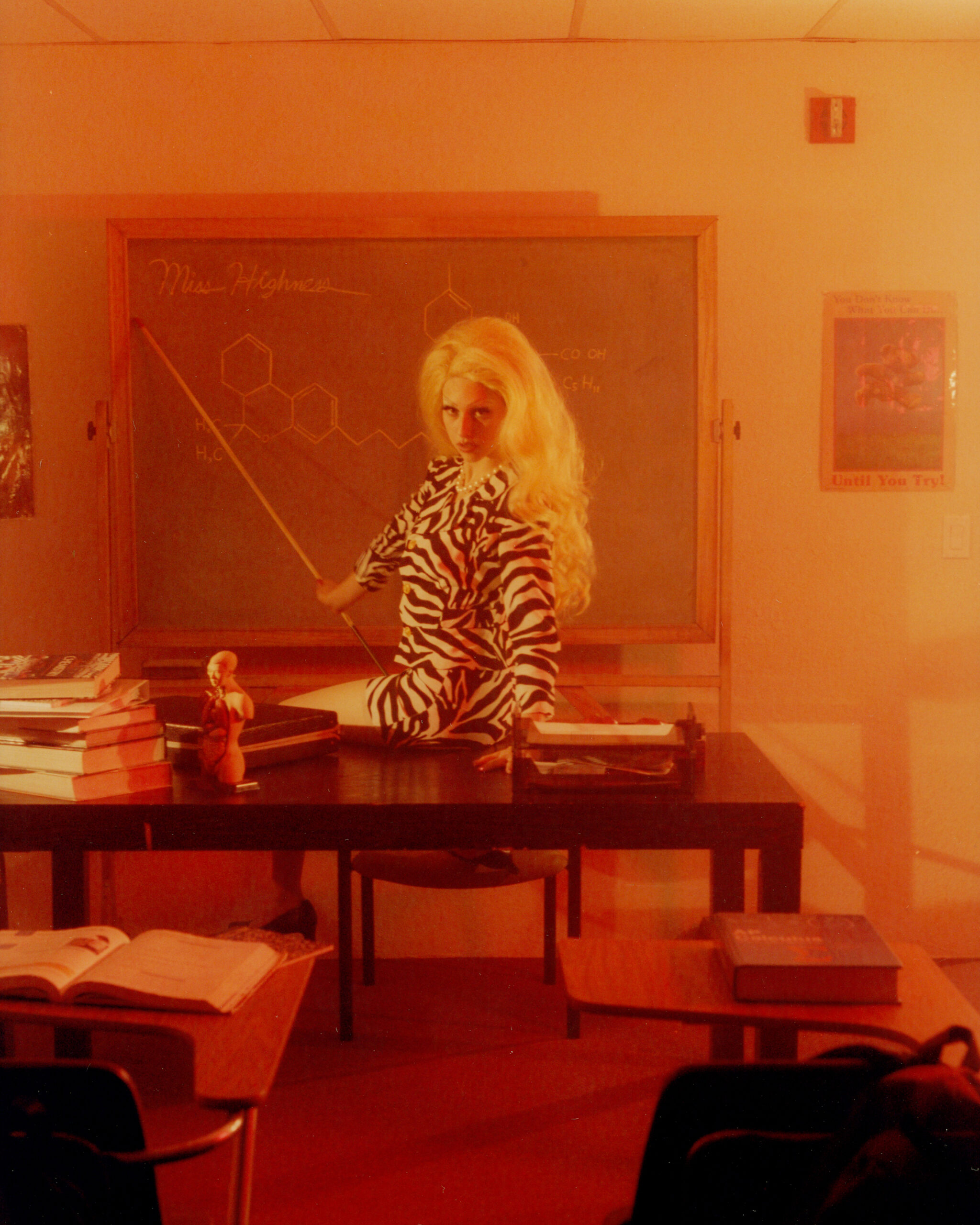
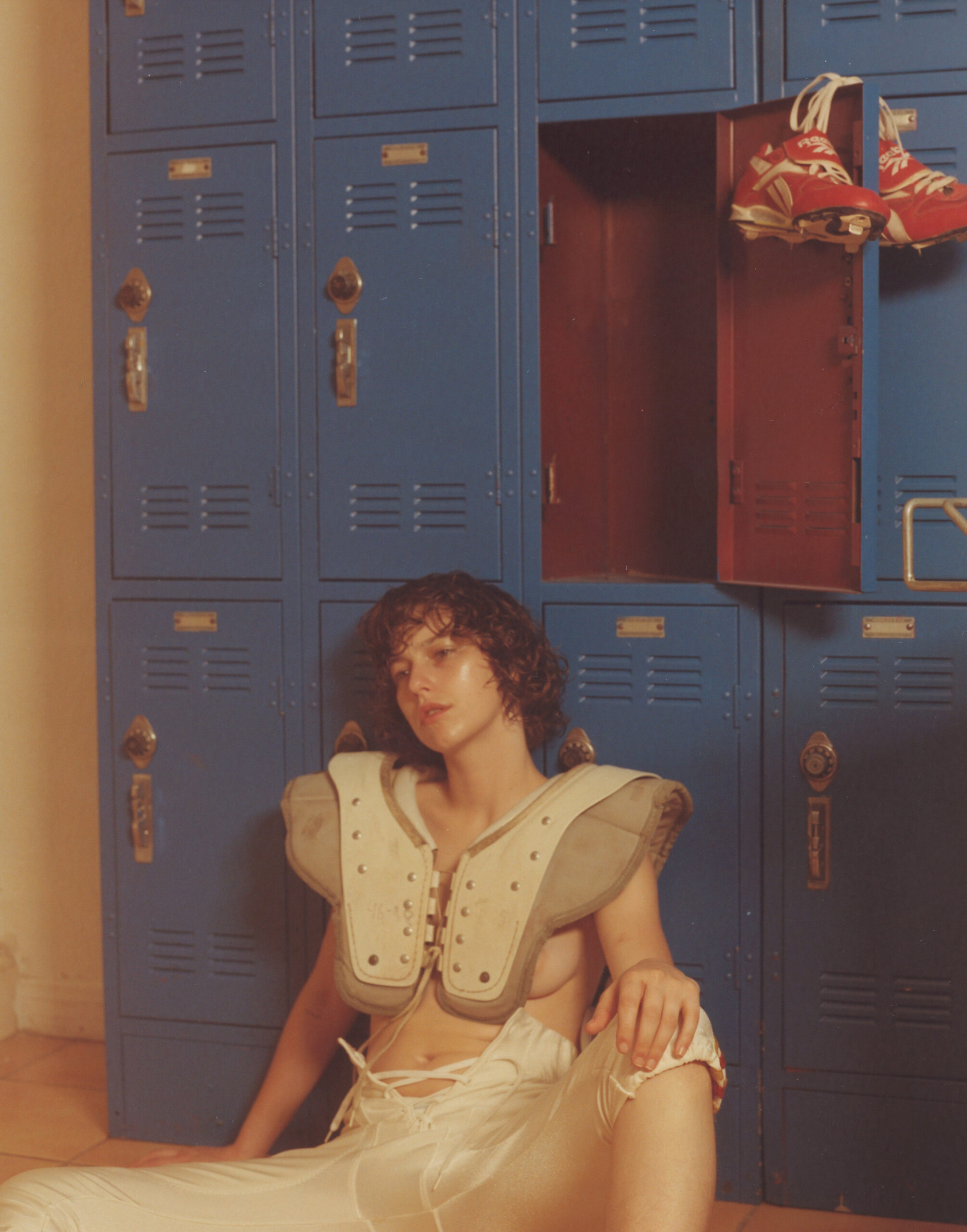
It was on Straus’ 19th birthday that she came face-to-face with the woman she loved. “I rolled through to this Lady Gaga concert at [Los Angeles venue] The Forum,” she says, with Ronson and her best friend Josh in tow. “We were fully sobbing the whole time because it reminded me of being a kid and going to a Gaga show, and being like ‘Oh my god, I’m gay’–but I was so fucking stoned.” Straus wrestled with the idea of coming face-to-face with her idol having smoked so much beforehand. She didn’t want to in her current state, and bickered with Ronson (who produced Gaga’s last record Joanne) about being too inebriated, but it was too late—the argument was still underway when the door to Lady Gaga’s dressing room swung open and the woman herself walked in. “She walks out with cut-off jean shorts and a blunt. I’m just gooped,” Straus remembers. “She walks right up to me and says, ‘Hey, I’ve heard so much about you. I can’t wait to listen to your music’. All I could say [in response] was,‘I’m gay’, and then she held me. I went through a whole menstrual cycle and years of emotions in five minutes.”
You get the impression that in a year’s time, a teenage musician full of hope and admiration will be in the dressing room of King Princess, waiting to greet her with a blunt and tears. Straus’ effect on that plane of influence can be felt already; she’s changing things. With the album on the way, she’s looking forward to that musical future we’ve all predicted she’ll be a major part of. And she’s achieved another lifelong goal of hers recently. “My gay ass in PLAYBOY? We fully are gooped!” she smirks. “It’s not only iconic–it’s historical!”