Your bag is empty.

Carnivore diets, Liver Kings, protein bars. What if our food didn't define our masculinity?
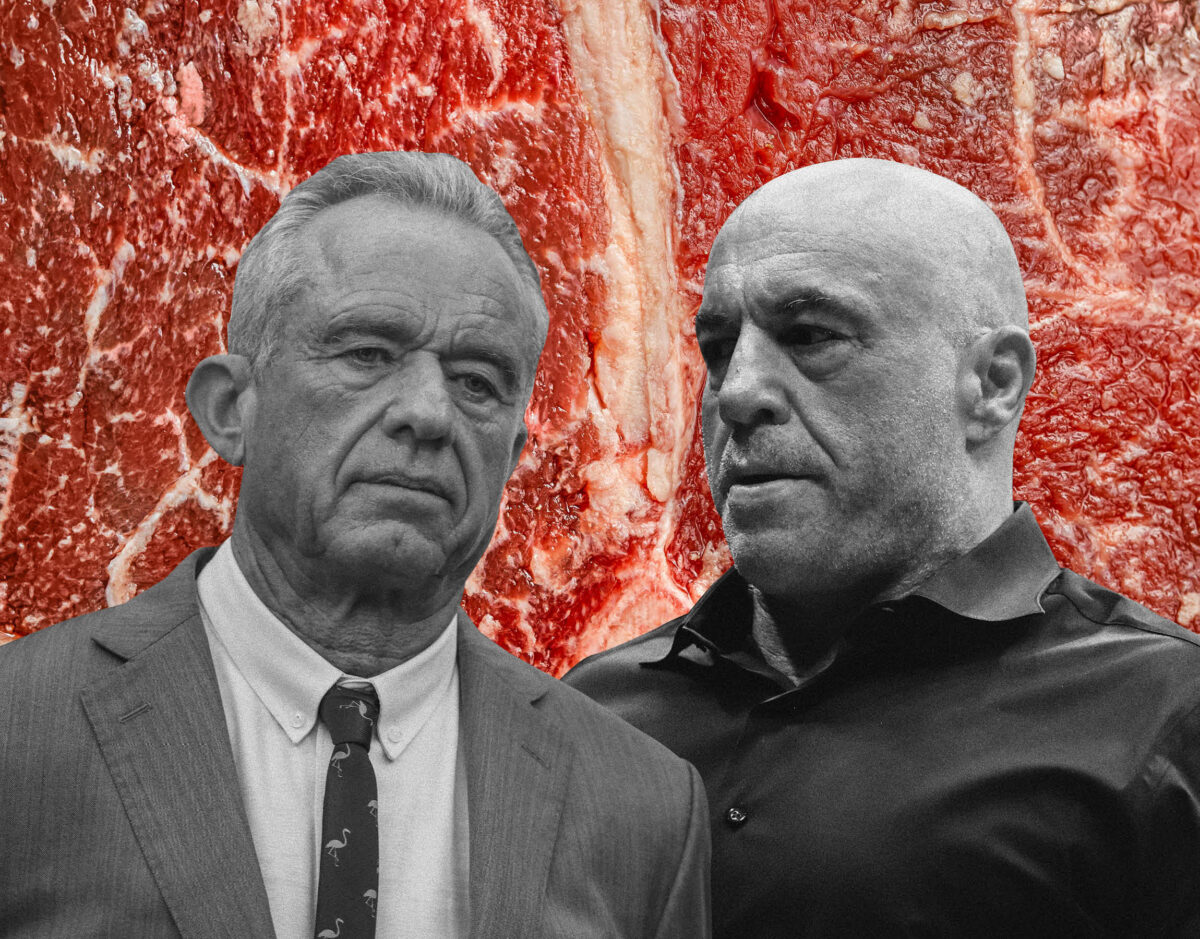
In 1976, cinema’s ultimate macho boxing hero Rocky Balboa woke up at four in the morning, cracked five raw eggs into a glass, and chugged the gloppy cocktail right before heading out for a run. Balboa is, of course, just one in a long line of men ingesting odd concoctions in the name of fitness. Since then, we’ve watched a wave of body builders come and go then come again, saw the advent of the Liver King, and now we have the rise of the looksmaxxer—the most famous of whom, Clavicular, claimed to take meth to stay lean. Looksmaxxing spawned a litany of other maxxes: protein-maxxing, fiber-maxxing, meat-maxxing, and whatever new trends will be popping up in your feed next.
“The social media algorithm pushes you to extremes,” says Dr. Travis Masterson, director of the Health, Ingestive Behavior, and Technology Lab at Penn State. His lab focuses on the ways technology and media can influence eating behaviors. They study messaging related to food and nutrition on platforms like Twitch, Kik, and YouTube live, and use immersive VR to monitor people’s food choices at buffets. “There’s a lot of extremism and pushing things to a limit,” Masterson says of the social media trends urging men to eat only red meat or biohack their muscle growth. Men and the pursuit of muscle is an age-old habit, one tied to our conceptions of masculinity and worth. But in the social media era, as that pursuit gets more and more dogged and extreme, it’s worth asking: Are we maxxed out?
On Instagram, Brazilian MMA fighter Edson Barboza posts about his strict meat-based diet, sharing videos that show a plate full of steak, sausage, and bacon as a meal. Health Secretary Robert F. Kennedy Jr. flipped the long-standing food pyramid upside down, favoring meat and dairy. And, of course, we have the Liver King, who built his brand on eating raw animal organs for every meal, claiming it got him incredibly jacked (more on that later). The new messaging is basically: Who needs broccoli or apples? Not real men!
According to Dr. John Hayes, professor of food science at Penn State, the extreme evolution of this meat = muscles mentality comes from an age-old impulse. He cites Teddy Roosevelt and the Rough Riders as a good comparison to what’s happening today with carnivore diets, manosphere masculinity, and protein-maxxing. In the 1890s, Roosevelt and his cavalry of rifle-toting, horseback-riding manly men helped to drive Spain out of Cuba during the Spanish-American War. Back then, there was a fear that because frontier life was giving way to office jobs or more sedentary work, the ideal rugged male figure was disappearing from American life. So, men compensated for that by acting like tough guys. Today there’s a similar undercurrent of fear as everything becomes automated and outsourced.
“I think we’re seeing the exact same thing now,” says Hayes of the drive to build muscle and chisel your way to alpha-male perfection. “People are engaging in this pursuit of unintentional performative masculinity. Men are lost without role models or a cultural script.” But in the social media era, seeking a script turns to writing an unprecedented one real quick. “It becomes about how extreme can you be,” he says. “Our entire society is clickbait.”
A lot of what we’re being fed is false advertising, though. Some of the influencers sporting eight-packs and 20-inch biceps might be doing a lot more than maxxing out on protein to get so fit.
“There’s a pretty good chance some of them are using performance-enhancing drugs,” Masterson says. The Liver King (aka Brian Johnson) amassed millions of followers online and launched a product line called Ancestral Supplements, including Grassfed Beef Liver pills. People believed that his lean, muscular physique was the result of eating bull testicles and working out, until leaked emails in 2022 showed that he’d also been injecting massive amounts of human growth hormone (HGH) each month. Podcaster Joe Rogan has praised the carnivore diet, claiming a 30-day streak of eating nothing but meat boosted his energy and made him leaner. Rogan is also open about his own steroid use. Tech entrepreneur Bryan Johnson (not the same Johnson as the Liver King) poured millions of dollars into the pursuit of everlasting life and health, injecting 300 million stem cells into his joints and donor fat into his face to appear younger. He later admitted that all of his “treatments,” including taking the immunosuppressant drug Rapamycin, backfired and caused alarming health problems like severe allergic reactions and increased resting heart rate. It’s hard to imagine that these health quests are actually about health at all. They’re about projecting an appearance of peak masculinity and youth by any means necessary. That is, until those means cause your face to blow up like a balloon.
If the meatosphere is taking over masculinity, tell that to vegan bodybuilder and coach Brian Turner, who shares workouts and recipes for his Instagram followers. Turner pokes fun at the real-men-eat-meat craze and shows people that a plant-based diet doesn’t mean you can’t get buff. In one video, he posted about a back and bicep workout that “puts carnivore anti-vegans to shame.”
Turner “took the full vegan plunge” 10 years ago when he was about 23, and says he’s never looked back. He calls the influencers pushing meat “Carnivore Carls” and says the exaggerated advice about optimal protein intake is getting out of hand.
“We have people out here acting like they’ll wither away if they don’t eat a steak for breakfast,” says Turner. “You see these carnivore influencers eating raw liver and sticks of butter on camera just for the shock value. It’s more of a weird identity thing than actual health at this point.”
This is the real issue, according to Italy-based psychologist and nutritionist Dr. Riccardo Gurrieri. These influencers are often selling a bill of health when they’re really just building a persona, one that can potentially bring in millions of dollars in brand deals.
“The issue isn’t just that people get advice from influencers,” says Gurrieri. He thinks that many influencers are highly trained and are trying to provide a valuable education. “The problem is more subtle,” he says. “It’s the difference between evidence-based communication and algorithm-driven advice, where content is simplified, optimized for engagement, and often stripped of nuance.”
Gurrieri’s concern is that people are basing their health and nutrition not on how they feel, but on what their devices are telling them they should feel. It’s easy to convince yourself that all that protein is beneficial when you see your body get jacked, but what about your cholesterol, your gut health, your well-being? Consuming excessive amounts of protein has all sorts of health risks, including increased risk of cardiovascular issues. But, like Penn State’s Hayes said, the centrist approach isn’t nearly as click-worthy as an extreme. And, for the record, adults generally need between 0.8 and 1.6 grams of protein per kilogram (2.2 pounds) of body weight, or 10 percent to 35 percent of total daily calories.
“Rather than focusing only on whether men are eating enough protein or following the ‘right’ diet, we should be asking a deeper question,” Gurierri says. “Are these behaviors flexible, sustainable, and supportive of psychological well-being, or are they being used to manage underlying distress?”
Penn State’s Masterson tries to help his students decipher what’s real and what’s fake online by getting them to do something that, in today’s maxxed-out world, seems revolutionary. He urges them to think. He chooses a popular stance (you need x amount of protein; eating 90 percent meat builds muscle) and has them find a scientific paper backing it up. Then they have to find an online influencer opposed to the stance, and another scientific paper opposed to it. Trying to understand all sides makes them less susceptible to falling into extreme thinking.
“They become more skeptical and that’s a good place to be,” Masterson says. “So now you realize that some product might work, or it might not, and you can decide if you want to spend 500 dollars on it.”
We might not all have the time to read scientific papers to help us decide how and what to eat, or what products to use or not use, but a little skepticism goes a long way when you’re being marketed to 24/7. It’s a positive shift in culture when people want to get healthier, but anybody can post a video and sound authoritative. Masterson stresses that what works for one person might not work for everyone else. Turner, the vegan bodybuilder, can bulk up on plant-based everything, but someone else might need a little meat. That doesn’t mean they need to become a “Carnivore Carl,” though.
“There is a tribal nature people get where they cling to a certain group or make diet part of their identity, and that’s a little extreme,” says Masterson. “There’s not one right way to do any of these things, and when you start to think there is only one right way you start to go down that rabbit hole of misinformation.”
Here’s hoping that the harmful trends and misinformation we’re seeing right now, and all this maxxing, goes the way of Rocky Balboa’s raw eggs. A dated fad that we’ll one day make funny memes about.