Your bag is empty.

The filmmaker offers a panoramic view of his work—and leaves you wondering what's behind it all
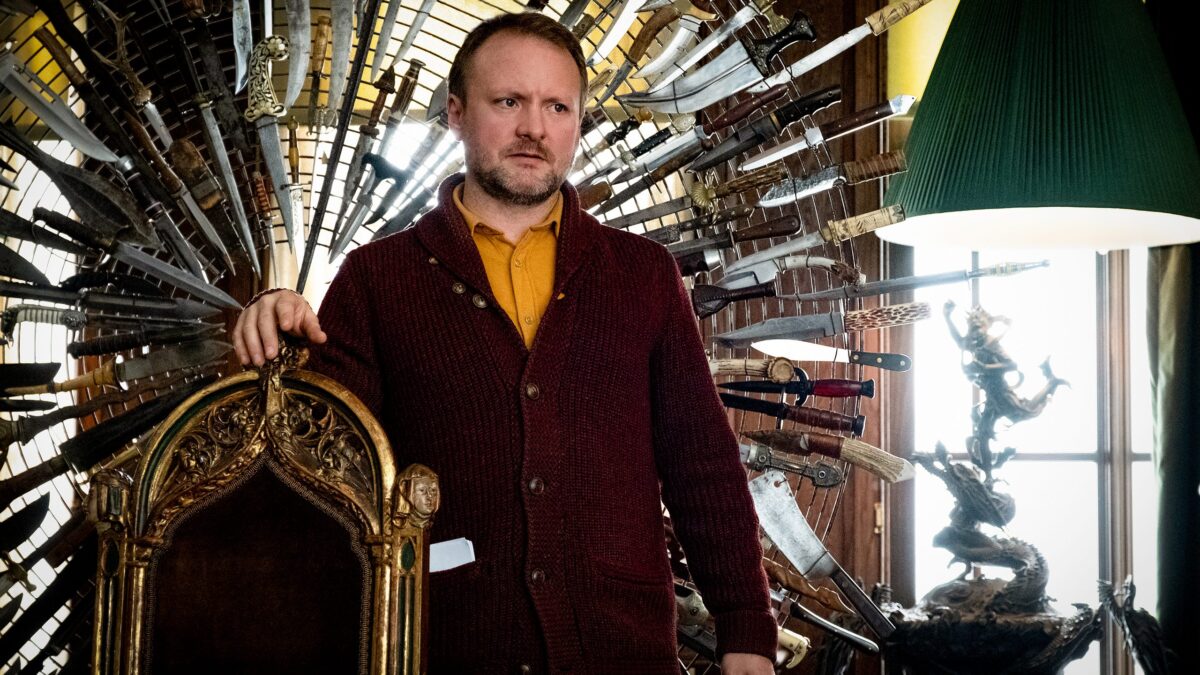
“I’ve gotten very good at talking around spoilers,” Rian Johnson says at the top of our interview. “So don’t worry about that.”
I have just told him that I’ll do everything in my power to protect the plot of Knives Out, the writer-director’s fifth movie. Out this week, Knives Out is a throwback to the classic creepy-mansion whodunit that somehow manages a ripped-from-the-headlines relevance.
Rian Johnson isn’t concerned about dropping spoilers, and he will talk about the Star Wars saga—whose eighth episode, the hotly debated Last Jedi, he wrote and directed—without hesitation. Sipping coffee at a restaurant in Beverly Hills, he speaks comfortably yet deliberately, editing his answers as he goes and ending most of them with self-deprecating asides. (“I’ve gone down the rabbit hole here, a little, I’m sorry.”) Compared to his evident delight in discussing the workings of genre, he’s reluctant to talk about himself or the dark sociopolitical currents that run just beneath the surface of this new movie.
Actually, Knives Out works on at least three levels: There’s the violent and, of course, mysterious death of Harlan Thrombey, a massively successful mystery writer and the patriarch of a large blueblood family; there’s the multifront warfare of the family itself, a pack of middle-aged scions, in-laws and grandkids whose tensions twang in psychic surround-sound throughout the movie; and there’s the perilous journey of Marta Cabrera, Harlan’s young caretaker and a daughter of undocumented immigrants—a point both applauded and used against her by the Thrombey family.
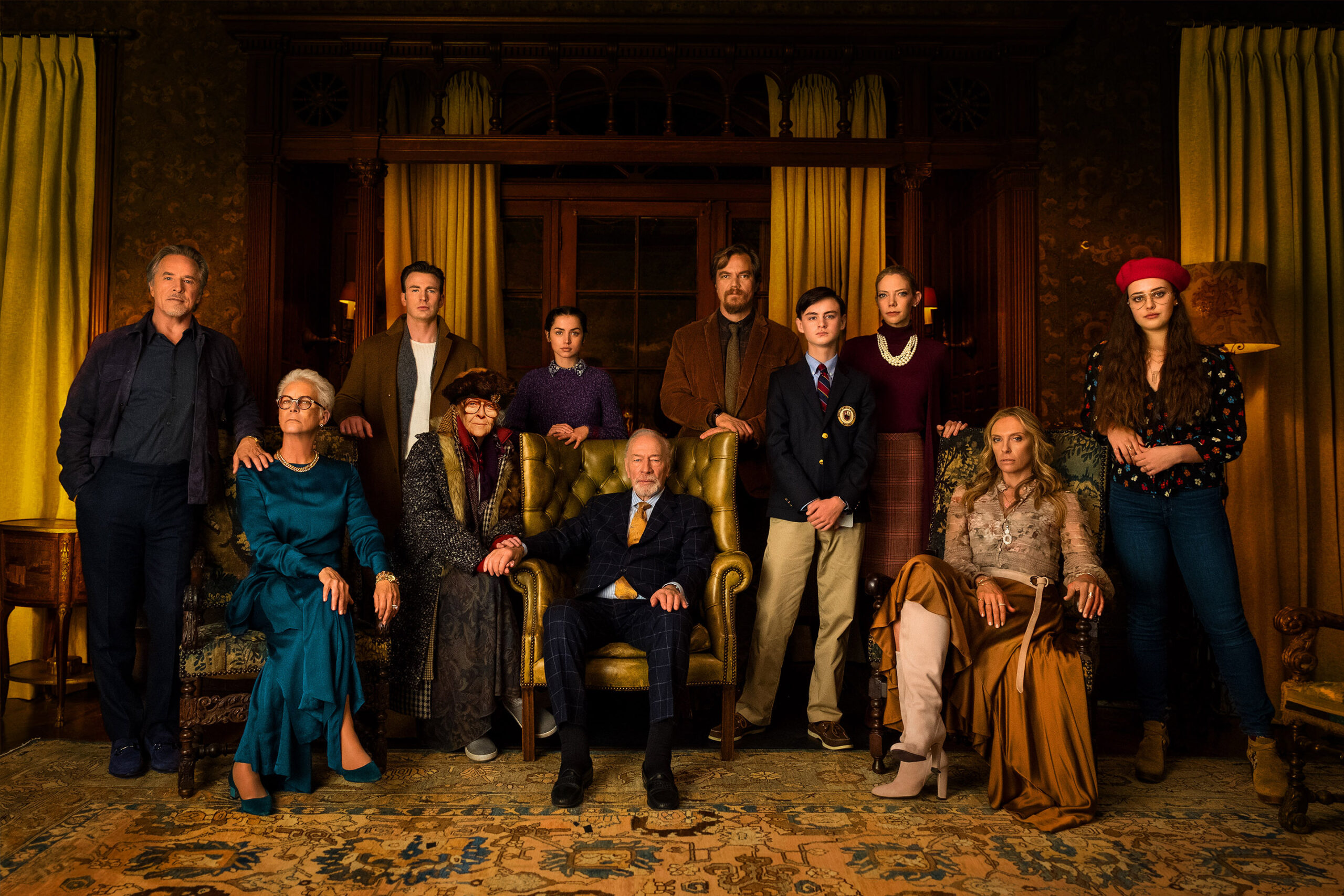
It is impossible to ignore the aptness of Marta’s plotline, even though it’s tucked inside a lavish and at times uproarious genre valentine. So I’m surprised to learn that Johnson first conceived of Marta (brought to life with extraordinary strength and vulnerability by Ana de Armas) not under the current presidential administration but 10 years ago.
The movie’s central tension, he says, is evergreen. “Of course the last couple of years have turned everything into overdrive,” he says. But Knives Out is “more about privilege, and that’s always been with us. We mythologize ourselves to ignore the way that privilege has helped us in our lives in order to maintain this illusion of an even playing field.”
I ask him about the relevance of mysteries in an age of top-down xenophobia, hubris and toxic discourse. “If you’re living in Hammett’s world, it feels good to read a Poirot novel,” he says, citing, respectively, the noir forefather and Agatha Christie’s lovable mustachio’d detective. Otherwise, he mostly stays focused on style and structure, referencing everything from Hitchcock’s The 39 Steps to Verhoeven’s intergalactic splatterfest Starship Troopers—but his thoughts on the latter are telling. (Spoiler: In Verhoeven’s movie, the jacked-up soldiers trying to wipe out an infestation of giant space-bugs turn out to be the bad guys, but viewers have to figure that out for themselves.) “It never winks at you to tip you off to what’s actually behind it. The movie never says, ‘I bet these guys are actually fascists.’ It’s up to you to recognize, ‘Oh my God, wait a minute.’ That’s the goal.”
If you’re living in Hammett’s world, it feels good to read a Poirot novel.
Johnson is genre obsessed—Brick (2005), his first feature, is a noir mystery, The Brothers Bloom (2008) a globe-trotting caper, Looper (2012) a time-bending sci-fi thriller, Star Wars Episode VIII: The Last Jedi (2017) a… well, a Star Wars movie—and although he lets Marta’s story unfold without blaring social commentary, he does indulge in the occasional meta wink. A detective in Knives Out is an overeager mystery buff. Mark Ruffalo’s character in The Brothers Bloom is a writer who essentially dictates his and his brother’s lives in real time, exploring, in Johnson’s words, “the whole notion of perception being a form of storytelling.” In Looper, right about when your capacity to understand the movie’s painstakingly wrought time-travel logic hits critical mass, Bruce Willis’s character tells his younger self, “I don’t want to talk about time travel, because if we start talking about it, then we’re going to be here all day talking about it, making diagrams with straws.”
Johnson didn’t waver when The Last Jedi awoke a Twitter troll army that assailed him, in large part, for creating Rose, a resistance fighter of Asian descent with the audacity to be one of the movie’s heroes. It’s hard to imagine Johnson maintaining his equanimity once the movie was out—especially considering that, counter to the tormented-artist stereotype, he’s active on Twitter, presiding over an account with almost a million followers.
“Yeah, I had never had anyone mad at me on the internet about anything before [The Last Jedi],” he says. “I’m kind of thankful that—not kind of; I am genuinely thankful for the experience of that, because it made me disconnect people online being mad at me from my own sense of self.” Without the slightest shift in tone he tells me that, for many entertainment journalists, “all the bad stuff is very fun to write about, and so it gets written about a lot. That’s 10, probably five percent of my experience online. Ninety-five percent of the past two years has been lovely and wonderful and rewarding beyond anything I would ever expect as a filmmaker.”
As far as Johnson himself, if there is a clue pointing toward some dark force beneath his vast cultural acumen and generous nerdy laugh, it’s of the blink-and-you’ll-miss-it variety. Spoiler: I didn’t find it. But I did find something surprising when I coaxed him down a very Playboy road.
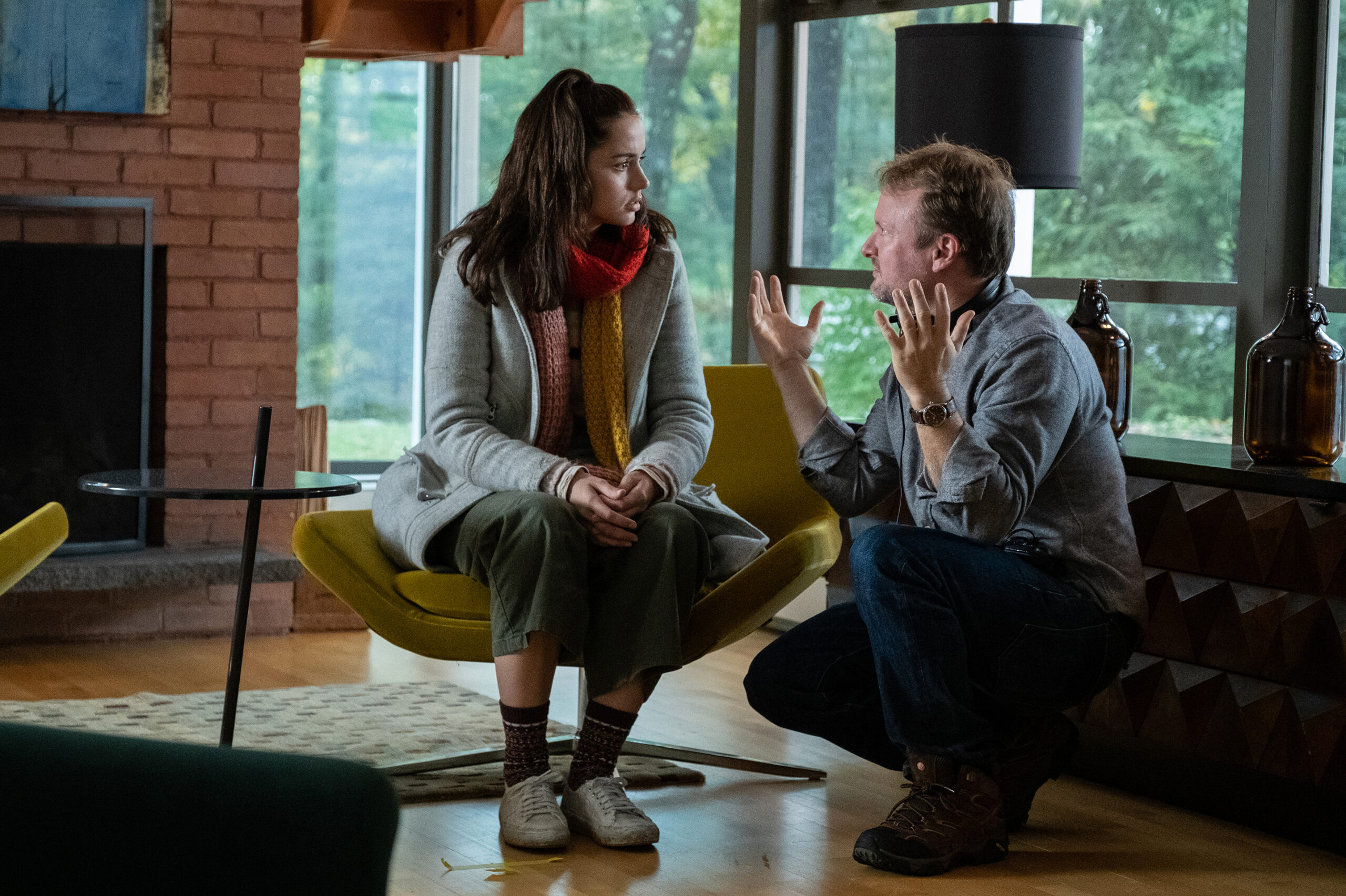
Before we go there, let’s meet Noah Segan, who plays the overeager detective in Knives Out and has appeared in every one of Johnson’s features. The banner of Segan’s Twitter account is a picture of Klaus Kinski, Werner Herzog’s maniacal leading man. Segan and Johnson’s dynamic is the polar opposite of the searing love/hate relationship between Herzog and Kinski as documented in the documentary My Best Fiend. Ages 36 and 46, respectively, Segan and Johnson have spent most Thanksgivings together since Segan played a spazzy rocker named Dode in Brick. They nerd out on literature, movies, role-playing games, weird old cameras and Steely Dan.
Over two interviews, Segan talks a lot about Johnson’s temperament as a director. In his experience Johnson has never turned to the dark side despite making difficult movies, one of which grossed over a billion dollars worldwide and brought down that famous, if overblown, Twitter avalanche. Can a filmmaker of this scale really not be a dick, or at least an agonized auteur?
“I think Rian’s trick is that there is no trick,” Segan says. “He’s a very smart guy. He may be well aware of that. He may have decided at some point, ‘The best way I can manage is by managing through honesty and generosity and collaboration.’ It’s sneaky, man. It’s sneaky to be a good person now.”
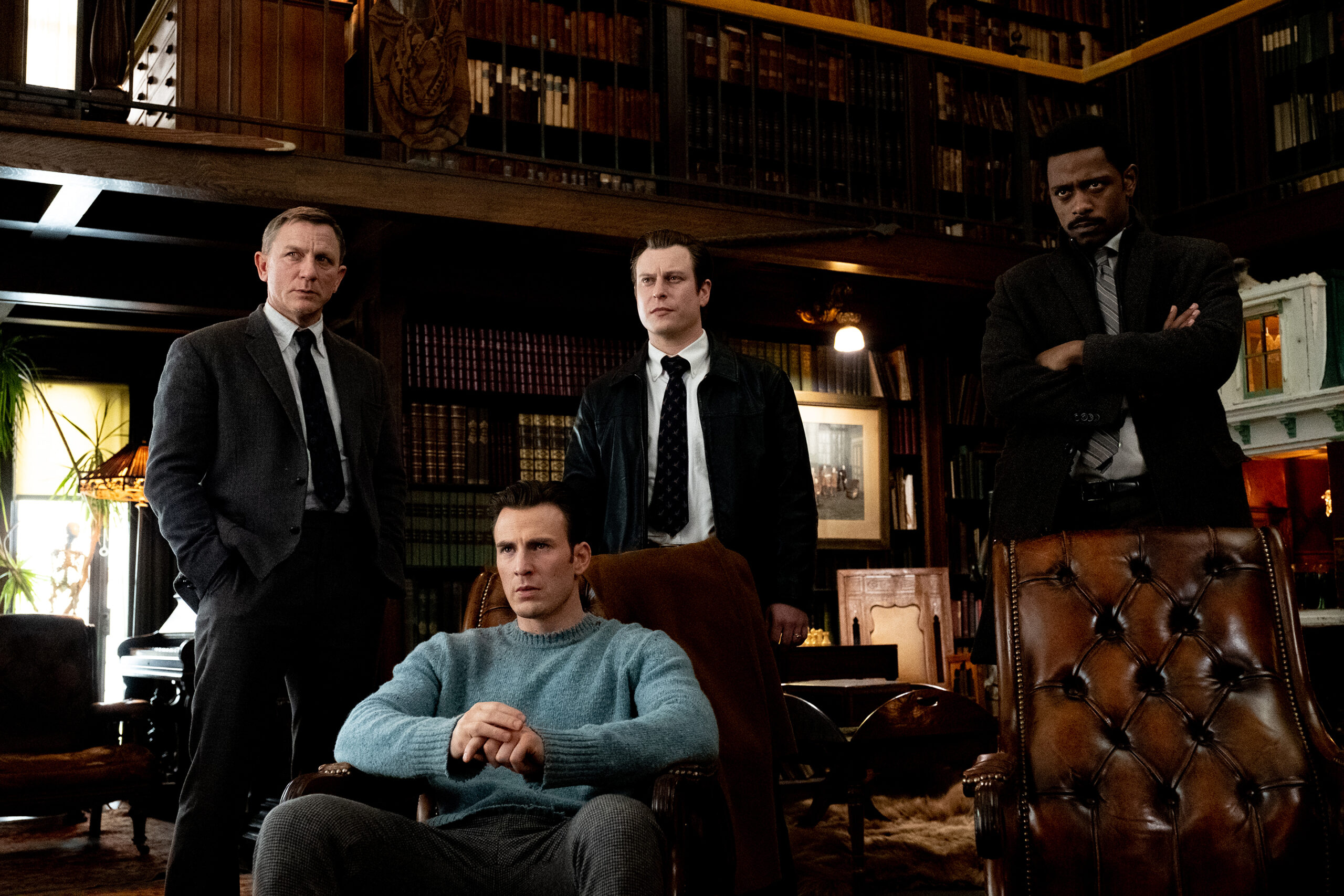
Segan might be the embodiment of Johnson’s method: the hypeman of a small inner circle that has followed the filmmaker from project to project since Brick. When I ask Segan whether The Last Jedi was drastically different from his previous work with Johnson, I’m picturing the latter in a trailer far, far away, surrounded by more blinking consoles than the Millennium Falcon’s cockpit. Did Jedi or any of their previous collaborations breed the same shoestring camaraderie that Johnson brought to Brick?
Segan answers without hesitation. “All of them. Even flying to London to put on an X-wing fighter suit and hang out for a couple of days felt like I was on a Rian Johnson set. He was right there. And so was Steve [Yedlin], this cameraman who shot everything he’s ever done, and Nathan [Johnson], his cousin who does most of the music composing for his work, and Ram [Bergman], his producer since Brick. It was a little surreal but totally the same hang.”
Maybe Johnson’s unflappable kindness comes from the conditions he has set for himself: the cultivation of a crew that surrounds him whether he’s shooting at his old high school, against a towering green screen or inside a labyrinthine mansion. He seems to insist on an intimate set—according to Segan, “sometimes it’s as simple as Rian showing up with a little stupid Bluetooth speaker and playing music in between takes”—and that insistence becomes the outlet for all the stressors of filmmaking. It’s peace through control, an extreme example of benevolent dictatorship, and by all appearances it allows Johnson to have several cakes and eat them too.
Segan, perhaps sensing that a semi-pro journalist is still searching for some kind of crack in Johnson’s facade, offers one more thought. “Like many close friends, I have a key to his place,” he says. “And if there is a freezer full of body parts, I have not found it yet.”
It’s sneaky, man. It’s sneaky to be a good person now.
Across Johnson’s five features, I count two sex scenes: In The Brothers Bloom, Rachel Weisz’s character brings herself to orgasm with the help of a large pillow, and in Looper Joseph Gordon-Levitt lies with a mostly nude prostitute. (The scene breaks after a few lines.) Other than an entirely implied sex scene later in Looper and an intensely awkward makeout session in Bloom, that’s it. I ask Johnson whether that strikes him as unusual.
He laughs at this and counters, “Unless you count Rey and Kylo touching hands.” If you haven’t seen The Last Jedi, spoiler alert: That’s the closest it gets to a sex scene.
Here’s where he surprises me: “I’d like to give some like creative rationalization like, ‘Oh, for me it’s more about the tension between the two people, and the buildup to it is more interesting than the act.’ It’s also very possible that—look, I grew up religious. I’m not anymore, but I grew up very, very Christian. And that’s part of the reason I never got into horror movies: I wasn’t allowed to watch them when I was a kid. My parents were cool parents; they weren’t draconian or anything. But there’s probably some stuff that informed why I don’t touch the third rail in terms of wanting to be on set directing sex.”
(A self-deprecating Johnson coda immediately follows. “Cut to after this conversation: My next movie, I’m just gonna do a Verhoeven-style sexploitation.”)
Johnson was raised “Orange County Christian.” As he matured, and entirely of his own volition, faith became the lens through which he viewed the world. Then, quietly— “it’s not like I had an angry breakdown in faith at all”—his relationship with God shifted. He found Jung among his dad’s books and was taken by the idea that the object of faith was not necessarily a “cosmic entity,” that it could be “a structure that’s within my own psyche. All of that stuff is as real as anything. It’s just interior as opposed to exterior.”
Could this be the key to a deeper layer—deeper than the dense genre mechanics and underlying/understated social messages? Is Johnson’s experience of faith connected to his characters’ quests to solve mysteries, to alter the fabric of time, to touch hands with the dark side, to journey, as Marta does, from poverty and exile to grace? If they are, he’s not saying so. That’s for us to discover.
Maybe all this time Johnson has been looking for the denouement of his own story, whether he finds it through work or faith or some combination of the two.
“There is a raw power to reckoning with that,” he says, summing up his thoughts on religion. “That was a true source of power in my life, and you have to reconcile that in some way. I guess I’m still trying to.”