Your bag is empty.

Performer, stylist and activist Love Bailey has built an Inland Empire commune for marginalized artists—a discrimination-free creative space where, to quote one resident, "even the dirt is glam"
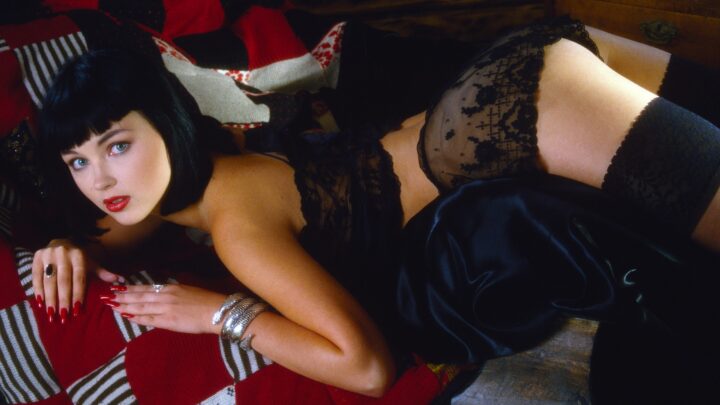
There’s a lot you have to leave out while attempting to write a Love Bailey capsule bio. There’s her 2007 gig dancing in The Beauty of Magic: Hans Klok Featuring Pamela Anderson in Las Vegas. There’s the time she and her mother, Judy Bailey-Savage, had to expel Heidi Fleiss, who had moved onto the elder Bailey’s property in 2013 and brought along over a dozen exotic birds. There’s Bailey’s career as a young stylist, working with the likes of Naomi Campbell, Lady Gaga and Azealia Banks. There’s even a Playboy encounter: She dressed True Blood star Natasha Alam for the cover of our July 2010 issue.
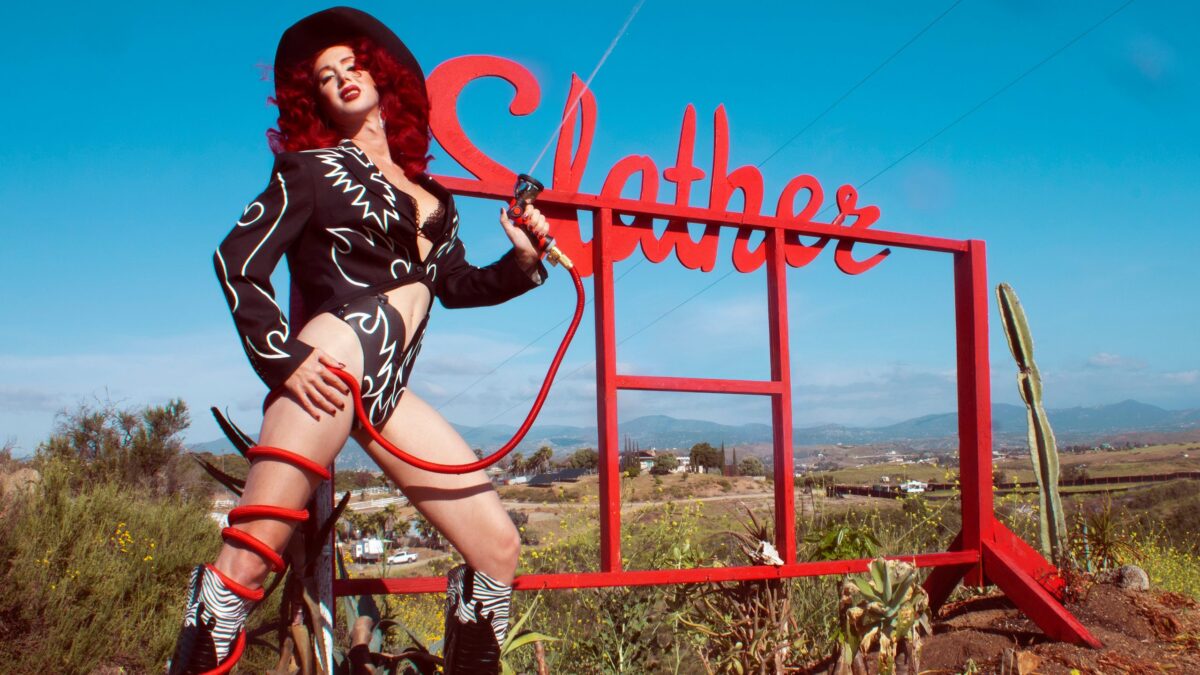
But all of these are prelude to the latest and perhaps most important endeavor of Bailey’s life: Savage Ranch, an Inland Empire retreat for marginalized artists—an ever-expanding mountaintop gallery, playground and intersectional utopia.
Love Bailey was born in Southern California and raised by her grandparents in a retirement community north of San Diego. Judy went to prison when her daughter was about six years old; Bailey has no memory of their life together before then. Her father was Iranian, and Bailey was compelled to whitewash her own ethnicity, especially post-9/11. Her father was also gay, and Bailey’s own sexuality was dismissed as a phase by members of her family and met with middle fingers on the street.
She relocated to New York around 2011, making her name as a performer in the queer nightlife scene. In 2013, Judy, having completed her prison sentence and started a construction business, invited her daughter to live with her in Temecula, a wine-growing valley about 90 miles southeast of Los Angeles. Love moved to a lot adjacent to Judy’s, and mother and daughter began to build Savage Ranch. Today, the Ranch comprises a central “lighthouse,” where Bailey lives, and a handful of bungalows for residents; there’s also a hot tub, tiki bar and “outdoor cowboy shower and bathroom, for your viewing pleasure.” Next door, Judy runs an animal rescue that houses horses, pigs and chickens.
Last month, Bailey launched a fundraiser to raise money for more bungalows, a septic system and a dome that could serve as an event space and a high-volume shelter. For obvious reasons, she had to pump the brakes on the effort at the end of the month, but the spirit of the fundraiser—in her words, “the liberation of Black, trans, queer, non-binary—everything under the rainbow of marginalized artists”—has lost none of its relevance.
PLAYBOY phoned Bailey a few times between mid-May and mid-June. One of the calls included pop performer Brooke Candy, who had just visited the Ranch. We also exchanged emails with recent resident Terry Lovette, a performer and producer focused on the intersection of music and mathematics. Here, we present a composite Q&A.
PLAYBOY: What’s a typical day at the Ranch?
BAILEY: It usually starts with some sort of nourishment. I wake up, and I feed myself a colorful salad or a rainbow fruits-and-vegetables-type fantasy. I get into my morning stretches and I open my computer and I figure out what the mission is for today. Some days it’s answering artists who respond to our posts. Some days it’s organizing volunteers for the weekend. Some days it’s going to Lowe’s with my mother to pick up wood and gardening supplies. Other days, it’s making content. I’m just basically hosting a lot of people and trying to facilitate the vision for the Ranch. We get our chores done, we feed the animals and then at sunset, it’s usually a cocktail and a dip in the Jacuzzi. That’s my ritual.
PLAYBOY: How often are all of the residents together?
BAILEY: It depends. We’re building these bungalows so that people can stay away from the main house and so that we can all have our own privacy. There’s a few bungalows around the property. We’re just making it up as we go along.
PLAYBOY: Do the artists share their work, or is it more of a private space for creation?
BAILEY: I’ve had artists that have made us their thesis program, with a writing piece plus poetry plus imagery; I’ve had an artist come out here and show her final thesis couture garment collection. If some guests don’t have a specific mission, we give them opportunities and ideas and concepts to work. Those who have their own mission, we let them explore how they want to, as long as it sort of helps propel the mission of the Ranch.
PLAYBOY: Terry, you were at the Ranch early this year. Describe what it’s like waking up there.
LOVETTE: If you wake up around six A.M., you can walk right out of the front door and catch the sunrise out of the mountains. Once it’s finished pushing the twilight out of the valley, you’ll start to catch the land shimmer. Naturally, on the ranch, even the dirt is glam. I do my best writing in the morning, so I typically write until I hear that legendary “Yoohoooooo!” When Love’s up, we “bippity, boppity, boo” breakfast for two (or seven) while singing to disco cuts. We eat on the deck with Frosty, her white wolf dog and the coolest dog I’ve ever met. We decide what we want to work on for the day and execute. During my first trip we shot a magazine editorial, a video, fundraiser campaigns; we recorded music and produced a 12-hour rave. When Love says “Showtime!” she absolutely means it.
PLAYBOY: Love, what’s the occupancy going to be once you expand?
BAILEY: Well, once we build our 50-by-50-foot dome, if an emergency were to arise—like if COVID were to happen again—we could house 50 to 100 people in that space. There’s about six bungalows we’re hoping to build, and each bungalow can fit two to three people. We’re a small grassroots organization, but we are dedicated to the liberation of Black, trans, queer, non-binary—everything under the rainbow of marginalized artists. So these are our humble beginnings, but we hope to expand because it seems like our current state of affairs isn’t getting better anytime soon.
PLAYBOY: Brooke, you visited the Ranch mid-May. Was that your first time there?
CANDY: As it is now, yes. But I did go—what was it, six years ago? Time for me is always a blur.
BAILEY: Time is a construct I don’t abide by, so leave your negativity at the door.
CANDY: Ooh! Anyways, I have been once before. But coming back and seeing what it’s become, it definitely felt different.
BAILEY: The first time was at my mother’s property. We share the same land, but we have two adjacent properties so I’m neighbors with her. My mother’s a lesbian and she had a crush on Brooke.
CANDY: You know I’ve always had a crush on her?
BAILEY: Yeah.
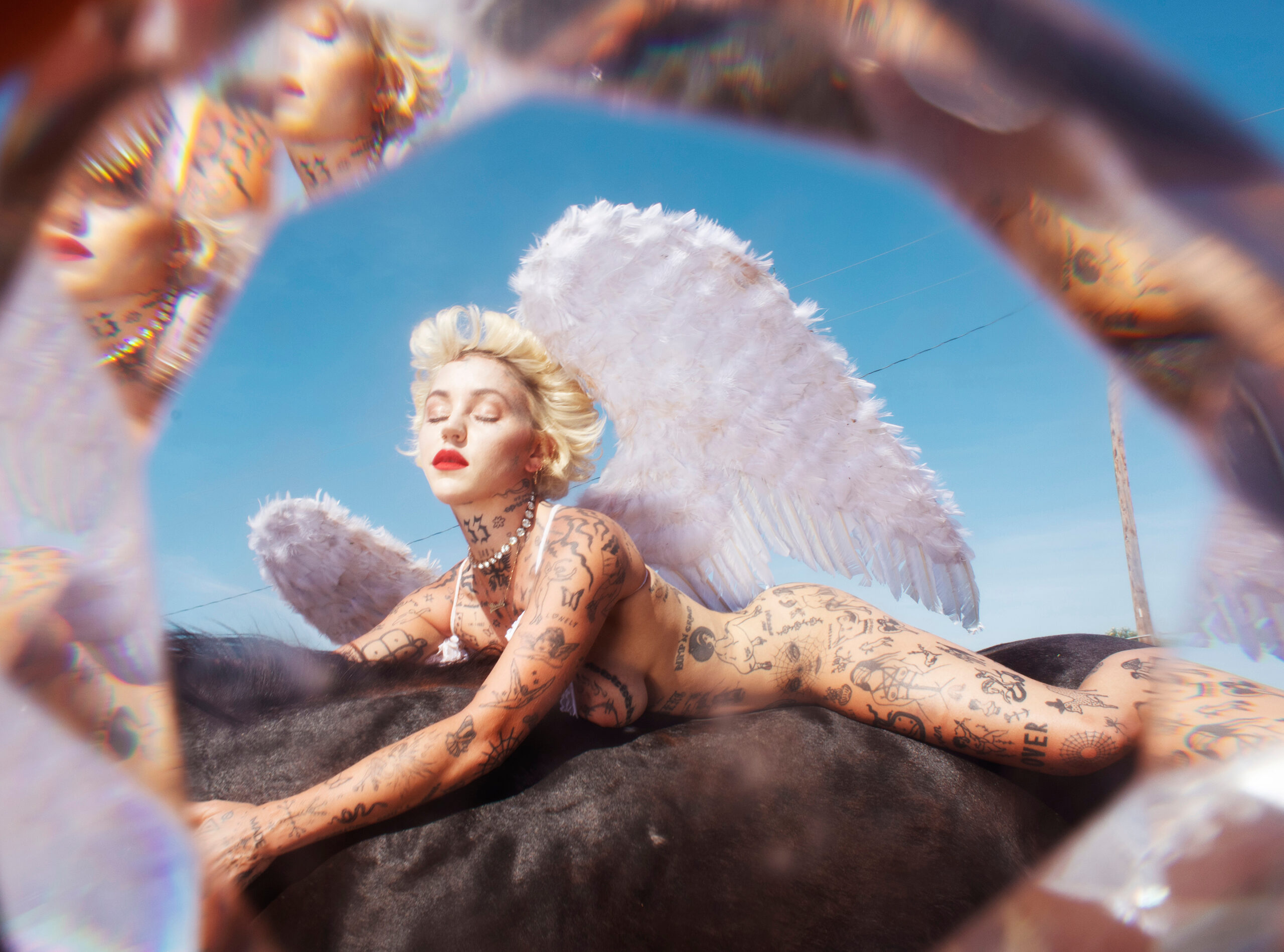
PLAYBOY: Brooke, what jumped out at you this time around?
CANDY: The fantasy. How colorful it was. How glamorous it was. It was just so nice to go into a space that was just filled with nature and was so gay. Those are two things that I need in order to function and I haven’t been able to experience in like six months. So it was just so nice to be in that kind of vibration.
PLAYBOY: What were some highlights?
CANDY: The second we stepped foot on that ranch, I felt like I was in a meditative state. It’s really bizarre. I know the whole world has been feeling so unsure and so anxious. I’m a sensitive person, so I’ve really been almost crippled with anxiety in Brooklyn, and just being able to feel like myself and to feel like I could breathe was so amazing. We played with horses. We did some naked Jacuzzi. We cooked every meal. We danced.
PLAYBOY: Love, what are the biggest challenges you’ve faced as you’ve developed the Ranch?
BAILEY: Well, at first I had no idea about construction. I’m a city girl. I like glam; I like “showtime!” I don’t know much about anything else. But I learn things really quickly, and my mother is in construction. I think the hardest challenge for me was laying the foundation, because I was always decorating and painting and putting pretty facades on it—but at some point you have to go back to the foundation, go back to the roots. I laid the marble. I laid it with my own bare hands. That was sort of a revelation to me. It’s the biggest lesson I had to learn in my transition: I had to lay the foundation first. I think that metaphor for life is a beautiful thing. I think we’re living in a time where we need to go back to grassroots organizations. We need to learn how to create sustainable farming. We need to learn these things so that we don’t rely on the person who’s pushing us down with their oppression and racism. I think the Ranch is a symbol of hope that we can live off the grid and learn to live for ourselves.
When you don’t have stable ground to plant your roots in, that’s when things go awry, and that’s why I’m so happy to have this space.
PLAYBOY: How are you interacting with the larger community around there?
BAILEY: I don’t really know my neighbors too much. We’re blessed to have so much space between us that I don’t need to know them. There is one neighbor on the way out to town who has a Trump flag. Then when you go into town, there’s a whole Trump merchandise booth—someone selling bootlegged shit on the corner. So I know that Temecula itself is a sort of Republican town, but there’s also a lot of people who are very pro “do your thing.” It’s a great reminder that, even though I do live in a bubble, this exists in the world and I have to check my privilege.
PLAYBOY: Do you spend much time in town?
BAILEY: I go to town all the time for errands. I have to go to JOANN Fabric and pick up fabrics or I have to go get some wood to build a bungalow. It’s a lovely town. It’s wine country, so it’s a beautiful area. I’ve never had any problems with bigotry, homophobia. I know I get looks all the time, but I get that everywhere I go.
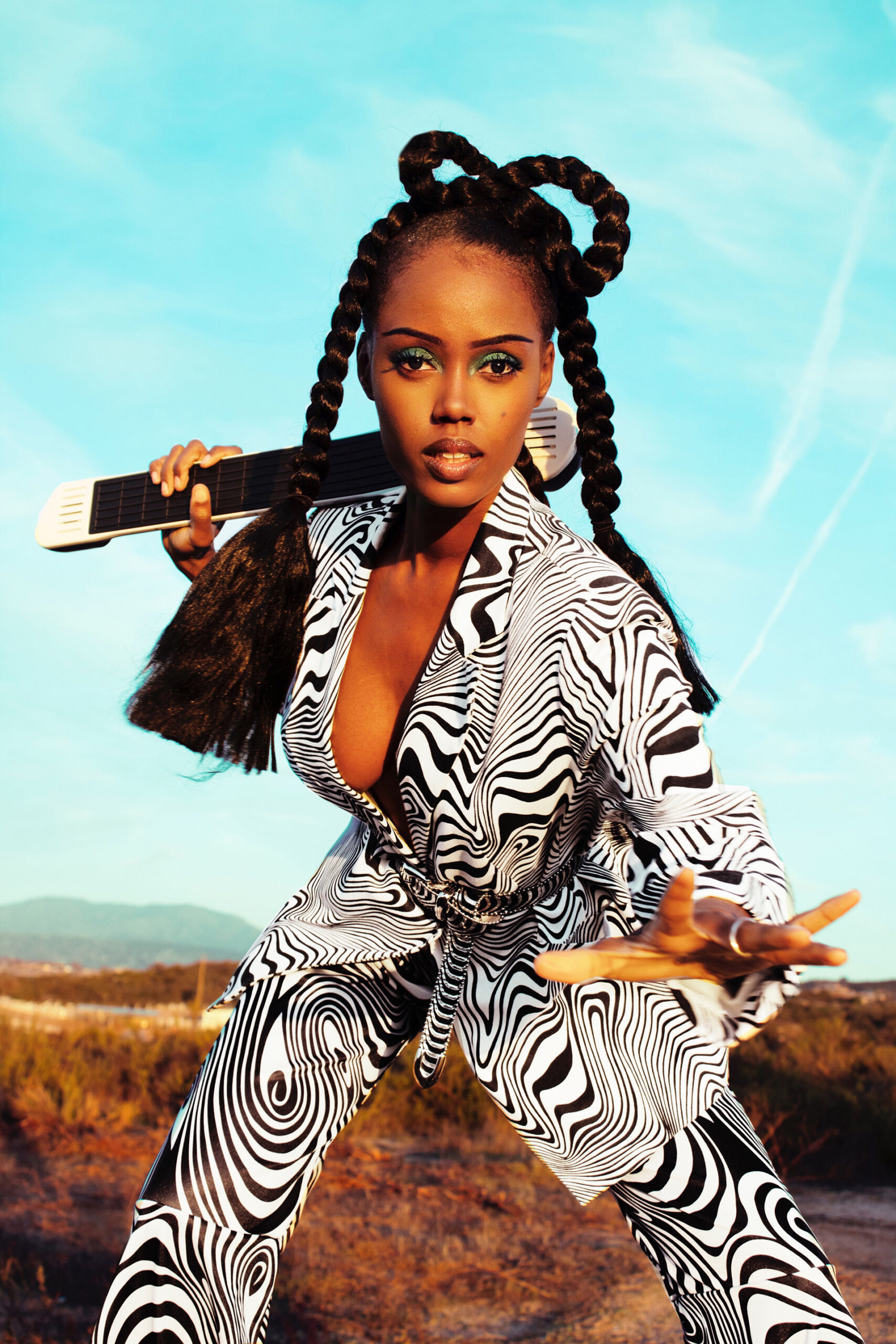
PLAYBOY: Do you feel like you have to dress down when you run errands?
BAILEY: Oh, I’ve never let that change me. I always dress how I want to. That’s just who I am. I have a middle finger to people who judge me for the way I dress.
PLAYBOY: It sounds like you have a lot of experience confronting that kind of judgment.
BAILEY: It helps that I have such a solid foundation. I think that’s why a lot of queer people hurt themselves or inflict pain or want to kill themselves. When you don’t have stable ground to plant your roots in, that’s when things go awry, and that’s why I’m so happy to have this space. That’s why I want to share it with other people: so that they can also see their foundation and see a path that they could carve for themselves.
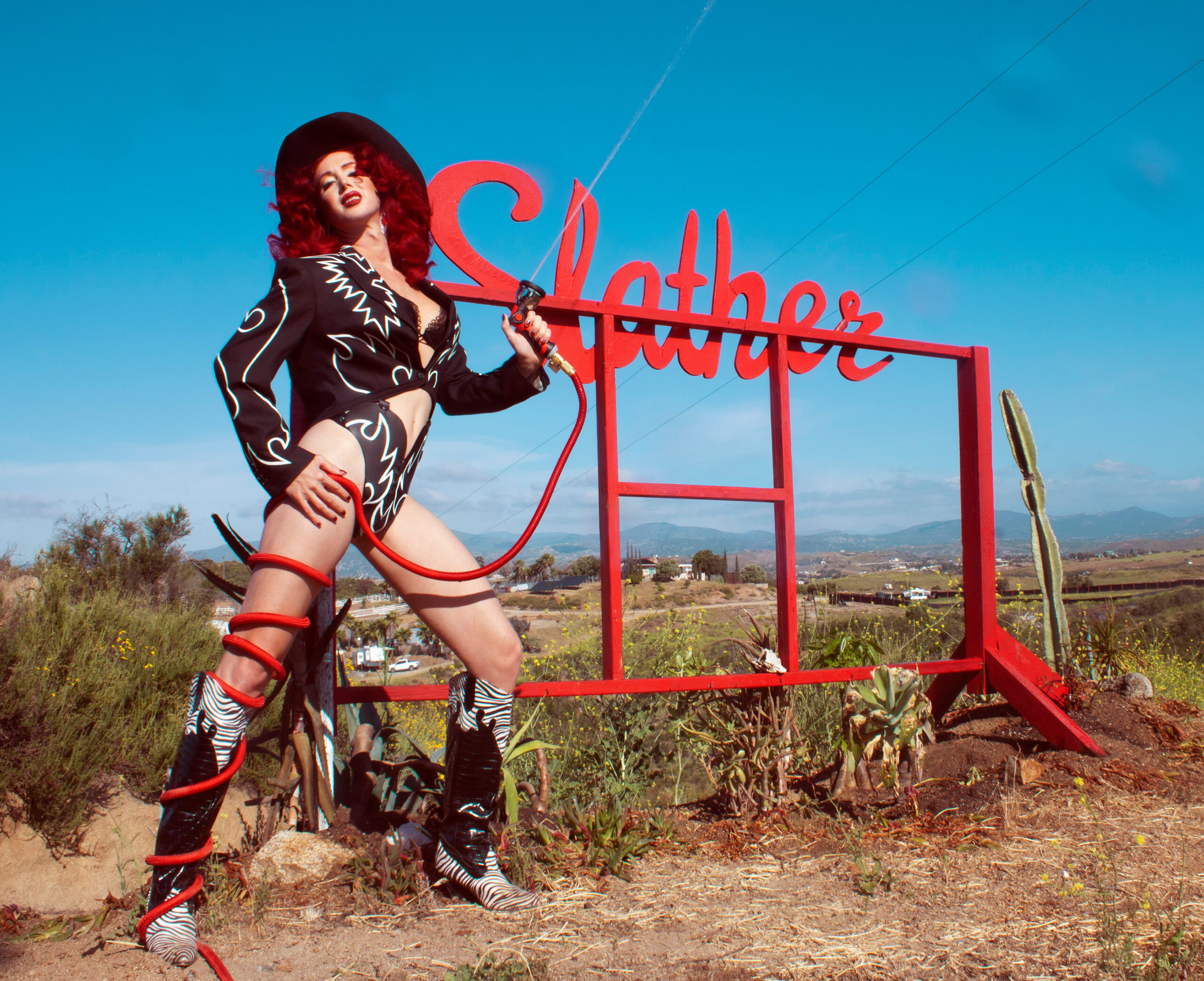
PLAYBOY: Terry, how do you see your Ranch residency in hindsight?
LOVETTE: My time at the ranch was historical, a new beginning born from an ending. I was there for the entire month of February, which is Black History Month. It was the first I’d spent away from a traditional cultural celebration of it. The spirit of that celebration poured out of me and into the music I was creating, all before the dystopian plot twist that was March and revolution that has come since.
PLAYBOY: Love, how have the events of the past month affected the fundraiser?
BAILEY: We’re sort of on pause because of COVID and because of the liberation movement. It really put priorities in a different perspective, which is a good thing. But it’s also good to understand that we are here for the liberation of Black and trans and nonbinary and queer people. So as soon as we have funding, the money’s going toward building more facilities so that we can house more marginalized artists to come experience nature, free from discrimination. As much as it seems like it’s silly and we’re a small grassroots organization, it’s important to give back—not just to the Ranch, but other small grassroots organizations—because these are the organizations that are tapping into the communities and that can really inspire change. If you don’t have money to give, that’s fine. But if you’re a sculptor, a painter, a welder, an electrician, a grant writer, we’re calling all of our angels.