Your bag is empty.

'Pacific Rim Uprising' director Steven S. DeKnight tells Playboy about John Boyega's initial concern
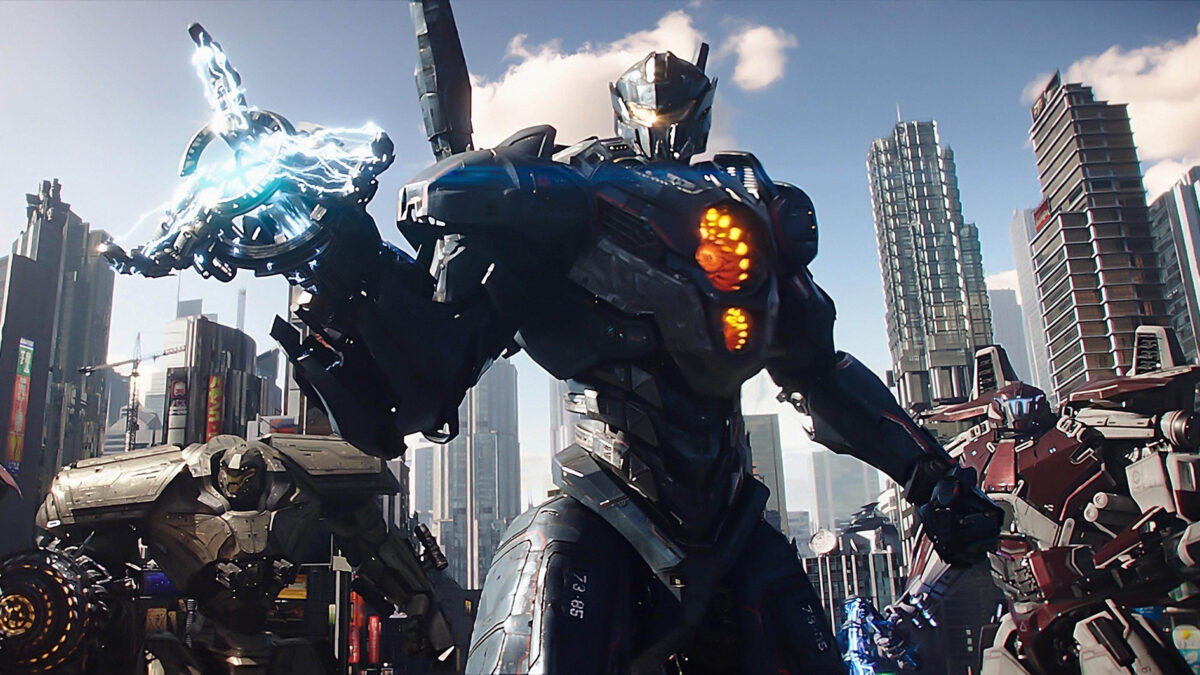
It’s been five years since audiences watched giant robot mechs battle otherworldly Godzilla-style monsters in Pacific Rim. Friday marks the release of its sequel, Pacific Rim Uprising—the big-screen directorial debut of Steven S. DeKnight, best known for creating Starz’s Spartacus and executive-producing Netflix’s Daredevil.
Set 10 years following the events of Pacific Rim, the world is still on the mend after the Kaiju Wars. The sequel not only reintroduces viewers to the future world Guillermo del Toro built, it moves the canon forward with new characters and threats. Here, audiences are introduced to Stacker Pentecost’s (Idris Elba) rebellious son, Jake (played by John Boyega), and engineering mastermind Amara Namani (portrayed by newcomer Cailee Spaeny). As you can expect, it doesn’t take long before a new set of monsters test their mettle.
Del Toro’s Oscar wins for The Shape of Water are an example of the enduring popularity of genre storytelling. And boy, has he kept himself busy since directing Pacific Rim, which hit the big screen in 2013: He helmed 2015’s gothic romance Crimson Peak, delivered vampires to FX with The Strain and brought the animated Trollhunters series to life on Netflix. One has to wonder, though, if del Toro had ever planned on heading back to the world of Jaegers and Kaiju. According to Steven DeKnight, that was never in the cards.
“He was actually getting ready to go off and prep his passion project he had been trying to make for years, which turned out to be The Shape of Water,” DeKnight tells Playboy. “So he was prepping and shooting that as I was prepping and shooting Pacific Rim. The Shape of Water was why he couldn’t do the sequel to Pacific Rim.”
The director shares that, while del Toro was busy with his genre-bending love story, he handed off some sage wisdom to guide DeKnight through his Pacific Rim journey. “You hear a lot of great direction and suggestions of where to go,” DeKnight explains. “[Guillermo] said, ‘Look, it’s a marathon. Pace yourself. There will be terrible days, and there will be good days. You just keep going. If you ever need me, give me a call. But otherwise, I’m going to stay out of your hair. Go make your movie!'”
“John [Boyega] said, ‘Look … I don’t want to be Finn from Star Wars.'”
Those words of wisdom were beneficial to DeKnight, who did his best to keep his cool while around the Oscar-winning director. “First and foremost,” DeKnight continues, “he was like my spirit animal. I had been a huge Guillermo del Toro fan since Cronos. I saw it at the theater! I have all of his DVDs; I’ve looked at all the special features and commentaries; I have all the books about his movies. He has been such an inspiration, and when the opportunity first came up for me to do this movie, one of my first thoughts was: Holy shit, I get to meet Guillermo del Toro!”
And not only did DeKnight meet his hero, but he was invited to visit Bleak House—the director’s personal museum of movie props, genre collectibles and other inspirational accoutrement. “I just wanted to move in—it was so magnificent,” DeKnight admits. “The moment I stepped into his living room, and there were drive suits and escape pods … There was the original space suit that Kane [John Hurt] uses in Alien. There were all of these little Ray Harryhausen miniatures and some skeletons from Jason and the Argonauts … Everywhere I looked was something phenomenal.”
The task of making his own Pacific Rim movie proved to be challenging on multiple fronts. One aspect, for instance, was casting. Pacific Rim Uprising definitely continues the story introduced in the first film, but it does so in a unique manner that helps the sequel operate as a stand-alone movie as well. Of all the people starring in the film, DeKnight looks to the discovery of Cailee Spaeny, who plays Amara Namani, as one of the highlights of the whole experience.
“We started off auditioning around the world,” the director explains, “and we were in the last 48 hours of screen-testing John [Boyega] with a couple of fantastic actresses with a ton of credits. We got a call from our casting director Sarah Finn—she does all the casting for the Marvel movies—and she said, ‘I just got a self tape from a small town in Missouri from an actress that really hasn’t done anything. I think you should take a look!'”
As risky as the move was to consider an actress as new and inexperienced as Spaeny, DeKnight decided to bring her in anyway. “We thought, ‘What the hell—let’s fly her out, and throw her on screen with John, and see what happens!'” And as the director explains, the screen test was “pure magic.”
“[Guillermo del Toro] told me, ‘There will be terrible days, and there will be good days.'”
DeKnight continues: “They immediately bonded, and had a great relationship and chemistry right from the start. We rolled the dice, and from day one, she just was so professional, it looked like she’s been doing it forever. I’m thrilled that I get to introduce Cailee to the world because I think she’s really something special.”
Of course, the movie wouldn’t work without its lead. But with John Boyega attached to another big franchise—we’re talking Star Wars, people—there was a creative strategy implemented in bringing the actor on board. DeKnight explains it was producer Mary Parent’s (Godzilla, The Revenant) idea to court Boyega for the role of Stacker Pentecost’s son. “She said, ‘Well he’s coming in for a general meeting … Why don’t we put up the concept art in the conference room, and I’ll just casually walk him past and gauge his reaction?'” DeKnight quickly learned that he and Boyega had something in common: “It turns out, he’s a huge anime/giant mech/monster fan. So he was interested! And we sat down and talked and really bonded over the love of the genre.”
According to DeKnight, once Boyega joined the project, the actor didn’t shy away from bringing his own input to the role: “We were halfway through writing the script, retooling it for Jake Pentecost, and John said, ‘Look … I don’t want to be Finn from Star Wars. I think it’s important that this character be very different. I love Finn. I love playing him. But this should be different.'”
DeKnight cites Boyega’s work in Joe Cornish’s 2011 cult hit Attack the Block as a good reference for Jake Pentecost’s edgy character traits in the film. “I think he brings that kind of roguish young Harrison Ford feel to the role,” DeKnight adds. “I’m a fan of his work, and I’ve got to say, I think this is some of his best work. He really owns this movie.”
Another component that sets this Pacific Rim apart from its predecessor is the age of the movie’s cast. According to DeKnight, Legendary Entertainment agreed that bringing in some fresh faces was the right move here. “I was really keen on putting across the message of: It doesn’t matter where you’re from, it doesn’t matter who your parents are, the color of your skin, your religion … anybody can stand up and be a hero, especially if you work together. So the idea of using these cadets as basically the last pilots standing was a natural progression from that.”
While Pacific Rim Uprising is full of blockbuster fun and flashy action sequences, DeKnight’s vision brought some real-world stakes to the story as well. “From the very start, I pushed hard that not all of them should live. I didn’t want all of them to win the battle and everything to be happy where everyone gets to live,” DeKnight explains. “The thing that I stressed was this: They have no combat experience. They’re going to make mistakes, and some should have deadly consequences … I wanted to really make the world a bit grounded, that there are consequences, and that you can try really hard, but you can fail. Sometimes that’s OK, and sometimes that has to happen.”
DeKnight has enjoyed a rather successful career as a writer, director and executive producer on television. But while Pacific Rim Uprising is his big-screen directorial debut, he’s quick to point to the wealth of knowledge and experience he’d gained from working on small-screen projects with Joss Whedon.
“I couldn’t have done this without my experience in television—both on the story and character side and on the production side, of just having run my own shows and managing big productions. Also, I couldn’t have done this if I hadn’t directed for television,” DeKnight explains. “Joss Whedon gave me my start and took me under his wing. I learned an incredible amount working for him on Buffy, Angel and Dollhouse. TV has an incredible amount to offer the movies, and I’m really overjoyed the studios are starting to see a benefit of that. You’re seeing more and more writers rooms being put together to help break big movies and big franchises, and I think that is absolutely invaluable.”
From the Transformers franchise to Voltron to Aliens, it’s clear audiences have an undying love for watching giant robots battle grizzly monster foes. For DeKnight, it all hits his inner child’s sweet spot. “I grew up on Ultraman, Space Giants and Johnny Sokko and His Flying Robot. There’s something that is so epic, this kind of can-do attitude of wanting your own spaceship, you know? Especially if they’re mechs operated by humans. I think it’s such fantasy wish-fulfillment.”
After a beat, the multi-talented DeKnight reveals what is perhaps his dream job: “I mean, who wouldn’t want to climb into one of those beasts and go toe-to-toe with a monster?”