
Your bag is empty.
Though Capitol Hill was empty due to the pandemic, there were rumblings of a legislative uprising outside the old marble halls.
In early April, the Congressional Progressive Caucus, a large but loose group of congress members who, to various extents, subscribe to progressive policies, was working legislative tricks hoping to bend the latest coronavirus stimulus bill further to the left. It was hardly a unique move for the group of lawmakers, and it had a predictable end—one in which Speaker of the House Nancy Pelosi passed the bill she was aiming to get through. The moment seemed to reckon with a larger understanding of the current attitude in America, an attitude in which occupations like grocery cashier and delivery driver are now essential and even celebrated.
Early in the coronavirus pandemic, Congressman Ro Khanna, who represents a Silicon Valley district peppered with tech giants like Apple and Yahoo, joined Senator Elizabeth Warren in a proposal for an “Essential Workers Bill of Rights,” and called on Congress to include their policies in the next coronavirus relief package.
When Warren and Khanna released their proposal, Khanna highlighted the fights of essential workers, saying “the grocery clerk that packs our groceries behind a plastic shield, the bus driver sanitizing seats between shifts, and the security guard on watch from a distance: these heroic workers are keeping this country afloat. They deserve every benefit and protection we can give them, starting with those outlined in our Essential Workers Bill of Rights.”
I was born in Philadelphia in 1976, the bicentennial, and put very simply, I just want this country to give everyone the chance that they gave me, a son of immigrants.
Khanna and Warren’s proposed Bill of Rights included some broad statements, such as, “All essential workers should get the care they need during this crisis, including those who are uninsured or under-insured, regardless of their immigration status.”
But there were other, fine-tuned requests, such as, “Any federal funding should be designed to ensure that employers cannot skirt the rules by firing or furloughing workers or reducing their hours or benefits in order to access a tax credit or avoid a worker protection requirement.”
For some, the Essential Workers Bill of Rights was a progressive flag in the ground. Nelini Stamp of the Working Families Party praised the proposal during a conversation with Playboy. “We need an Essential Workers Bill of Rights,” she said. “It’s really, really clear that we need it more than ever to protect working people. And it’s really great that [Warren and Khanna] have been championing that fight.”
Stamp, like many progressives, is frustrated by the pace of change. “We, as the United States, need the level of investment that we’ve put in for things like war,” she added.
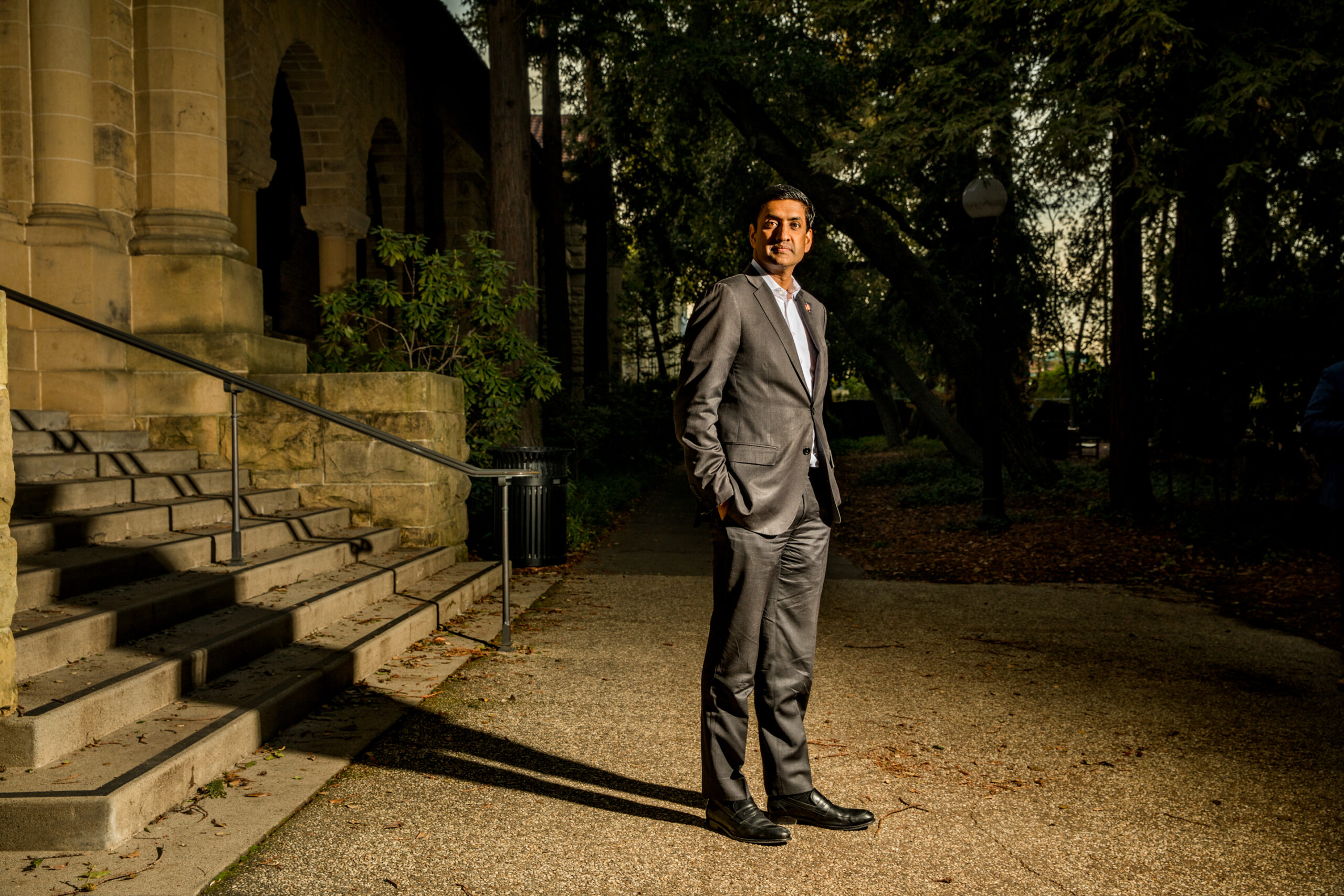
Khanna has become a powerful voice in Congress, in part because of the enormous tech riches shimmering in his district. He’s a tall and thin former Stanford lecturer who grew up in suburban Philadelphia as the son of middle-class immigrants. He entered Congress by running on a progressive platform and beating a Democratic congressman in a safe district. Two years later, a New York bartender named Alexandria Ocasio-Cortez would make the same play and become the youngest congresswoman in history and a household name overnight.
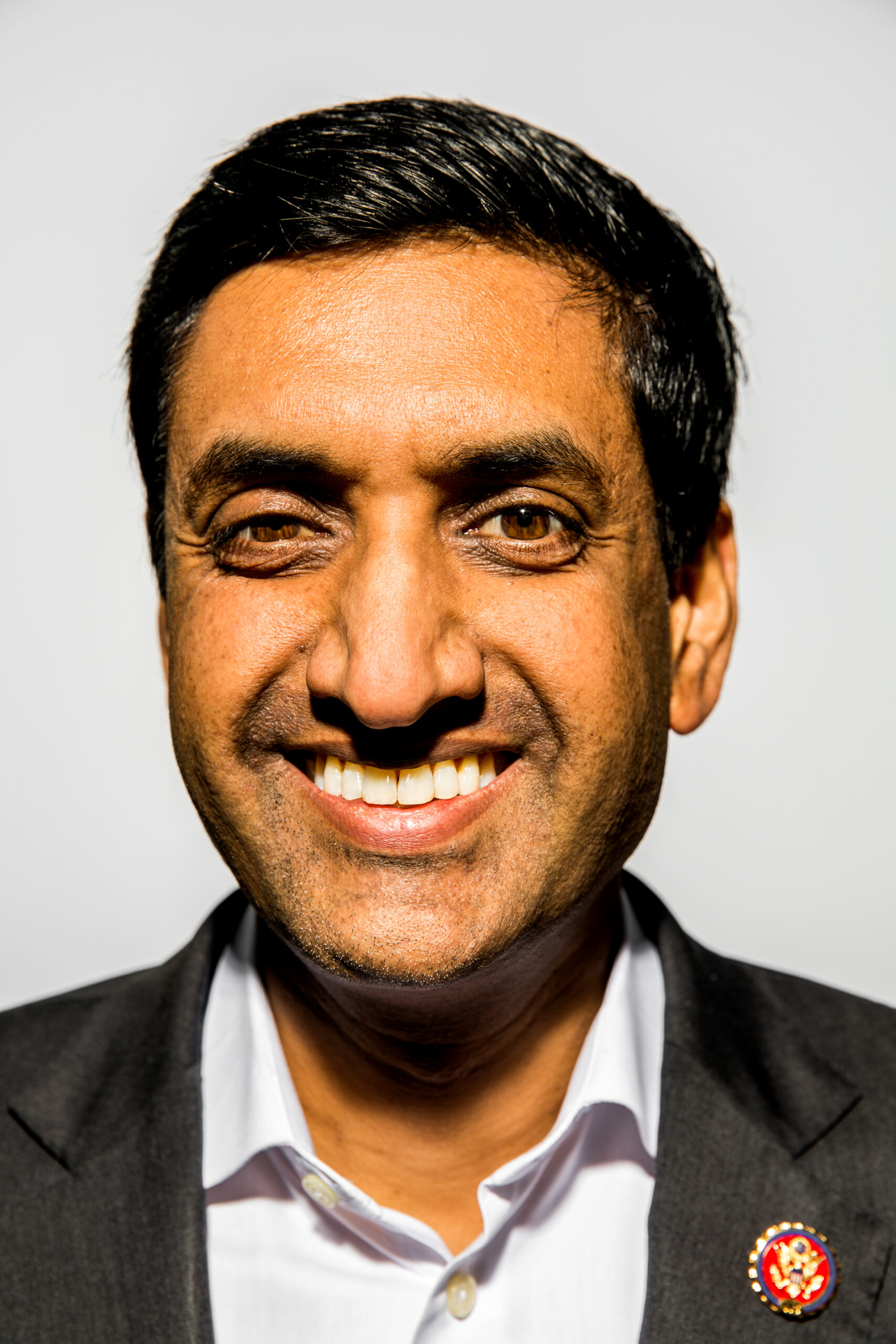
“Why can’t this country do that for everyone?” Khanna mused to Playboy in a December conversation in his office on Capitol Hill. “I was born in Philadelphia in 1976, the bicentennial. Put very simply, I just want this country to give everyone the chance it gave me, a son of immigrants. So that’s really what my governing philosophy is.”
Khanna talks like the West Coast Ivy lecturer that he was for a few years. He has large ideas about jobs in the Midwest, with sidebars about things like the 1890s and the Industrial Revolution tracing to the 1929 stock market crash.
In addition to being a voice for economic equality and working-class protections in Silicon Valley, Khanna has dedicated his platform to advocating for marginalized groups that are often missing from the Capitol Hill conversation. Just last year, he introduced a pro–sex worker bill intended to combat the ill effects of SESTA-FOSTA, the controversial legislation aimed at curbing sex trafficking that instead made many legitimate sex workers’ jobs more difficult and dangerous.
Khanna told Playboy that he wants a full repeal, but that in the meantime we should “at least repeal the provisions that are overbroad and forcing sex workers out onto the street.” He added that he expects a study of SESTA-FOSTA would find that the policy “has led to increased violence and sexual assault against sex workers, and that the most impacted have been women of color, the LGBT+ community and the trans community.”
“Almost one-fifth of transgender individuals have engaged in sex work and are at higher risk for violence and higher risk for assault,” he said. “I don’t think there’s awareness about the link between the most marginalized communities and sex workers.”
In Khanna’s America, everyone should have the right to economically thrive and earn a living—safely. It shouldn’t matter if you’re a frontline healthcare worker, an Amazon factory worker, a white-collar employee with the privilege of working from home or a sex worker.
Khanna described the road to that America by saying, “You’d have to do [sex work decriminalization] thoughtfully in a way that you still criminalize sex trafficking and child trafficking, but you aren’t going after sex workers.”
In Khanna’s America, everyone should have the right to economically thrive and earn a living—safely.
Six months after our conversation in his comfortable Washington office, America is a nation in the grip of a virus. The death toll is climbing north from 115,000, and the country has relied for months on the grocery clerks and bus drivers that Khanna nodded to in his statement accompanying the Essential Workers Bill of Rights.
Outside the Capitol, I stood a few feet away from a masked Alexandria Ocasio-Cortez. “We need to move closer to a point where healthcare is actually treated as a right,” she told Playboy. “I don’t think we should be subsidizing for-profit health insurance companies. I think we should be expanding Medicare to allow unemployed people to opt in.”
Ocasio-Cortez’s ideas echoed those set down in Khanna and Warren’s proposal: their call for “a full federal subsidy of fifteen months of COBRA for employees who lose eligibility for health care coverage.” The latest stimulus bill didn’t fully achieve that, but it was a nod to progressives like Khanna and Warren.
The progressive fight has come to the forefront during the pandemic, and expanding access to health care is at the center of that battle. For progressives in the mold of Khanna and Warren and AOC, it has been a driving point of their political philosophy. And even President Donald Trump seems to have briefly realized that this health crisis surpasses politics. When asked last month by a reporter at the White House if the coronavirus vaccine will be free, he responded, “We’re looking at that, actually.”
The progressive uprising that rumbled through the empty halls of Congress before the passage of the HEROES Act was voiced largely by Congresswoman Pramila Jayapal, who co-chairs the Congressional Progressive Caucus. Jayapal was the only member of the massive caucus to vote against the bill, and, in her statement accompanying that vote, she said she voted against the legislation in part because the bill “does not guarantee affordable and accessible health care for everyone.” But Jayapal, who came to Congress in the same class as Khanna, is no longer the far-left voice in the wilderness of Congress. It is a body that’s always shifting, under the constant strain of a nation that has seen two major political revolutions in Bernie Sanders and Donald Trump in the past four years.
In late April, a group of progressives released a list of demands that asked for the legislation that would become the HEROES Act to “ensure full health coverage with no out-of-pocket costs for any Covid-19 care by expanding Medicare to cover those on unemployment and those who have lost insurance.” That letter included the signatures of Jayapal and Khanna.
Although former Vice President Joe Biden hails from the more centrist wing of the Democratic party, he seems to have realized that the progressive movement and its voters have at least earned a seat at the table. He announced unity task forces aimed at uniting the progressive and centrist wings of the party. Jayapal was named a co-chair of the task force on health care; Ocasio-Cortez was named a co-chair of the task force on climate change. The task force was an obvious nod to progressive voters who have never been enchanted by Biden. And change may sometimes be difficult; in April, Ocasio-Cortez told The New York Times, “The whole process of coming together should be uncomfortable for everyone involved.”
The attention that progressives are earning in Congress and in the presidential race might not have been as powerful if we weren’t living in a moment when essential workers have become the most important segment of our society. Alas, the pandemic has proven that the myth of reclusive billionaires and hedge fund managers and high-powered executives holding civilization together was greatly exaggerated. There is an obvious desire to keep the real backbone of society safe, and the progressives see their ideas as the best way to accomplish that goal.
But still, the progressives, a group with a seemingly Sisyphean task, have said that not enough is being done to protect those workers. While progressives toil to secure protections for essential workers in the pandemic, those workers carry on, delivering our packages, packing our grocery haul and, sometimes, saving our lives.